In France, the word is protected. There is the Palace label: a State distinction, a few dozen establishments, an application file, a committee. Elsewhere, the same word circulates freely, from one hotel to another, in different countries and even in France. So I put the question to the managing director of the Leela Palace group in India, which has been operating genuine palaces for four decades. His answer rests on four criteria, and the last one is the only one that truly matters.
The question has occupied me for a long time, and it is rarely treated seriously. In France, the Palace distinction is an official procedure, with specifications and a jury. It protects the word, which is a good thing. It does not, however, say what a palace is; it says who has the right to claim it.
This subject has followed me since 2010, the year the distinction was created. At the time, most of the professionals I met predicted a handful of chosen ones, a dozen historic Parisian establishments, not one more. I argued the opposite, in my articles and in the media that interviewed me: once the title relied on a set of criteria rather than on age alone, the circle would widen, and I was already speaking of some thirty houses. Nobody believed me. Fifteen years later, France has more than thirty Palaces, and the list keeps changing.
I went back over this whole story last June, in What is a Palace? versus the “Palace de France” label. My conviction has not moved: a label protects a word, it does not make a palace.
The debate is not closed in France, and that is good news. The Ritz, which the whole world regards as a palace, does not appear on the list of distinguished establishments, because it never applied for the title. Yet nobody would think of denying it the word. The question therefore deserves to be asked without polemic: can a label decide what is a palace and what is not, or does it recognise what guests have already decided?
I have been asking this question for fifteen years, in my articles and in the profession's debates, and I still find it just as useful, all the more so since I have watched the label evolve. Today, nothing is guaranteed for a Palace hotel: in 2026, three establishments lost the label. A system that accepts being discussed remains a living system, and discussion is what makes it progress. This is precisely why the Indian answer interests me: it defines the word instead of awarding it.
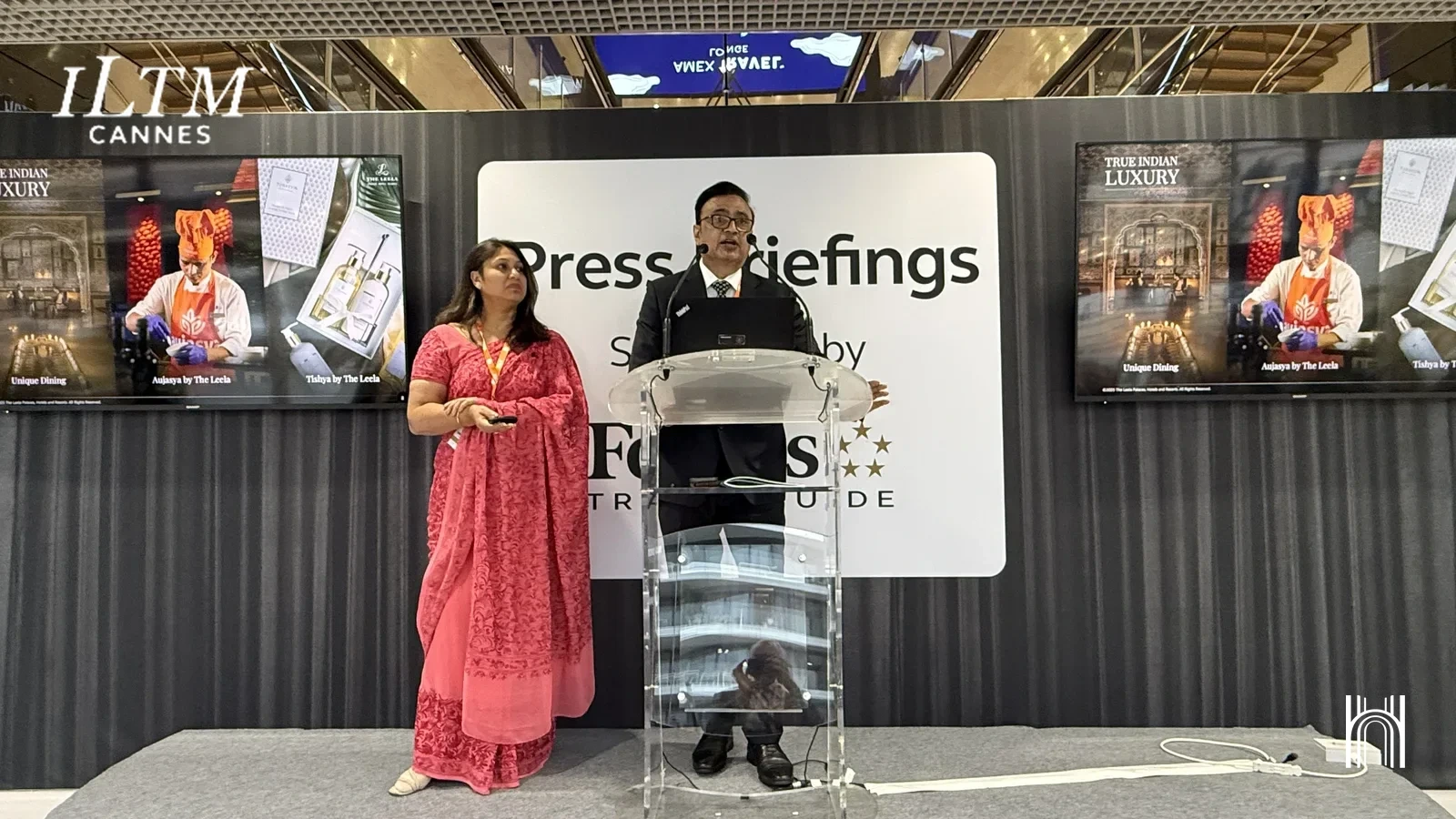
At ILTM Cannes, I put the question to Anuraag Bhatnagar, managing director of The Leela Palaces, Hotels and Resorts. The Indian group has been operating palaces for more than forty years and presents itself as the only pure luxury company listed on the stock exchange in its country. India, for its part, has had palaces for centuries, which changes the perspective.
This is not my first conversation with this house. In 2018, I had interviewed Vivek Nair, then the group's chairman, on his way of welcoming guests, in The Leela Palaces: The Art of Welcoming. Eight years later, the question has changed in nature: it is no longer about describing an art of welcoming, but about defining a word.
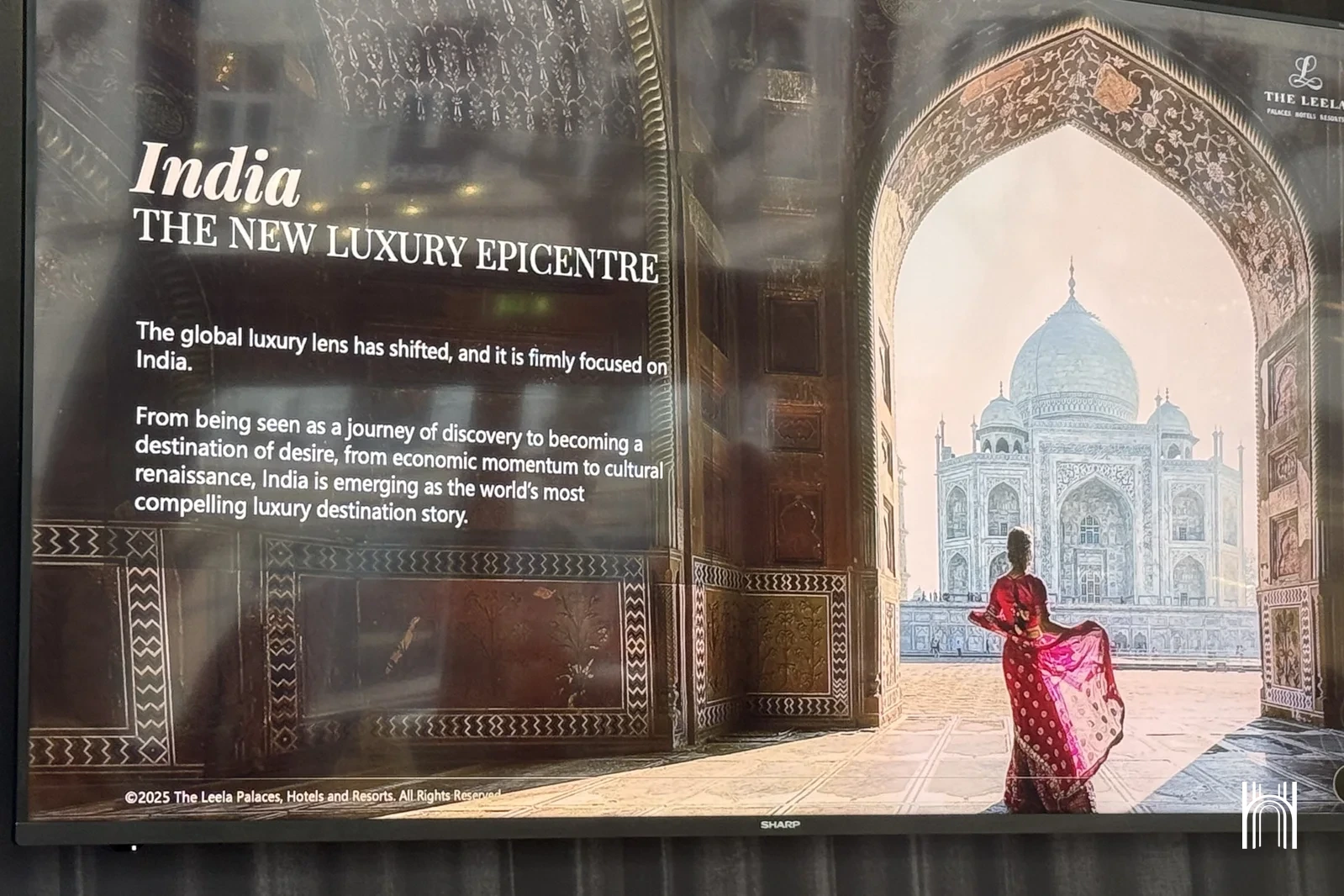
His answer was immediate and structured. Four criteria.
First criterion: the land
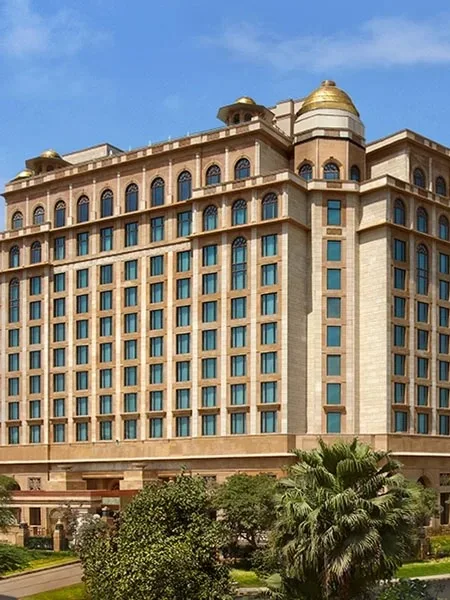
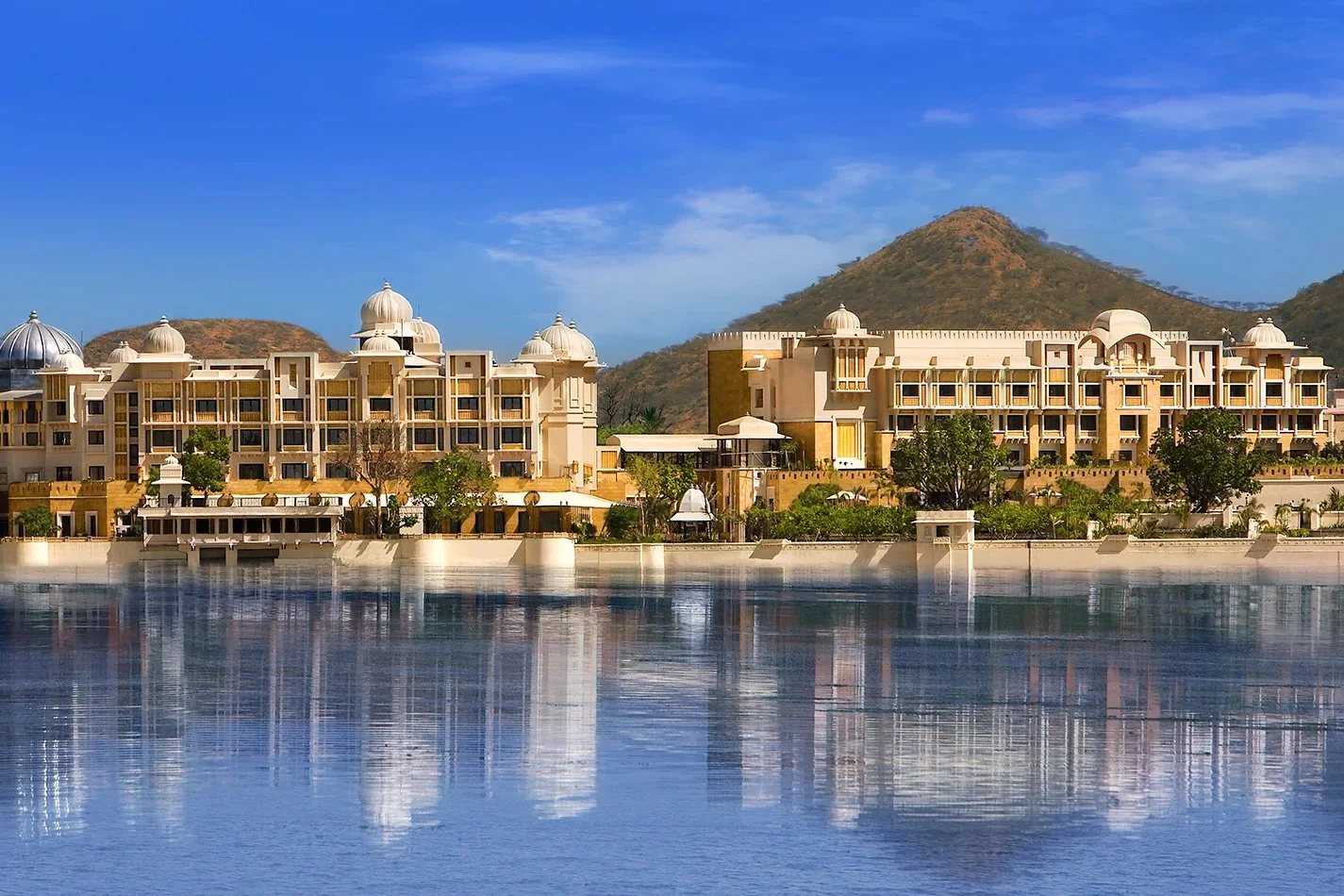
A palace begins with a location and a footprint that are hard to reproduce. The Leela Palace in Bangalore occupies eight acres, the one in New Delhi four acres, right in the heart of the city.
The starting point is neither service nor decoration. It is land.
Anuraag Bhatnagar uses the word iconic, and he immediately links it to something measurable: the location and the plot. Eight acres in Bangalore, more than three hectares. Four acres in New Delhi.
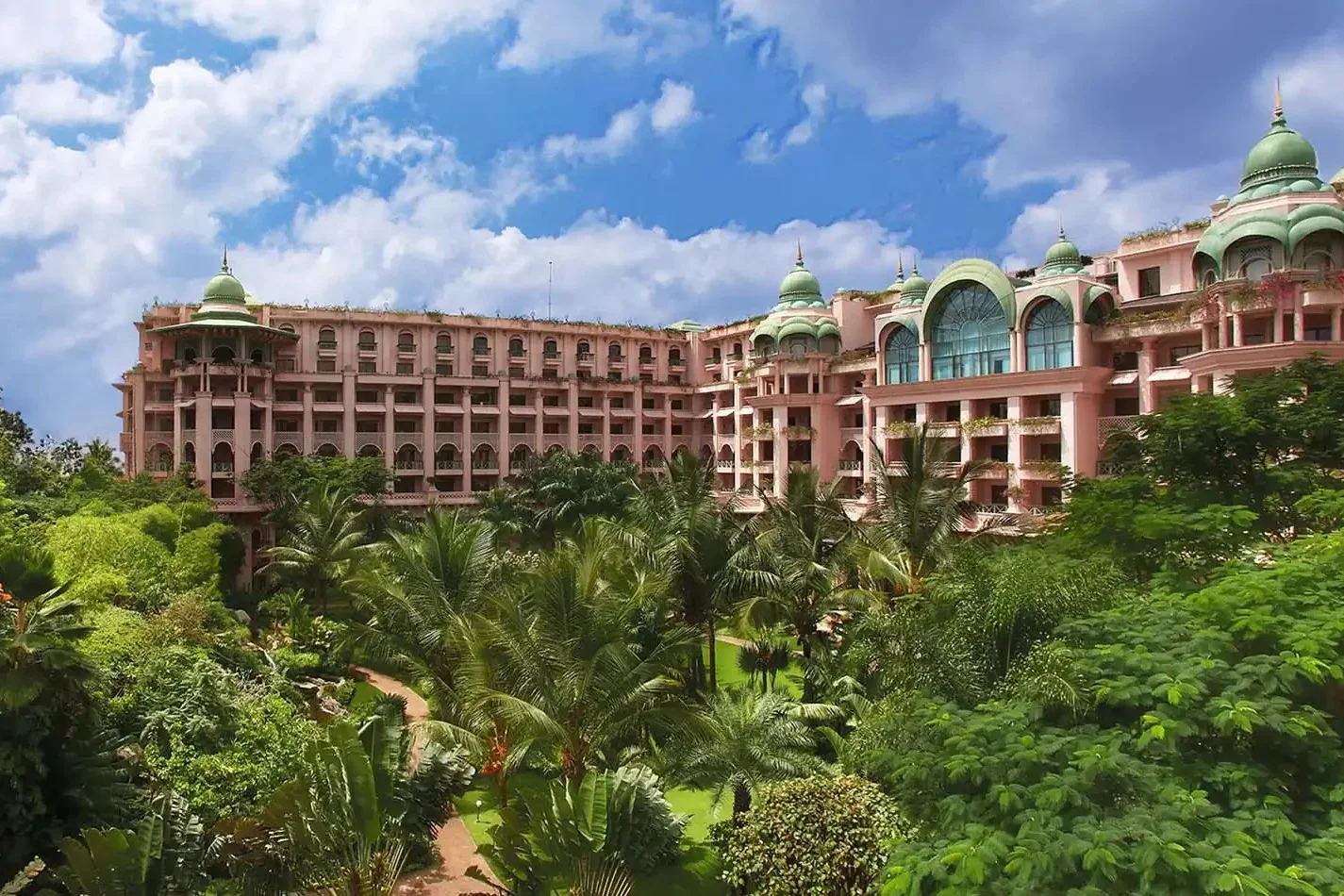
This criterion is the most honest of all, because it is the only one that can never be made up for. A hotel can redo its rooms, change its general manager, hire a Michelin-starred chef. It cannot grow larger. A constrained address will remain constrained, and that is precisely what makes certain palaces impossible to replicate.
The group puts it this way: to be the best address in the best place, on locations that are extremely hard to reproduce. It is a heritage definition of luxury, not a service definition. It deserves to be heard by all those who think that positioning is decided in a marketing committee.
Second criterion: the size of the rooms
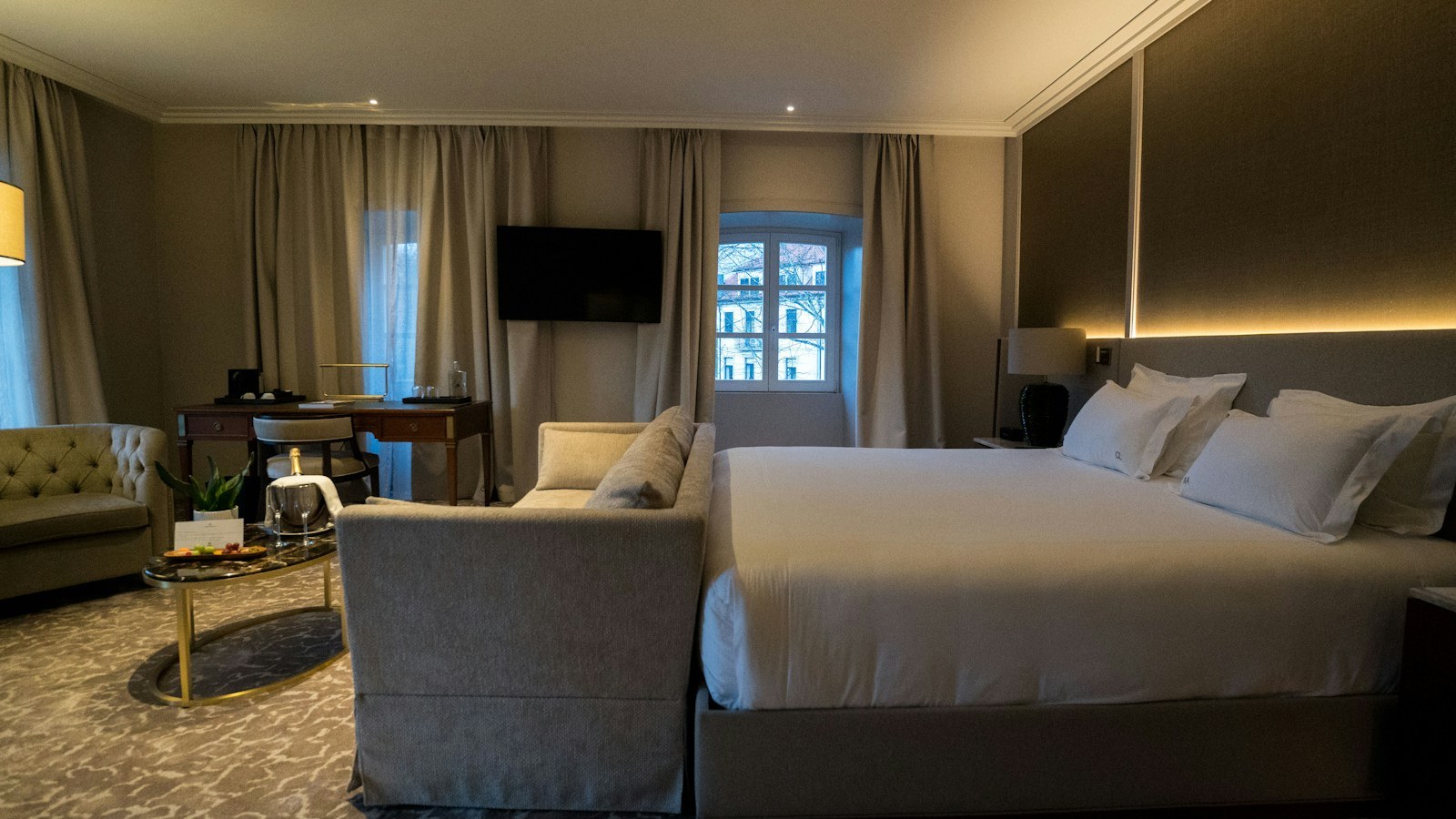
At Leela, the smallest room in the group measures 55 square metres. It is the starting point, not the exception.
This figure deserves an honest comparison.
Fifty-five square metres as a minimum threshold places the group's entry category at the level of the junior suites of many European houses. Many prestigious French establishments open their range between thirty and forty square metres, constrained by old buildings that nobody can enlarge.
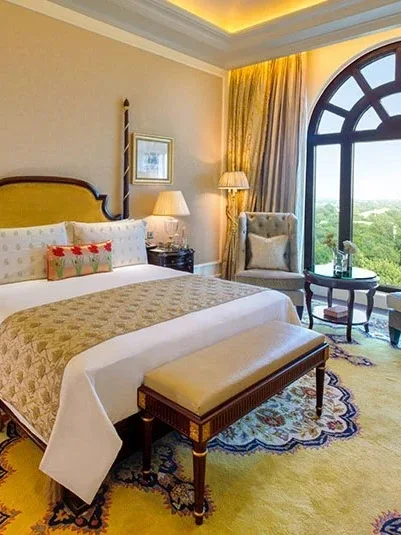
The point is not to name a winner. It is to note that the word palace does not cover the same physical reality from one continent to another. An international guest who has stayed in Bangalore or New Delhi arrives in Europe with a reference in mind, and that reference is spatial.
This question of space runs like a thread through the group's discourse. One of its future properties spreads over forty acres, another restores a four-century-old fortress. The sentence that accompanies these projects is revealing: creating space to take the stress out of travel.
Third criterion: the quality of craftsmanship
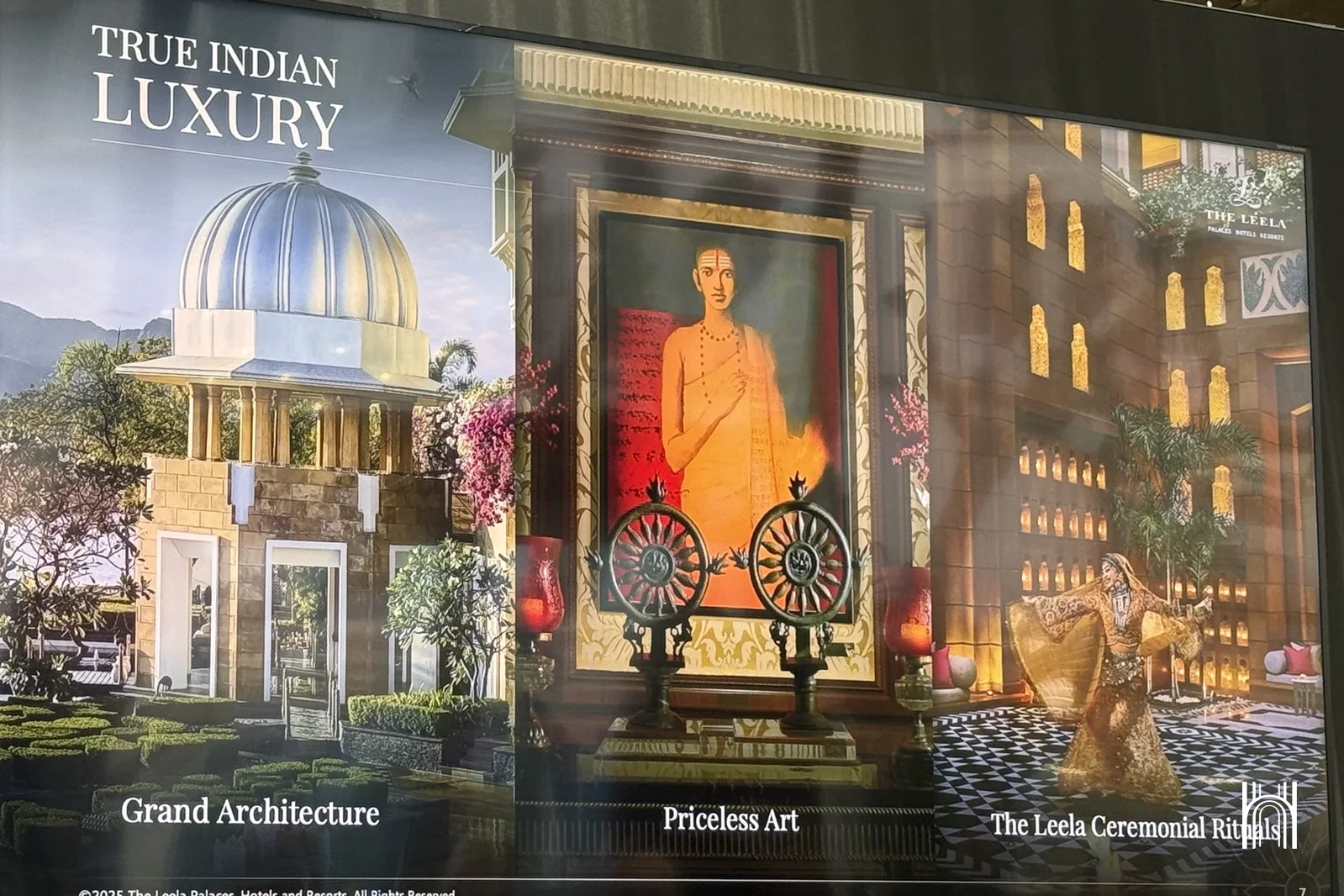
Chandeliers, crystal, marble, fabrics, furniture with bone inlay work, and three-dimensional, sculpted art, present in abundance.
The third criterion is the one guests perceive without being able to name it.
Anuraag Bhatnagar lists the materials like a master builder: the crystal of the chandeliers, the marble, the fabrics, the furniture. Then he insists on a point that struck me, three-dimensional art. Not canvases hung to dress a wall, but sculpture, volume, pieces that occupy the space.
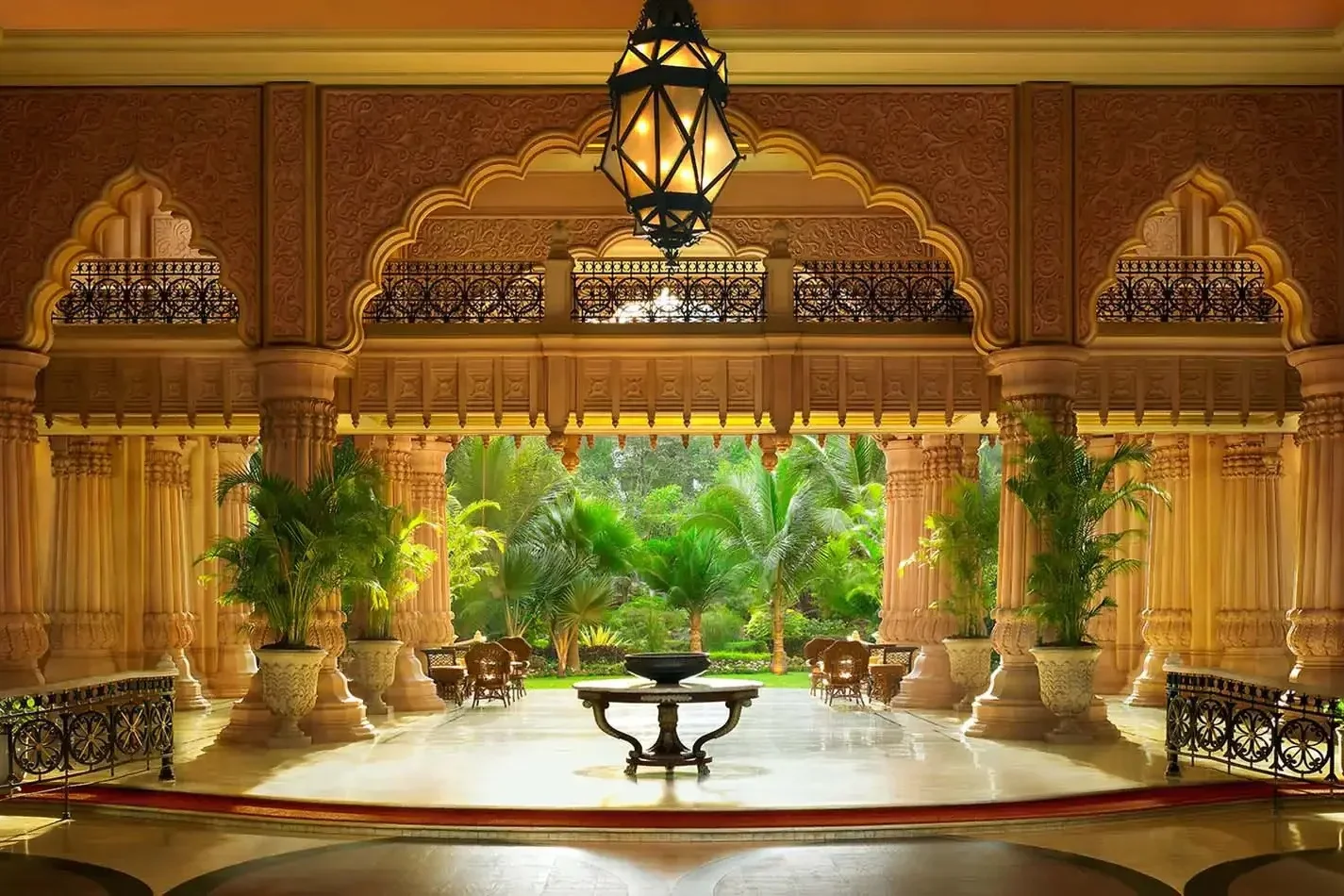
The nuance runs deeper than it seems. A painting can be replaced in an hour. A sculpture built into a place means the place was designed around it. The first belongs to decoration, the second to architecture.
The group carries this logic all the way to consumables. Scents and amenities are developed in-house, from flowers grown specially for the group on a dedicated site. Nothing is bought off the shelf. The phrase used leaves no ambiguity: nothing standard, everything is composed for the house.
Fourth criterion: the overall feeling
The last criterion is the only one that cannot be bought. Anuraag Bhatnagar speaks of the feeling produced by the whole ecosystem, and he uses two words: the software, and the people.
The first three criteria can be financed. The fourth has to be built.
His wording is interesting because it separates two things our industry constantly confuses. The software refers to the way service is designed, sequenced and delivered. The people are those who embody it. An establishment can excel at one and fail at the other, and the result will be mediocre either way.
The cultural reference he gives sheds light on the group's whole approach: service as it would be rendered to a maharaja. The group openly addresses what it calls the modern maharaja, guests used to the best the world has to offer, who come looking for that quality through the eyes of an Indian house.
Behind this image lies an openly claimed service philosophy, service from the soul, rooted in an ancient Sanskrit phrase the group quotes systematically: atithi devo bhava, the guest is God.
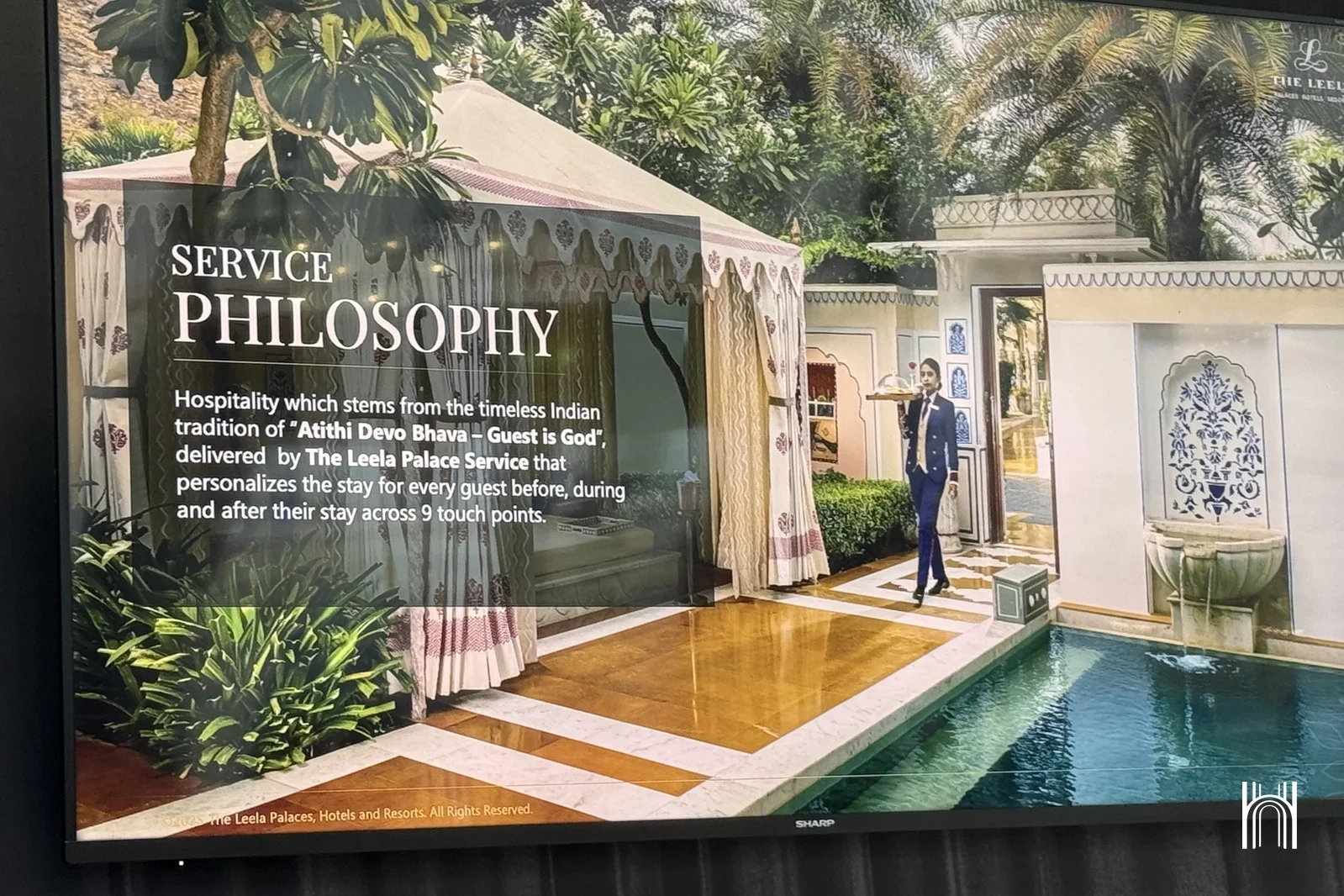
This phrase is not a recent slogan. It has belonged to Indian tradition for centuries, and it says something our professional vocabulary has lost: welcoming is not a service, it is a duty.
How does this philosophy become an organisation?
Through a named point of contact for each guest, eight to nine mandatory touchpoints during the stay, and a daily cultural ritual at a fixed time in every property.
This is where the discourse stops being mere discourse.
Each guest is assigned a dedicated point of contact, responsible for carrying the relationship throughout the stay. The group then requires eight to nine mandatory touchpoints: packing and unpacking luggage, amenity preferences, the beverage programme, the turndown attention, the sleep ritual. These touchpoints are checked, and the group tracks a specific indicator for them.
The most interesting element lies elsewhere. Every evening, between 6.30 and 7.30 pm, in every hotel of the group, a ceremonial ritual takes place. It showcases the local culture of the destination, its cuisine, its art. It is offered to all guests, with no booking and no extra charge.
This is an idea I find remarkable, and one that can be transposed well beyond India. A daily appointment, at a fixed time, offered, which is not entertainment but transmission. Guests returning from their day know something awaits them. The team knows this moment belongs to it. And the place asserts its cultural territory without needing to write it in a brochure.
How many European establishments, set in regions of considerable cultural wealth, offer something equivalent every day?
What the group measures, and what it reveals
Two distinct indicators: overall guest satisfaction, and a score dedicated to the touchpoints of the signature service. The second is tracked separately because it measures a promise, not a service.
Anuraag Bhatnagar is comfortable talking numbers, and he gives the reason: his group is listed.
The point that seems important to me for a hotel manager is not the level of the scores, but their separation. Overall satisfaction measures what guests thought of their stay. The second indicator measures whether the house actually delivered the gestures it had committed to.
These are two different questions, and the second is infinitely more useful. A guest may declare themselves satisfied with a stay in which half of the promised attentions never happened, simply because they did not know they were planned. The house, however, must know.
In my audits, this is exactly the distinction I seek to establish. Almost every establishment measures satisfaction. Very few measure the delivery of their own promise.
Laurent Delporte's keys to understanding
Three things stay with me from this meeting.
The first is the solidity of the definition. Four criteria, three of which can be checked by an outsider in a single visit, and a fourth that decides everything. Many houses would struggle to produce such a clear definition of what they claim to be. It is in fact the first exercise I propose in my consulting work: write in four lines what makes you irreplaceable, without using a single adjective. The exercise takes twenty minutes. It is rarely successful on the first attempt.
The second is the end-of-day ritual. One hour, every evening, in every property, devoted to passing on the culture of the place. It is neither costly nor complex, and it produces three effects at once: a landmark for the guest, pride for the team, and a difference the competitor across the street cannot copy without looking ridiculous, because it belongs to the territory. I now ask the question in every audit: what is your daily appointment?
The third is the separation of the two indicators. Measuring satisfaction is not enough. You have to measure whether the promised gestures took place. The gap between the two is exactly where a house loses its reputation, slowly, without ever seeing it coming.
As for the initial question, after this conversation I would put it this way. A palace is not a hotel that has the attributes of a palace. It is a place whose space, materials and organisation were decided together, in advance, for a precise intention. The official title protects the word. It does not make the thing.
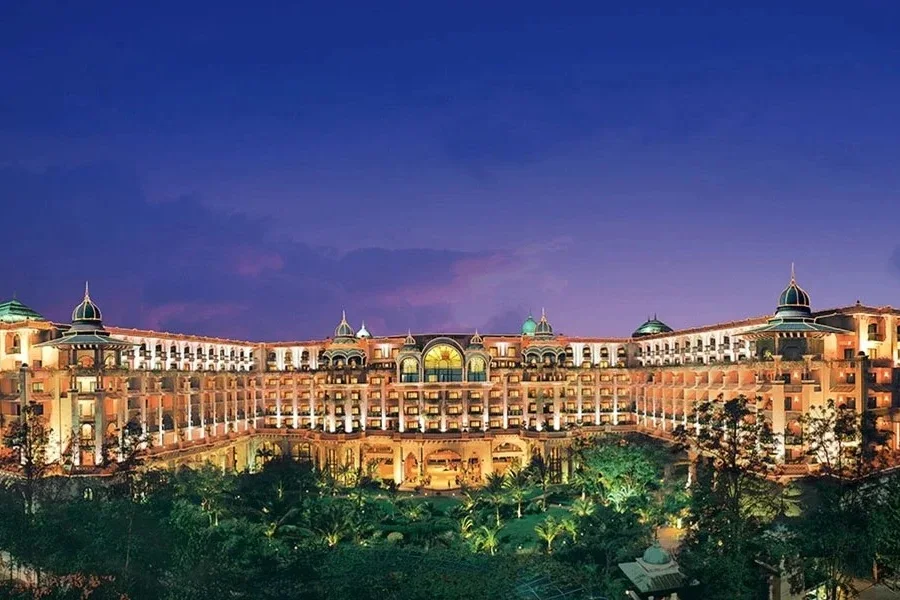
For The Leela, a palace rests on four criteria: a land footprint that is hard to reproduce, generous room sizes from the entry category, craftsmanship and art built into the architecture, and the feeling produced by the whole.
To go further, my articles on the Palace label
- What is a Palace? versus the “Palace de France” label, June 2026
- Lutetia: A Palace Label in Paris, January 2020
- What Makes a Palace Hotel in France?, December 2018
- Leading a Palace Hotel, November 2018, with François Delahaye
- The Palace according to TAJ Hotels, November 2018
- The Leela Palaces: The Art of Welcoming, November 2018
- The Palace Label: A Distinction for Everyone?, October 2017
- Three New Palace Hotels in France, July 2016
- 2014: New Palaces, July 2014
Share this article with a colleague, a client or a partner.
That is often how an idea enters a house, and then its habits.
What you say about it matters more than what I say.
A keynote, a mission, an article in the magazine: if my work has been useful to you, a few lines on Google are worth more than any argument.
Leave a review on Google →