Generous Hospitality Put to the Test of Excellence
The word Palace is one of those rare terms that reach beyond a simple hotel classification. It instantly evokes a promise: an extraordinary place, an exceptional standard of service, a memorable experience. Yet behind this label lies a more complex reality, shaped by a fairly recent political decision to assert French excellence on the international stage.
As an observer of the industry's evolution, I believe the question of the Palace label reaches far beyond the world of luxury. It challenges our ability to create hospitality that is genuine and truly embodied. Because a Palace is not simply a spectacular place: it is a place that must know how to welcome with precision, intelligence and attention.
Looking back at how this label was created, at its criteria and its first recipients, helps us better understand what it represents today and what it should continue to embody tomorrow.
For the first time in France, the Palace distinction, a mark of French excellence, was created by decree on November 8, 2010. It was the French State itself that created this distinction, to recognize five-star hotels with exceptional characteristics tied to their location, their historic and aesthetic character, and the level of service they offer. The label was later adjusted by decrees on October 3, 2014, then November 17, 2015, to bring new guarantees to the application process. The label falls under the ministry in charge of tourism, namely the Ministry for Europe and Foreign Affairs.
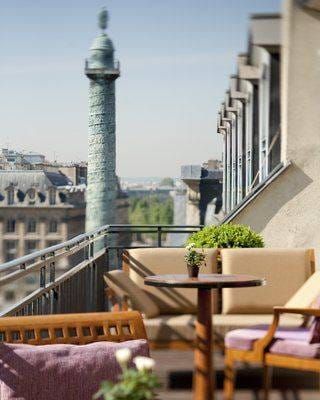
The first hotels awarded the Palace distinction were: the Plaza Athénée, the Bristol, the Meurice, the Park Hyatt Vendôme, then the Hôtel du Palais in Biarritz, Les Airelles and Cheval Blanc in Courchevel, and the Grand-Hôtel du Cap-Ferrat in Saint-Jean-Cap-Ferrat.
There were 30 candidates in the first selection round, including some grand hotels: the George V and the Ritz in Paris, the Negresco in Nice. None of them were selected. At the time, no one really understood that choice, which is why the decree needed adjusting, to bring more transparency to the process.
Why? Hotels had to meet a set of very precise criteria, along with others that were more subjective, such as the consistency and speed of service, room size, a multilingual team, a spa, exceptional dining, and the history or architectural quality of the building. These criteria were set by Atout France, the French tourism development agency.
The purpose of this distinction is to enhance the standing of French luxury hotels on the international stage, where competition abroad is becoming ever fiercer, particularly with the recent openings of luxury hotels run by Asian operators, such as the Shangri-La and the Royal Monceau. The Palace label is awarded for five years and is no longer renewed automatically.
Today, 31 five-star hotels hold the Palace label:
The creation of the Palace label has allowed France to structure and showcase an excellence that already existed within its greatest hotels. It brought a framework, recognition and international visibility, in the face of ever fiercer competition.
But beyond the criteria and the rankings, the real question remains the experience itself. A Palace cannot be reduced to a set of standards, however high they may be. It has to be capable of creating emotion, a relationship, a memory.
In my vision of hospitality, a Palace is, above all, a place that takes care. A place where every detail is designed for the guest, yet never tips into mere display. That form of generous, deeply human hospitality is what will always make the difference, far beyond any label.
Share this article with a colleague, a client or a partner.
That is often how an idea enters a house, and then its habits.
What you say about it matters more than what I say.
A keynote, a mission, an article in the magazine: if my work has been useful to you, a few lines on Google are worth more than any argument.
Leave a review on Google →