Business models, heritage, financing, transmission, wellbeing, know-how: the director of the EquipHotel trade show describes a hotel industry that no longer has a single model.
Our profession has never had so many reasons to doubt, nor so many fields to explore.
Land is scarce, building permits are hard to obtain, and the cost of construction and financing weighs on every project. Recruitment remains tight, environmental requirements are tightening, and guests expect at once more meaning, more comfort and fairer prices. In this context, the question is no longer which hotel model to imitate, but which one to invent.
That is exactly what the theme chosen by EquipHotel for its 2 to 5 November 2026 edition says: plural hospitality. The show breaks it down into three axes: hospitality on every ground, from campsite to palace and from aparthotel to youth hostel; hospitality of experiences, from the room to the spa and from the lobby to the restaurant; and reasoned hospitality, which works with the economic and environmental constraints of the moment.
Plural hospitality is also the hospitality of disability, and each of us may, one day or another, be confronted with it: an accident is all it takes. The Senses Room, to be found in Hall 7.1, stand P032, is a show hotel room and bathroom, a laboratory of ideas proving that it is possible to combine luxury, cutting-edge home automation and total inclusion, in a sensory design where accessibility becomes invisible. It was imagined in 2014 by Francis van de Walle, who passed away in May 2025.
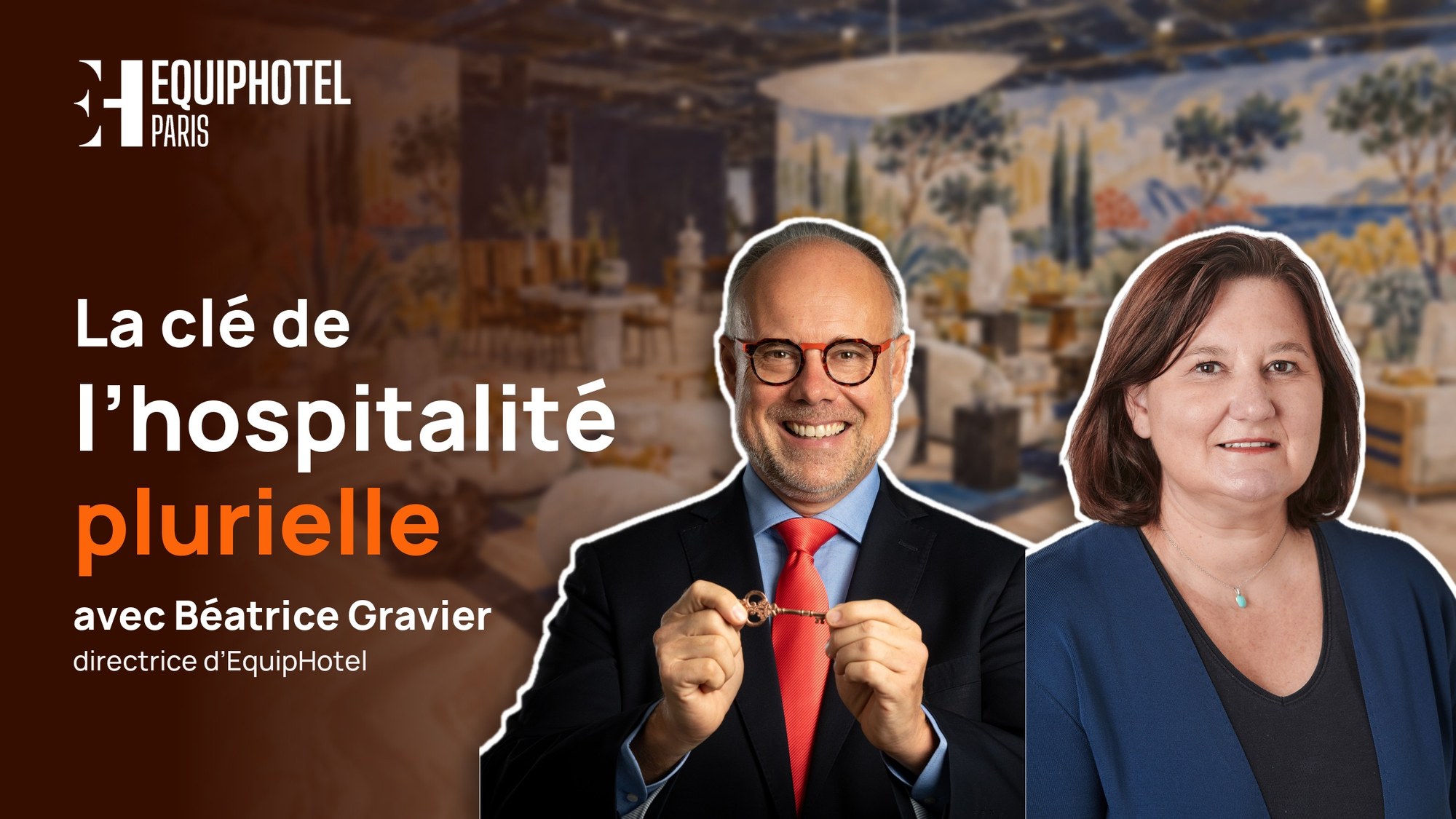
We met with Béatrice Gravier, director of the show, in a lounge of the Four Seasons George V in Paris. We have known each other for eight years, and I thank her for giving me this time, a few months before an edition she has been preparing for a long while. Before EquipHotel, she led the commercial strategy of MIPIM and MAPIC for ten years, two real estate gatherings.
We covered most of what occupies the leaders of our sector today: the diversity of models, the return of the territory, the financing of heritage, the openly accepted place of profitability, the three professions that make a project, transmission between generations, wellbeing that goes beyond the spa, and French know-how. Here is that conversation.
Why does the hotel industry no longer have a single model? Where does this theme of plurality come from?
For decades, the question put to a hotelier was: which category do you belong to? It has become: what promise do you keep, and for whom? The show has moreover reflected this shift in its own organisation, dividing its 1,200 exhibitors into four universes, Design, Tech & Services, Wellbeing and Foodservice, rather than into product categories.
From an observation, quite simply. Right now, we see a crazy diversity of hotel models appearing, a little more every day. It is not a communication trick, it is what we have before our eyes.
And it is not only about the product. There is the way of designing the establishment, yes, but also the way of running it. With which team, how, with whom. It is quite broad. And the difference with a few years ago is striking: the diversity of today’s hotel projects bears no comparison.
Hotels of the territory: why is the local becoming a model? Is the territory taking its revenge on the city?
Local roots were long treated as a touch of soul, a few regional codes borrowed from the decoration. They are becoming a foundation of the project, because an establishment that could be transplanted elsewhere without anything changing has no story to tell, and becomes interchangeable at the first price trade-off. The show extends this thinking with the École nationale supérieure de création industrielle, around hospitality that creates memories.
There is the urban, and there is the territory. We see a very clear rise of hotels of the territory, with many more conferences than usual on local roots.
How do you finance a hotel project in an old building? Why does the sector so rarely tackle investment head on?
This is where one of the sector’s deepest movements is playing out. The market summaries published in early 2026 by BNP Paribas Real Estate and Cushman & Wakefield converge: nearly 3.9 billion euros were invested in French hotels in 2025, which places our country at around 30% of the hotel capital committed in Europe. But the scarcity of land and the cost of construction mean that the transformation of existing buildings now outweighs new construction. The old building is no longer a romantic curiosity, it has become the most realistic path. You still have to know how to finance it.
You inherit an old house, a mill, and one day you tell yourself: I am going to make something of it. This year, we have a conference with the Caisse des Dépôts on reinventing heritage. Institutional players nobody expects at a classic hotel show, who come to explain which financial model makes it possible to keep this kind of place alive.
It is neither design nor product. There is a very strong dynamic around hotel investment and building the economic model, especially in a context where everything is tighter.
Must a hotel be profitable to remain hospitable? What are the keys to success?
Yes, and profitability is not the enemy of hospitality: it is the condition of its survival. The question will seem blunt to anyone who grew up in a profession where talking about money passed for a lapse in taste. It has nevertheless become central, and Béatrice Gravier’s answer comes down to three professions that must talk to each other very early.
Plural hospitality is also about new projects within a reasoned framework. We must pay attention to ecology, and it has to be economically viable. We are less afraid of these words today. It has become a little less taboo to say that it has to be effective, efficient, profitable, with a long-term vision.
For a project to last, there are three things, and for me this is the real structure of the sector. First the vision: we put many owners, investors and operators on stage, so that they share their direction and their good practices. Then the suppliers, who will say concretely what is possible and what is not. You may have an idea, then there is a technical reality, that of the field and the equipment. Finally the architects and designers, the link between the investor and the manufacturer, who will test your ideas and refine them.
The investor, the manufacturer, the architect: these three pillars carry every hotel project, and I strongly believe in their convergence to build solid and lasting projects. This is also why we have an important momentum this year around the Entreprises du Patrimoine Vivant, these houses holding rare know-how labelled by the State. Several installations will be entrusted to architects, including Jean-Michel Wilmotte’s studio, with a maximum of EPV materials.
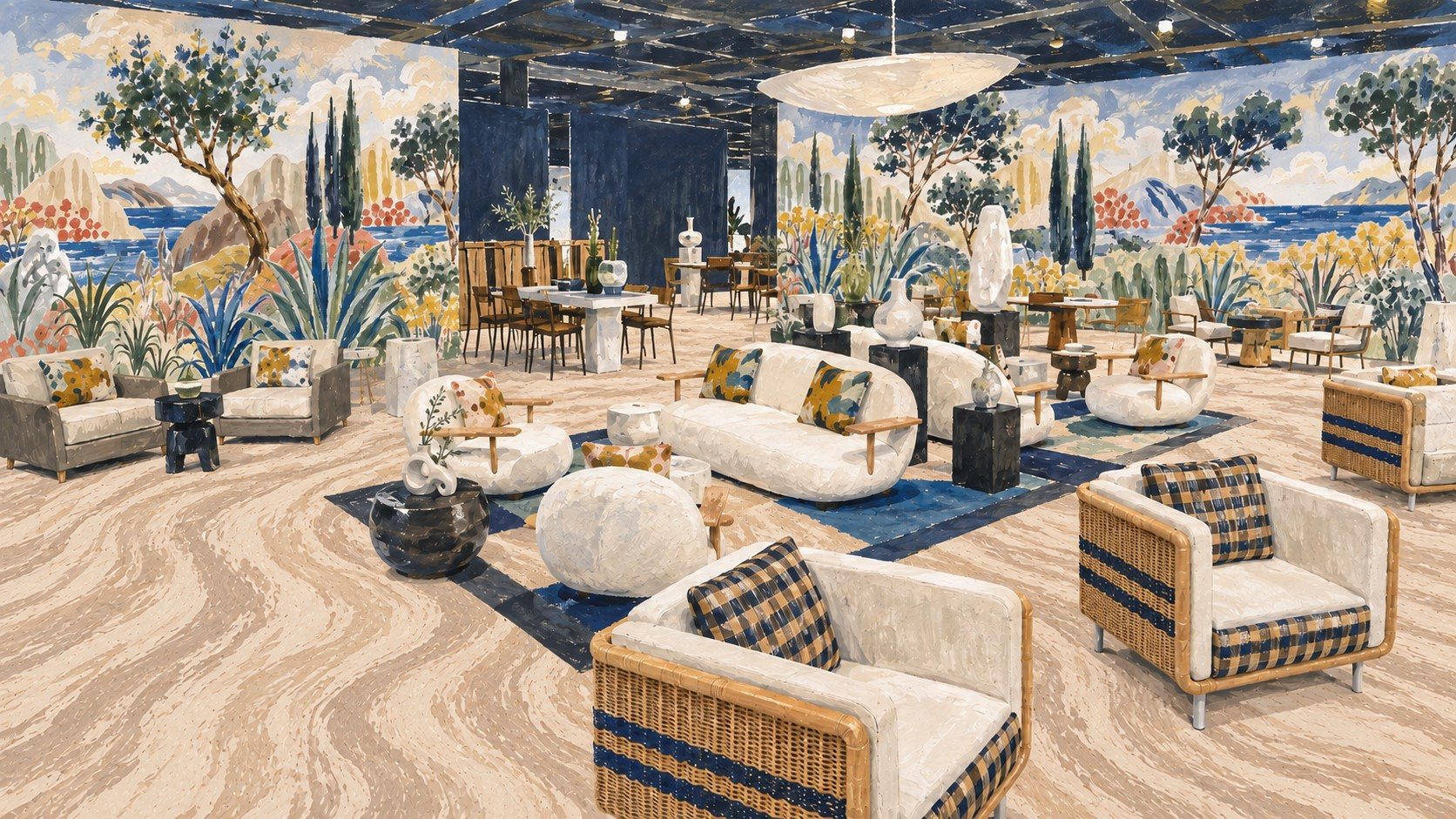
A hotel project rarely fails for lack of ideas. It fails when those who carry it do not talk to each other early enough. The show makes this meeting between professions visible this year in Exclusive Collection: nearly 1,000 square metres dedicated to premium and luxury hospitality, with the exhibition Do not disturb, an ode to intimacy, led with the Réseau Excellence des Entreprises du Patrimoine Vivant and the Mobilier national. Four creators offer their reading of intimacy there: Maison A&G with Abside, Mathilde de l’Ecotais with À la source du refuge, Emilieu Studio with La chambre nomade, and Jean-Michel Wilmotte’s studio with Poids-plume.
How do you retain young hotel talent? What is the show putting in place on the human side?
The sector struggles to recruit and even more to retain. The difficulty comes not only from working hours or salaries: it also comes from the way young professionals are viewed, still spontaneously associated with execution.
We propose two axes on this theme. The first is transmission. We work with the Young Hospitality Club, a recent network that has two heads: rather senior professionals, and younger ones. And I must admit that I was wrong at first. I told myself: young people, they will be kitchen assistants. Not at all. They are young people who already hold management positions in independent hotels, who wonder whether they will go towards a chain or elsewhere tomorrow, and who need to be guided in managing their careers. We will organise a major event around this connection between a generation with potential and established professionals.
This question runs through our whole programme. The Young Hospitality Club will host a conference entitled “leaders of today and tomorrow: thinking together about plural models” and we will welcome the national final of the “Next Gen Hospitality Challenge”, bringing together the best students in the Hospitality Master of the INNTO France network (Instituts Nationaux du Tourisme) to take on a concrete challenge: designing strategic recommendations for a partner hotel.
Our partnership with ENSCI, the École nationale supérieure de création industrielle, is part of the same movement: we have entrusted young designers with working on hospitality that creates memories, because their answers never look like those of manufacturers.
The second axis is a new partnership with Femmes du Tourisme, beyond even the hotel industry, with a round table and a meeting time. Bringing together profiles and experiences is also what plural hospitality is about. We want the show to be a place where careers meet, and not only a place where products are sold.
Is wellbeing in a hotel limited to the spa? What editorial choice did you make this year?
Wellness is returning to the heart of the show, in hall 4, and the wellbeing offer will this year be a true pillar of the universes that structure the show, alongside design, technology and food service.
But above all, we are devoting the morning conferences to wellbeing beyond the spa: sleep, nutrition, movement, longevity. How to take care of yourself every day, how to continue this routine at the hotel without breaking your habits, and how a stay can even set off virtuous circles for your health.
We have brought all this together in the Wellness Talks, a space designed for hotel directors, spa managers, consultants and architects. Three subjects meet there: wellbeing beyond the spa, longevity, and the operational excellence of spas. The format matters as much as the theme, with conferences but also debates, workshops and feedback sessions. And every afternoon, the Wellness Lounge hosts two one-hour round tables, bringing together the recognised experts and the most emblematic figures of the sector today.
This place given to wellbeing is not a passing trend. Our visitors come looking for very concrete answers on air, silence, disconnection and recovery, because their guests demand them.
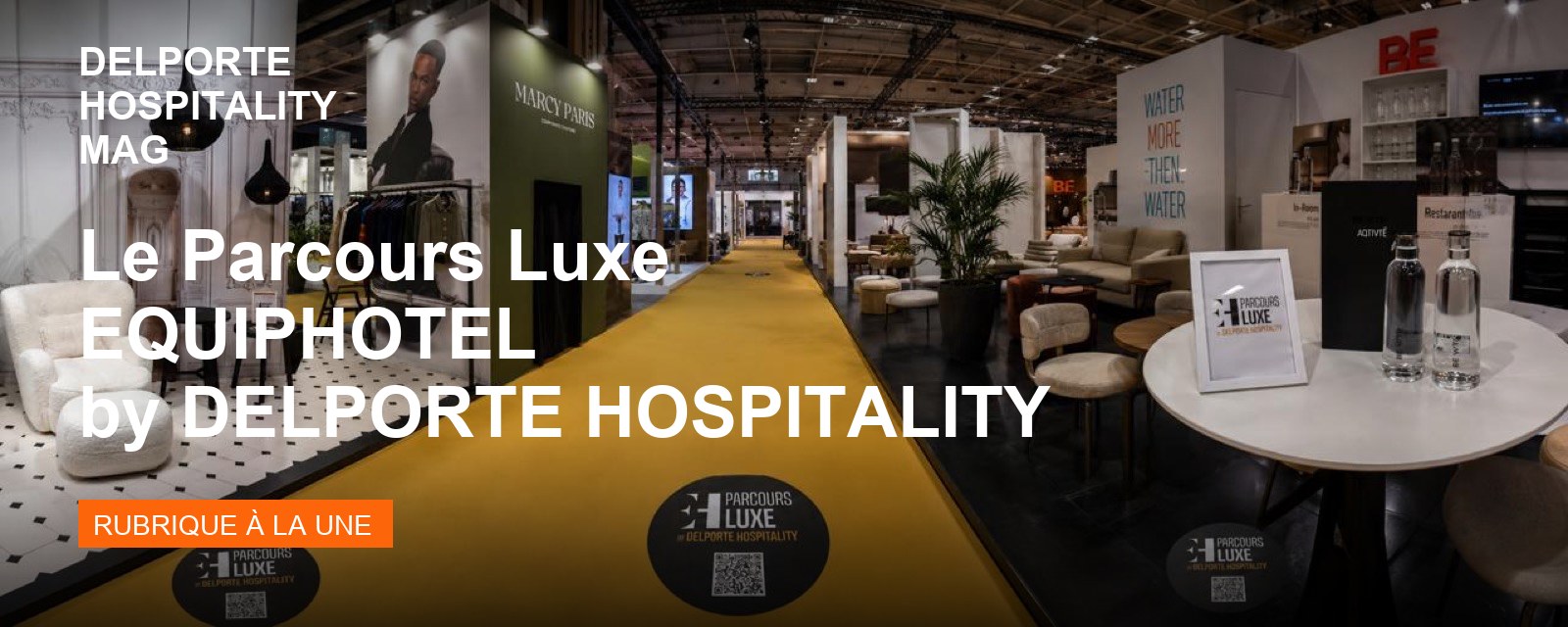
Let us now talk about the Parcours Luxe EQUIPHOTEL by DELPORTE HOSPITALITY that we have been building together since 2018?
It has become a very fine tool, and I say so all the more readily because it meets a real need. We have a whole clientele of palaces and high-end hotels coming to look for very particular suppliers. Yet the show is vast: 1,200 exhibitors spread across some thirty sectors and four pavilions, 40% of them international companies from thirty-six countries. The Parcours makes this search easier, and there is something deeply human in it, since the selection is made by a person who knows the subject. It is not a broad, automatic selection, it is a fine, individual one.
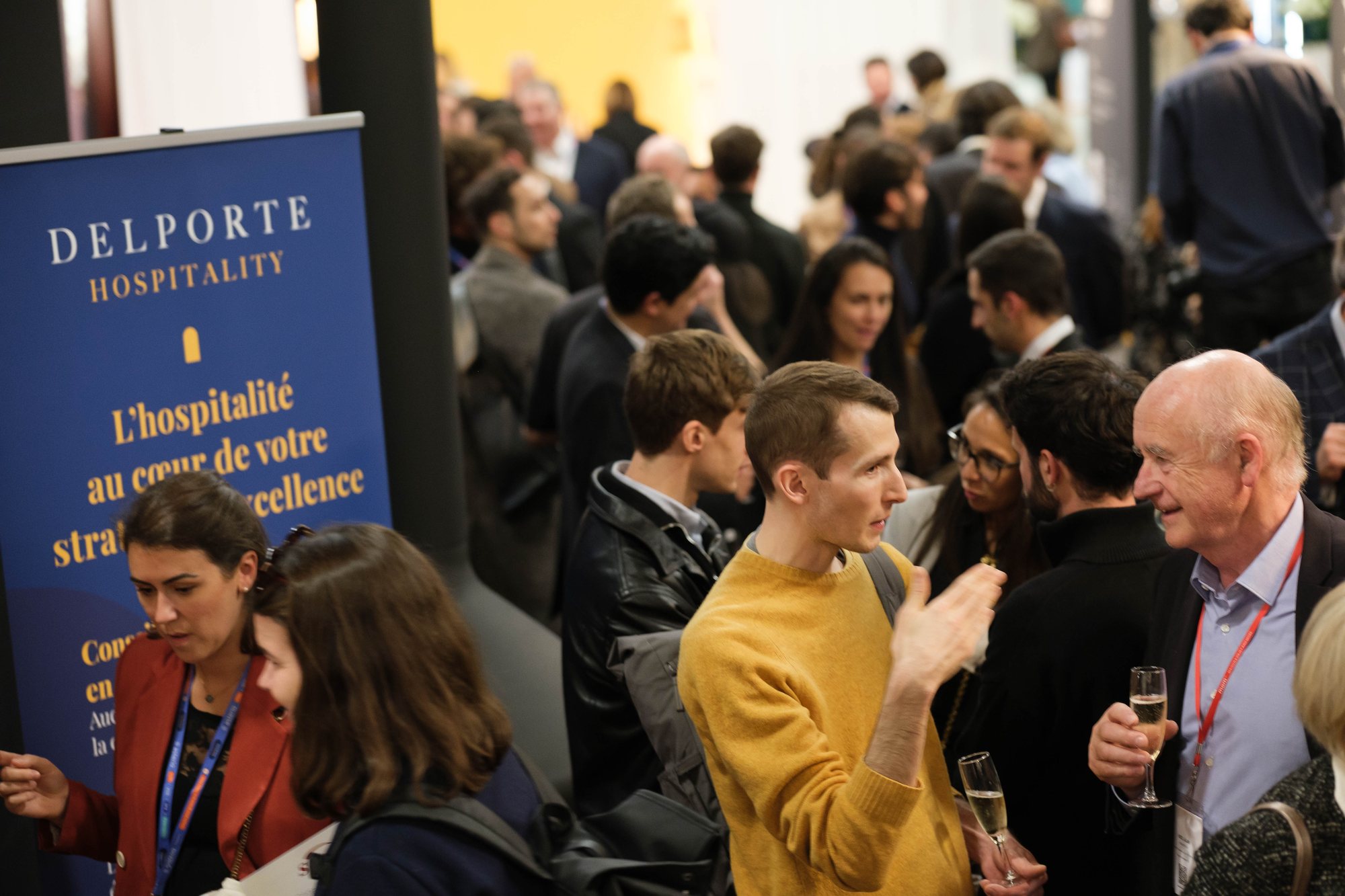
That is what gives it its value, and also what makes it demanding. You read each application yourself, you go back to companies when an answer lacks clarity, and no place can be bought. At a show of this size, a selection that everyone knows is not commercial changes everything for a director preparing a visit.
For the companies selected, the benefit plays out over three stages. Before the show, they appear in the Parcours materials we send to visitors while they prepare their visit, that is, at the precise moment when a director decides who to go and see. During the show, the official signage on their stand changes the nature of the visits they receive: the professional who stops does not pass by chance, they come. And after the show, they keep their selection and continue to use it.
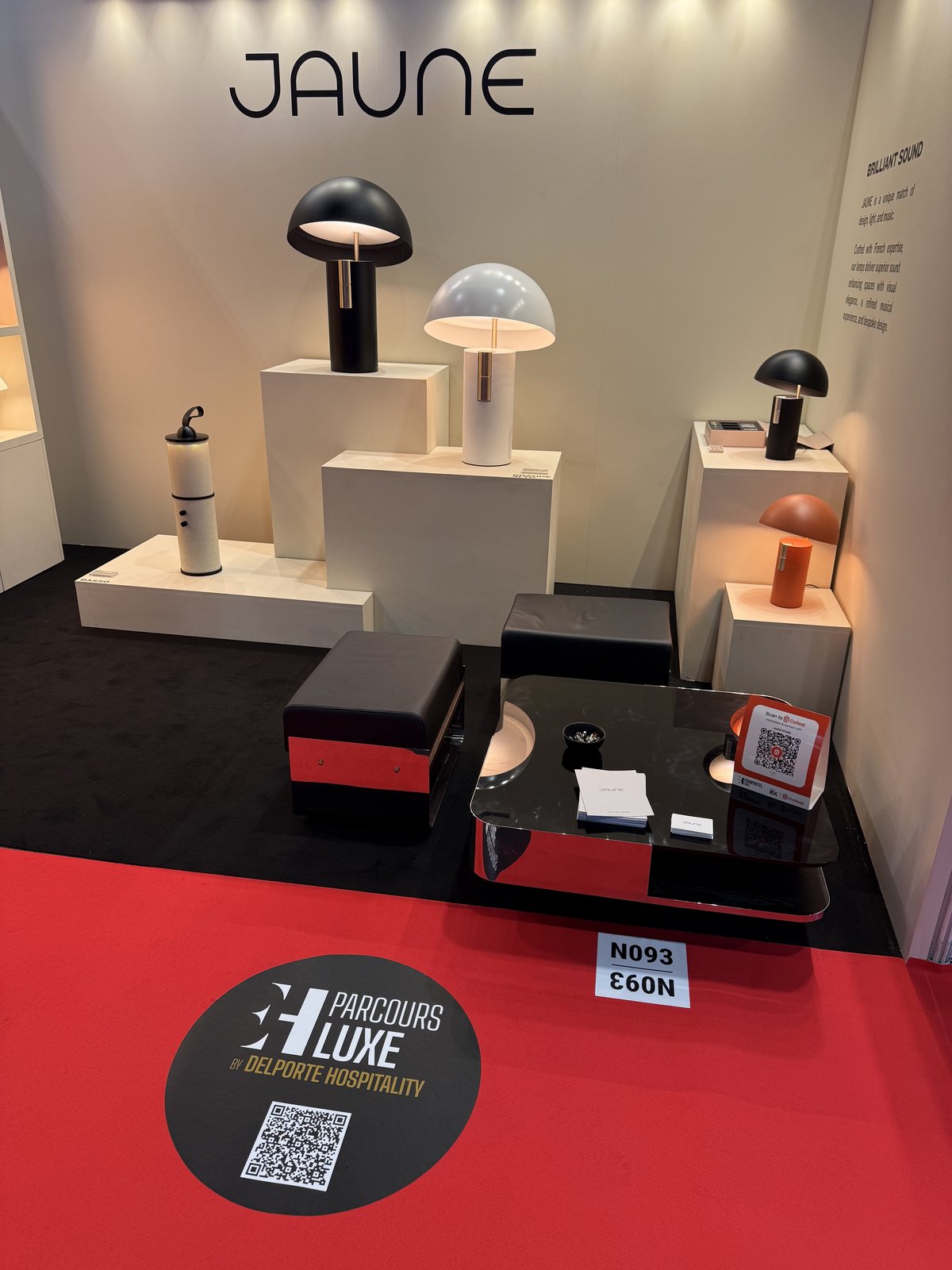
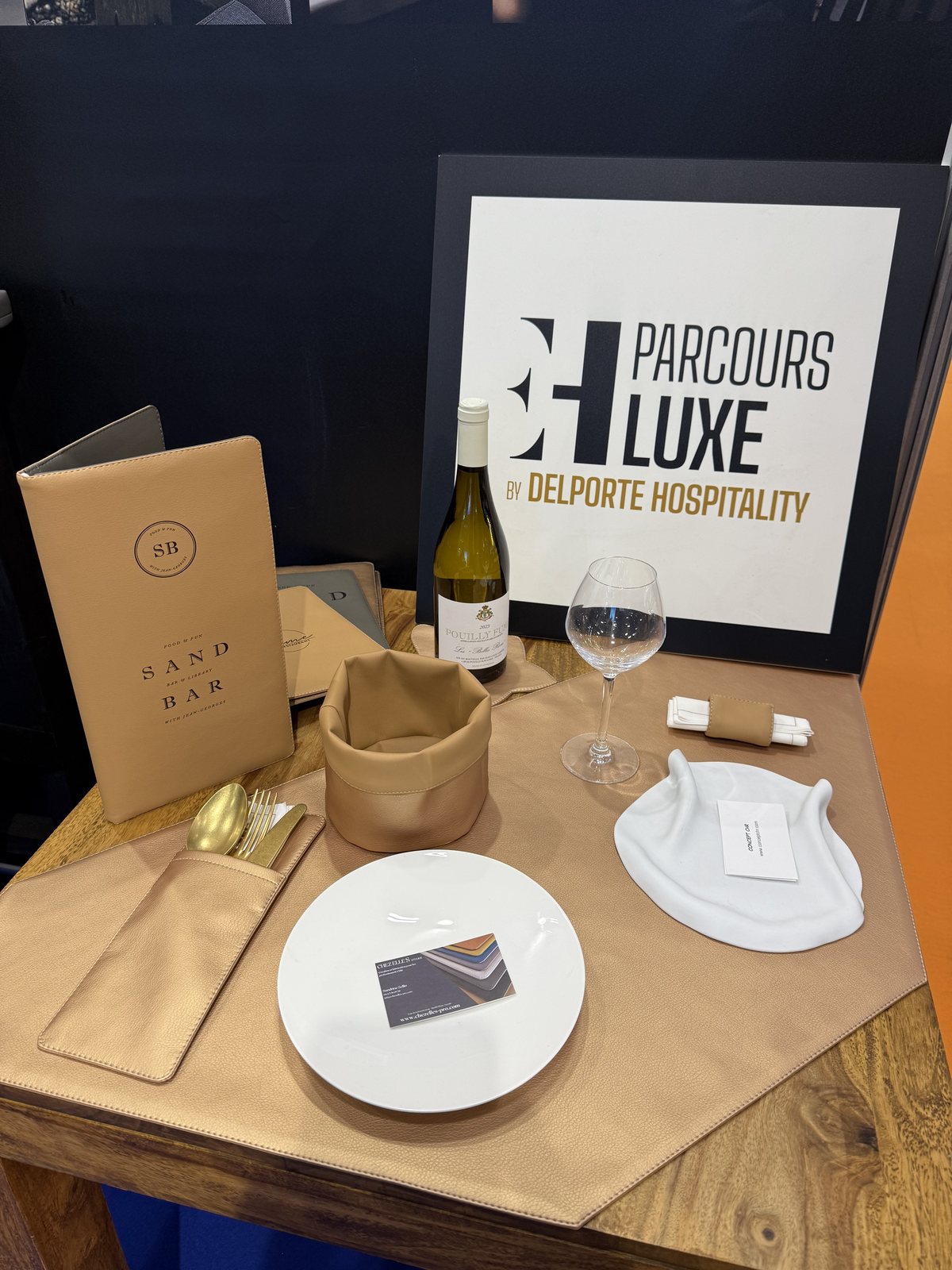
This last point is the one I find most interesting, and it comes from what Delporte Hospitality brings on top of us. A selected company is presented in the Delporte Hospitality Magazine, relayed on your networks, sent to your newsletter of more than ten thousand professionals, and cited in your conferences during the show. It also receives the official Parcours Luxe EquipHotel by DELPORTE HOSPITALITY logo, which it can reuse on its website, brochures and sales presentations well after November. No exhibitor can afford this kind of endorsement alone.
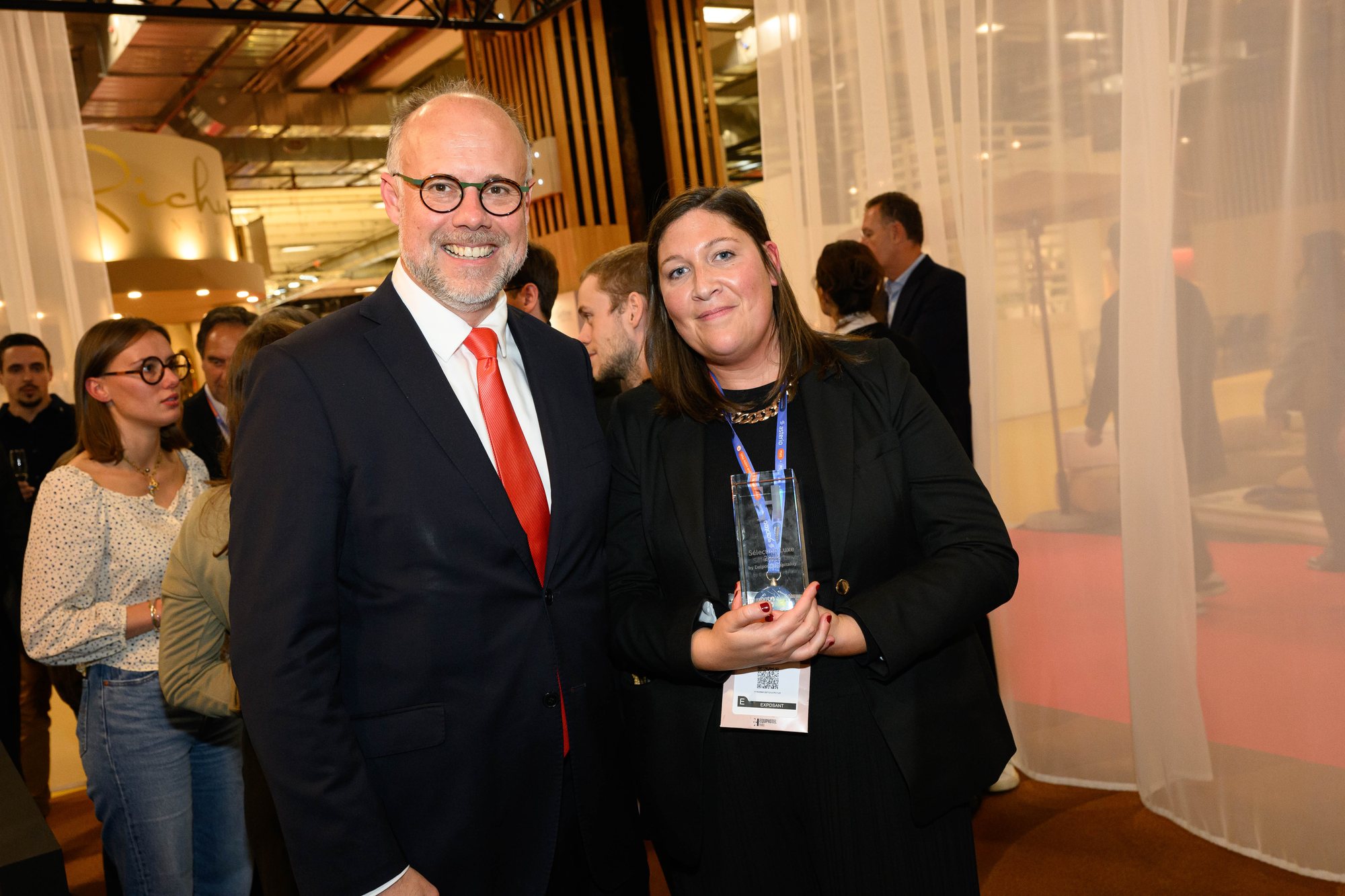
And let me tell you something. I went to another show, and an exhibitor had hung her Parcours Luxe EquipHotel by DELPORTE HOSPITALITY, framed, on her stand. At another show. For her, it was a mark of quality: look, I am in the Parcours Luxe EquipHotel by DELPORTE HOSPITALITY. Little by little, it is our wish that it becomes a kind of label. That is no small thing, because an exhibitor who claims their own selection extends the show well beyond our four days.
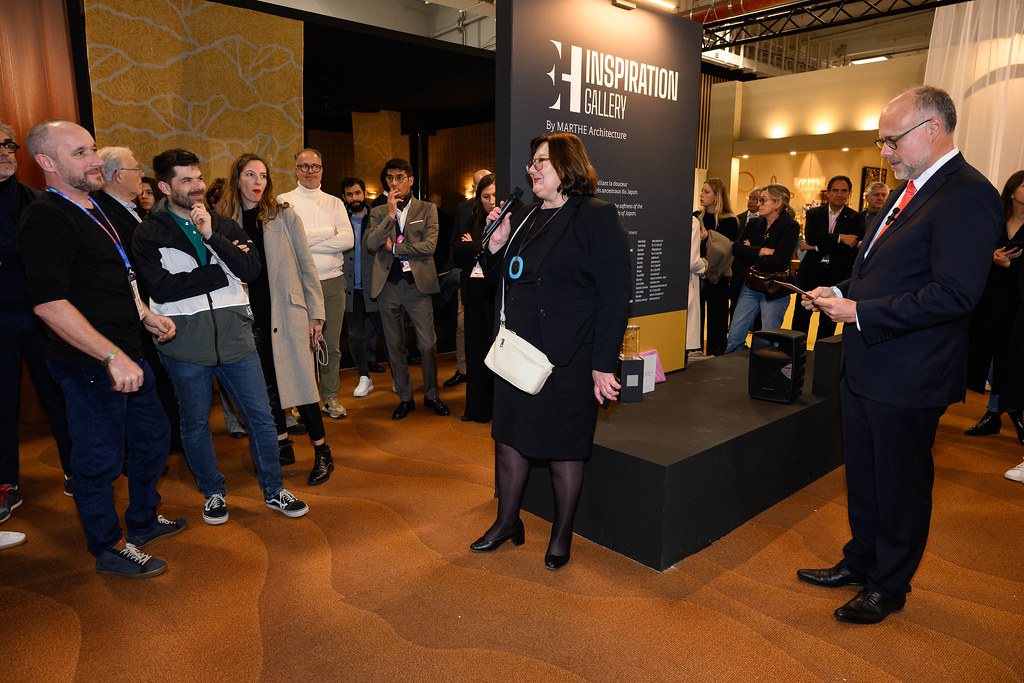
And once again, this guides hoteliers looking for very specific things, taking them straight to where they will find the supplier or partner who will meet their needs.
The rules, the calendar and the laureates of the Parcours Luxe EquipHotel by DELPORTE HOSPITALITY are gathered in the dedicated section of my website: discover the Parcours Luxe EquipHotel by DELPORTE HOSPITALITY page.
Share this article with a colleague, a client or a partner.
That is often how an idea enters a house, and then its habits.
What you say about it matters more than what I say.
A keynote, a mission, an article in the magazine: if my work has been useful to you, a few lines on Google are worth more than any argument.
Leave a review on Google →