Contemporary Art and the Guest Experience: When Luxury Hospitality Creates Meaning
In luxury hospitality, decor can no longer be treated as a purely aesthetic exercise. It has become a strategic lever in service of the guest experience. Every material, every light, every artwork helps build a narrative, give meaning to a place and create a lasting emotion.
It is precisely in this approach that contemporary art finds its full place. Far more than a decorative element, it creates a connection between the place, its environment and the guest. It fully embodies what I call sense of place: the ability to root an experience in a territory, a culture, a history.
The LVMH group, through its Cheval Blanc brand, illustrates this vision perfectly. By weaving artworks into the very heart of the hotel experience, the goal is no longer simply to create an exceptional place, but a coherent universe, where every detail contributes to a form of generous hospitality: a hospitality that nourishes the imagination, stirs emotion and stays with the guest throughout their stay.
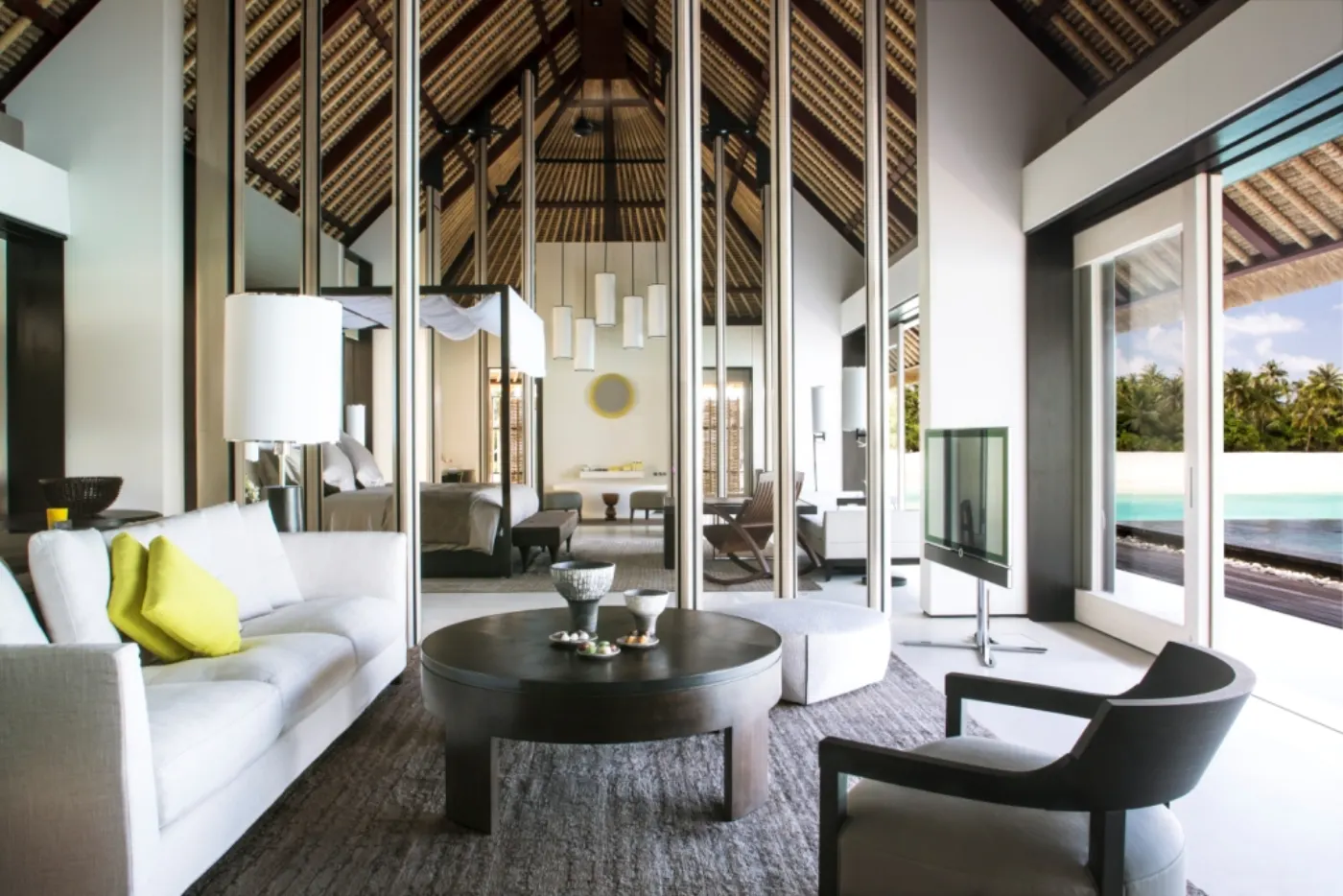
The example of Cheval Blanc Randheli in the Maldives, with the works of Vincent Beaurin, illustrates this approach very concretely. An approach where art becomes a structuring element of the experience, not a simple addition.
It is always interesting, and important, to bring meaning into a hotel's decor. A hotel is a wonderful place to give an artist free rein. Their works allow guests to escape, spark their imagination and offer sources of inspiration. Whether a hotel sits in a city centre or by the sea, contemporary art elevates the guest experience.
LVMH moved into hospitality by creating the Cheval Blanc brand. The group is deeply attuned to contemporary art. Its chairman, Bernard Arnault, is a great lover of art and culture; he leads numerous patronage initiatives that enhance the LVMH group's image. The group is currently preparing to open the Fondation Louis Vuitton museum for creation, a building located in the Bois de Boulogne in Paris. It is therefore no surprise to find this same interest in contemporary art within the Cheval Blanc hotels.
A Circle of Fullness at Cheval Blanc Randheli Resort in the Maldives
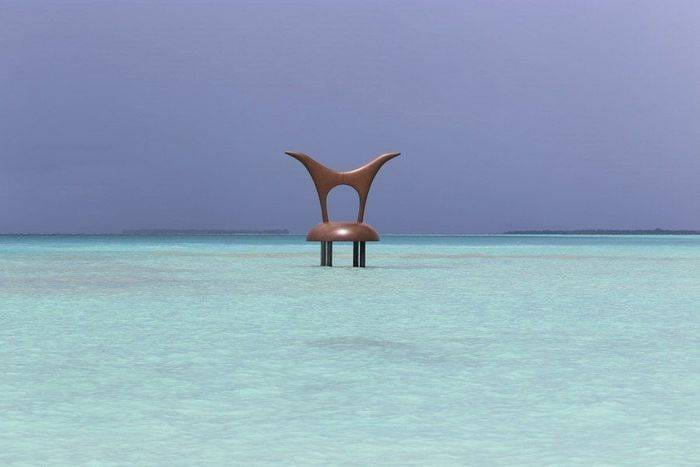
LVMH commissioned the artist Vincent Beaurin to create two major artworks for this hotel. First, guests are welcomed by Arch, a monumental copper artwork set in the water. This piece is the alter ego of Bruno Peinado's horse at Cheval Blanc Courchevel.
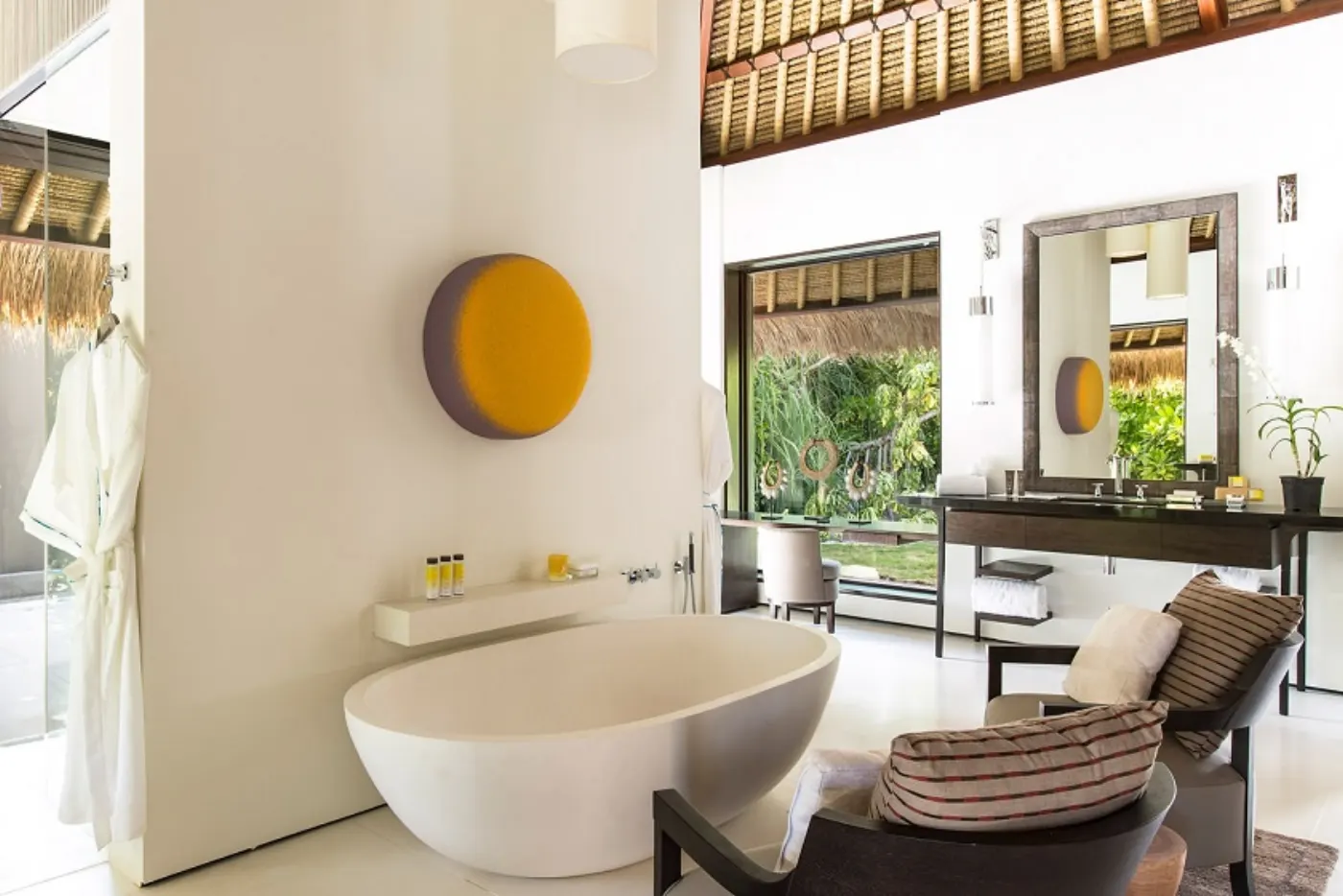
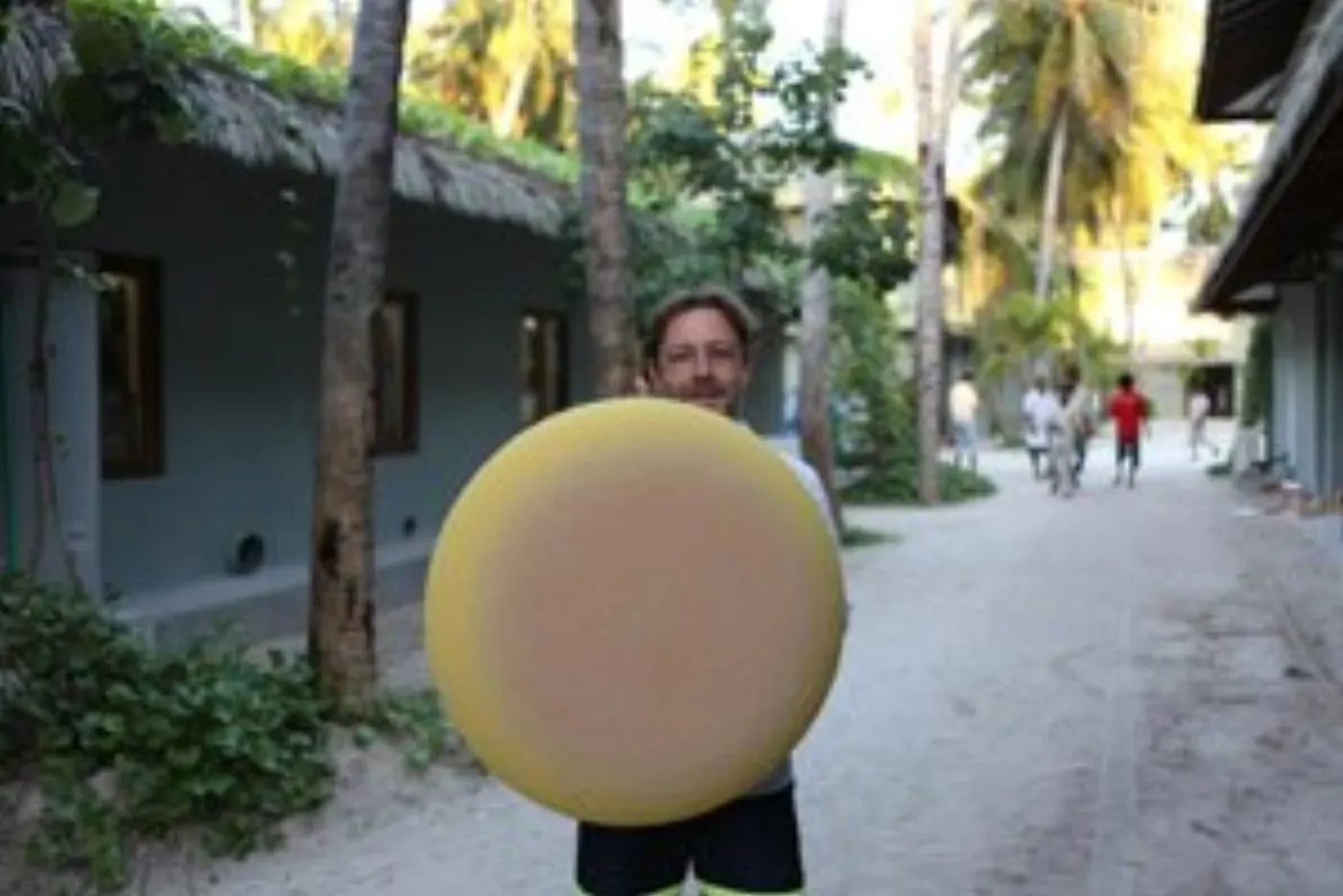
Guests then discover a second work, called Couronne, spread across the hotel's 46 villas. It is made up of 46 coloured spots exploring the richness of a wide chromatic spectrum to produce an effect that is both stimulating and striking. Made from marble sand and quartz, each spot is unique and reveals fascinating colours.
Vincent Beaurin explains: "In each villa, a spot is placed exactly along the axis of the entrance, at the other end of the nave, just above a large bath that intimately recalls that everything here is built on water, a lustral water, much as I identified my spots with the circular atolls I flew over on the seaplane that brought me to Randheli."
What the Two Artworks Have in Common
The shape of the statue's base is comparable to that of the spots. Arch and Couronne share the same matrix, the same foundation. Arch rests horizontally on four symbolic pillars. The spots, meanwhile, are suspended vertically.
As Vincent Beaurin puts it: "Arch and Couronne speak to each other like a tree and its fruit, a whole astronomy of their own."
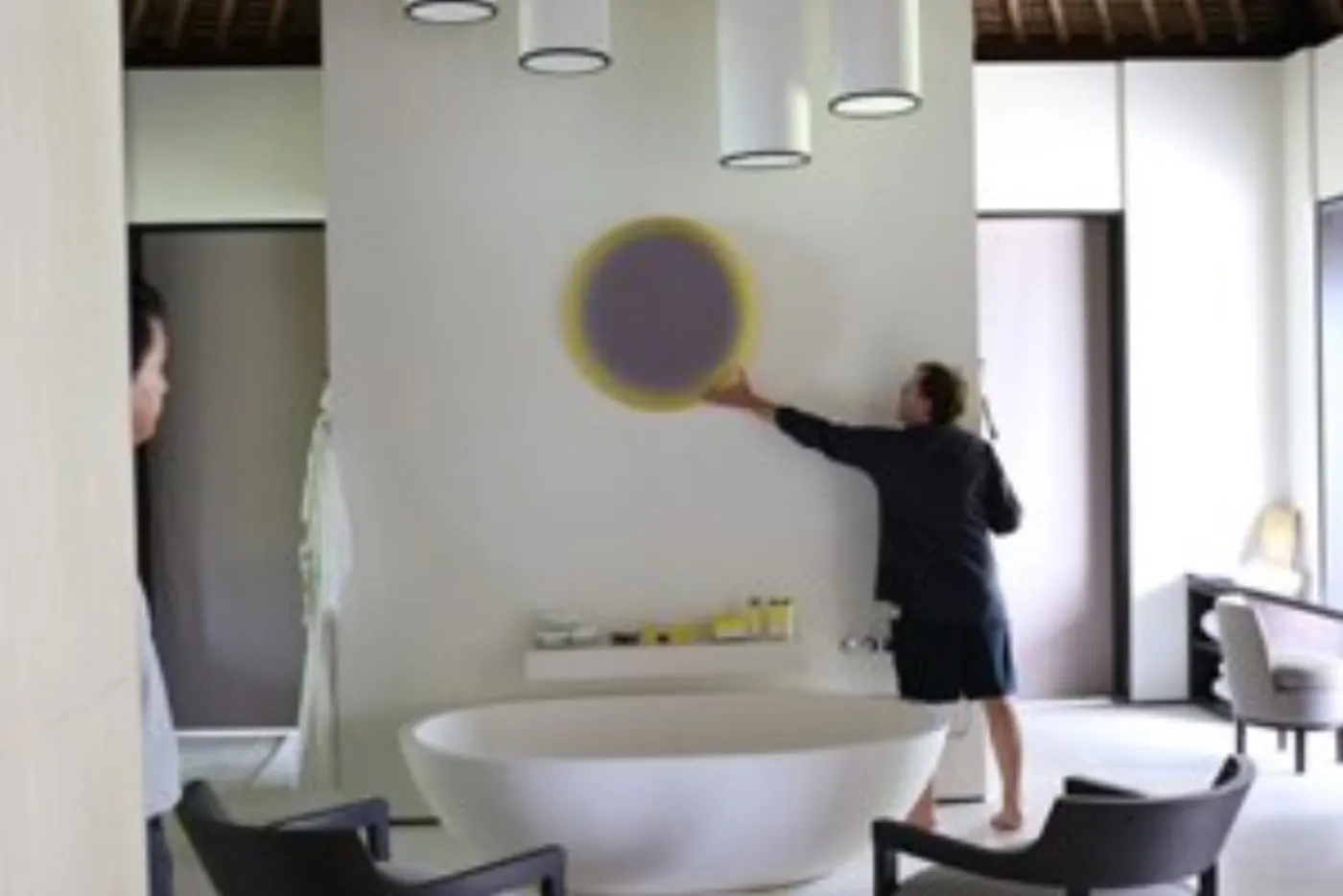
From a hotel operations standpoint, it is worth asking how these artworks are maintained in countries where the temperature hovers around 30 degrees, not to mention the salt water that makes upkeep even harder. Teams, and housekeeping staff in particular, need to be trained on everything related to cleaning them. It will be interesting to see how long these works keep their full splendour. To be continued.
Art as a Lever for Hospitality: Between Emotion, Coherence and Operational Rigor
This example points to a clear reality: bringing art into a hotel is never purely an aesthetic or cultural choice. It calls for a global reflection on the guest experience, on the coherence of the place and on how every element helps tell a story.
Vincent Beaurin's works at Cheval Blanc Randheli illustrate this logic perfectly. They are not there simply to be looked at. They structure the space, speak with the architecture and extend the guest's relationship with their surroundings. They help create an immersive experience, one where guests are invited to feel as much as to observe.
But this artistic ambition also demands operational rigor. Training teams, planning maintenance, weaving these works into daily operations: all of this is a reminder that the guest experience is not decided only at the design stage, but sustained over time.
In my reading of hospitality, it is precisely in this balance that a place's performance is built. Generous hospitality is never just an intention. It rests on the ability to align concept, design, teams and operations. It requires thinking of a place as a complete system, where every detail has a role to play.
Contemporary art, when integrated with real precision, becomes a formidable lever. It helps create meaning, leave a lasting impression, and set a property apart in an increasingly competitive luxury market.
And that is undoubtedly one of the major challenges ahead: designing places capable of telling a strong, coherent, embodied story, a story guests will never forget.
Do you have a reaction to this article? Would you like to share one of your own experiences? Do you have a question? Feel free to reach out by email.
Share this article with a colleague, a client or a partner.
That is often how an idea enters a house, and then its habits.
What you say about it matters more than what I say.
A keynote, a mission, an article in the magazine: if my work has been useful to you, a few lines on Google are worth more than any argument.
Leave a review on Google →