At the Plaza Athénée, decoration cannot be reduced to a simple aesthetic signature. It is part of a broader vision: that of evolving an iconic palace of Parisian luxury hospitality without ever breaking with its heritage. In a climate marked by the emergence of new luxury hotels and rising expectations around guest experience, the question was not only how to renovate, but how to reposition.
The ambition carried by François Delahaye was clear: to keep the Plaza Athénée alive through time, anchoring it in a measured modernity while preserving its historic identity, in other words, imagining “the palace of tomorrow.” It is within this dynamic that Marie-José Pommereau’s work takes on its full meaning. For more than fifteen years, she has guided the gradual transformation of the rooms and suites, developing an approach in which decoration becomes a lever of experience. Far from a fixed project, this is a continuous, almost invisible evolution that keeps the place desirable without ever losing its bearings.
This positioning raises an essential question for owners and architects: how do you evolve a luxury hotel without betraying its soul? The Plaza Athénée offers a singular answer, grounded in timelessness, coherence, and a refined understanding of its surroundings, those of Avenue Montaigne, between heritage and haute couture.
Decorating the Plaza Athénée
After several years of experience on private client projects, Marie-José Pommereau became the decorator of the Plaza Athénée more than fifteen years ago. She continued her work as new rooms and suites were created in the hotel’s new buildings, along with a large share of the bathrooms.
How do you see the French art of hosting? What inspires your work at the Plaza Athénée?
If the art of hosting at the Plaza Athénée has evolved so well over more than a decade, it is thanks to François Delahaye and Laurence Bloch, who play their roles as hosts to perfection. They wanted to turn this classic hotel into the palace of tomorrow!
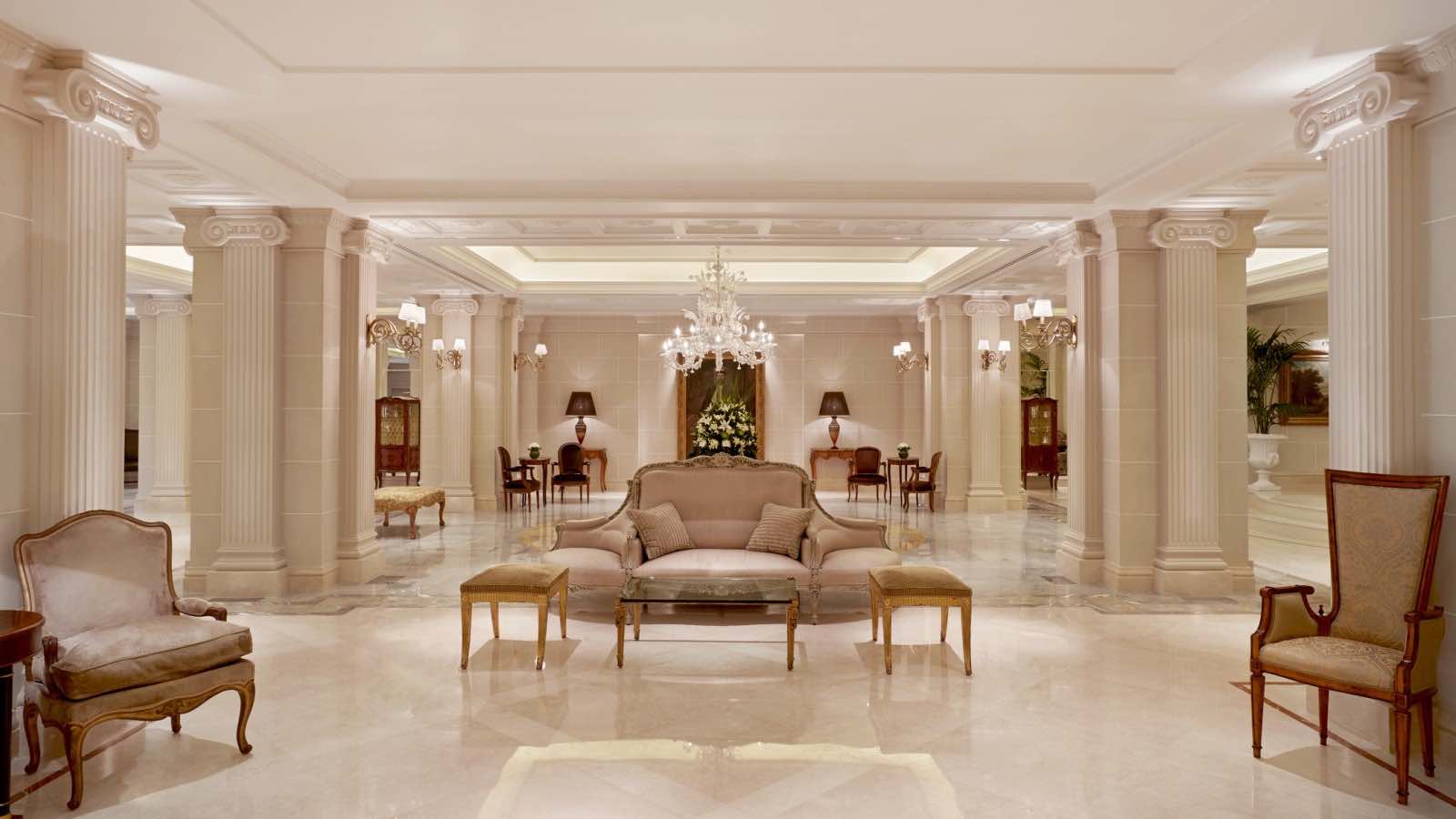
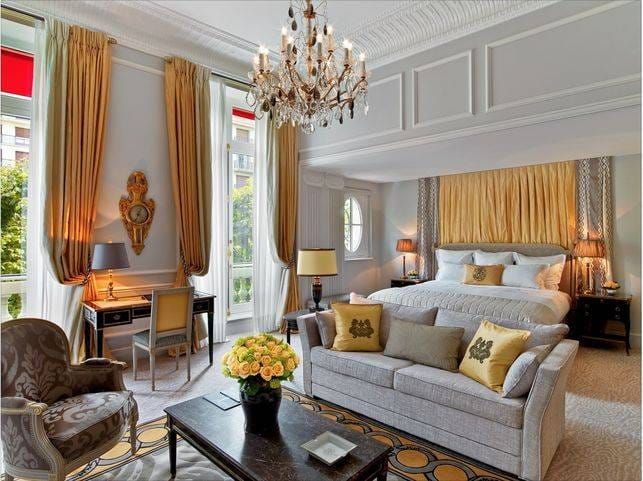
I designed a decor inspired by the 18th century, given a fresh reading. On the first six floors, only the top two are more modern, decorated in an Art Deco spirit.
The decoration of the rooms makes them warm and welcoming: guests feel at home. The rooms, and especially the suites, are designed like private apartments. Every one of them is personalized.
All the materials used are rich and luxurious. The fabrics are silky, and details such as the cushions are embroidered with the hotel’s monogram. Floral fabrics are avoided as too dated; I prefer masses of plain silk in shimmering colors mixed with refined grays and beiges. Many of the paintings and art objects are sourced from antique dealers.
Only the renovated bathrooms bring a touch of modernity through their brightness. The marble chosen is pale, and the play of decorated mirrors creates a lovely sense of perspective.
The world of Haute Couture on Avenue Montaigne can be found in every one of these details.
Suites Designed to Feel Like Home
For some fifteen years, the hotel has worked with a decorator who continually renovates its suites and rooms (now numbering 54 and 154 respectively). Marie-José Pommereau therefore created the hotel’s new suites in keeping with her ongoing work. Her goal, from the very start, has been “to create spaces shaped by the dreams and expectations of our guests, that is, rooms and apartments that are always intimate and deeply private, which they will be delighted to return to every time they stay in Paris, as if they were coming home.”
The ambition is significant. Finding, or being, as comfortable as at home. Feeling at home while being elsewhere, traveling and discovering an atmosphere different from one’s own. These two feelings are, at once, opposites and complements.
The new suites and rooms are located in the buildings neighboring the heart of the hotel. You would not notice this as you move from one corridor to another. Let us not forget the expression “change everything without changing anything.” The guest therefore remains within the same atmosphere and has the impression that it was always designed this way. This is precisely what defines a timeless approach.
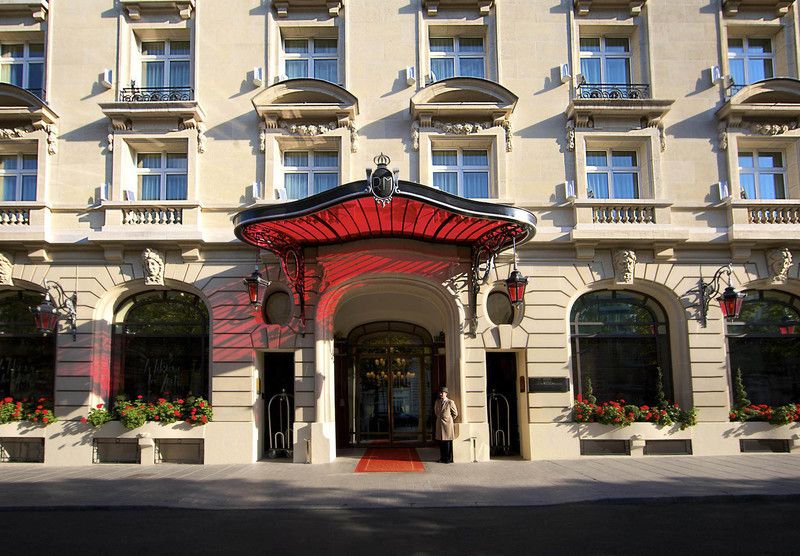
At number 29 Avenue Montaigne, above the Harry Winston boutique, the six newly created apartments offer incredible charm through their volumes and spirit, with a view onto Avenue Montaigne that is “pure couture.”
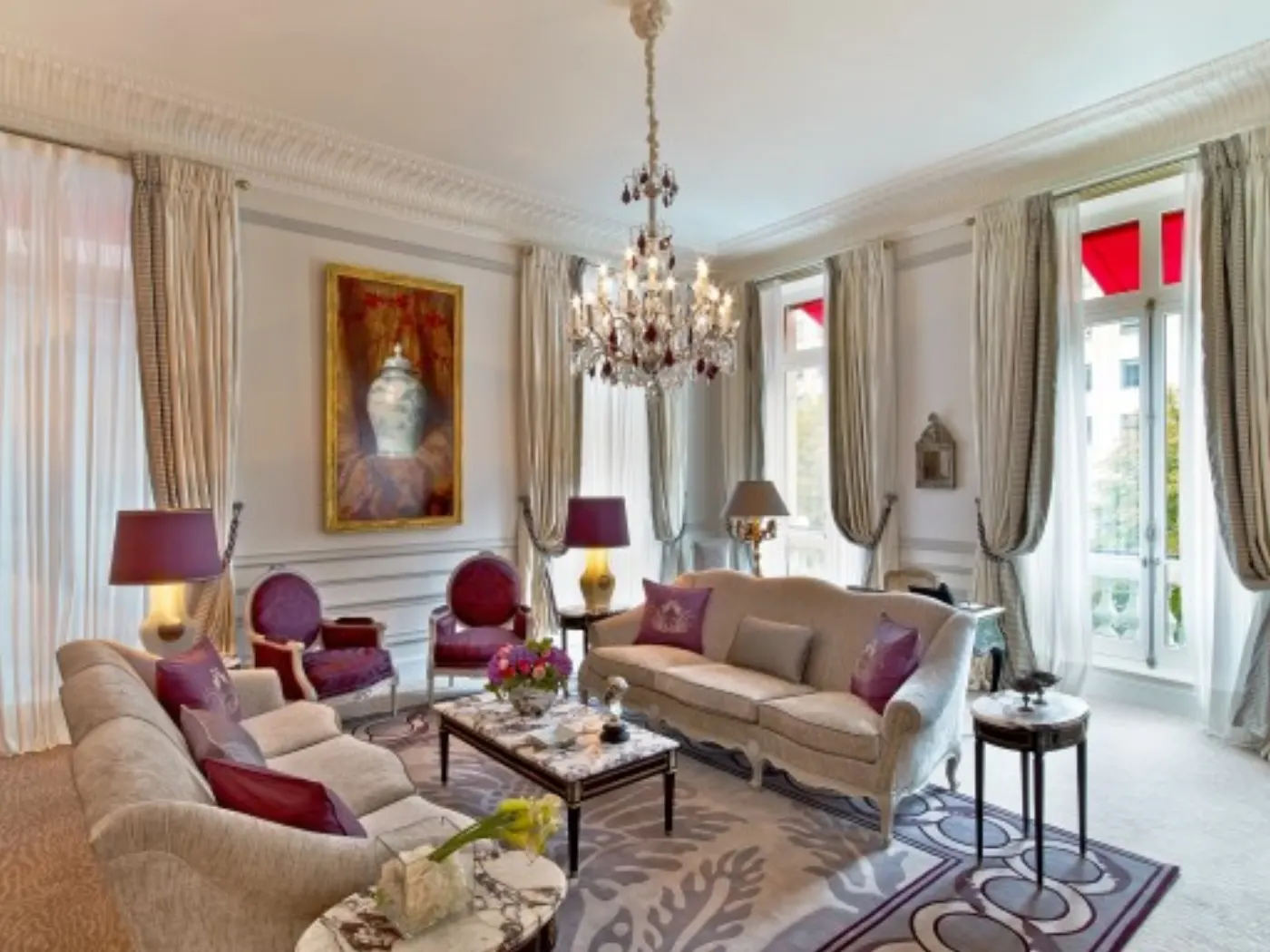
At number 21, this time above the Relais Plaza, the eight new keys, including two signature Eiffel suites, one Deluxe, and one Prestige, unfold in tones combining gray primarily with pink or mauve. The Signature suites benefit from a wide bow window, and a silver-framed window offering a view of the Eiffel Tower!
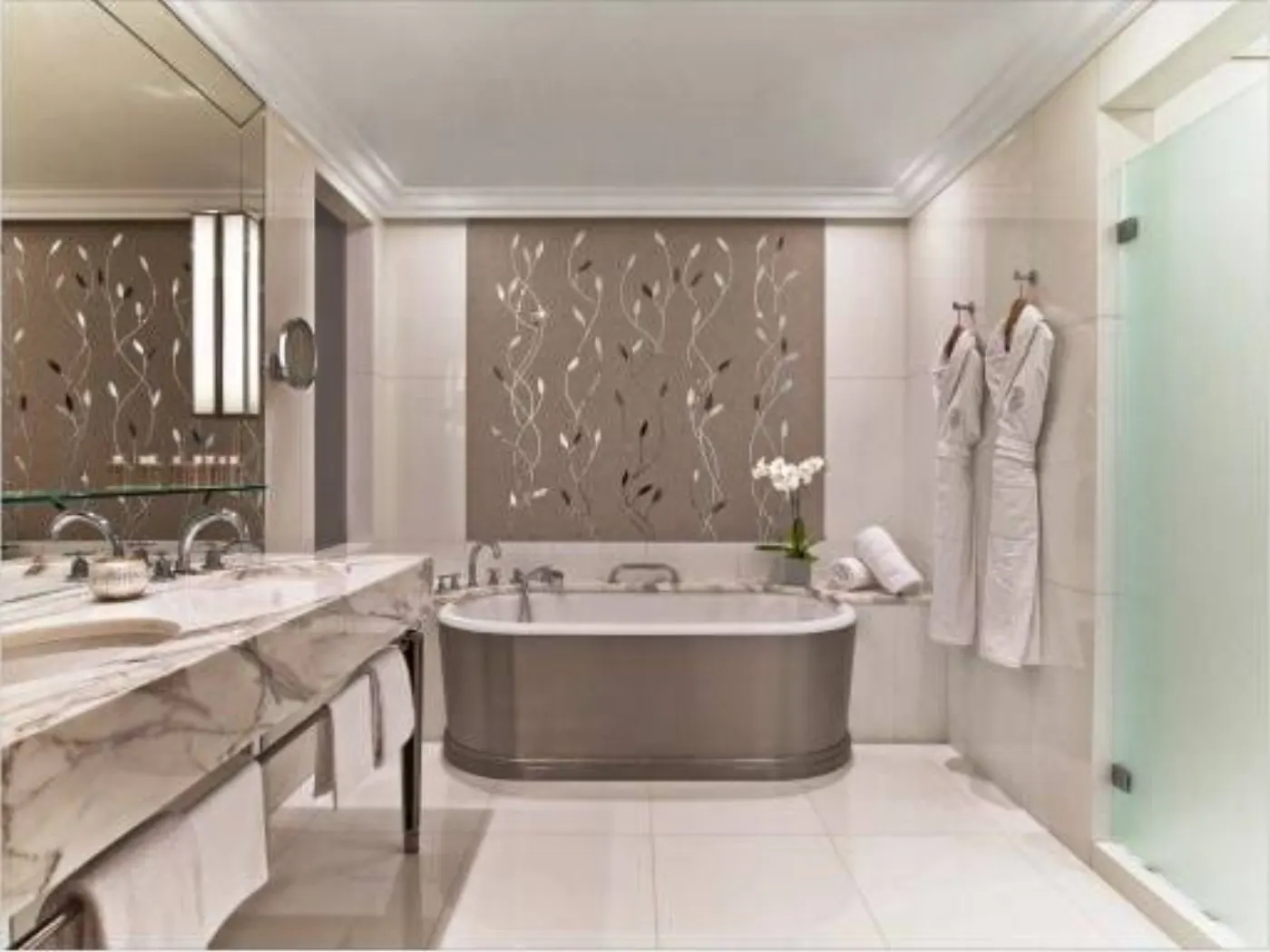
The bathroom is very bright. A white marble veined with gray, “Calacatta” from Carrara, illuminates the room from every angle. The pairing of mirrors with the remarkable mosaic beside the bathtub brings an unmistakable artistic dimension and a strong sense of space. The bathtub is large and invites rest. It is deep, allowing guests to fully enjoy the benefits of a bath. The hotel has installed “Toto” toilets, offering the very best technology available on the subject!
The furniture follows a distinctly French style known as Régence. It corresponds to the end of the Louis XIV style and the beginning of the Louis XV style. The cabinetry and woodwork bring the nobility and symmetry characteristic of the Régence style. The decorative arts hold a fine place at the Plaza Athénée, in harmony with the evolution of technology and contemporary design. For example, the light switches echo the graphic design of those found on the Orient Express train. It is a small detail, but one that shows just how important it is to successfully blend elements from different eras.
What to Remember
At the Plaza Athénée, decoration is not a fixed aesthetic exercise frozen in time. It is part of a continuous process, driven by a clear vision: to evolve the rooms and suites without ever breaking with the identity of the place.
The work carried out by Marie-José Pommereau illustrates an approach still too rare in hospitality: a constant dialogue between heritage, use, and modernity. The selection of antique furniture, the search for noble materials, and the attention paid to detail do not merely answer the codes of luxury; they contribute to building a coherent and lasting experience.
This logic is essential for owners and architects: designing a hotel is not about creating a decor, it is about conceiving a place capable of living, evolving, and remaining desirable over time. This requires surrounding oneself with partners able to understand the history of the place, its surroundings (here, Avenue Montaigne), and the ambition of the project.
More broadly, the decoration of a palace like the Plaza Athénée points to a fundamental truth: guest experience rests on a multitude of invisible choices, where every detail contributes to a subtle balance between familiarity and escape. It is in this ability to “change everything without changing anything” that much of the perceived value of luxury hospitality is played out today.
Share this article with a colleague, a client or a partner.
That is often how an idea enters a house, and then its habits.
What you say about it matters more than what I say.
A keynote, a mission, an article in the magazine: if my work has been useful to you, a few lines on Google are worth more than any argument.
Leave a review on Google →