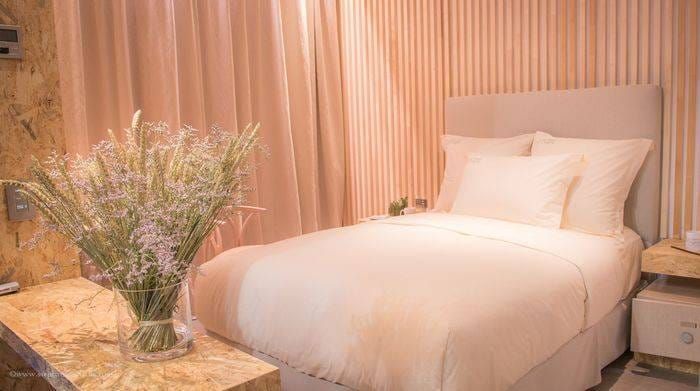
In 2016, at EquipHotel Paris, I presented the ORIGINE® Room by DELPORTE HOSPITALITY, imagined with Reda Amalou and Stéphanie Ledoux of the AW² agency. This room of the future was not meant to dictate a decor model or to predict what would happen the following year. It was a place of experimentation, to explore the needs, services and uses of a hotel room fifteen to twenty years later. Ten years on, which ideas have truly taken their place in hospitality? Which ones struggle to spread? And why do some obvious things, such as sleeping well in a hotel room, remain so hard to guarantee?
This review is also a way of explaining my work. At DELPORTE HOSPITALITY, I support owners, investors, operators and architects in designing or renovating hotels. The aim is to define, before drawing, the experiences and services that will give a hotel meaning for years to come. I also support suppliers in identifying uses for their products that they had not necessarily considered, in order to meet the needs of tomorrow’s hospitality.
What this article covers: what the ORIGINE® Room imagined in 2016, what has become reality ten years later, what remains uneven, and what this experience teaches about designing the hotel of 2036.
Why imagine the hotel room of the future and call it ORIGINE® for EquipHotel 2016?
The name ORIGINE was a deliberate choice: a return to the essential. A hotel room must first allow guests to sleep, regenerate, recover their energy and feel good. It was not enough to add technology or to draw a beautiful decor. I wanted to question habits and make visible new answers to lasting human needs.
I chose to work with AW², and met Reda Amalou and Stéphanie Ledoux, because their sensitivity to place, to lived experience and to environmental issues matched this approach.
The ORIGINE® Room by DELPORTE HOSPITALITY was a real hotel room, with its bathroom, built and open to EquipHotel visitors. It combined three ambitions: being energy-efficient, favoring bio-based and natural materials, and helping guests recharge and restore themselves. Its design also explored the modularity of spaces, with a fold-away desk, and new uses of the room. The point was not to show an accumulation of equipment, but to make another way of thinking about comfort, services and the guest experience tangible.
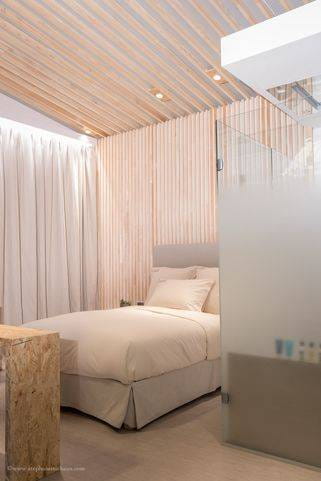
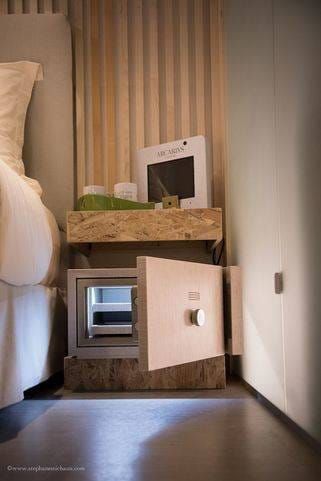
Together, we worked with manufacturers, sometimes suggesting applications they had never imagined for hotels. That is how I sought, among other things, to integrate a dawn simulator: the goal was to explore a use, not to display a gadget. How can a guest be helped to fall asleep better and to wake up more naturally? Working with suppliers is still part of my assignments: identifying new possibilities from their expertise.
The room also featured a robot able to bring objects to the guest’s door. In 2016, this was a first in France, and at EquipHotel, in a trade show devoted to hospitality. My intention was not to promote replacing staff with machines, but to raise, as early as then, the question of their future role in hotel service. That question is becoming more pressing with advances in artificial intelligence. It is important to anticipate tomorrow’s challenges now.
The ORIGINE® Room was one of the attractions imagined for EquipHotel 2016. Set up inside the show, it let visitors step into a real space, discover solutions and talk directly with the professionals who had designed them. This is what I particularly appreciate about EquipHotel: the show’s ability to bring hoteliers, architects and suppliers into dialogue, and to feed their thinking about the hospitality of tomorrow.
This experience also helped to define the challenges of the hotel room of the future and to take the time for a methodical reflection. Behind the words “well-being”, “sustainable” or “guest experience”, what precise promise do we want to keep? How do we translate it into the guest journey, the layout of spaces and the creation of new uses? How do we support suppliers so that they adapt their products to these needs? These questions still shape the way I support hotel projects at DELPORTE HOSPITALITY.
Recharging in 2016, longevity in 2026: what has changed?
Vocabulary sometimes changes faster than needs. Hospitality, like other sectors, goes through fashions around certain words and concepts. “Boutique hotels” took center stage, then “lifestyle” hotels: behind these labels, it was often about renewing the way a place, its atmosphere and the experience it offers are designed. I now see a comparable phenomenon around well-being. In 2016, I spoke about recharging and the need to recharge in a hotel room. In 2026, the sector readily promotes longevity, recovery and preventive health. These words have their merit, but they must not mask the essential: allowing everyone to feel good, to protect their health and to leave in a better state than when they arrived. That was already my conviction when I imagined the ORIGINE® Room.
The promise begins with sleep. A hotel room must allow guests to sleep well, in darkness and quiet, with suitable bedding and satisfactory air quality. In the hotels I visit in France and abroad, I still notice intrusive indicator lights, curtains that let light through, poorly thought-out equipment or avoidable noise. In several recent hotels, I have also observed the disappearance of the inner door that separated the entrance from the sleeping area, at the expense of acoustic protection. These details are a reminder that a well-being experience is built first of all on concrete design and operating choices.
But recharging does not stop at the bed or at the door of the room. It concerns the whole stay. The spa can contribute, of course, but so can the quality of the food, the products offered at breakfast, the possibility of drinking quality water, the choices at the bar, physical activity and the way the hotel supports its guests’ rhythms of life. A hotel without a fitness room can perfectly well suggest running or walking routes, offer outdoor activities or build partnerships with local professionals. Meditation can also find its place in the journey, notably through apps, audio content or simple devices accessible from the room. The point is not to multiply services to display a trend, but to be proactive in helping each guest take care of themselves.
This logic already inspired the uses explored in the ORIGINE® Room by DELPORTE HOSPITALITY. I had notably imagined a foot-care service, particularly relevant after a day of walking, sightseeing or conferences. The idea came from a very simple sensation: after a long hike, what a pleasure to dip tired feet in the cool water of a river! Why not turn this natural experience into a hotel service? This work on well-being concerns the room as much as the restaurant, the bar and the common areas. It requires defining a clear intention, then supporting the architect, the owner and the operator in making it real in the spaces, the equipment, the services and the teams’ gestures. This is also the meaning of Generous hospitality®: taking care of people through concrete attentions rather than marketing promises.
This approach will be at the heart of the discussions at EquipHotel 2026. I will be leading the conference “Spreading well-being throughout the guest journey” on Monday, November 2, 2026, from 10:30 to 11:15 am, at the Wellness Lounge, hall 4. A chance to remind everyone that well-being does not belong to a single space or a single service: it must flow through the entire hotel experience.
How can naturalness enrich the experience in a hotel room?
Naturalness was, as early as 2016, one of the founding principles of the ORIGINE® Room by DELPORTE HOSPITALITY. It directly extended my thinking on recharging and well-being. I wanted to show that protecting the environment could not only reduce hospitality’s impact on the planet, but also enrich the guest experience and improve employees’ working conditions.
Hospitality has a significant environmental responsibility. A hotel consumes energy, water and raw materials, and generates waste. To this is added the impact of travelers’ journeys, notably international ones. All hotels must therefore commit to a sustainability approach, particularly upscale and luxury hotels, which also have the capacity to change practices and to bring their suppliers along.
For a long time, the environmental discourse in hospitality was built mainly around savings and restrictions: reducing water consumption, limiting linen changes, cutting energy costs or removing certain products. These approaches are necessary, but guests sometimes perceive them as a reduction in services.
In 2016, I wanted to defend another approach: what if protecting the environment also became a source of creativity and well-being?
The ORIGINE® Room was energy-efficient and favored natural, bio-based materials. But naturalness had to go beyond these technical choices. It invited us to rethink light, air quality, the materials in contact with the body, the equipment and the small attentions offered to guests. The dawn simulator, the bedding designed with recyclability in mind and the bedtime rituals all contributed to this thinking.
Take the example of the sweets traditionally left on the pillow in luxury hotels. If the hotel promises rest and well-being, is it still relevant to offer sugar just before sleep? Why not imagine herbal teas, infusions or confections without added sugar, inspired by plants? The point is not to remove pleasure, but to think about attentions that are more consistent with the promise of the stay.
This thinking also concerns the materials used for furniture, curtains, coverings or equipment, as well as the products used to clean the rooms. Certain treatments and chemical products can contribute to indoor air pollution or present risks for the people exposed. Their composition, effectiveness, emissions and conditions of use therefore deserve real attention, for the health of guests as much as for that of employees.
Why design a room only for those who sleep in it, without thinking about those who work in it every day? This question was also part of my thinking in 2016. Is it reasonable to ask teams to move heavy armchairs or hard-to-handle bedside tables every day in order to clean a room properly? Why not imagine lighter furniture, more accessible equipment, solutions that make lifting mattresses or changing duvets easier? Ergonomics and reducing physical strain must be built in from the design stage.
This attention foreshadowed what I now call Generous hospitality®: taking care of the person welcomed without forgetting the person who welcomes. This is the principle of symmetry of attentions, which translates into very concrete choices of layout, materials, equipment and organization.
A true corporate social and environmental responsibility policy must therefore not be limited to saving resources. It must also improve working conditions and contribute to the well-being of teams. Employees whose needs are taken into consideration are better placed to commit fully to their profession and, in turn, to offer guests an attentive and generous experience.
With the ORIGINE® Room, I wanted to demonstrate that naturalness could reconcile three ambitions: respecting the planet more, enriching the guest experience and taking better care of employees.
Drinking water, a vital need that deserves a true hotel service
In 2016, we imagined filtered water in the room. Ten years on, are hotels adopting it?
What is the point of imagining the hotel room of the future if the ideas presented never find their place in hotels? Can an idea presented at a trade show really change hospitality practices a few years later?
I had wanted to include in the ORIGINE® Room by DELPORTE HOSPITALITY the possibility for guests to drink as much quality drinking water as they wished, chilled or at room temperature, still or sparkling, at no extra charge. It was a proposal that was not yet part of hotel practice, since hotels offered only small bottles of water, generally in plastic or glass.
While preparing the ORIGINE® Room in 2016, I met Thibault Lamarque, founder of Castalie, to suggest that he integrate his water filtration solution into the hotel room. His company was then developing its equipment mainly for restaurants and was beginning to address other environments, notably offices.
Installing a filtered water fountain in a hotel room was not part of his development prospects. This application had not been considered. Our conversation made it possible to explore this possibility, and Thibault agreed to play along and take part in the project.
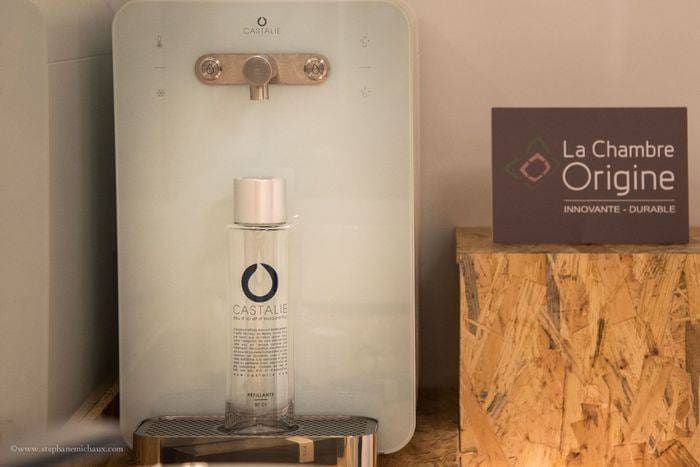
This proposal rested on a simple idea: drinking water is a vital need. Why shouldn’t access to quality drinking water be thought of as an essential hotel service, on a par with sleep or air quality?
My thinking was also international. In some countries, tap water can be drunk without difficulty. In other destinations, its safety or quality may raise questions for travelers. I therefore wanted to imagine a device that would give guests easy access to water of controlled quality, whatever the destination.
It was not simply a matter of filling a bottle in the bathroom. I imagined a new space in the room, a sort of small water bar, close to the coffee and tea equipment, allowing guests to serve themselves chilled or room-temperature water, still or sparkling.
This solution also addressed an environmental issue. Plastic or glass water bottles require supply, storage, transport, daily handling and waste management. Even when the containers are recyclable, using them mobilizes resources and a significant organization.
The idea was to gradually replace this logic of individual bottles with simple access to filtered water, along with a reusable bottle or carafe.
An innovation often carries a high cost in its first applications. The history of hospitality shows that some equipment first appears in palaces or the most prestigious suites, before spreading to four- and five-star hotels, then to more accessible categories.
As early as 2016, I had therefore imagined several scenarios depending on the hotel’s positioning and investment capacity. In a palace suite, the solution could be built directly into the room, within a dedicated drinks area.
In an upscale hotel, a dispenser could be installed on each floor, near the elevators, so that guests could fill a bottle provided in their room.
In an economy or mid-range hotel, a filtered water point could be offered in the lobby, near reception, with a carafe or bottle available in each room.
This logic was in the end not so far from the ice machines that have long been installed in the corridors of some hotels. Why not imagine a comparable service for drinking water?
Ten years on, concrete examples in hotels
In 2025, in a five-star Parisian hotel, I discovered a filtered water dispenser installed near the elevators, with a reusable bottle provided in the room.
More recently, in a three-star apart-hotel, I found the same principle, with a dispenser near reception and a carafe in the studio, allowing guests to choose between still and sparkling water. In the room, an invitation encouraged guests to use the container provided to go and get water in the lobby.
Finally, in a recently opened four-star hotel in Vilnius, Lithuania, I saw a space set up near the elevators, including a small kitchenette where guests could, among other things, fill their bottle.
These examples, in hotels of different categories, illustrate precisely the scenarios I had envisaged in 2016. They do not mean that filtered water is now widespread across all of hospitality, but they show that an idea that was still forward-looking at the time has found concrete applications.
I had in fact extended this thinking as early as September 5, 2017, in an article entitled “Water, a new in-room service”, which makes it possible to find this proposal formulated well before its current spread.
This example sums up the value of a forward-looking approach. Imagining the room of the future does not mean piling up spectacular technologies. It means identifying lasting needs, proposing new uses, working with manufacturers and anticipating the economic conditions that will allow these solutions to spread.
Filtered water was only one of the proposals of the ORIGINE® Room. But ten years after EquipHotel 2016, it makes it possible to measure concretely the road traveled between an intuition, an experiment and its gradual adoption by hotels.
Ten years after the ORIGINE® Room, what lessons for imagining the hotel of 2036?
Ten years after the presentation of the ORIGINE® Room by DELPORTE HOSPITALITY at EquipHotel 2016, the assessment deserves nuance. A successful demonstration does not mean an innovation will be immediately adopted by the whole of hospitality. Some ideas spread gradually, others require major investments, operational changes and sometimes a profound shift in mindsets.
The example of filtered water illustrates this phenomenon well. A solution that was not part of the usual uses of a hotel room in 2016 now finds its place in hotels of different categories. Other proposals, notably around robotics, remain more experimental. As for sleep, air quality, naturalness and recharging, these concerns remain essential, even if how they are taken into account varies greatly from one hotel to another.
Why does it take so long to change hospitality habits?
Hospitality is an industry that evolves slowly, notably because investment decisions commit hotels for many years. A hotel does not renew its rooms or equipment as easily as a company can change a digital service. Works are costly, renovations must be planned, and new solutions must demonstrate their economic interest as much as their usefulness for guests and employees.
But financial constraints do not explain everything.
There is also a form of resistance to change. Professional habits, brand standards, operating procedures and the traditions of the sector can sometimes hold back experimentation. Why change a service that has worked for twenty years? Why take the risk of a solution that is still little used? Why invest in equipment whose benefits cannot be measured right away?
These questions are legitimate. Yet by repeating existing models, the risk is to design hotels today that will meet tomorrow the expectations of yesterday.
I also notice that some interesting transformations come from professionals outside the hotel industry. In developing their own hotel, they sometimes bring a fresh perspective, challenge uses considered obvious and imagine other ways of designing spaces or services.
This ability to break away from habits is, in my view, an important condition for innovation.
Will the room of tomorrow be more modular and plural?
Modularity was already part of the thinking developed in the ORIGINE® Room by DELPORTE HOSPITALITY in 2016, notably with a fold-away desk that could disappear when not in use. It saved space in the room according to the guest’s need.
Ten years on, this question deserves to be explored further. Why should a room keep exactly the same configuration throughout a stay, when the guest’s needs change over the course of the day?
I have notably discovered prototypes of beds able to rise to the ceiling or fold into a wall to free up a large part of the floor space. These solutions are not yet common in hospitality, but they open interesting perspectives.
A room could thus host different uses at different times: sleeping, working, exercising, relaxing or occasionally receiving another person. The available space would no longer be defined only by its surface area, but also by its ability to transform.
This thinking leads me to imagine a plural room, whose functions could evolve according to the guest’s expectations, the destination and the hotel’s positioning.
It is not necessarily a matter of multiplying mechanisms or sophisticated equipment. Modularity must meet a real need, remain simple to use and be compatible with maintenance and operating constraints.
It is nevertheless a promising subject for the coming years, notably in hotels where every square meter counts.
Is the 2036 hotel being decided today?
Ten years after the ORIGINE® Room, one conviction remains: tomorrow’s hotel is not prepared by systematically reproducing yesterday’s solutions.
Artificial intelligence, automation, robotics, smart materials and new expectations around well-being will continue to transform uses. But the most important changes will not necessarily be the most spectacular. They will also come from our ability to better understand human needs and to question certain habits.
An owner or investor who launches a hotel project today is sometimes preparing an opening in three or four years. But a hotel is not designed only for its inauguration. Architectural, technical and operational choices must allow it to remain relevant for fifteen or twenty years.
To measure this challenge, it is enough to go back to the year 2000 and look at the changes since then: the use of mobile phones, access to the Internet, online booking, new ways of working and environmental expectations have profoundly changed travelers’ daily lives and the way hotels operate.
What will become of our current habits in 2036? Which services will we then consider indispensable? Which equipment, exceptional today, will become ordinary? And which services will we keep offering simply because they have always existed?
These questions deserve to be asked before designing the rooms, choosing the equipment and defining the services.
This is precisely the value of foresight and the meaning of my work at DELPORTE HOSPITALITY: supporting decision-makers in this thinking, confronting ideas with economic and operational realities, and turning a vision of hospitality into concrete experiences.
The hotel room of the future does not begin in 2036. It begins with the decisions made today.
Why does EquipHotel remain a prime place to imagine the hospitality of tomorrow?
EquipHotel holds a special place in my forward-looking thinking. This show makes it possible to discover, in one place, innovations from many worlds: interior design, furniture, bedding, linen, technical equipment, spa, well-being, food service, beverages, services and new technologies.
This diversity is precious. An innovation of interest to hospitality does not necessarily come from a manufacturer specialized in rooms. It can be born from equipment intended for restaurants, from a solution imagined for well-being or from a technology developed for another sector.
At EquipHotel, I take the time to observe products, to meet companies, to understand their innovations and to think about their possible applications in the hotel experience. The show makes it possible not only to discover what exists, but also to sense what might develop tomorrow.
It is also in this spirit that I created, in 2018, the Parcours Luxe by DELPORTE HOSPITALITY, whose fourth edition will take place in November 2026. This selection of exhibitors allows me to study many proposals and to highlight companies whose solutions can help upscale and luxury hospitality evolve.
This observation work continues throughout the year. Through DELPORTE HOSPITALITY Mag and my newsletter, I regularly share articles, analyses and discoveries drawn from exchanges with professionals, the innovations presented and the information I receive from the sector.
This permanent monitoring is essential to understand the transformations under way and to identify new uses likely to meet tomorrow’s expectations.
Share this article with a colleague, a client or a partner.
That is often how an idea enters a house, and then its habits.
What you say about it matters more than what I say.
A keynote, a mission, an article in the magazine: if my work has been useful to you, a few lines on Google are worth more than any argument.
Leave a review on Google →