Bringing Wellness to the City: The Urban Resort Challenge
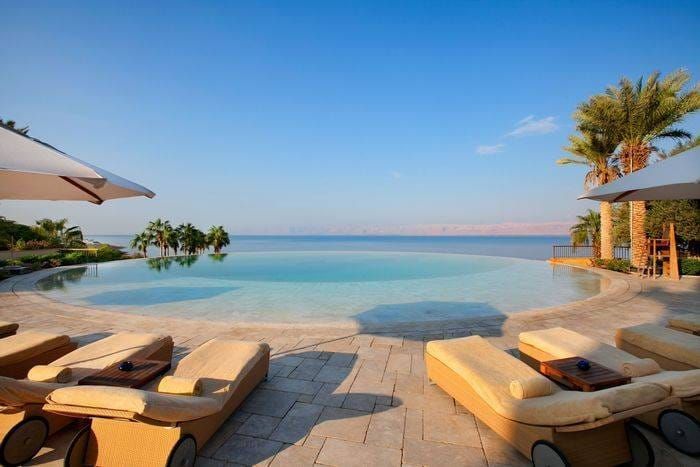
In luxury hospitality, certain brands have built their reputation around a very specific experience. This is the case with Banyan Tree, whose seaside resorts have long embodied a vision of wellness, nature and escape. But how can this promise be transposed into a dense, fast paced urban environment, often far removed from these codes?
During my stay at Banyan Tree Shanghai on the Bund, on the occasion of the ILTM trade show, I wanted to understand how this brand manages to adapt its DNA to a completely different context. Located in the heart of Shanghai, on the legendary Bund, the hotel offers a singular take on urban luxury: that of a resort integrated into the city.
This approach raises a central question for contemporary hospitality: how do you recreate an immersive, soothing experience in an urban environment? In other words, how do you turn a hotel into a destination in its own right, one capable of reconnecting guests with themselves, even at the heart of a metropolis?
Through this example, a broader reflection emerges on generous hospitality. A hospitality that is not limited to service, but that expresses itself through place, the senses, rituals and the attention paid to guest wellbeing.
Ecology at the Heart of the Banyan Tree Concept
The Group’s values and philosophy are greatly influenced by the history of its founders. The Banyan Tree story begins in the 1980s, when the founders acquired a stretch of coastal land in Phuket, Thailand. At the time, the land featured magnificent lagoons of an intense blue color. The founders would later discover that this color was not natural, but the result of a former tin mine on the site. Determined not to abandon this magnificent piece of land, the founders joined forces and planted more than 7,000 trees to depollute the soil. In 1994, the transformed land became the Group’s first resort, named ‘Banyan Tree,’ and respect for the environment has remained firmly rooted in the Group’s values ever since.
Over the years, the Banyan Tree Group has grown considerably and become one of the major names in seaside resort hotels. Often composed of villas with their own pools, Banyan Tree resorts are always located in truly beautiful settings. More recently, the Group set itself a new challenge and opened its first city resort hotels. It is interesting to see how the Group has succeeded in transferring its resort and wellness concept to its urban properties.
The ‘Wellness’ Resort in the Heart of the City
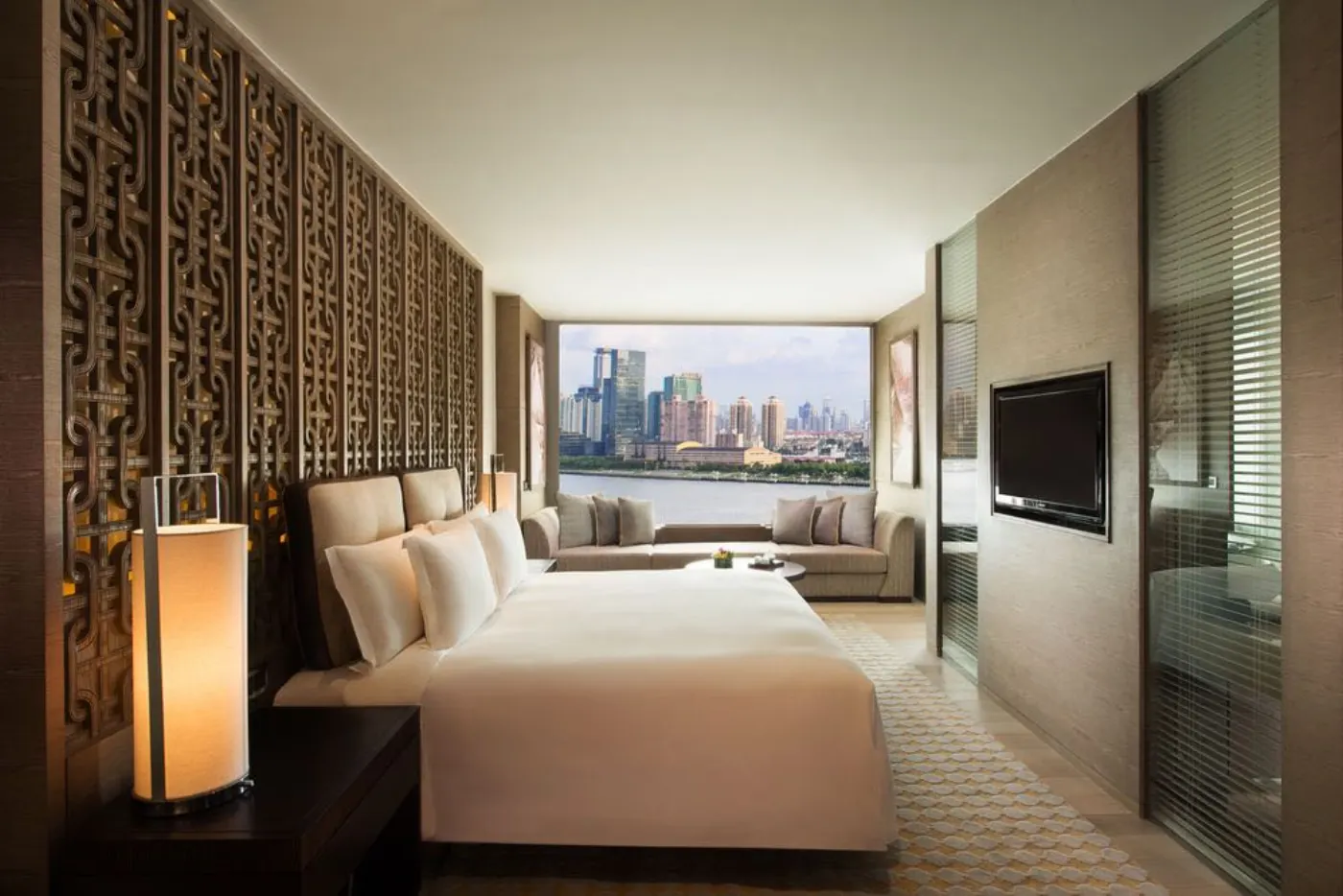
Opened in 2012, Banyan Tree Shanghai on the Bund is an urban resort set in the very heart of Shanghai’s historic district. The Bund is the city’s historic boulevard, lined with Art Deco buildings and running alongside the Huangpu River. Banyan Tree Shanghai stays true to the brand’s concept by offering guests a breathtaking view of the city’s river.
The five star property has 130 suites, all lined with floor to ceiling windows to offer an unrivaled view. About twenty of the suites take the concept even further, each featuring its own very small private pool. Each little pool or bath sits right against the window with a view over the city’s river, and comes with beach cushions. Everything is designed to recreate the Banyan Tree resort experience in the city, and it succeeds. I have never seen anything like it anywhere else to date.
The Banyan Tree wellness concept is also very much present. One of the hotel’s rituals, for instance, is diffusing new exotic scented essential oils every day in the property’s common areas. There are also incense sticks within the rooms. The spa is built around the Chinese therapeutic method of the five elements, and treatments are carried out favoring natural ingredients, particularly indigenous plants.
True to its commitment and its values, the hotel has also put in place a sustainable development program. A small stuffed turtle is used to encourage guests not to have their sheets changed, an action that has a very positive long term impact in a property of this size.
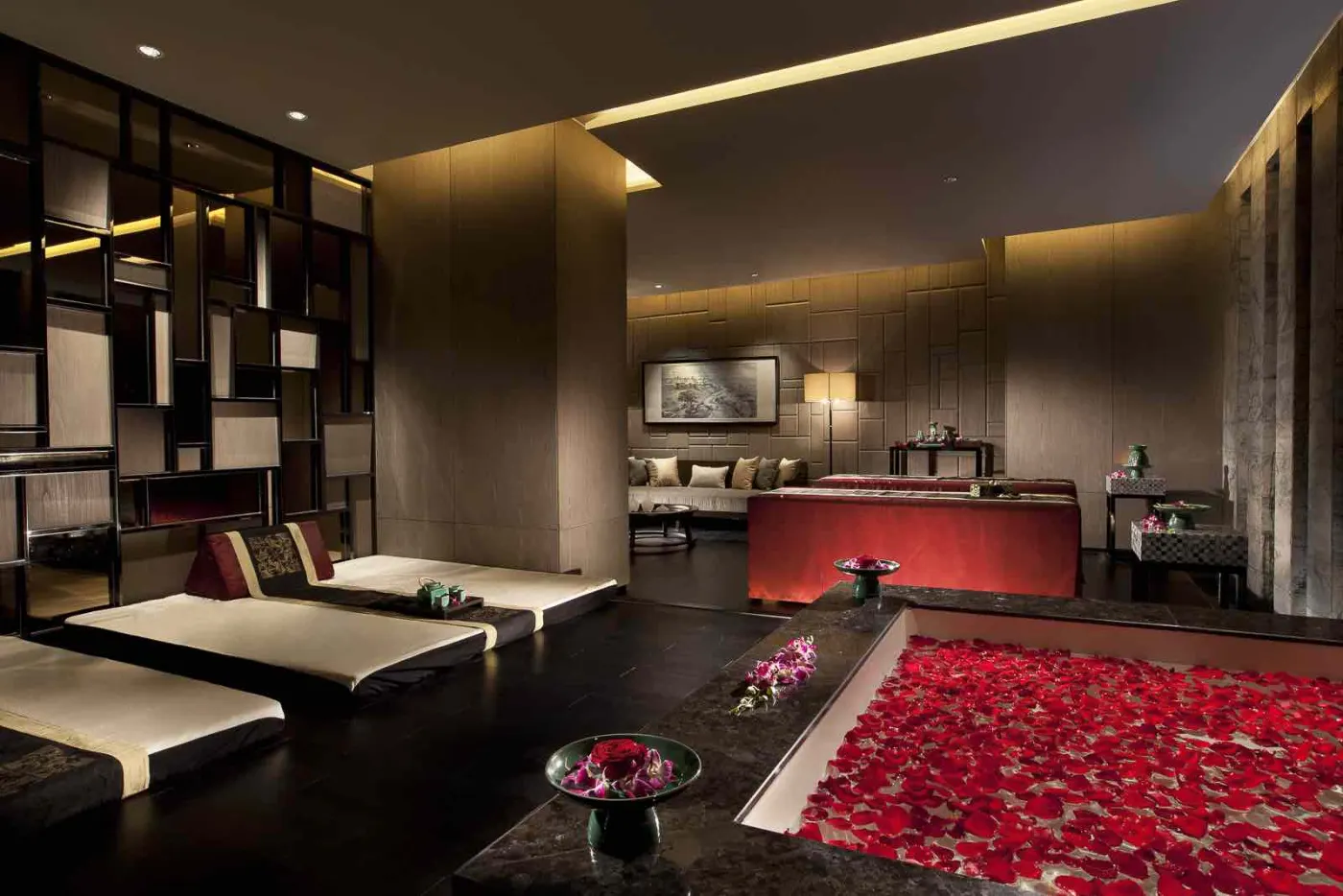
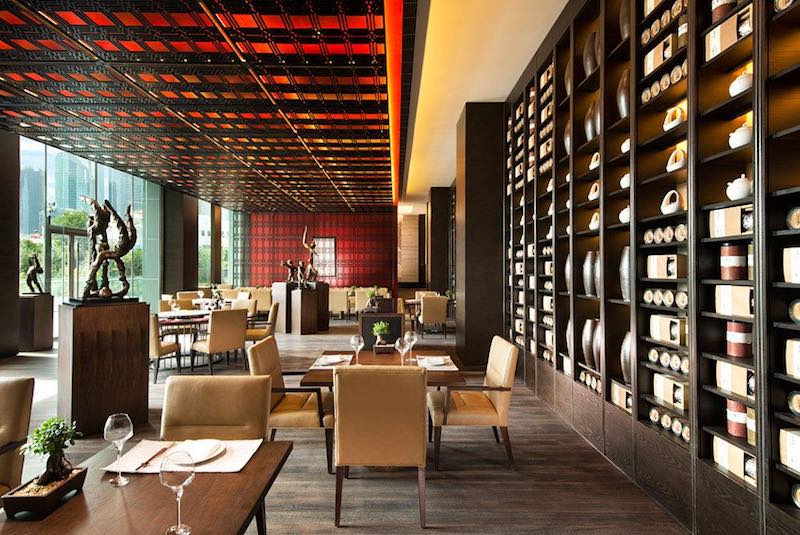
Finally, the services offered by Banyan Tree Shanghai are plentiful, making this resort a place of wellness and escape. The hotel offers a dining lineup to satisfy every craving, with a seafood restaurant, a Japanese restaurant, and a more traditional restaurant for guests wishing to discover Chinese cuisine. On the hotel’s rooftop is also Stars, a panoramic bar where guests can enjoy cocktails with a stunning, highly pleasant view over the city.
The Urban Resort: A New Take on the Guest Experience
Through Banyan Tree Shanghai, a major evolution in luxury hospitality clearly emerges: the ability to adapt a strong concept to radically different environments. Where the resort was historically associated with natural destinations, it is now becoming a model that can be transposed to urban settings.
This transformation rests on a nuanced understanding of the guest experience. It is no longer just about offering accommodation, but about creating an overall environment where guests can recharge, unwind and live a parenthesis away from their daily routine, even in the heart of a big city.
The integration of wellness, sensory rituals and particular attention to detail helps recreate that feeling of escape. But this success also rests on an overall coherence between the concept, the place and the operational execution.
In my view, this ability to transpose an experience into a new context lies at the heart of generous hospitality. It requires thinking of every project as a complete system, one in which architecture, services and operations are perfectly aligned.
Ultimately, the real challenge for hotels today is no longer just to differentiate themselves, but to create experiences capable of adapting, evolving and remaining relevant in increasingly complex environments.
Share this article with a colleague, a client or a partner.
That is often how an idea enters a house, and then its habits.
What you say about it matters more than what I say.
A keynote, a mission, an article in the magazine: if my work has been useful to you, a few lines on Google are worth more than any argument.
Leave a review on Google →