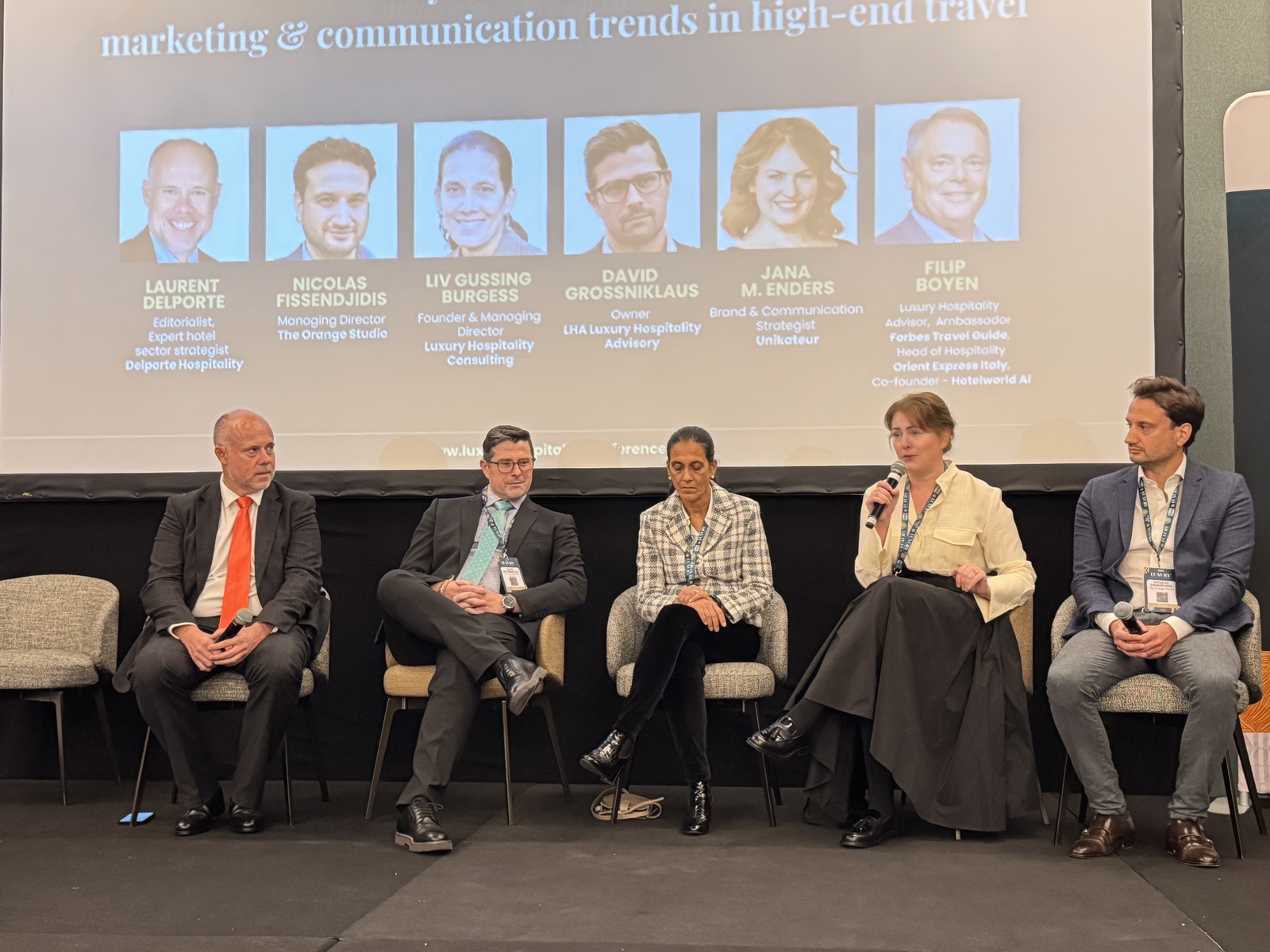
In Milan, in front of the leaders of European luxury hospitality, a panel of experts was set to cover four topics: personalisation through data, sensory storytelling, guest-generated content, and sustainability. Four topics, and a single underlying question: how does a hotel make people feel what it is, instead of stating it? Here is what I argued.
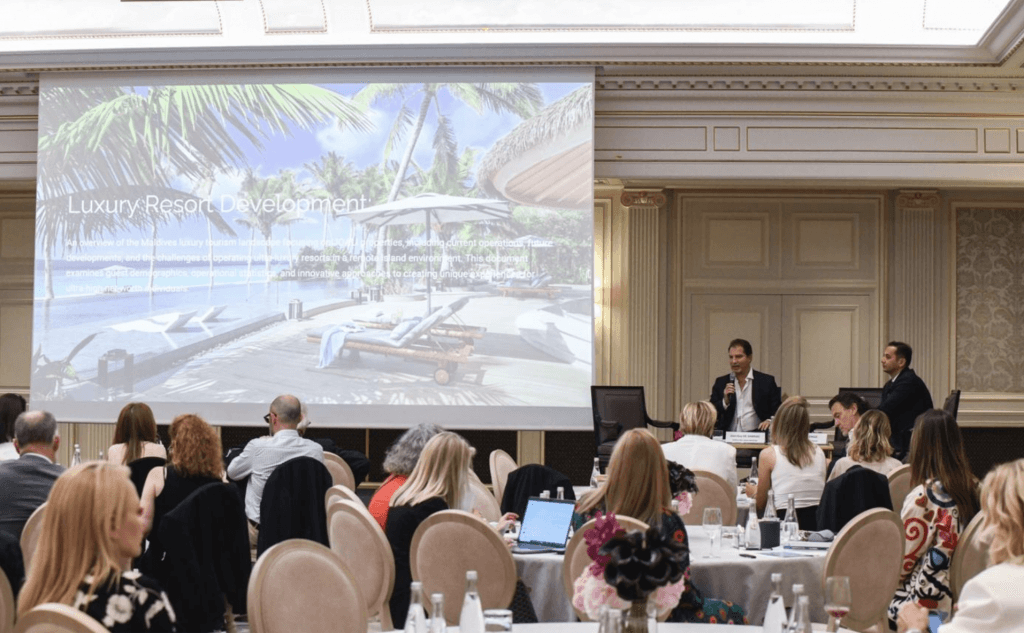
This gathering, titled “Beyond Experience: Marketing & Communication Trends in High-End Travel”, brought together a panel of industry experts. I took part in it, alongside David Grossniklaus (LHA Luxury Hospitality Advisory), Liv Gussing Burgess (Luxury Hospitality Consulting), Jana M. Enders (Unikateur) and Nicolas Fissendjidis (The Orange Studio). It was held in the main hall, ran for fifty minutes, and was moderated by Filip Boyen, of Forbes Travel Guide. The analysis that follows is mine alone and does not commit anyone else.
This kind of gathering has one virtue and one flaw. The virtue: the topics are addressed frankly. The flaw: the entire industry has ended up adopting the same answers. On artificial intelligence, the accepted answer has been circulating for two years, and it has become so smooth that no one questions it anymore.
Artificial intelligence took up a large part of the discussion. The subject deserves more than a paragraph, and I covered it separately in AI in hotels: the real risk is to your teams. I will keep only what governs everything else here: a tool gives back time, it never makes anyone present.
What actually makes storytelling immersive?
Storytelling that speaks to all five senses. Light, sound, scent, texture and taste awaken emotional memory and leave a trace that text alone never leaves.
The word immersive is used today to describe almost anything.
Immersive storytelling is not a device or a screen. It is an invitation to feel. To provoke a sincere emotion, it must engage light, sound, scent, texture and taste. These five entry points awaken emotional memory, the kind that keeps souvenirs long after the factual details have faded.
In luxury, every detail carries meaning. The goal is never to saturate the guest. It is to choose. One true scent is worth more than three layered atmospheres. A well-placed silence is worth more than a playlist.
This is also why a general manager should walk through their own property while refusing to look at the dashboards, asking only what they hear, what they smell and what they touch. The exercise takes one hour. It often changes the list of priorities.
Why do the wealthiest guests share nothing at all?
Because some of them buy precisely the opposite of visibility. Guest-generated content is inspiring, but high-end clientele splits between those who enjoy telling their story and those who seek discretion and privacy.
This point is regularly overlooked by content strategies.
Some guests share willingly, and their story is worth more than any campaign. Others consider that not appearing is part of what they paid for. Treating these two clienteles with the same approach means alienating the second to flatter the first.
A brand must therefore inspire without imposing, suggest without forcing, and convey its personality with accuracy. Authentic storytelling is born from the consistency between what a house truly is and what it makes people feel. When that gap widens, the guest perceives it before the team does.
Sustainability, the panel's fourth topic, calls for the same treatment as artificial intelligence: it deserves its own article, still to come. One thing alone should be remembered here: sustainability must belong to a house's identity, never to its sales pitch.
Can emotion be decreed?
Never. It is cultivated. To create emotion, one must first listen, observe and understand, then know how to surprise.
This is the point I insisted on in conclusion, and the one that touches most directly the organisation of a hotel, or of any establishment that welcomes the public.
Experience remains essential, but it is only authentic when it rests on sincere emotion. Yet emotion appears in no procedure. It requires collective work: in a hotel, every team member plays a unique role in the guest's experience, including those the guest will never meet.
The conditions must therefore be created for everyone to feel concerned and authorised to embody hospitality. Authorised, the word matters. Many employees know exactly which gesture would make the difference, and do not feel entitled to make it.
When that alignment happens, the experience stops being a service and becomes a memory. And a memory is the one thing a competitor cannot copy.
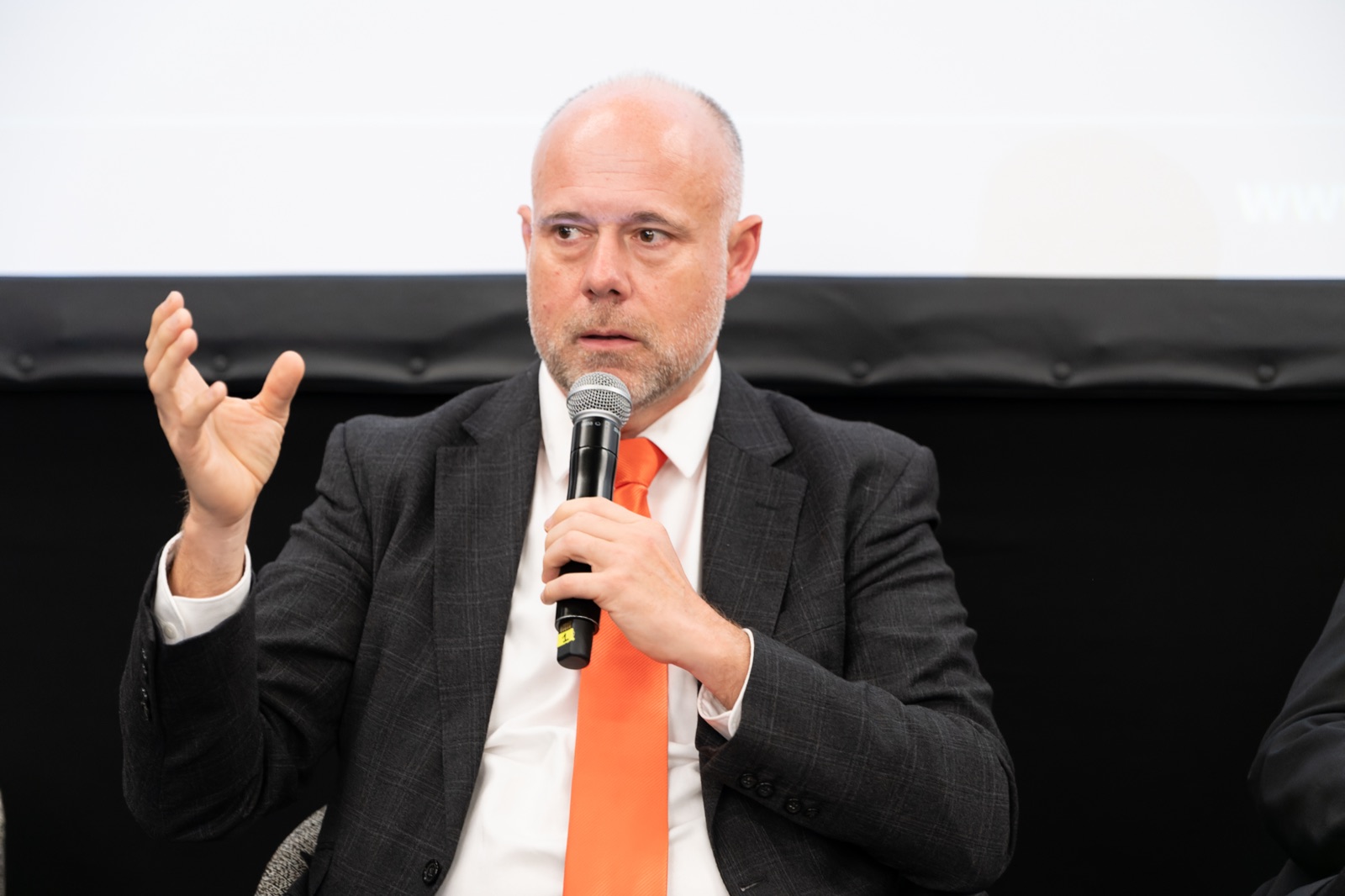
Laurent Delporte's key takeaways
What I have just described is not conference theory. It is what I do when a leadership team entrusts me with its teams.
A public talk such as the one in Milan has a precise function in my work. It forces me to put into words, in front of peers, in English, in a few minutes, convictions that I spend the rest of the year testing on the ground. An idea that does not survive that exercise does not deserve to be passed on to a team.
My talks are always built the same way. I start from what I have observed in the houses I advise and the ones I visit, then I test those observations against the data presented by the industry's major players at international gatherings. What survives both becomes a working principle. The rest remains an opinion, and an opinion has no place in front of a room of a hundred people.
In practice, a talk lasts from twenty minutes to a full day depending on the format, in French or in English, in front of a leadership committee, a full team, a school or a professional congress. The content is never generic: I always ask to understand the company's context, its current challenge, and what leadership does not dare tell its teams. That is often where the real subject lies.
I always leave a room with the same three questions. How exactly do you welcome your guests, gesture by gesture? What has changed in that welcome over the past five years? And above all: do your teams feel authorised to make the gesture that would make the difference?
The five senses, discretion, emotion: none of it can be decreed. All of it is cultivated, and the guest notices from the very first minute.
None of this belongs to hotels alone, either. A clinic, a boutique, a cultural venue, a corporate headquarters also tell people what they are, through their light, their sound and the way they welcome. This is what generous hospitality® covers, the concept I formalised: sense of place, human connection and the wellbeing of the person being welcomed.
What to remember
Immersive storytelling engages five senses: light, sound, scent, texture and taste. Choosing beats saturating.
High-end clientele splits between those who tell their story and those who buy discretion. The same content approach always alienates one of the two.
A poorly told subject turns against the house that tells it. Sustainability is the clearest example, and it deserves its own article.
Emotion cannot be decreed. It requires every team member to feel concerned and authorised to embody hospitality.
Luxury is not told, it is felt. A house that declares its attentiveness risks being contradicted by the very first detail that goes wrong.
Share this article with a colleague, a client or a partner.
That is often how an idea enters a house, and then its habits.
What you say about it matters more than what I say.
A keynote, a mission, an article in the magazine: if my work has been useful to you, a few lines on Google are worth more than any argument.
Leave a review on Google →