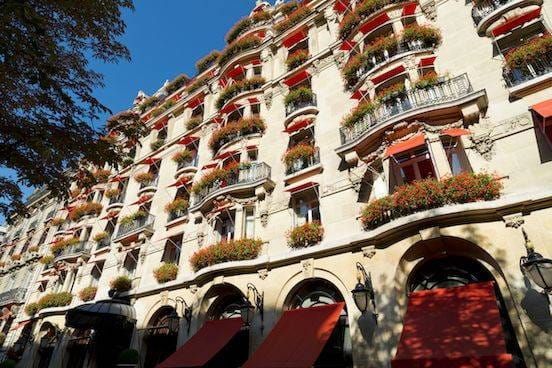
Palace changes
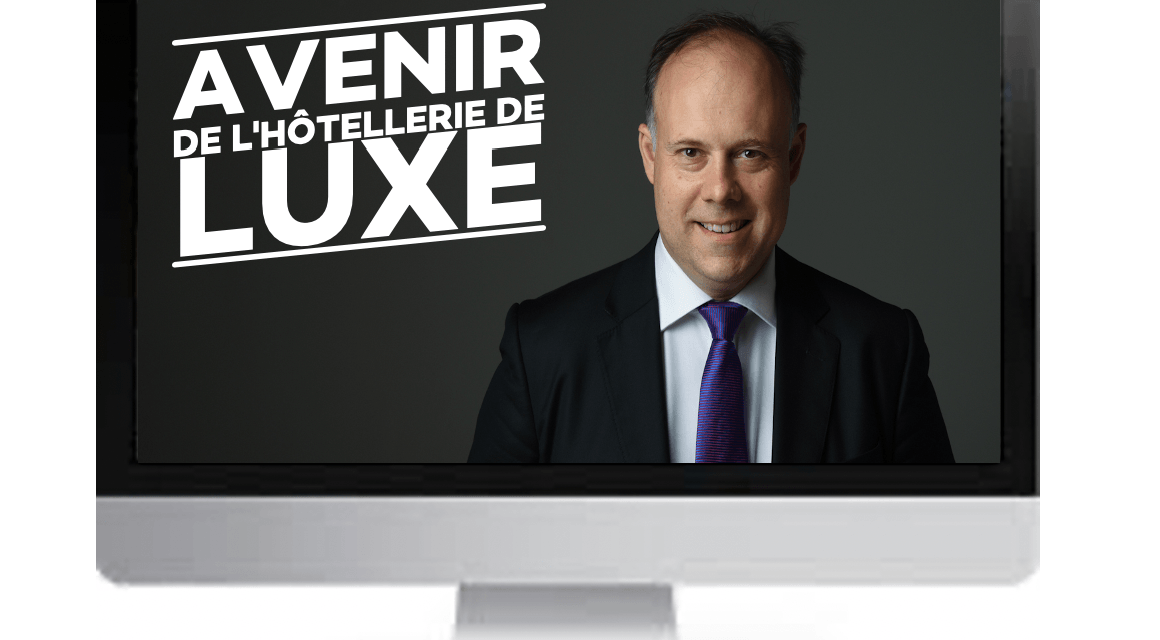
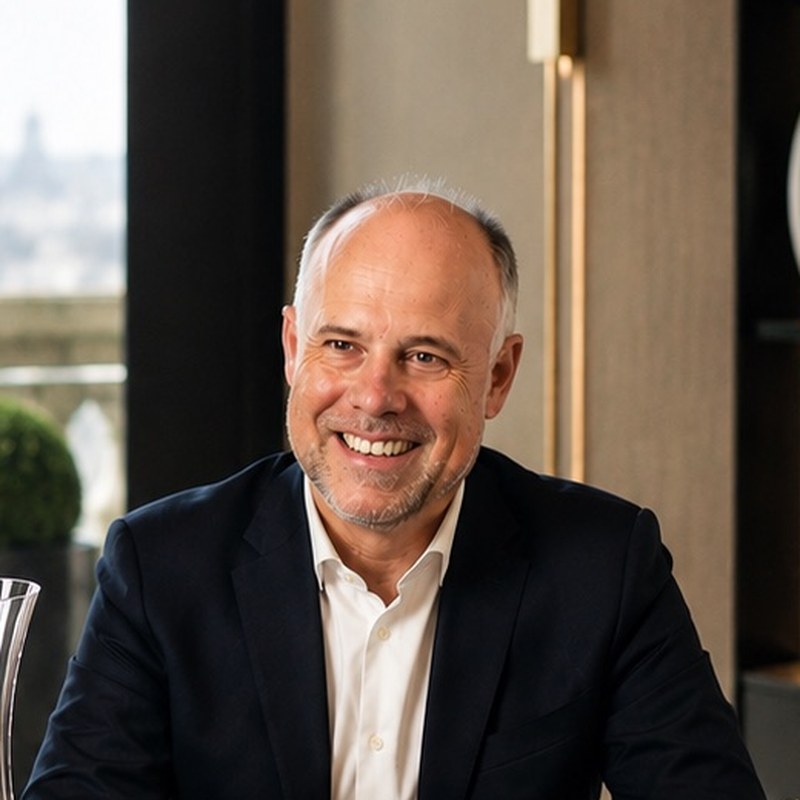
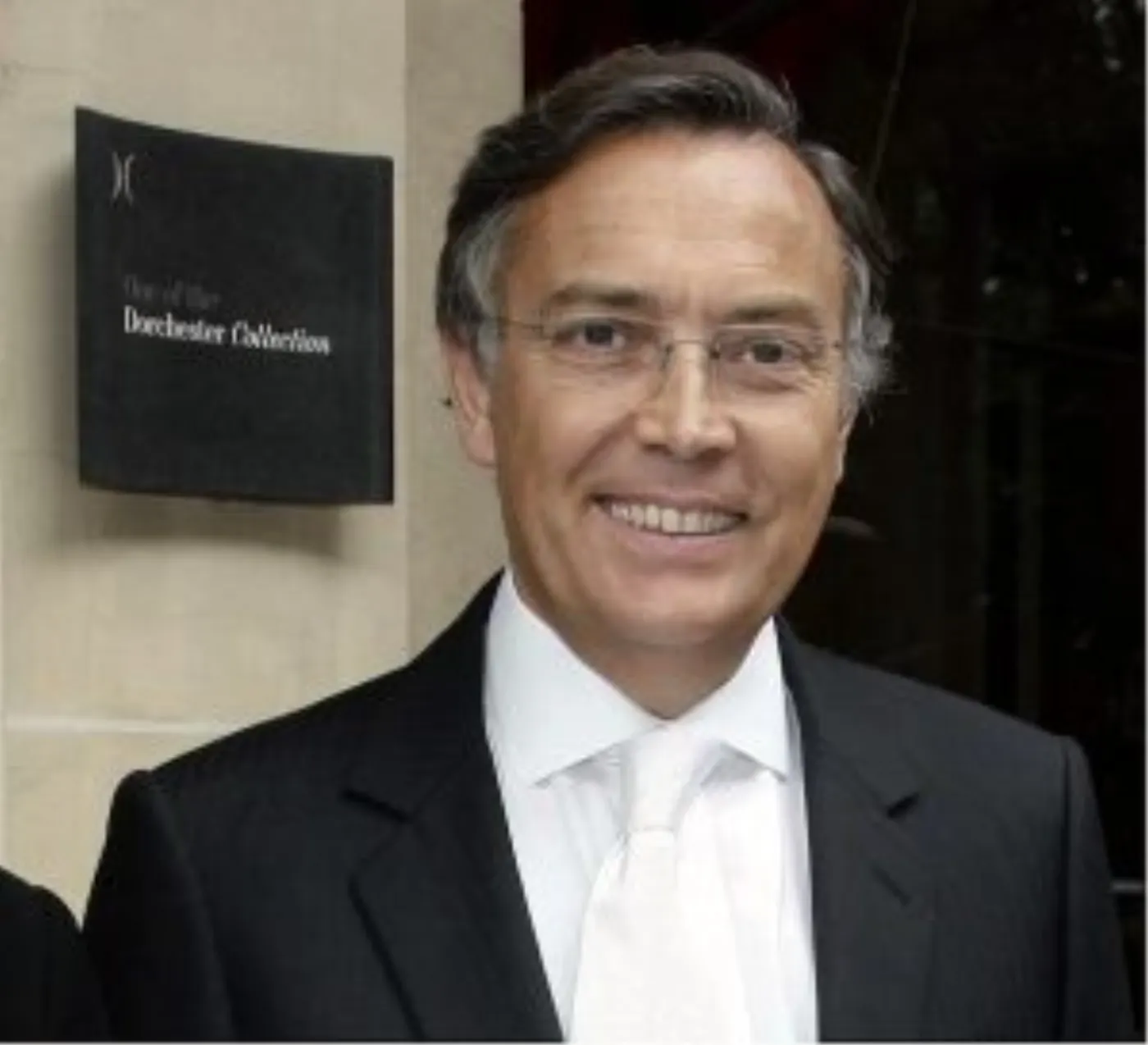
I met François Delahaye, general manager of the Plaza Athénée and director of operations of the Dorchester Collection. Discovering catering at the age of thirteen as a chef's assistant in Lille, he became a footman for the Duke of Westminster at nineteen before attending the Ecole Supérieure d'Hôtellerie de Saint Cergue in Switzerland until 1976. Since then, he has worked in numerous luxury hotel houses such as Sofitel, Warwick and Westin. In 1999, he became General Manager of the Plaza Athénée then Director of Operations of the Dorchester Collection in 2006. We met again during the ILTM show where we discussed the luxury hotel industry and its developments over the last 20 years.
In your opinion, what have been the main changes over the last twenty years in the hotel profession?
All hoteliers have had to change the way they approach distribution, that is to say the way of selling the rooms in our hotels. Over the past two decades, its evolution has surprised the entire industry. We weren't necessarily all prepared for it. The large hotel complexes lived on an annuity and few were trained in the new issues of distribution. The responsibilities are diverse, both on the part of the hotelier profession and of the hotel schools. Today, in fact, all students of the latter want to become asset managers, and very rarely want to work in the hotel industry at the operations level. The job of hotel manager and the journey to get there is both difficult, exciting and rich in experiences and a source of personal satisfaction.
We have also not seen the attack of companies like Merrill Lynch, Goldman Sachs or Nestlé which have taken an interest in hotel schools to recover the excellent training provided to students. The latter, who have become resourceful thanks to various internships in hotels, can access better paid positions. There is also of course a responsibility on the part of the hotels, where all the students are poorly paid and end up quickly leaving the industry.
In twenty years, the internet has reshuffled the cards for hotel tourism. Our community has not sufficiently seen the change coming and the different consequences at all levels.
Recently, I spoke with the new boss of One & Only - who had remained at the helm of Movenpick for many years. It was very interesting because he has a certain approach and a different outlook due to the fact that he does not come from a luxury background. When I now see certain general managers of hotels who retired too early - around twenty years ago - I really realize that the profession has completely changed. These former bosses are no longer at all up to date on current issues.
While working at AccorHotels in 2004, I asked the question of the necessity of setting up a guestbook on the hotels' website. At the time, hoteliers and marketing management told me that this was not important. The comments in the rooms were sufficient in their eyes. A few years later, TripAdvisor dominated the customer review market. Then there were online reservation sites, then the arrival of AirBnB which shook up the hotel industry. Were these developments predictable?
It was possible to predict certain trends, but the entire industry was surprised by the speed of developments in the profession. Throughout my career, I have been able to speak with many big bosses, who are often in the best position to establish a vision and spot future trends. We had visits from several of them at the Plaza Athénée, who despite their obligations know how to make themselves accessible. It is therefore essential to speak with people who have been able to follow recent developments and maintain a vision of their strategy. I am thinking in particular of Sébastien Bazin. Through his foresight, his encounters, his experiences, he is very well placed to discuss a vision of what could happen, particularly developments linked to the explosion of the Internet. However, this is observed on a smaller scale in the world of Palaces, such as the Plaza Athénée. Our customers still reserve 50% over the phone. The share of business passing through the Internet is still quite small, all Palaces combined. But this is changing. Not as quickly as I thought, but it's changing.
Apart from a redistribution brought about by online reservations, revolutions are being observed. Look at Uber, AirBnb, and how very difficult it was to predict these new players.
Does working in the field and ensuring the smooth running of the hotel 24 hours a day, 7 days a week hinder the development of a vision or at least a step back?
Yes, indeed, I think so. Management in the hotel industry is above all very operational, day to day. The job being this way, it is difficult to develop a real long-term vision. However, developing a vision and following trends is also part of our core business. We must not forget that we must provide a high quality of service on a daily basis in hotels if we want our customers to enjoy them.
In terms of technological developments, let's take the example of Wi-Fi. It took almost a decade for all hotels to have quality Wi-Fi. Between the first generation of the Wi-Fi system for a hotel, and that of today, numerous investments had to be made and sometimes several times. We could have changed our phones too. Fewer and fewer guests use the room's landline. This therefore no longer brings any turnover. Everyone uses their cell phones. The development of Wi-Fi therefore had a dual purpose. Meet the needs of new customers, while compensating for the loss of turnover caused by the reduction in telephone calls.
However, it is essential to maintain telephone switchboards - which are very expensive - so that more traditional customers can contact us. Switchboards are now from another age, but remain essential for answering the telephone. This still represents a significant cost on our operational expenses.
New services are developed every year. Now it is possible to find hotel-specific applications, with which the guest can send various requests to the housekeeper. But the environment takes relatively long to evolve, due to the cost of these investments which can be uncertain.
What do you think are the threats in the years to come?
Again and again the distribution. On the one hand, you will have the creation of huge players in the hotel industry. Just follow the mergers with Marriott International which buys Starwood or AccorHotels which buys the Fairmont, Swissôtels and Raffles hotels, all of which form complexes of a size never equaled before.
On the other hand, customers are increasingly looking for something confidential, intimacy around personalized service. This does not really correspond to the offerings offered by these new, very concentrated groups. So I don’t really know how this will happen, but I think that the new “mammoths” of the hotel industry will not be able to respond individually to the requests of each customer. There is no doubt that they listen to their customers, and try to offer an individual experience to each of them. We must therefore remain very attentive to digital developments, and the revolutions they can bring to the hotel industry. But the trend in the years to come will undoubtedly be to focus on customer expectations to offer them an individual experience.
Share this article with a colleague, a client or a partner.
That is often how an idea enters a house, and then its habits.
What you say about it matters more than what I say.
A keynote, a mission, an article in the magazine: if my work has been useful to you, a few lines on Google are worth more than any argument.
Leave a review on Google →