In the luxury world, customer welcoming is neither simple protocol nor basic politeness. It is the first sensory, emotional, and human contact between the brand and the visitor. From the very first interaction, sometimes a look, a smile, or a chosen phrase, the brand's universe is expressed.
I remember a visit to Cartier in Paris. The person at the welcome desk addressed these words to me, calmly, with a direct look: "Welcome to the Maison Cartier." This phrase is not a marketing formula, but a true ritual of hospitality. It is said to everyone, regardless of their status. And it immediately establishes a framework, an atmosphere, and consideration.
Creating a lobby buffer: from the outside to the brand's world
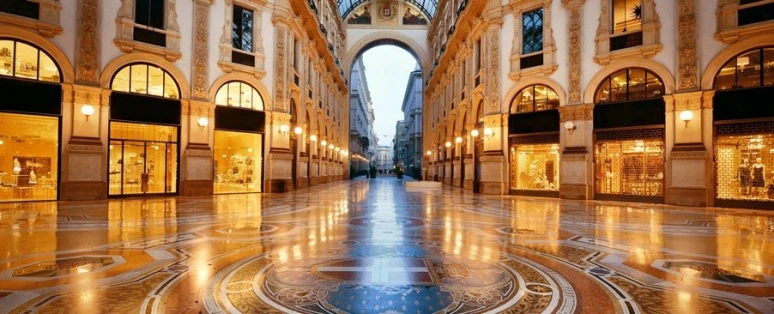
Just like in a hotel, the luxury store acts as a buffer between the street and the house's universe. The client leaves the external hustle and bustle to enter a hushed world. Every detail counts: temperature, silence, ambient fragrance, lighting, gestures. At Hermes, a simple look and a smile are enough. The advisor remains in the background while showing their presence. This silence, far from being an absence, is a way of leaving space for the client to take possession of the place.
Welcoming is therefore conceived as a transitional moment, an entry into a brand bubble. Clients feel this bubble, even unconsciously. And it is this bubble that creates a strong, memorable emotion.
A welcome aligned with the brand image
The attitude of each employee becomes a living extension of the brand. All gestures must carry the same intention: to embody the spirit of the house. This requires demanding training, but also true introspection.
Just as in hospitality, welcoming assumes knowing oneself to better welcome others. At DELPORTE HOSPITALITY, we start from this conviction to train teams. Our training programs integrate self-knowledge tools so that each employee understands their personality, strengths, and areas of vulnerability. For a good salesperson does not just recite a procedure. They understand what they project and how they can serve an experience larger than themselves. Elegance comes from authenticity.
This is why major houses invest in training inspired by personal development. For what the customer buys is not just a product, it is a moment, an exchange, an energy.
Knowing how to be present without being intrusive
In welcoming, everything is a question of accuracy. The most common mistake? Wanting to do too well: approaching the client immediately, speaking before they have even looked around, creating a false proximity. A good welcome is knowing how to show availability without imposing oneself.
You are seen, you are welcomed, but you are also left with the freedom to explore. Being there without hovering over the customer. Building trust without forcing the bond. It is a whole art.
Elegance in welcoming lies in this paradox: being visible yet discreet, warm yet professional, present but never heavy.
Intercultural welcoming: adapting without losing identity
A luxury store in Paris welcomes an international clientele. Each culture has its own relationship codes. Chinese clients will favor discretion and respect for personal space. American clients will expect more conversation, enthusiasm, and speed. Middle Eastern clients will appreciate ceremonial aspects and personalized attention.
The challenge is therefore double: to adapt to client expectations while embodying the spirit of the house. It is not about playing a role or transforming oneself, but about demonstrating relational intelligence. You can adapt your distance, vocabulary, and voice flow, while keeping the right tone of the brand.
In this balance, body language, facial expressions, and micro-gestures take on great importance. They are the elements that carry the brand's image and refinement across all cultures.
Common mistakes to avoid
Here are some common mistakes to avoid in luxury welcoming:
- Being too directive: interrupting the customer or directing them immediately to a product can break the experience.
- Judging by appearance: many wealthy clients dress soberly. Judging them too quickly is risking a strategic error.
- Adopting inappropriate familiarity: wanting to build a bond by behaving like a friend discredits expertise and positioning.
- Repeating meaningless phrases: the customer senses immediately when a speech is formatted. They expect the real, not the recited.
Another common mistake is thinking that welcoming only concerns the entrance to the boutique. In reality, it is a continuous presence, a discreet and fluid accompaniment, from the first hello to the departure.
Testimony: respect, the key to loyalty
"One day, I entered a luxury boutique dressed very simply, without makeup. I was not there to buy, just to spot a piece. Yet, the advisor welcomed me exactly as during my previous visit, where I had purchased a piece of jewelry. She looked at me the same way, said the same phrase, with the same tone: 'Welcome to our house.' This constant respect touched me. I remained loyal to this brand."
This testimony shows how consistency in the attention given is more important than the value of the purchase.
Welcoming during high-traffic moments
On a busy day, a good welcome makes all the difference. Even if one has to wait, a simple word, a look, or an explanation changes the guest's perception.
Reflexes to cultivate:
- Welcome immediately, even briefly.
- Announce the wait transparently.
- Offer a comfortable space: armchair, drink, magazine.
- Suggest a personalized appointment for another time.
These small attentions, trivial in appearance, are the ones that leave a deep mark. For the customer does not forget how they were treated in a moment of tension.
The sensory experience in service of the relationship
Welcoming also passes through the senses: store scent, touch quality of materials, soft music, precise vocabulary. Everything contributes to creating a unique atmosphere.
According to Pine & Gilmore's model ("The Experience Economy"), in luxury, perceived value is primarily emotional. Experience precedes the product. What you feel before buying conditions what you will keep in memory after.
Preparing a coffee in a heavy, elegant cup, the subtle scent of the room, the way you are invited to sit down... all these elements participate in an emotional conditioning conducive to purchase and loyalty.
Welcoming, a pillar of brand hospitality
Welcoming in luxury means bringing the client into a house where every gesture, word, and silence has meaning. Sales staff embody the brand's promise. They are its face, tone, and elegance.
The brands that succeed best in this welcoming (Cartier, Chanel, Hermes...) have understood that this first step is also, often, the one that triggers the purchase. Even if the purchase is not made that day, a successful welcome plants a seed: that of trust, desire, and long-term loyalty.
Share this article with a colleague, a client or a partner.
That is often how an idea enters a house, and then its habits.
What you say about it matters more than what I say.
A keynote, a mission, an article in the magazine: if my work has been useful to you, a few lines on Google are worth more than any argument.
Leave a review on Google →