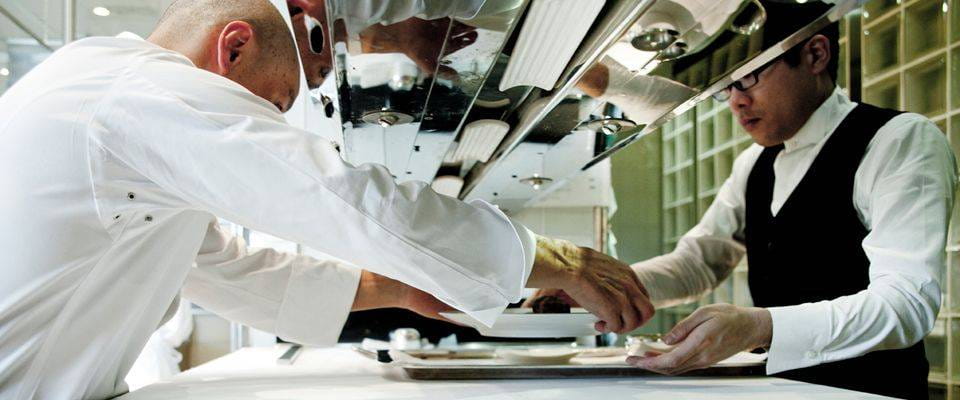
The current era encourages us to reconsider things, and above all to stop thinking that life is static, that organizations are set in stone, and that we cannot change anything. Quite the contrary, it is up to each of us to act so that a situation we dislike evolves in a different direction.
The organization of restaurant or hotel teams is the legacy of a long tradition of exemplary know-how. As in any organization, there is good and bad. Indeed, the "80s-style" management and beyond is no longer possible today. Things have evolved and can still move. It is time to recreate strength, a new energy contributing to a new dynamism in the profession.
New generations bring their fresh perspective
There are the new generations with their share of new ideas, and the older ones who have the experience and maturity to change organizations. It is an opportune time to rework the fundamentals of the profession. Working as a team is necessary. In the past, there was sometimes a competitive mindset among employees, and nobody shared anything, least of all the manager. This is not a healthy emotion in a team. It is preferable to have a dose of emulation and a high dose of collaboration. A new state of mind is emerging. Employees want to participate in the development of their restaurant and its success alongside their manager.
The organization of different restaurant professions takes place under the following hierarchy: Commis, Chef de rang, Maitre d'hôtel, Sommelier, Assistant Director, and Restaurant Director. In parallel, there is the same type of hierarchical organization in the kitchen. Everyone has their role, all at the service of the client, and their place. It is also interesting to step out of one's zone of responsibility. On the service side, everyone is in contact with clients and listening to them. Everyone can contribute to a restaurant's vision and share their ideas. We always enrich ourselves with different opinions, good or bad, because this contributes to our reflection and confirms or disproves our own ideas. Our ego is often harmful to the success of a project. An authoritarian chef or restaurant director who wants to control everything and make decisions solo will run into a wall. They will lose their employees one after the other, and only those who have no choice and will do the bare minimum will remain. Clients will have their plates served and might be satisfied for a while before going elsewhere.
Running a business obliges us to bring everyone together for collaborative work. We must involve teams in the operation and development of a restaurant. Later, it will be the younger ones who buy the restaurants of their elders, which they will manage after them. It is preferable to involve them in the organization from the start. Of course, at first, they will play the role of apprentice, working and observing. It is not always very motivating to be a commis if your manager confines you to this role without explaining how the restaurant works. We must share the details of each function to help them understand the challenges of their future career. Very quickly, they will want to share their ideas to improve the service organization for a better client experience.
We must show listening capacity and pedagogy. When an employee has been in office for a long time in the same restaurant, they may no longer see malfunctions because their brain has learned to live with them. We no longer see what might surprise someone arriving for the first time. This has happened to me personally several times when working in hotels. When you arrive at a new position, it is quite easy to submit an astonishment report to your manager. Depending on their ego, they will appreciate it or not, and in any case, it is a very important source of information.
We must also know how to delegate and take risks. By empowering their teams, a manager puts them in a position to thrive in their work. By expanding their scope of competence, they help them grow and evolve. From the position of employee, the collaborator becomes an intrapreneur within the company. This is much more rewarding. In parallel, the manager must support and train them so they have everything they need for their mission. This is what motivated employees are looking for.
By discussing the company's challenges and development, the manager must accept a different vision and a different way of doing things. They must position themselves to orchestrate the emergence of collective intelligence and foster it daily. They must accept debate and listen to different opinions. If there is no debate, the collaborator is of no use.
By listening to your teams, you not only help people grow in their profession, but you also enrich yourself intellectually. There are always limiting beliefs that must be broken at the right time. Be careful, daily routines and repetitive tasks lead you to reflect less and question yourself less.
A manager leads their teams around a unifying project. They must be a role model and lead by example daily. In difficult times, they can do the work of others when necessary. Everyone returns to their place when the service returns to calm. Solidarity and kindness are two other keys to management success.
Share this article with a colleague, a client or a partner.
That is often how an idea enters a house, and then its habits.
What you say about it matters more than what I say.
A keynote, a mission, an article in the magazine: if my work has been useful to you, a few lines on Google are worth more than any argument.
Leave a review on Google →