
Towards a quest for meaning
This unprecedented period leads us to share certain truths that we do not always want to face. The luxury and high-end hotel industry has been running towards superficiality for around twenty years to the point of forgetting its primary objective, namely to create places where guests must be able to sleep, rest, eat, eat and maintain their vitality.
This observation goes beyond a simple criticism of the sector. It highlights a profound change in customer expectations and a major strategic issue for investors and operators: restoring meaning to the customer experience in the design and operation of hotels. Today, the performance of an establishment is no longer based solely on its aesthetics or its apparent level of luxury, but on its ability to meet the fundamental needs of human beings.
In my support as a consultant in hospitality strategy and hotel design, I observe that the most successful projects are those which integrate this reflection on meaning from the outset. The generous hospitality® that I defend is based on a simple idea: creating places that truly take care of customers, by aligning hotel design, team organization and lived experience.
Construction or renovation, the number 1 key to success
Many investors today are proud of the renovation or opening of their hotel, because they have chosen an architect among those who have designed the most hotels, the largest, the most beautiful, the most magnificent, the most prestigious. They don’t really ask themselves questions about what they really want to contribute. So, the architect designs freely and creates the hotel as he wants to imagine it. It’s much simpler for him because he has no constraints.
Unfortunately, few owners ask themselves the following questions: what is the soul of the place? how can I respect it, how will I bring well-being and vitality to my guests? What sufficient investments should I plan to provide maximum comfort that will allow my guests to feel good? How can we define these points and anticipate them? In a word, what brief will I send to the architect? It is an essential document that requires weeks of preparation, discussions, and reflection for each idea to become mature. Once this work is completed, it is then time to look for an architect based on well-defined criteria to find the one who best suits the project.
Each architect obviously has talent, and even more so when there is a defined project which will be enriched over the course of the interventions of each partner and of himself in particular. There are too many projects that boil down to just releasing a hotel corresponding to criteria listed in a hotel classification and looking for savings at all levels which will be to the detriment of common sense due to the absence of the necessary initial reflection in relation to such financial issues.
However, the brief is the cornerstone of a successful hotel project. It makes it possible to define a clear vision of the customer experience, to anticipate uses and to align all stakeholders around a common objective. Very often, investors want the most for a low renovation budget. Architects must then demonstrate a great sense of economy and they will do so in a way that is very often inadequate and despite common sense for the project.
But this lack of initial thought is one of the most costly mistakes in a hotel project. The absence of a clear vision of the customer experience leads to inconsistencies in design, poorly oriented budgetary decisions and, ultimately, degraded operating performance.
Defining the brief is a key moment. It is at this moment that the vision of the place is structured: its identity, its positioning, the experience that we wish to provide. This work requires a transversal approach, combining strategy, operations and a detailed understanding of customer expectations.
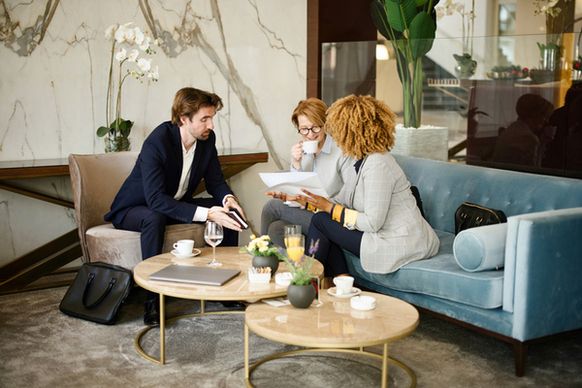
It is important to create a team around such a project. The binary relationship between investor and architect is not good. It doesn't contribute much, it's yes or it's no, it's gray or it's white. There are no debates and no real constructive exchanges that challenge each of the ideas. Conversely, a project team around several complementary personalities and a project manager independent of the interests of one or the other generates more creativity, reflection, questioning which will ultimately make it possible to produce a project that is viable in the long term and strong in meaning.
DELPORTE HOSPITALITY's approach is precisely in this logic: supporting investors and teams from the outset to structure a coherent vision, avoid costly errors and create high-performance places over time.
Sleeping well, the reason for a hotel
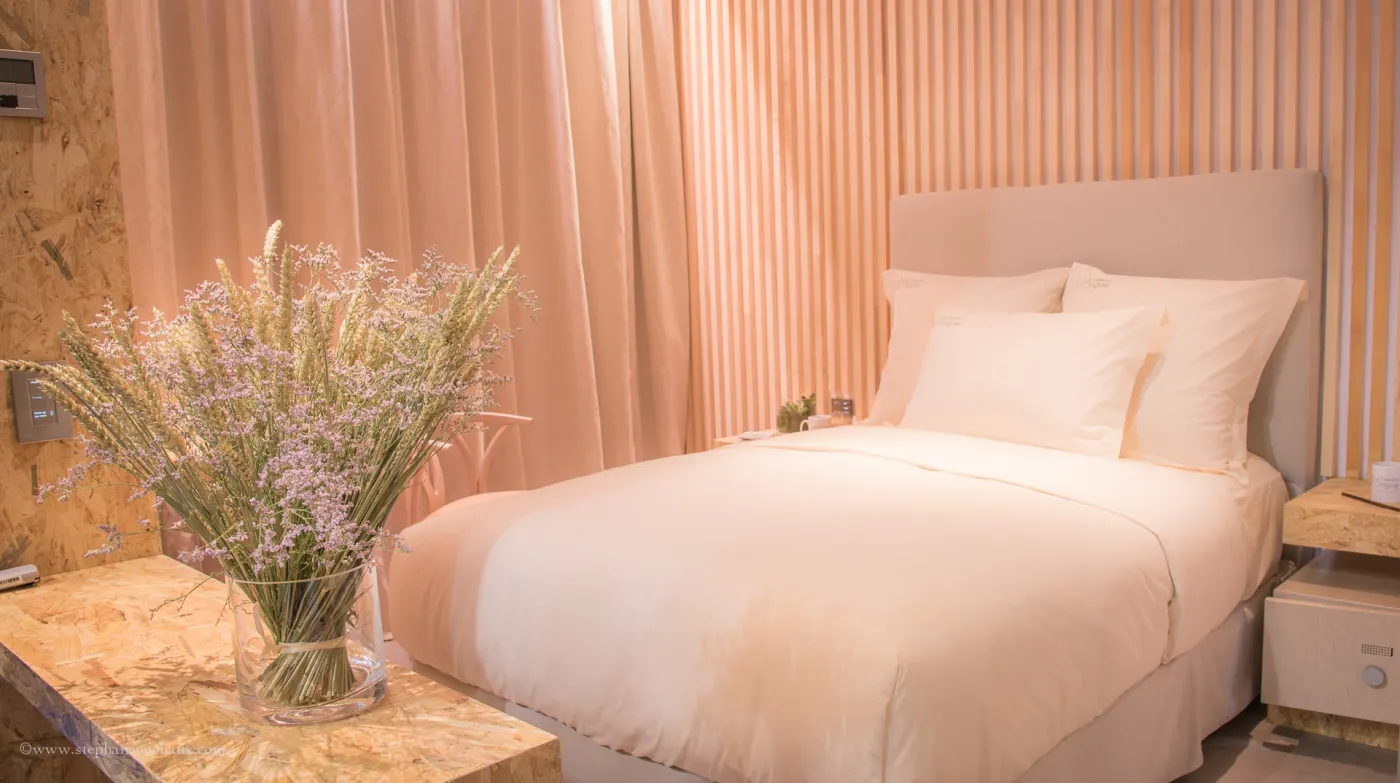
Remember, for a long time there was a door between the bedroom and the entrance to the bedroom. It allowed you to isolate noise coming from outside and to cut yourself off from the dressing room and the bathroom. It was a benefit for the client but now, for budgetary reasons, it is almost eliminated with each renovation.
Sleep is the primary service of a hotel, and yet it is often neglected in room design. However, it constitutes a direct lever for customer satisfaction and loyalty.
Another element that has deteriorated over the years and renovations is that of the possibility of creating black in the bedroom. Investments around windows and curtains are often reduced, again despite common sense, although in my opinion this is one of the key points of a successful renovation. Recently, I stayed in a mountain hotel classified 5 stars whose owner was proud to be at the head of an establishment which had respected the criteria of this classification as best as possible at the time of its opening.
And yet, at 6 a.m., when the sun rose, a bright light filtered through the curtains and woke me up. It was a new hotel built three years previously. Above all, the owner believed that everything was perfect having respected the classification criteria. However, if they do indeed determine a framework, these criteria are far from being sufficient. In any case, we should not rely solely on them.
Respecting standards does not guarantee a successful customer experience. Only an approach centered on the use and experience of the customer can avoid these errors.
I invite investors to sleep in each room in order to discover their establishment and know both its faults and its advantages. I knew another hotel abroad, worthy of a palace, whose facade was so lit that the room was flooded with light during the night. Again, the curtains let the light through.
Yes! we forget the essentials. There are different phases to sleep, and to sleep well, you must first fall asleep well. It is necessary to plan this phase with your architect in order to create the right conditions. This depends on the temperature of the room, the intensity of the light, the evening meals, and other equally important elements. All of these points raise a lot of questions and thoughts that should be kept in mind from the start. To wake up well, you must also create the conditions for success. A bad awakening can put you in a bad state of mind for the whole day. When a customer pays between 350 and 800 euros for their room, they have the right to hope that all these conditions have been carefully thought through.
The excessive digitalization and technologization of the last twenty years have worked against the customer. It's "in", it's "digital", but very often it doesn't allow you to sleep properly. Light pollution in the bedroom is becoming more and more unbearable. First of all, opposite the bed, you will often find the television and its red night light which provides a little brightness at night that your brain picks up. Sometimes the television shows the time, which creates even more light. You turn around and, sometimes, there is a speaker, a coffee machine, a clock radio with their indicator light as well. On the ceiling, you have a smoke detector which can flash, or stay on constantly. Recently, I even saw a bedside lamp that had a presence detector with a blue indicator light to turn it on. This illuminated part of the room as well as the ceiling thanks to the effect of its lampshade. I wanted to unplug it but the cable was fixed to the wall and when I wanted to put a book on this very annoying light, the light came on completely as I approached this object. In short, this type of situation is not conducive to peaceful sleep.
There really are now a bunch of little lights all over the room!! Not forgetting the backlit electrical outlets whose use is often incomprehensible when you sleep in the room for the first time. At night, I like floor lighting that turns on discreetly when you put your foot on the ground.
Every detail counts, especially in a segment where the customer expects an impeccable experience at every level.
Return to naturalness and simplicity
All these devices release waves that the brain will capture through electrical stimulation of the nervous system which will harm your sleep. Perhaps it is time to think about all these questions and see what is really necessary to put in place in a bedroom. The question of naturalness arises here as a first avenue for reflection.
Naturalness is now establishing itself as a real strategic lever in the luxury hotel industry. It helps meet growing customer expectations in terms of well-being, simplicity and authenticity, while reinforcing the consistency of the customer experience.
Naturalness is a concept based on the simplicity and common sense of actions. Above all, it is about duplicating what we find in nature and which contributes to our well-being. The Earth and its environment have put everything within our reach. We all know the benefits of nature, so all we have to do is translate them into the hotel for the benefit of customers, employees and for the good of the planet in general.
In the projects that I support, this approach to naturalness is considered from the design of the hotel, in order to align architectural choices, materials and uses with a truly regenerative customer experience.
Naturalness must be implemented in all the essential points of a hotel: room, catering, spa, bar, exteriors. For example, the room service menu must be able to offer dedicated menus for lunch and others for the evening. It is no longer thinkable today, with the level of knowledge of our experts, to offer dishes that go against restful sleep. Very often, I see a chocolate or candy placed near the bedside table encouraging the guest to eat a sweet before going to bed. If this gesture is a sign of generosity, it is not adapted to the well-being of the customer.
This is where generous hospitality® must evolve: offering not what gives pleasure in the short term, but what does the customer good in the long term.
Sometimes, the hotel offers poor quality industrial sweets without interest where local products should be favored. It is the same in restaurants, it is preferable to respect seasonal and local products, to prepare dishes which will contribute to the health of customers and they must be supported in this regard. These choices do not only relate to catering, but are fully part of an overall strategy for a differentiating customer experience.
The setting of a hotel must favor naturalness and everything natural over products designed using chemistry. Many materials found in furniture, mattresses, cabinets, building materials, wallpaper, cleaning products and glues can release gases into the ambient air. These gas emissions should be avoided. There are also in a hotel, for safety reasons, a lot of fire-retardant products which certainly have their reason for being but which are not necessarily good for air quality.
Air quality is today becoming a major criterion of the customer experience, still too little integrated into hotel projects.
The health question, the natural challenge for tomorrow
Cleaning is very important and current health issues will reinforce its importance. It is especially necessary to remove dust in order to avoid breathing bad products. Maintaining a hotel requires a high level of knowledge about the products used and the risks involved both for the employees who work on site on a daily basis and for the customers. I have already felt unwell in a hotel room, for example having itchy eyes without knowing why.
These situations reflect a lack of anticipation in design and operation, even though these elements directly influence the perception of the stay.
Health issues in the hotel industry will increasingly constitute commercial issues and not only during the outbreak of viruses. Ventilation of rooms or different rooms in a hotel must be possible on a daily basis. Sometimes this is not possible in high-rise buildings where the air conditioning and ventilation system plays a major role. In a distant era, maids in luxury hotels did not hesitate to take out pillows to shake them outside.
This raises the question of the balance between technology and common sense in contemporary hospitality.
To ensure restful sleep for its guests, the hotelier will favor 100% natural products or at least as much as possible for the bedding. We must move in this direction and make suppliers responsible. Recycling and renewing beds are major challenges for the environment. Ask yourself the question about the future of 200 beds in a hotel after five to eight years for example? Naturalness is the answer to this question.
These issues are part of a broader logic of sustainable performance and responsibility of players in the luxury hotel industry.
Simplicity for the benefit of use
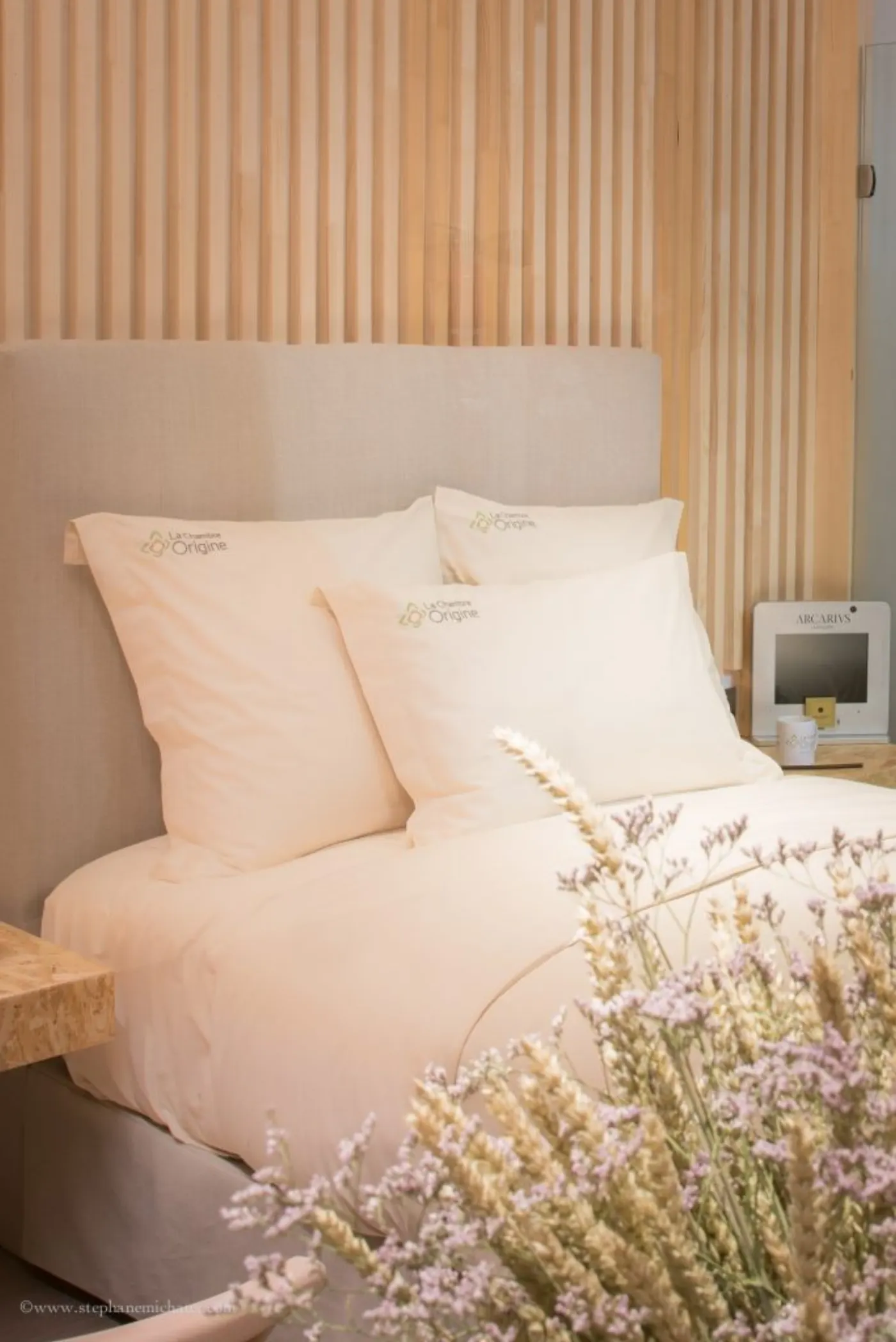
Naturalness is also common sense in the layout of a hotel. This is about thinking carefully about your organization and that of all your points of sale. Here again, nature is a perfect example of organization. Take the example of a honeycomb; a swarm has incredible organization and great logic where everything has its place. This organizational logic is essential in the design of an efficient hotel, where each space must respond to a clear and intuitive use. In the hotel room, you have to think about this place with the greatest simplicity in order to allow your guest to use it in an obvious way without creating opportunities for stress. All these subjects must be addressed in the brief given to the architect in order to bring together all the conditions for ideal comfort according to his clients.
The brief here becomes a major strategic tool to anticipate uses and guarantee a smooth customer experience.
For example, while staying at a newly opened and built hotel, I needed to plug in my computer charger near my bed. To connect to an electrical outlet, you had to remove the nightstand, bend down and put one knee on the ground, then plug in the outlet. For a 5 star hotel and even for a 1 star hotel, we would like to have a little more practicality to facilitate the use of the room. This type of detail, seemingly minor, has a direct impact on the overall perception of the customer experience.
There were other layout errors also in the room which did not make me want to come back and sleep in this hotel. When we talk about well-being, it is also important to create all the conditions so as not to annoy your guests and avoid any unnecessary stress. And believe me, the room is the place where you have to think carefully about all these little details that will make the difference in the experience of the guest's stay. When I worked at Sofitel, several of us checked all these questions which were also included in specifications to facilitate the work of architects.
Finally, in order to succeed in what some will call a revolution, it is necessary to work through teams. The quest for meaning must also have an impact on employees. It is time to bring in a new form of management where each profession will be valued and where each employee will be empowered to contribute to the development of the hotel. The pyramidal and quasi-military system of the hotel industry is often obsolete and increasingly called into question by younger generations. Everyone wants to participate in the life of the hotel and no longer submit to orders from above. The time is one of kindness and mutual aid. The new generations want to participate in the discussions, to contribute their ideas and their experience. The days of “shut up and do what I ask you to do” are over. However, this is still felt in some great chef's kitchens. A hotel brings together very varied professions requiring different skills which form a whole. It is a great example of collaborative work between people with very varied backgrounds. It is important to allow everyone to reflect on their job and that of others, the strength of skills bringing creativity and therefore allowing the implementation of new ideas. Each department must take the time to regularly question itself and work with others to benefit from their outside perspective.
What to remember
The quest for meaning in luxury hotels is not an option. It is becoming a key differentiator in a market where customers are looking for authentic, coherent and deeply human experiences.
Rethinking the design of a hotel means going back to the essentials: good sleep, well-being, ease of use, the quality of human interactions. It also means integrating a global strategic vision, where each decision contributes to the performance of the place.
For investors and operators, the challenge is major: structuring a differentiating customer experience from the outset not only makes it possible to avoid costly errors, but also to create sustainable, efficient and meaningful establishments.
This is precisely the approach developed by DELPORTE HOSPITALITY: supporting the design, strategy and teams to create generous hospitality®, aligned with the expectations of today and tomorrow.
Share this article with a colleague, a client or a partner.
That is often how an idea enters a house, and then its habits.
What you say about it matters more than what I say.
A keynote, a mission, an article in the magazine: if my work has been useful to you, a few lines on Google are worth more than any argument.
Leave a review on Google →