


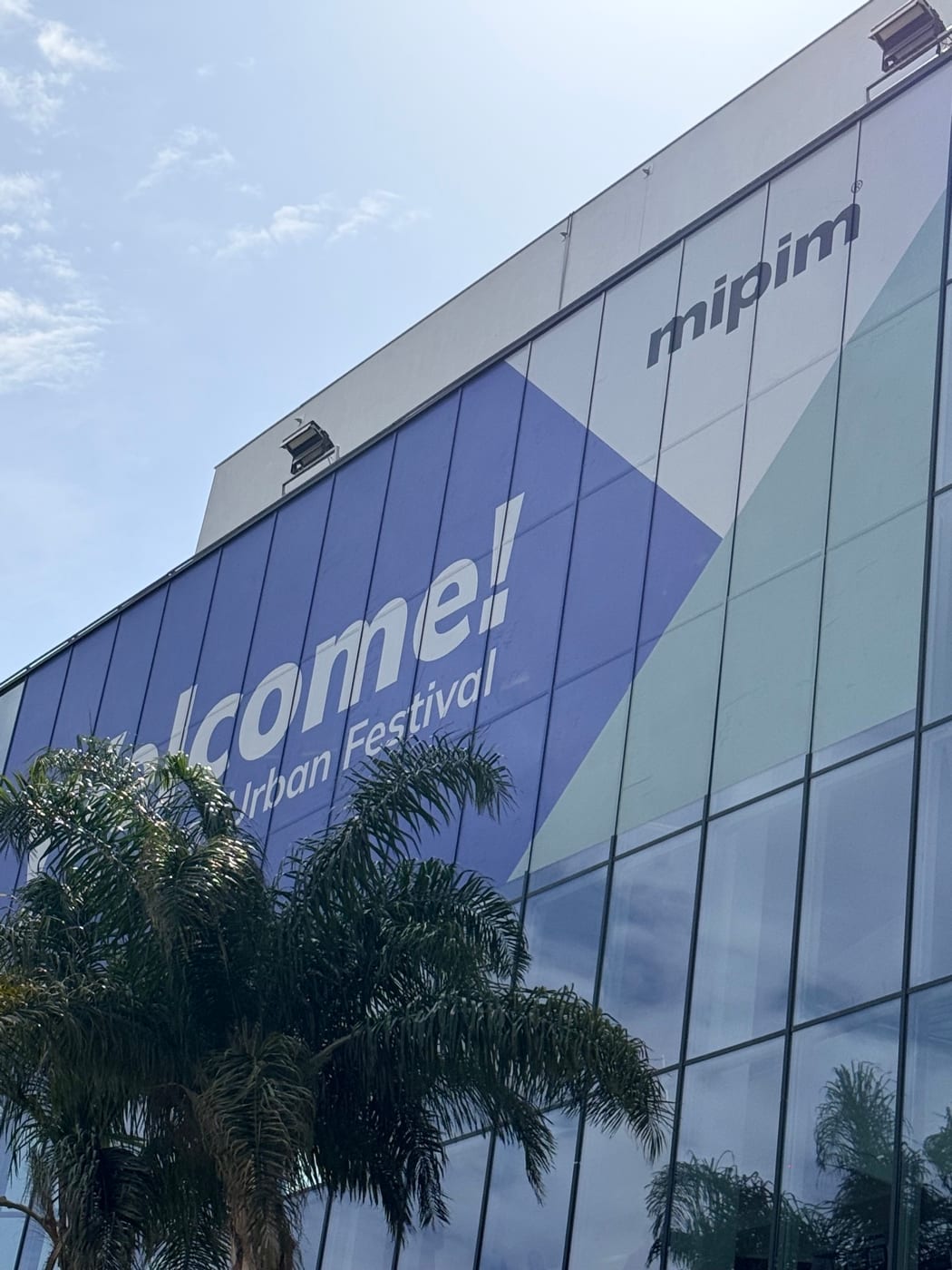
Each year, MIPIM brings together the leading figures of global real estate and investment in Cannes. For hospitality professionals, the gathering also serves as one of the most valuable opportunities to gauge the direction of the market, confront strategic trends and listen to industry analysts.
The latest data presented by STR during the March 2026 edition offered a revealing snapshot of a sector entering a new phase of maturity. The global hotel market is no longer simply recovering from the pandemic shock. It is undergoing a deeper recomposition of demand patterns, geographic dynamics and performance models.
For investors, operators and developers, understanding these shifts has become essential.
Where does the European hotel market stand in 2026?
In January 2026, European RevPAR returned to, and in several markets exceeded, its 2018 level, yet the gap between luxury and economy keeps widening.
European hospitality continues to demonstrate resilience. In January 2026, RevPAR across the region returned to, and in several markets exceeded, its 2018 level.
Behind this positive headline, however, performance gaps are widening.
Paris provides a clear illustration. Luxury hotels continue to push performance upward, supported by sustained rate growth and strong international demand. Economy and budget properties, by contrast, face increasing pressure as inflation affects price-sensitive travelers and operating margins tighten.
This divergence highlights a structural reality across Europe: premium demand remains significantly more resilient than price-driven segments.
Southern European destinations continue to perform particularly well. Greece, Spain, Portugal and Italy benefit from strong leisure demand and growing international visibility. Greece and Switzerland currently lead the region in ADR growth during the first months of 2026.
Italy is also benefiting from the economic and tourism momentum surrounding the Milano-Cortina Winter Olympics, which began in February, with ADR increasing by approximately five percent.
Central and Eastern Europe, which lagged behind during the post-pandemic recovery, now records the fastest occupancy growth, approaching three percent.
Destinations such as Georgia, where hotel supply is projected to grow by more than fifty percent compared with the current inventory, and Azerbaijan are attracting increasing attention from international travelers looking for authentic and emerging destinations.

Should investors still bet on the Middle East and Asia-Pacific?
The Middle East still holds a considerable pipeline, close to 100,000 rooms for Saudi Vision 2030 alone, but rate growth is moderating and geopolitical tension weighs.
The Middle East has experienced remarkable growth over the past few years.
Countries in the Gulf Cooperation Council, including Saudi Arabia, the United Arab Emirates and Kuwait, delivered strong hotel performance throughout 2025, supported by massive tourism investments, ambitious economic diversification programs and improved global connectivity.
However, ADR growth is now beginning to moderate, while geopolitical tensions in the region introduce new layers of uncertainty.
Saudi Arabia’s Vision 2030 remains one of the most ambitious hospitality development programs in the world. Approximately 100,000 hotel rooms are currently expected within the national pipeline. A large share of these projects is already under construction, while roughly half remain in the planning phase.
The key question is therefore not whether these developments will materialize, but how quickly they will come to market and under what demand conditions.
In Asia-Pacific, the picture is more uneven.
Vietnam and Indonesia continue to demonstrate strong momentum. Vietnam maintains occupancy levels around 63 percent despite significant new supply entering the market. Indonesia also benefits from sustained leisure demand and improving international connectivity.
China’s recovery, however, has been slower. Although late 2025 showed signs of improvement, early 2026 remains fragile. Japan enjoyed exceptional performance throughout 2025 before entering a period of stabilization in early 2026. Thailand experienced a difficult first half of 2025 but began to recover after the Chinese New Year period in mid-February.
A structural difference distinguishes APAC from Europe: in Asia-Pacific, growth is largely driven by emerging markets and midscale segments, while in Europe luxury remains the primary performance engine.
Are travellers still spending on travel?
Travel remains a budget priority, but spending is shifting: less on accommodation, more on experiences.
One of the most striking insights emerging from recent data is the continued prioritization of travel, even in an environment marked by inflation and economic uncertainty.
Travel has increasingly become a core lifestyle expenditure rather than a discretionary luxury.
However, spending patterns within the travel experience are evolving. Travelers are allocating a smaller share of their budgets to accommodation while increasing spending on experiences, gastronomy, activities, culture and well-being.
In other words, travelers are not abandoning travel. They are redefining what they value within it.
This shift has profound implications for hospitality operators. Delivering a distinctive experience is no longer a differentiating advantage; it has become a baseline expectation.
Properties such as the Rosewood Hong Kong, Aman Tokyo and Six Senses Ibiza demonstrate how hotels increasingly function as experiential destinations. Architecture, gastronomy, wellness and cultural programming combine to transform a stay into a narrative experience.
This positioning enables hotels to maintain pricing power even during periods of economic volatility.
Why are independent hotels joining brands?
Branding has gained five to ten percentage points in lower segments since the pandemic, because a brand brings distribution, loyalty and operating standards.
Another structural transformation has quietly reshaped the European hotel landscape over the past decade: the conversion of independent hotels into branded properties.
The trend has accelerated significantly since the pandemic. In several markets, branding penetration in lower segments has increased by five to ten percentage points.
Several factors explain this shift. Brand affiliation offers distribution strength, loyalty programs, operational standards and international visibility. For owners and investors, joining a brand network often reduces customer acquisition costs while increasing pricing power and asset valuation.
Over time, this process also reduces performance gaps between hospitality segments across the European market.
Which emerging destinations deserve attention?
Georgia, Morocco, Egypt, Vietnam and Indonesia now concentrate the strongest prospects, with competition still moderate.
One of the most interesting developments highlighted during this year’s MIPIM discussions is the growing importance of emerging destinations.
Morocco, although outside Europe, belongs to the same Mediterranean leisure ecosystem as Greece or Spain and is experiencing similar growth dynamics. The country is preparing for a significant expansion of its hotel inventory toward 2030.
Egypt is also gaining momentum. Driven by the continued development of Red Sea resorts, the country is projected to achieve tourism growth of around seven percent.
Vietnam, Indonesia, Georgia and Azerbaijan share a similar appeal: they offer international travelers new experiences combined with attractive value propositions.
For investors, these destinations represent development opportunities while competition remains relatively moderate.
Travelers choosing these markets are not seeking standardized hospitality. They are looking for immersion, coherence between architecture, gastronomy, local culture and the experience of welcome itself.
This is precisely why experiential hospitality projects often find particularly fertile ground in emerging destinations.

How can you invest despite geopolitical uncertainty?
Hotel markets follow remarkably stable seasonal cycles, which argues against overreacting to short term turbulence.
Looking ahead, forecasts for 2026 and 2027 suggest a more moderate pace of growth for the European hotel market.
Geopolitical tensions, particularly in the Middle East, are already affecting international air traffic and increasing transportation costs. Air hubs such as Dubai, Doha and Abu Dhabi account for roughly fourteen percent of global connecting traffic. Disruptions in this region therefore reverberate across global travel flows.
Certain European markets, including the United Kingdom, Switzerland and Cyprus, could see tourism demand decline by as much as ten percent as a result.
At the same time, intra-European travel remains a strong stabilizing force.
Longer-term projections appear more encouraging. Major events such as the UEFA European Football Championship in the United Kingdom and Ireland in 2028 are expected to stimulate renewed tourism growth.
Historical data also reminds us that hospitality markets tend to follow relatively stable seasonal cycles. Periods of uncertainty rarely alter these underlying structural patterns.

What to remember
The fundamentals of global tourism remain solid: travel demand is not weakening, it is moving.
The data presented by STR at MIPIM 2026 confirms that global tourism is currently navigating a period of turbulence. Yet its underlying fundamentals remain remarkably strong.
Travel demand has not disappeared, it has evolved.
Travelers are more selective, more informed and increasingly focused on experiences that feel authentic and meaningful. But they continue to travel and remain willing to invest in what they perceive as memorable and unique.
Two key conclusions emerge.
First, hospitality operators who invest in experience, differentiation and identity are best positioned to navigate periods of uncertainty.
Second, emerging destinations, from Morocco to Georgia, from Vietnam to Egypt, represent development opportunities that forward-looking investors cannot afford to overlook.
The global hospitality market is entering a new phase of transformation. Those who understand its deeper dynamics will ultimately shape its future.
Key takeaways
• European RevPAR in January 2026: back to 2018 levels, with slight growth compared with 2025.• Luxury continues to outperform across markets, while economy segments struggle to achieve structural growth.• Greece, Switzerland and Iceland: strongest ADR performance in Europe at the start of 2026.• Italy: ADR growth of around 5%, driven by the Milano-Cortina Winter Olympics.• Georgia: projected +52% increase in hotel supply, an emerging destination to watch.• Middle East: around 100,000 hotel rooms in the pipeline under Saudi Arabia’s Vision 2030.• GCC air hubs (Dubai, Doha, Abu Dhabi): approximately 14% of global connecting air traffic.• Egypt: tourism growth projected at around 7%, driven by the Red Sea resort market.• 2028 outlook: stronger growth expected, supported by the UEFA European Football Championship in the UK and Ireland.• Structural trend: travel spending shifting toward experiences rather than standard accommodation.
Sources: STR, data presented at MIPIM, Cannes, March 2026.
Share this article with a colleague, a client or a partner.
That is often how an idea enters a house, and then its habits.
What you say about it matters more than what I say.
A keynote, a mission, an article in the magazine: if my work has been useful to you, a few lines on Google are worth more than any argument.
Leave a review on Google →