Every two years, EquipHotel brings together in Paris everything the hotel and restaurant industries have to offer in the way of suppliers, designers and operators: 1,200 exhibitors, 80,000 professionals from 133 countries, four halls and 90,000 square metres. A show of that size cannot be walked at random.
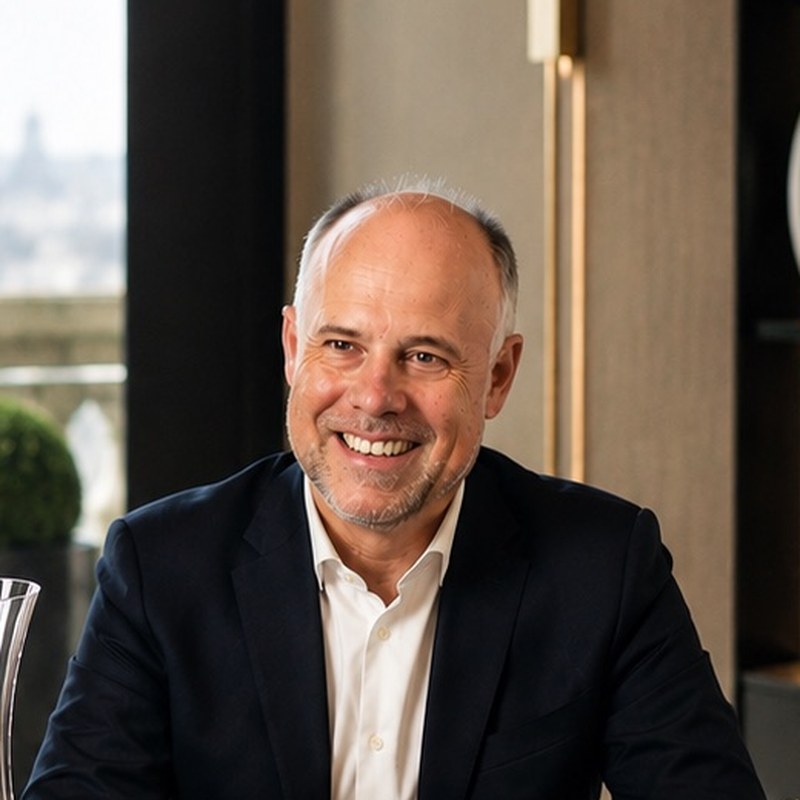
That is where the EQUIPHOTEL Luxury Trail by DELPORTE Hospitality comes from. Created in 2018 with the show's teams, it is an independent selection of exhibitors, which I run personally, to guide upscale and luxury houses towards the suppliers able to meet their standards. November 2026 will be its fourth edition, and its success shows no sign of fading.
Every summer, between June and September, the applications land on my desk and I study them one by one, without ever delegating that reading. In 2024, more than 130 companies applied and I selected 110.
When I open one of those files, I am not looking for a beautiful product. I am looking for a sign of what hospitality will be in three or five years.
Taken together, these applications form the most honest picture I know of the upscale hotel market: what is being invented, what is going out of fashion, what is rising quietly. In this article, I invite you behind the scenes of that selection: what I look for, what it teaches me about the market, and what it brings both to those who consult it and to those who appear in it.
How are the Luxury Trail exhibitors selected?
Through an individual reading of every application, and one simple rule: no place can be bought. Taking part is free, reserved for exhibitors at the show, and only the quality of the answers counts.
Béatrice Gravier, who runs EquipHotel, measures what this selection brings to the show:

Béatrice Gravier, director of EquipHotel
What should you look for in a supplier to the luxury hotel industry?
The real benefit for the hotel's guest, and for the teams who will use the product every day. Not the technical sheet, not the patent, not the brand's reputation.
That is the dividing line between a supplier and a partner. Many companies describe their product admirably, its materials, its manufacture, and find themselves at a loss when I ask what it changes for the person sleeping in the room, or for the person preparing it the next morning. The application form is built around that question: each house has 800 characters to justify its presence, and as many to describe three concrete benefits. A brand held to that brevity can no longer hide behind its brochure. It has to choose, and that choice tells me the essential.
The time I give each application varies tenfold. Five minutes are sometimes enough, when I already know the house, its work and the seriousness of its references. Others hold me for forty-five minutes. And I regularly go back to a company for clarification when an answer lacks precision. That follow-up is never an administrative formality: the way a house responds already shows how it will treat a hotelier on the phone six months later.
Why is responsible commitment a selection criterion?
Because no house can serve the upscale and luxury hotel industry today without having thought about two things: the place it gives to the women and men who make it live, and the footprint it leaves. Every application must describe its flagship actions in this area, and the question is not optional.
The demands of luxury do not stop at the beauty of an object. A remarkable product, made without regard for those who produce it or at the cost of a heavy footprint, becomes difficult for an exceptional house to defend to its clientele. That clientele asks the question more and more often, and the management teams who consult me pay close attention to it.
This does not mean I expect perfection. Nobody achieves it, and a company claiming to be beyond reproach on every front would make me cautious rather than impressed. What I look for is a genuine approach: three concrete actions are worth more than a complete speech. That is precisely where the houses that have acted part company with those that have communicated, and it is often on this question that brilliant applications collapse.
Why select houses that do not see themselves as luxury?
Because luxury is not a product category, it is a level of demand. Some houses were never aimed at the upscale market, never sought it, and yet offer a quality, a story or an intention that has every place in a palace hotel.
Those are often my finest discoveries. An artisanal compote made from unsold fruit, a tea infused in birch sap, a bed-lifting system that spares the backs of housekeeping teams: none of this belongs to the usual vocabulary of luxury, and all of it belongs in an exceptional house. These companies sometimes lack very little to make the leap, a rethought packaging, a better told story, a more accurate staging of their craft. Those houses deserve to be selected, and to hear it.
I do of course look at whether a house is already present in the upscale market, but that is not a decisive criterion. An innovative product, or a service capable of adapting to this world with a little work, holds my attention just as much. The Trail therefore does not gather only the names the industry expects, and that is what makes it worth reading.
A notebook of trends as much as a visitor's guide
Reading those 130 applications gives me, every year, a view of the market that no industry report would offer, because it reveals the gap between what brands believe they are selling and what hoteliers actually buy.
Two signals stand out regularly, beyond the responsibility question already covered. Client references first, which tell a brand's real positioning far better than its adjectives. And above all the appearance, in recent years, of solutions designed for teams rather than for guests alone: seeing the physical strain of hotel work become a subject of industrial innovation is, to my mind, as important a signal as any aesthetic trend.
That is why the Trail has become, for me as for those who consult it, a genuine notebook of trends. It does not only say where to buy. It says what is moving.
How does this work feed my consulting practice?
What I read in the summer comes back the following year in my audits, my training sessions and my talks, and above all in the projects I support.
When I work on the design or the renovation of a place, the question is never only aesthetic. It is about which hospitality strategy that place must serve, and with which partners it will become possible. A management team wanting to reduce the strain on its housekeeping, a spa director rethinking a product range, an owner wanting to lighten the footprint of packaging: each of them needs to be pointed towards houses whose file has been read, whose samples have been seen and whose references have been checked.
I never address the market in general terms in my talks. I speak about what I have seen come through, with names. That demand for precision I owe entirely to this summer reading.
How do visitors use the Luxury Trail?
They download it before coming, and they arrive with an itinerary rather than a hall plan. I regularly meet visitors who tell me so: across 90,000 square metres, the truly scarce resource is time.
Two images come back to me. The first is the design director of a major group, responsible for all of his house's creative work, whom I met at the show with the Luxury Trail printed out in his hand. He had annotated it stand by stand, with the questions he intended to ask each of them written in the margin. His visit was prepared like a campaign.
The second is the head of a large yacht builder, who came looking in the hotel industry for what his own sector did not offer him, and who used the guide in exactly the same way. These uses are often discreet, and I only discover them in passing conversation.
These two profiles share something that should hold the attention of exhibitors: neither of them was looking for a hotel supplier. They were looking for an idea, a material, a piece of craftsmanship. A selected house therefore does not only gain hotel clients, it becomes visible to entire worlds it would never have approached.
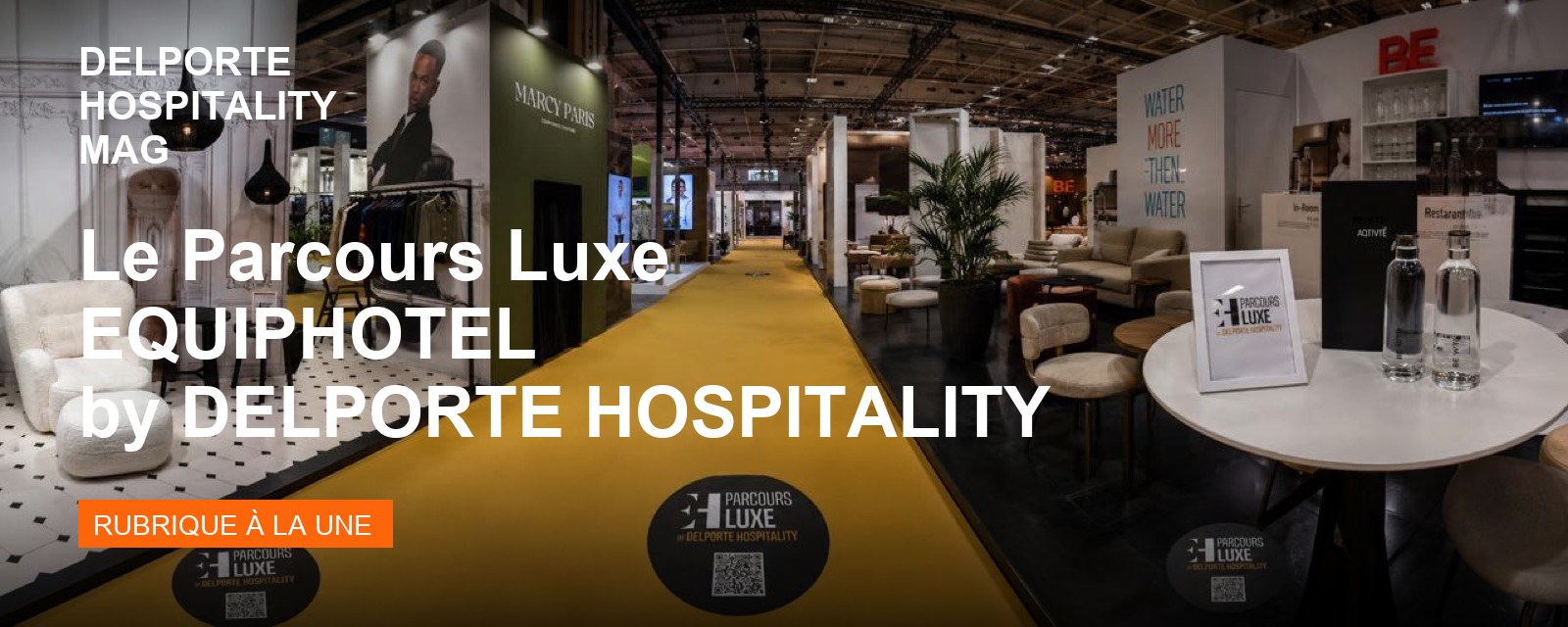
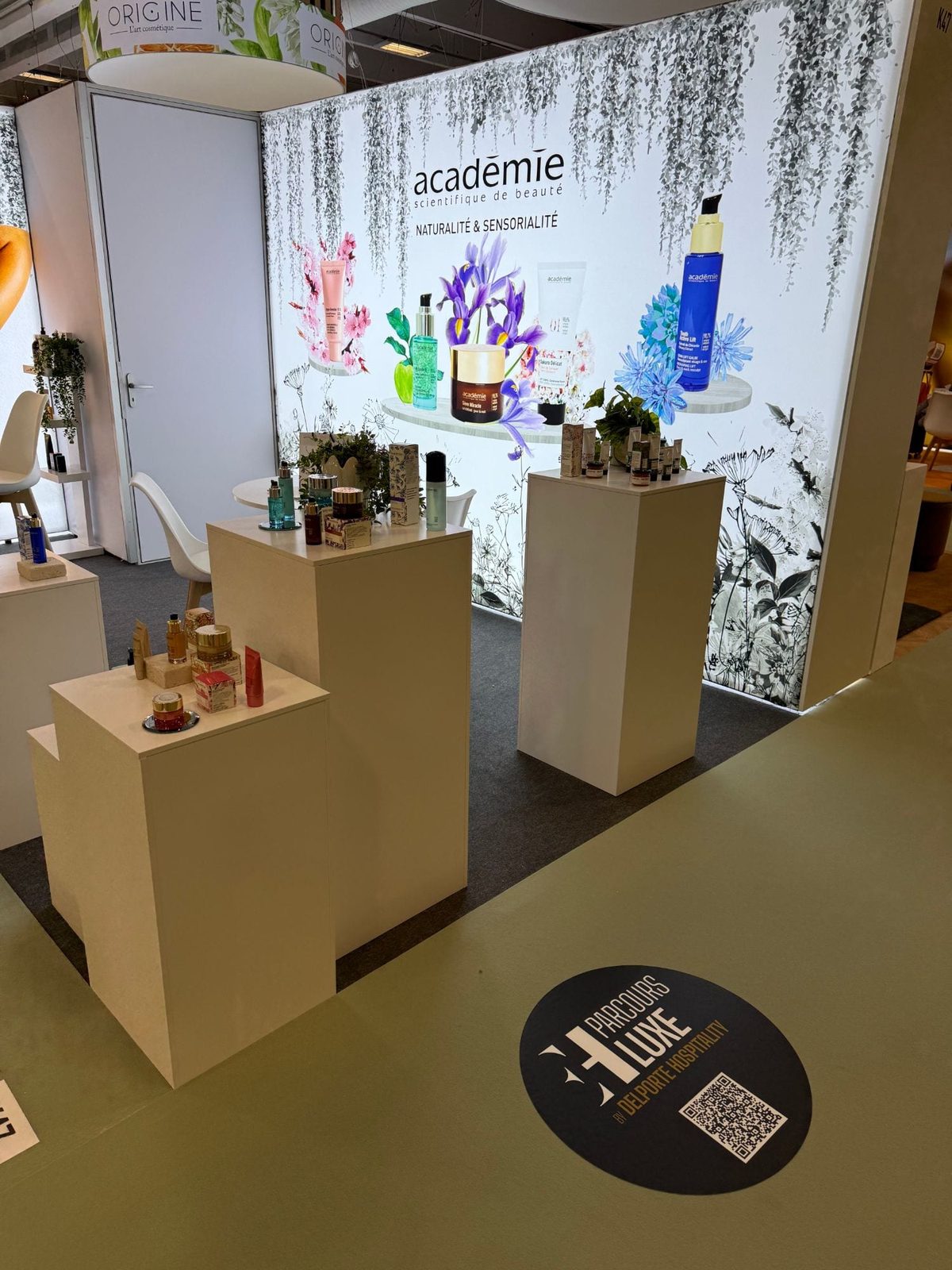
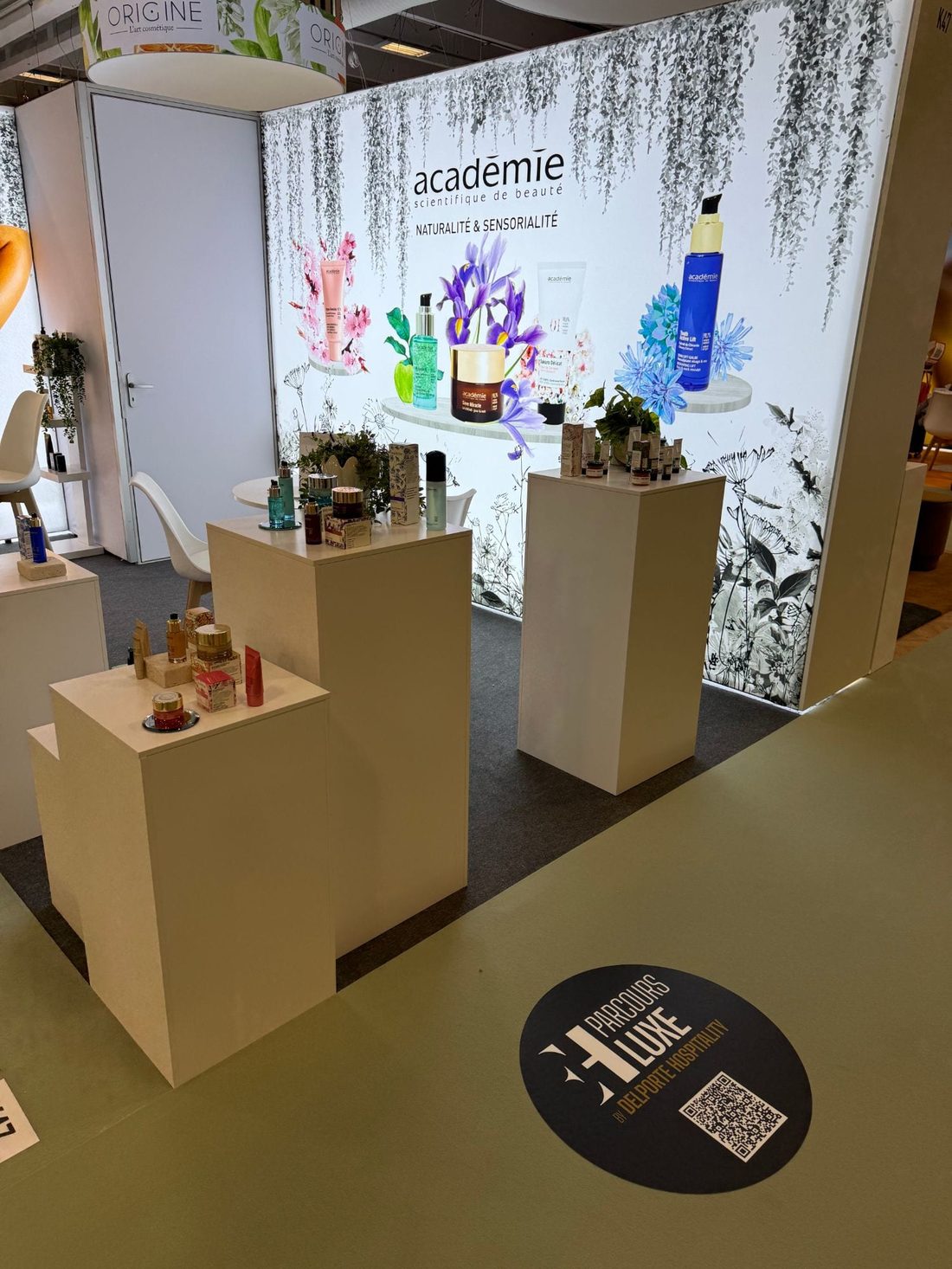
In the aisles, the official floor marker identifies the selected houses and guides visitors from stand to stand.
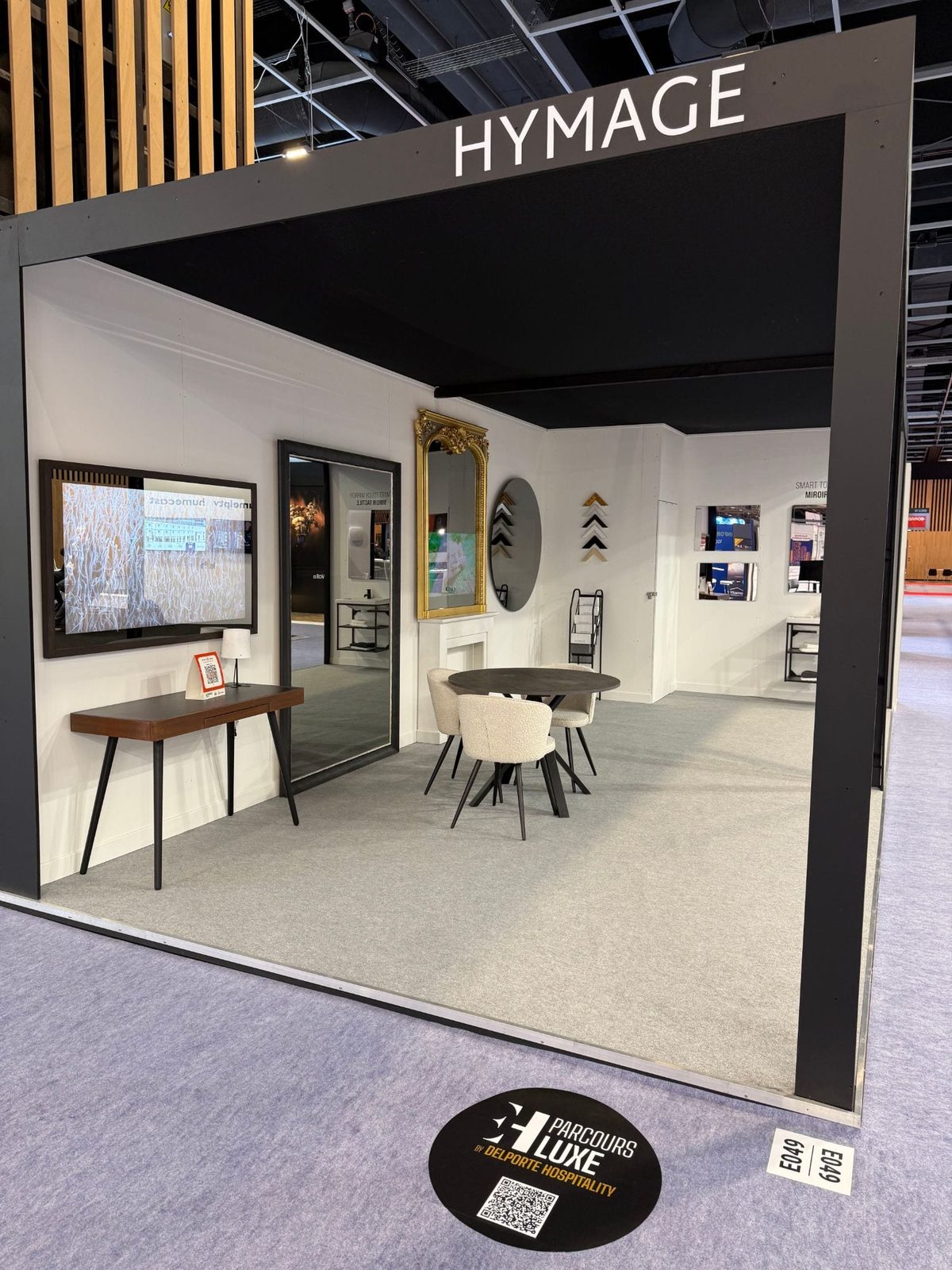
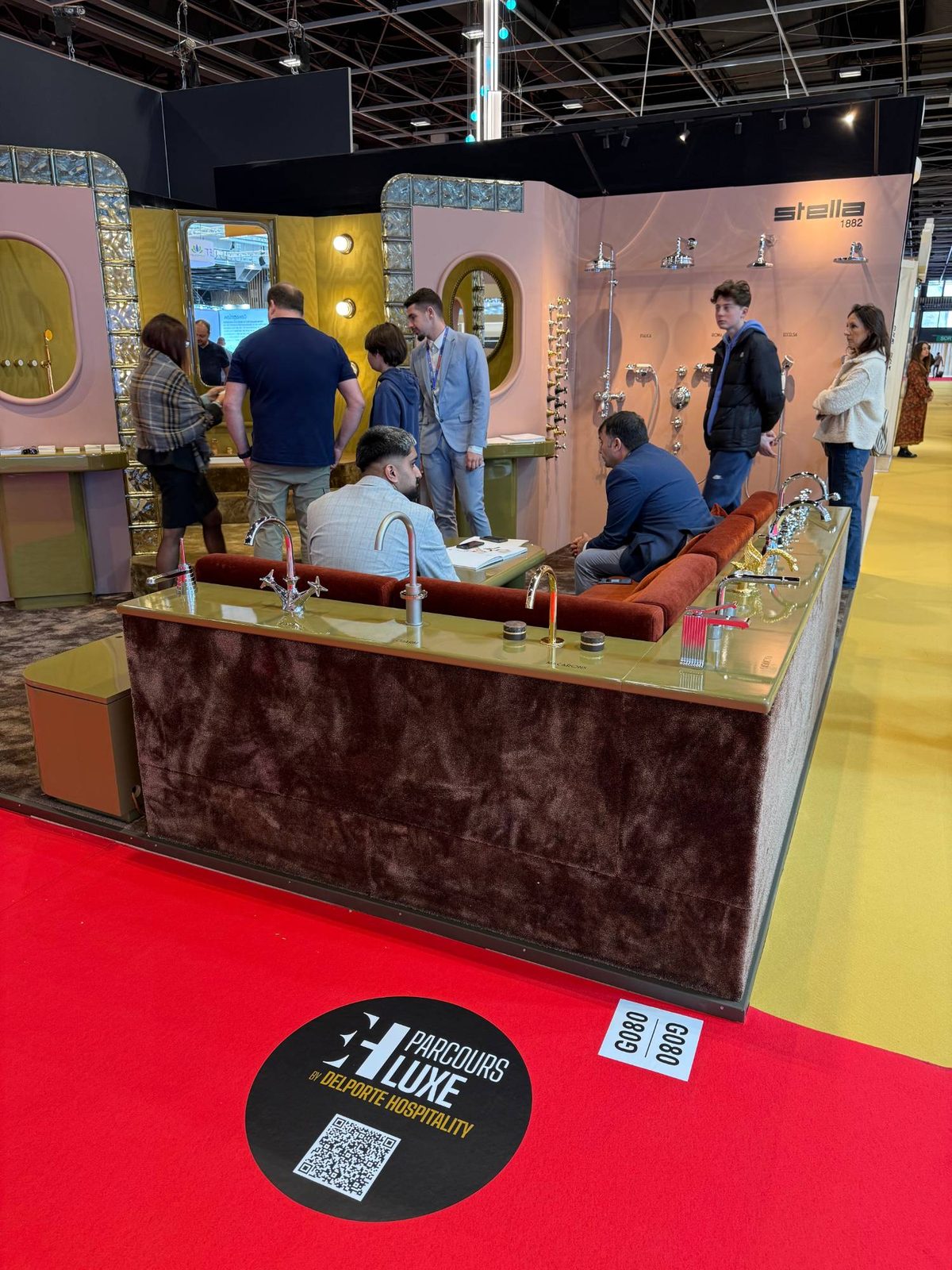
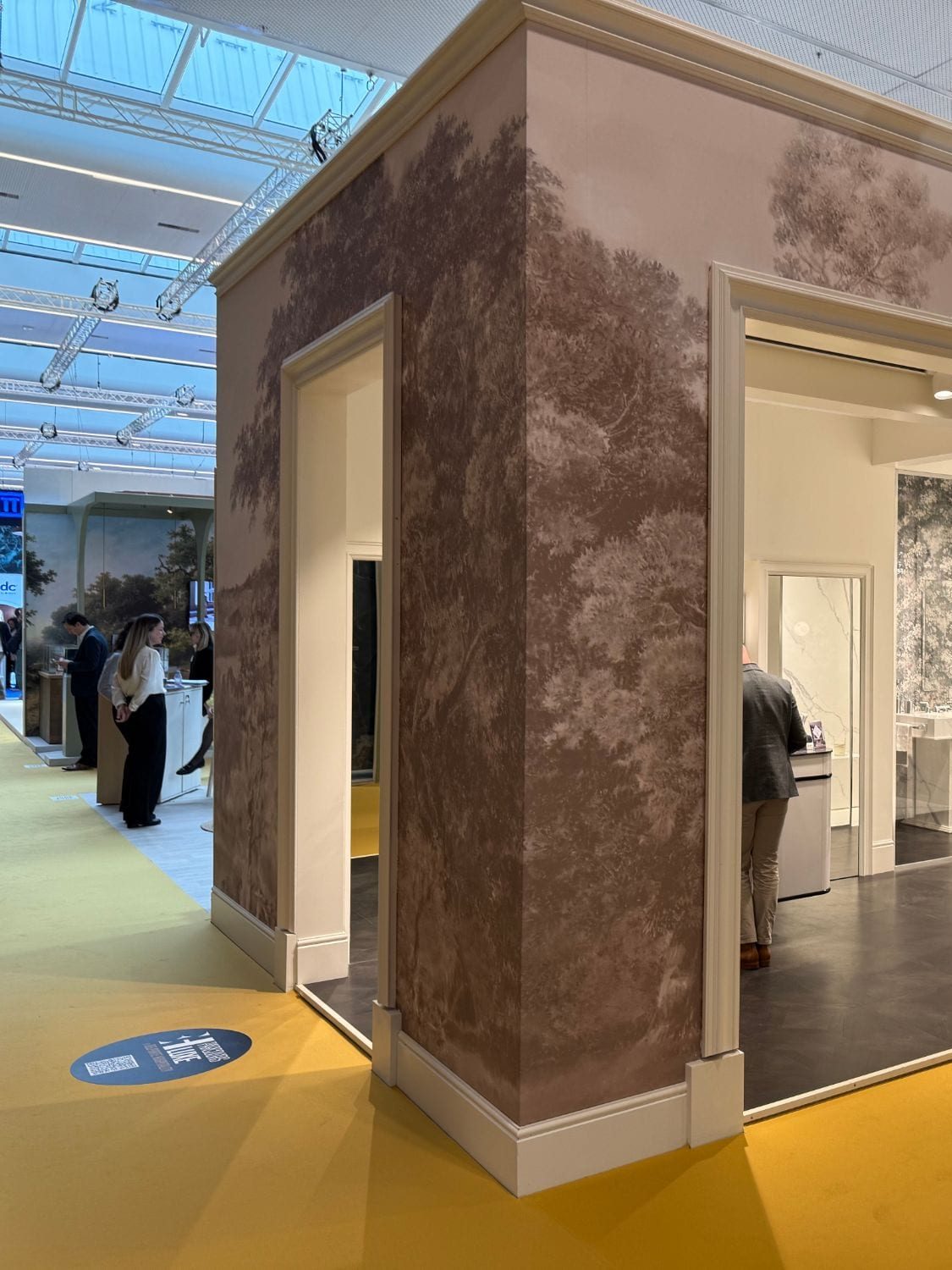
What does a selected brand gain from the Luxury Trail?
Targeted visibility among qualified decision makers, and a mark of recognition that outlives the show by a long way. The official signage on the stand, presence in the materials sent to visitors before they arrive, a feature in the magazine and in a newsletter followed by more than 10,000 professionals, a logo that can be reused afterwards: the detail is on the Parcours page.
What most applicants discover afterwards is that this visibility does not fit inside the show's four days. It begins weeks before the doors open, when visitors are preparing their trip and deciding who they will go and see, and it carries on long after, because the Trail takes the form of an illustrated document in which each house appears with its products, and that document keeps circulating.
The best sign of that value does not come from me. Béatrice Gravier came across, at an entirely different show, an exhibitor who had framed her Luxury Trail certificate to display it on her stand, as proof of seriousness addressed to visitors from outside our industry. She tells the story in our interview. A house that hangs this selection on the wall of another show says more than any report on returns.
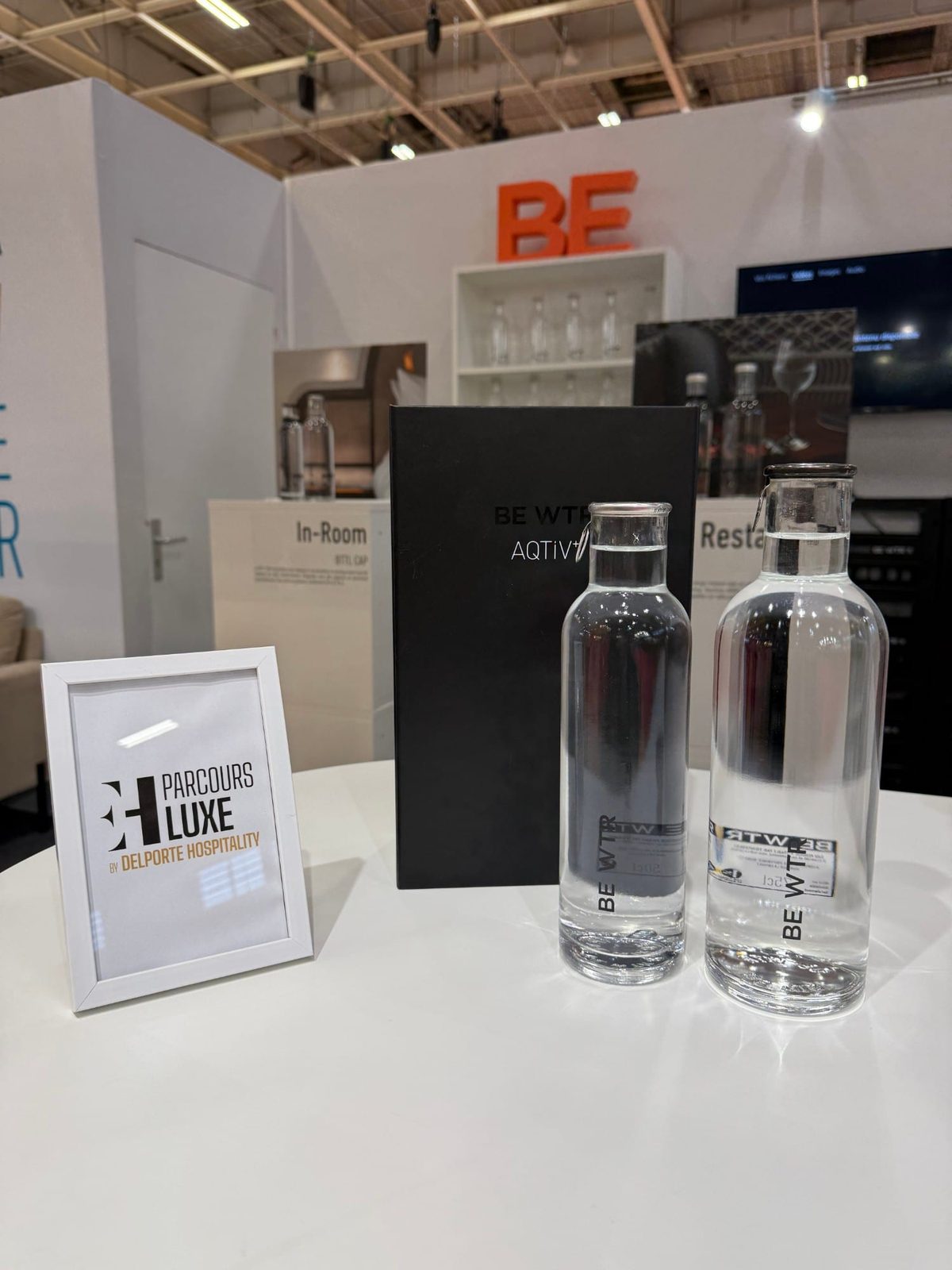
Some houses go further and stage the distinction themselves on their stand.
Why a trophy built around generosity?
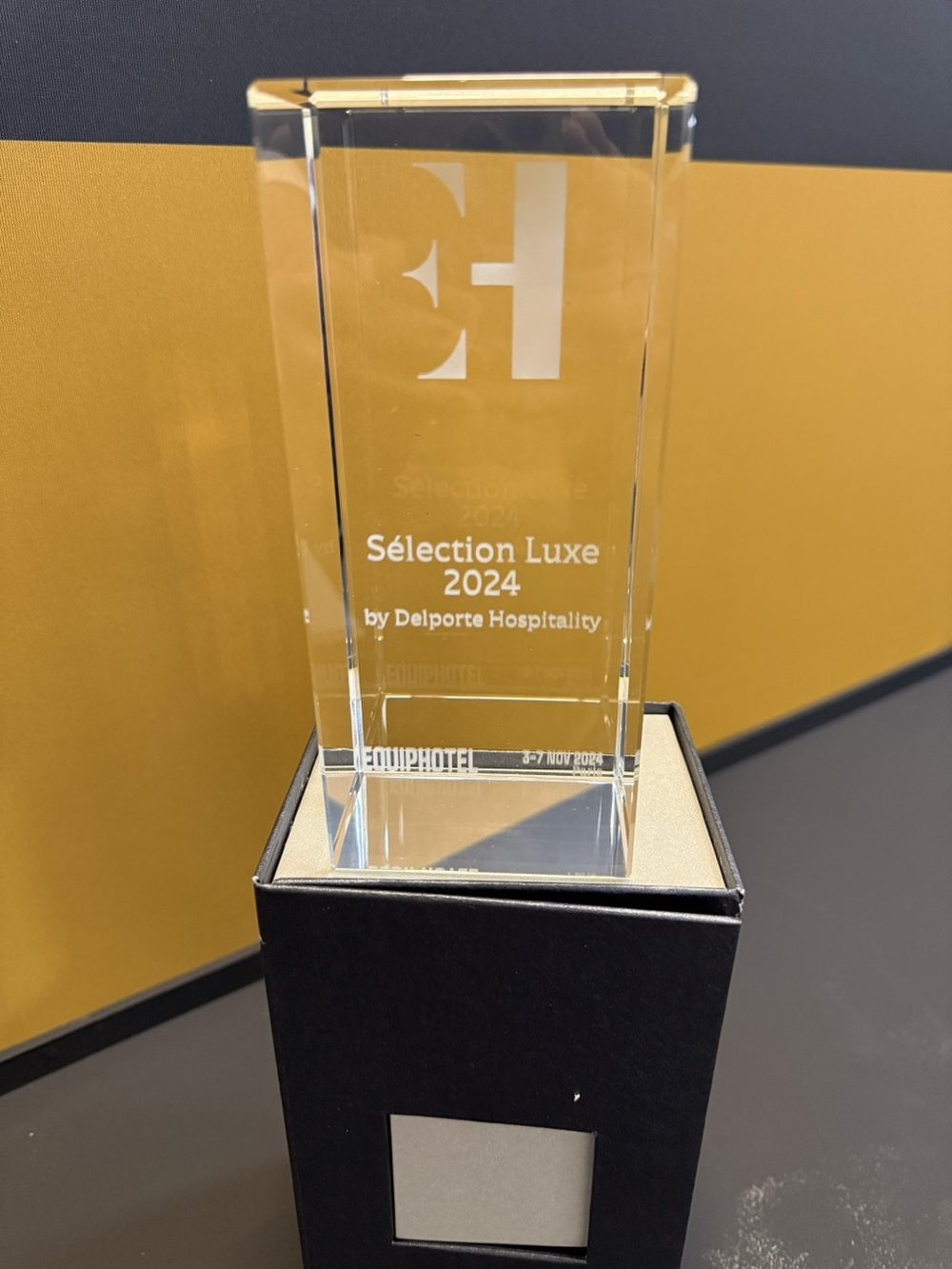
Because amid such a diversity of products and services, something had to be singled out that remains inseparable from our profession. Generosity is part of it. This trophy was born of that idea, and it is also a chance to redefine, each year, what the word means in the hotel industry and, more widely, in hospitality.
Every year, among the houses selected, one particularly inspiring initiative is distinguished, and the trophy is presented publicly during the show.
In 2024, while going through the applications, I came across a name that took me straight back to my childhood: Académie Scientifique de Beauté. As a boy I went along with my mother when she bought their products, and I remember the samples handed over at every visit.
For more than fifty years, this house has indeed been giving samples of its various products, so that its customers and prospects can discover them and genuinely try them. Even today, in its points of sale, it advises, shares its scientific approach to skincare, and still hands over those samples.
That is what I call a sincere approach. A house that has been giving for fifty years, without turning it into a campaign argument, necessarily carries that generosity into its professional practices. That is what decided me.
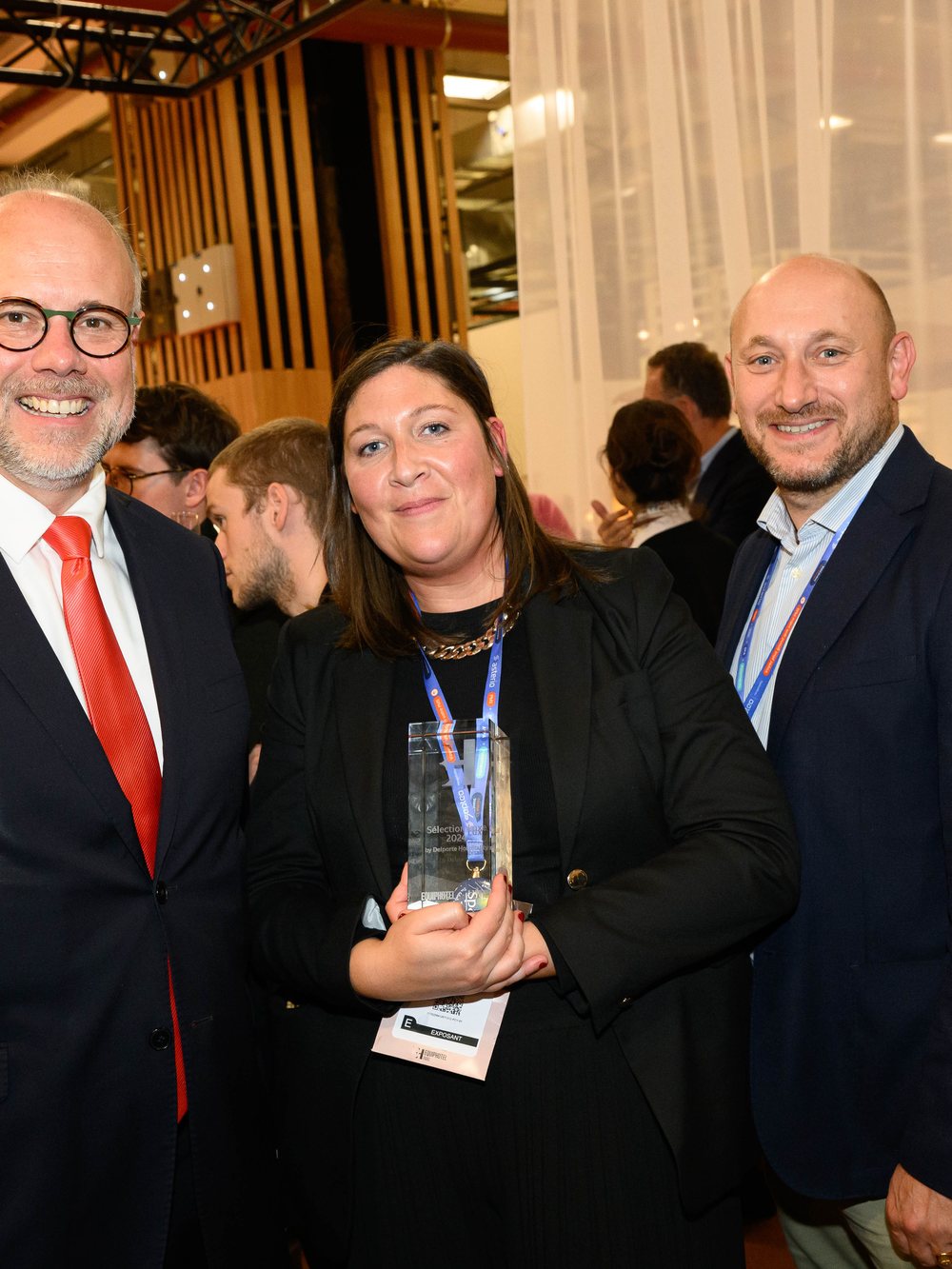
So I presented the 2024 trophy to them, alongside Jennifer Weinfeld, the group's sales and marketing director, and Jérôme Lallemand Piat, sales director. This family house, passed down through five generations, is also committed to a more responsible approach to beauty, right down to its formulas, its packaging and its daily trade-offs.
This house supplies cosmetics and treatment protocols for the spas and beauty rooms located inside hotels. But what held my attention goes further than the product: it also knows how to support an establishment in the care given to its own teams. Inviting employees to use these products, training them to look after their skin and their face, is an attention almost nobody considers.
It is, however, a very concrete answer to the question every director asks me today: how do I motivate and keep my teams? Giving an employee the care they provide to guests every day costs little, is quick to put in place, and says more than any speech about what generous hospitality means. A spa supplier then becomes a partner of the employer brand, something very few hoteliers have seen yet.
My conviction is this: what makes hospitality strong is the generosity and the warmth of those who practise it. The Luxury Trail works the same way. The selected companies form a community sharing the same standards of excellence, and the more each one takes part, the more that collective energy turns into visibility, credibility and concrete opportunities for all of them.
Reading applications year after year, I notice a pattern: the houses that last for decades are rarely the ones that speak loudest. They move forward with a quiet consistency, and that consistency ends up showing, in their products as in the way they treat people.
How do you apply to the Luxury Trail?
Applying is free and reserved for exhibitors at the show. Only the quality of the answers counts: no place can be bought, and a question left unanswered is disqualifying.
The form also includes a section devoted to the trophy, where the company describes an initiative embodying generosity. Few houses fill it in with care. It is nonetheless the one that holds me the longest.
The rules, the calendar and the presentation of the most recent winners are gathered on the Luxury Trail page.
Further reading
Share this article with a colleague, a client or a partner.
That is often how an idea enters a house, and then its habits.
What you say about it matters more than what I say.
A keynote, a mission, an article in the magazine: if my work has been useful to you, a few lines on Google are worth more than any argument.
Leave a review on Google →