Brazil is the world's twelfth wellness market, and by a wide margin the largest in Latin America, ahead of forty-five other countries in the region. The sector represents close to ninety-six billion dollars there, nearly five percent of the country's wealth, according to the Global Wellness Institute.
That figure deserves to be known, because it corrects a common assumption. Wellness in Brazil is not a recent import for a wealthy clientele. It is a massive, deeply rooted sector, weighing on the country's economy the way entire industries do.
And in that country, the best hotel spa has been named, two years running, in 2024 and in 2025: Asaya Spa by Guerlain at Rosewood São Paulo, crowned best hotel spa in Brazil and best hotel spa in Latin America by the World Spa Awards. Vogue magazine also included it among the hundred best spas in the world.
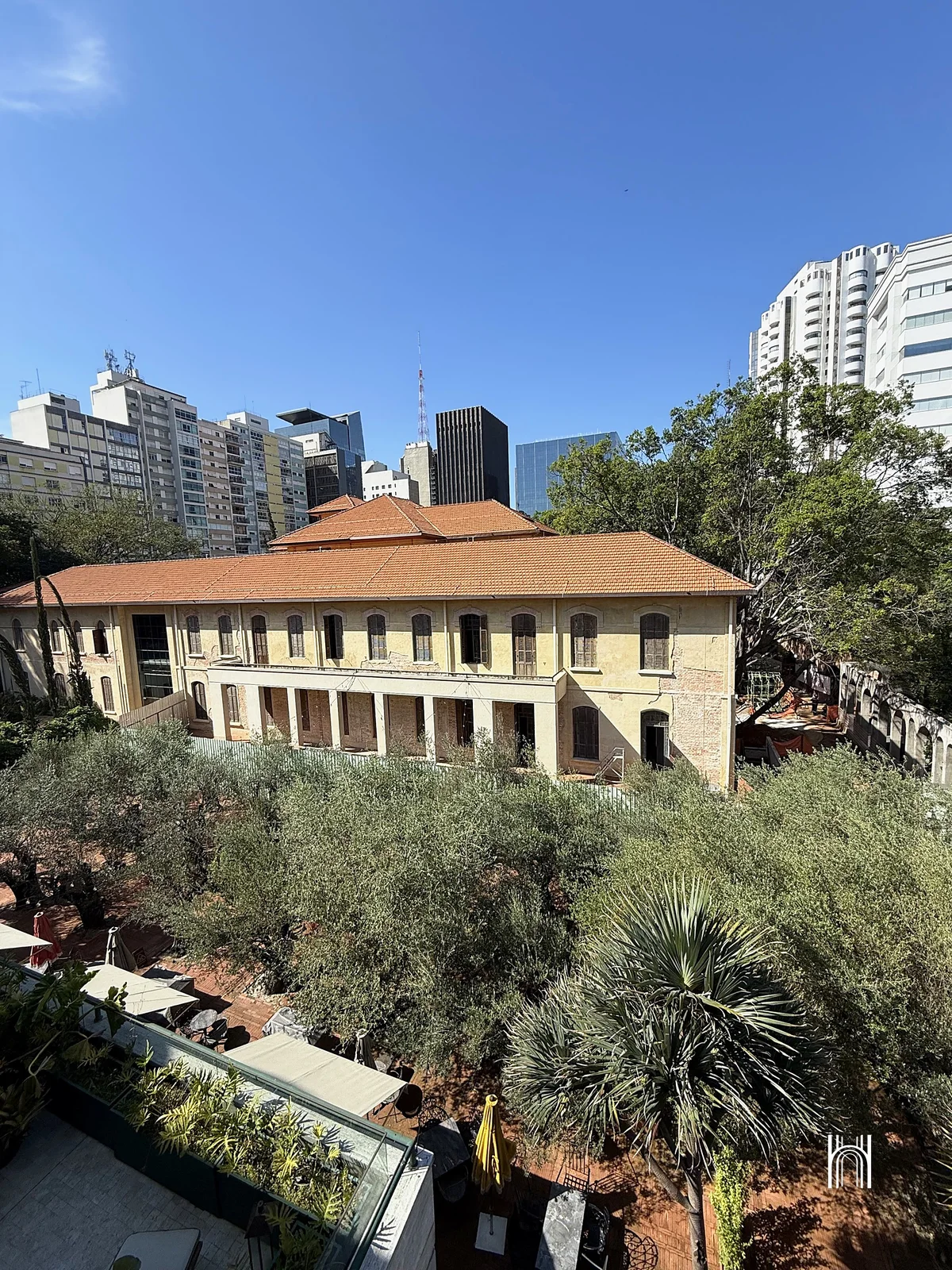
This spa sits on no beach in Bahia, in no forest, by no thermal spring. It stands at the heart of São Paulo, the largest metropolis in the southern hemisphere, minutes from the Avenida Paulista, inside the preserved enclave of the Cidade Matarazzo. It is called the Asaya Spa by Guerlain, and it is the first Asaya spa in South America.
The best place on the continent to rest sits in the city that rests the least.
A spa is, in fact, the space that most fully expresses what a house thinks of its guests' time, because it exists for nothing else. It occupies square metres, mobilises long-trained teams, and produces nothing but time given back to someone. A house that builds one places its guests' rest at the centre of its offer, and it says so through an investment that never pays back as much as an extra room would.
What is the Asaya Spa by Guerlain at Rosewood São Paulo?
The Asaya Spa by Guerlain is the first Asaya spa in South America, born of the alliance between Rosewood's integrative wellness concept and the Parisian house of Guerlain.
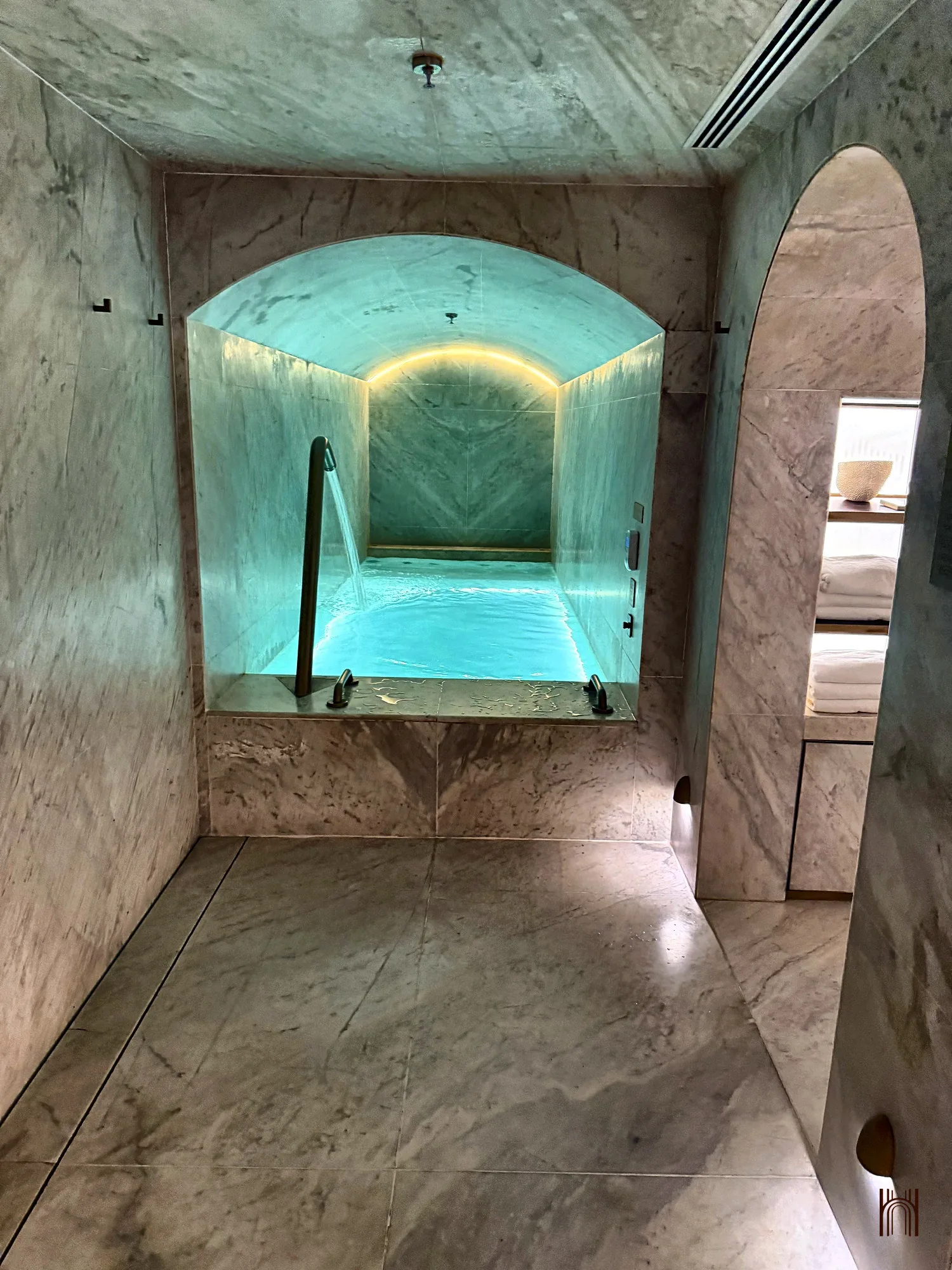
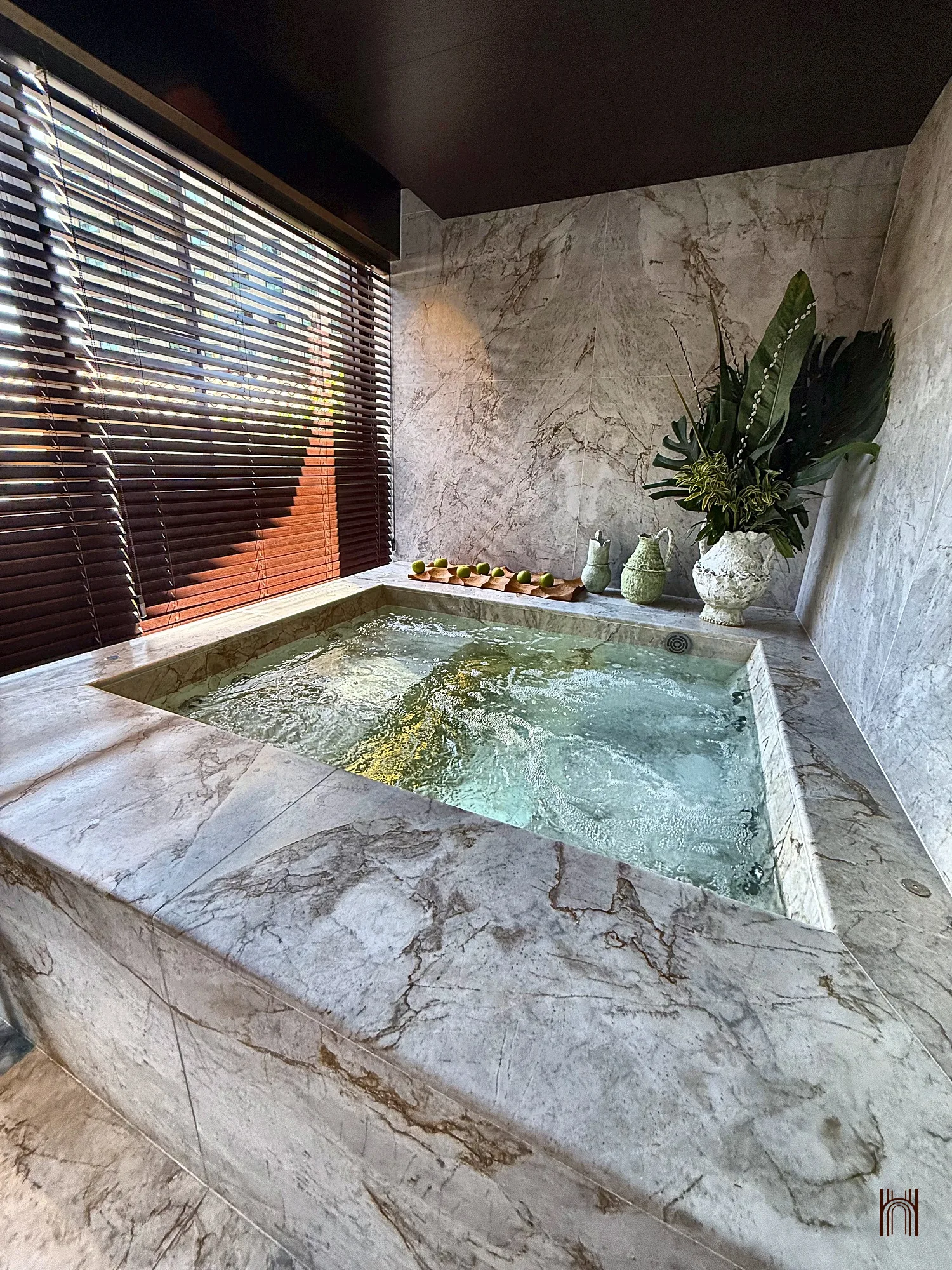
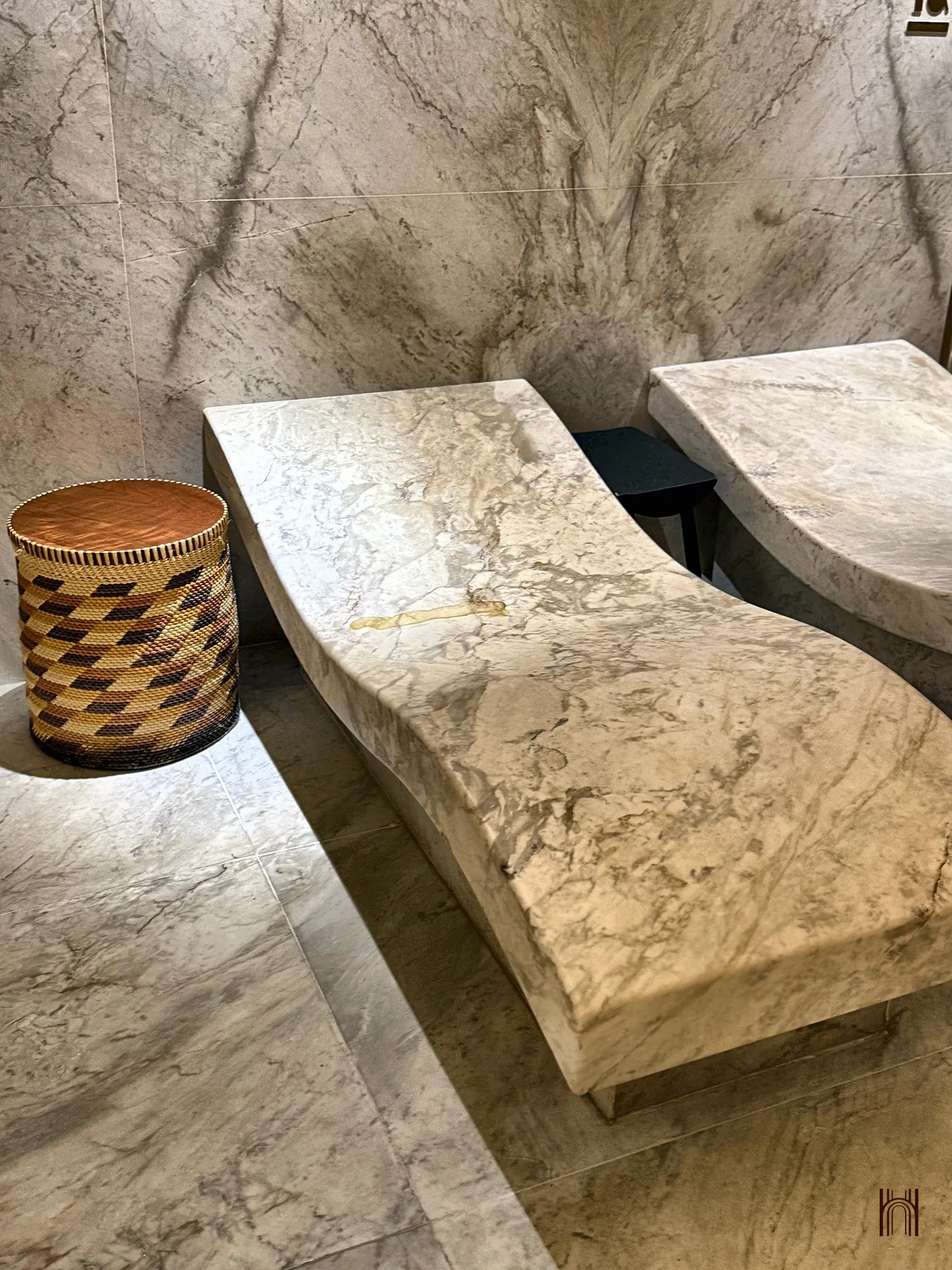
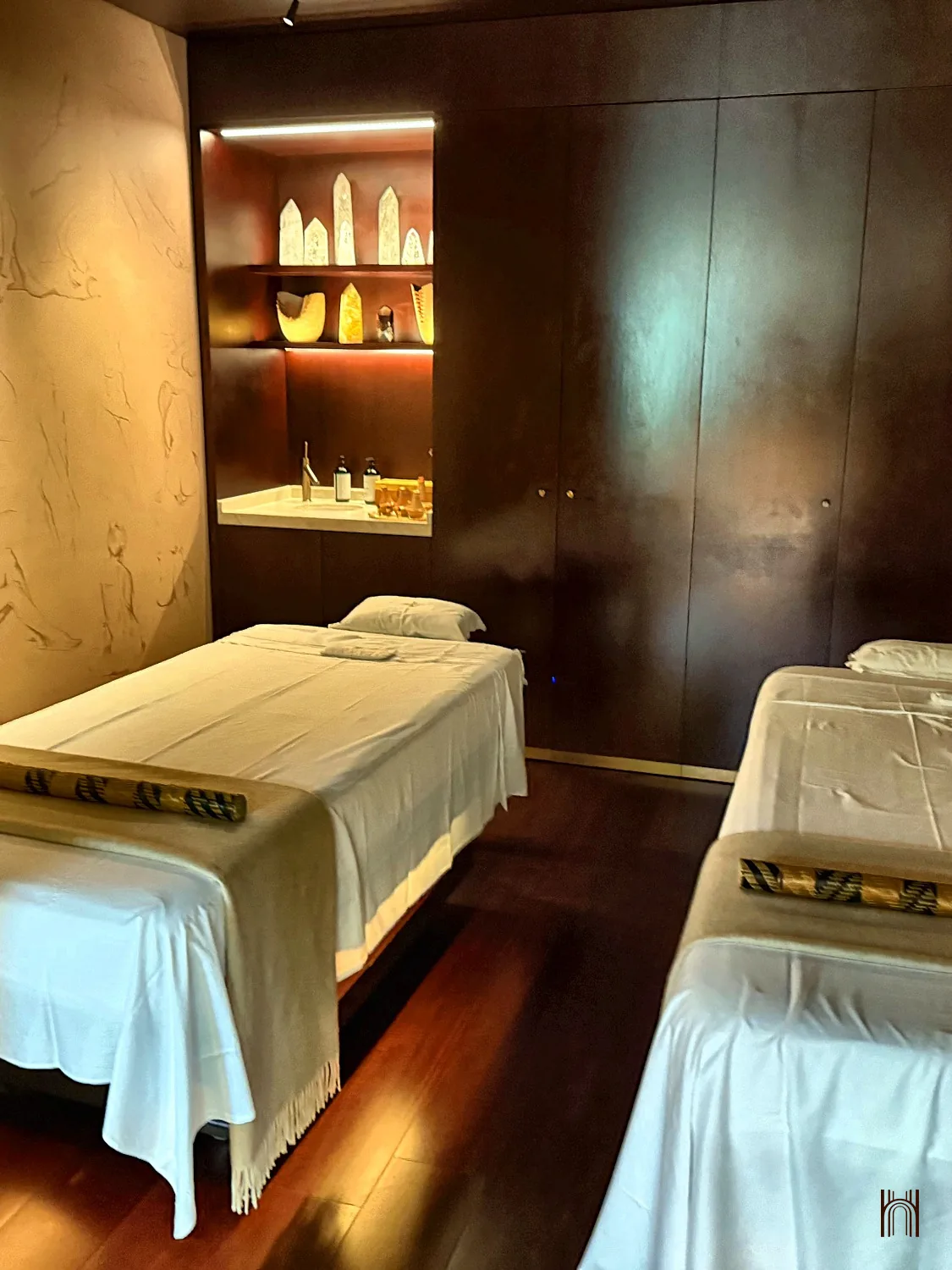
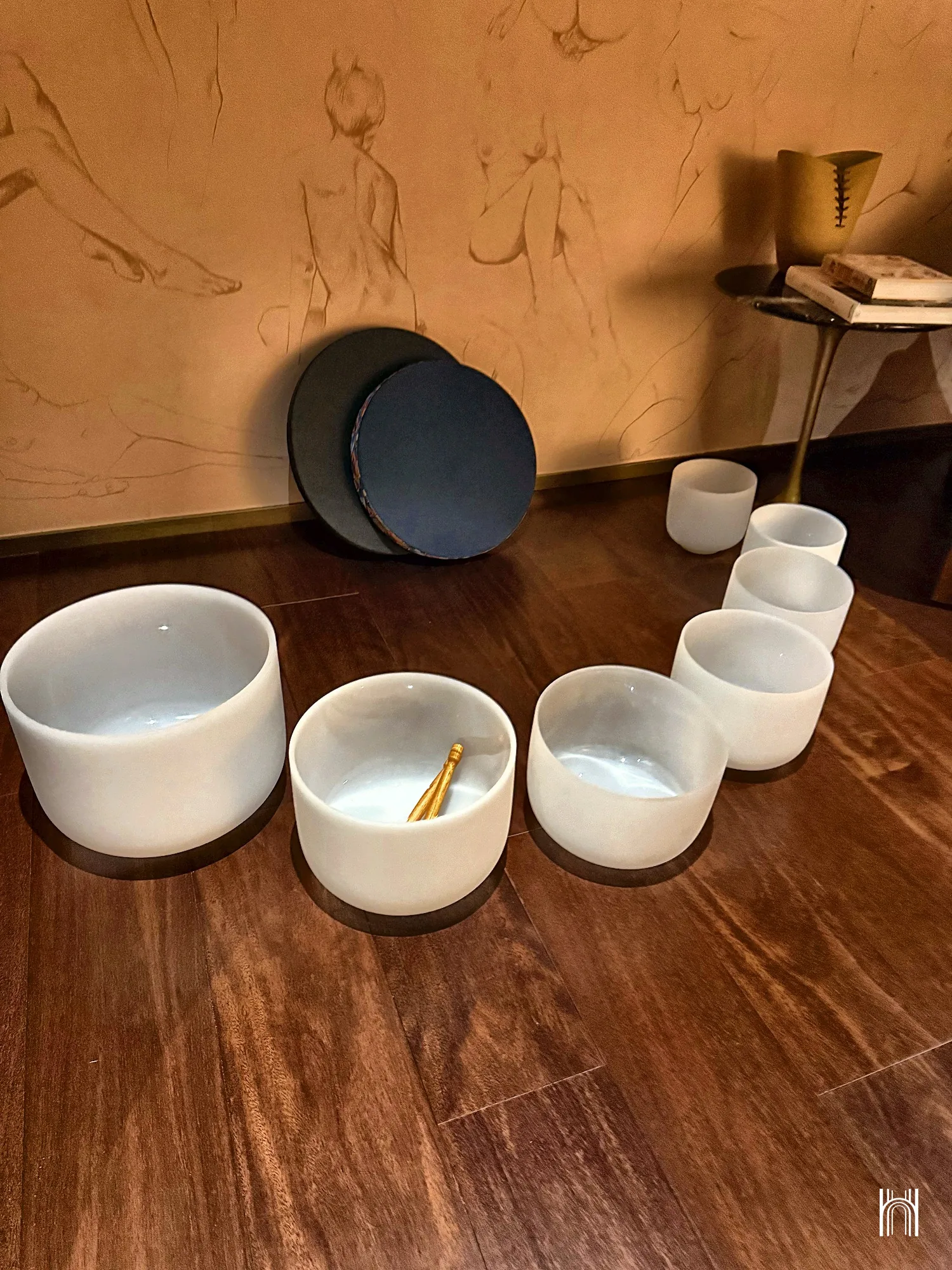
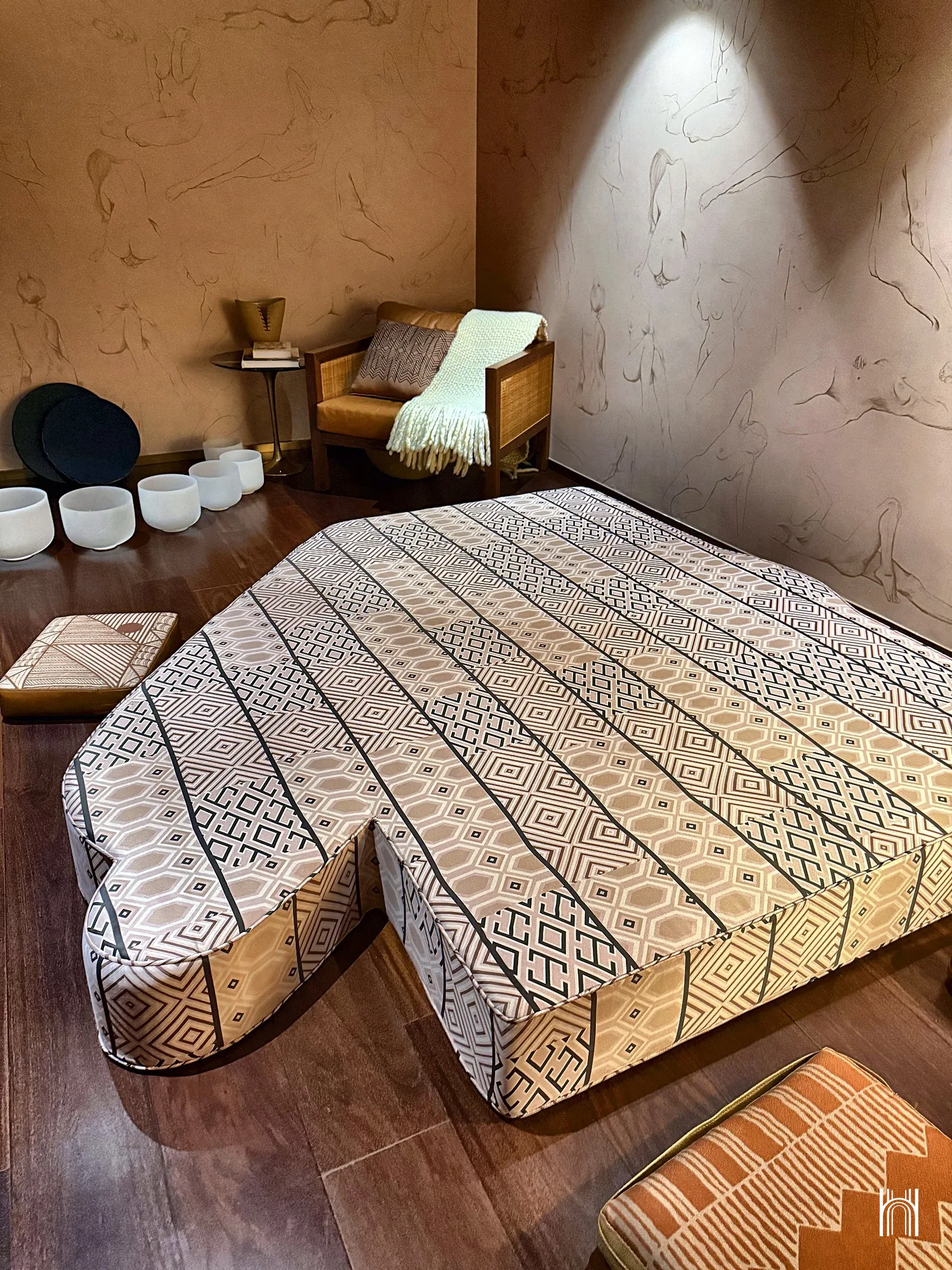
Seven treatment rooms, a sauna, a hammam, a fitness studio, and spaces for yoga, Pilates and sound baths. That is the inventory, and it says almost nothing.
What matters more is how Rosewood structures its wellness brand. Asaya rests on five pillars: emotional balance, fitness and nutrition, body therapies, skin health, and community.
Look at the last of these five. Community. No other hotel brand, to my knowledge, places collective life on the same level as a facial in defining its wellness offer. It means an Asaya spa has not succeeded if it brings no one together, whatever the quality of its protocols. It is a rare position, and it translates very concretely: the spa offers São Paulo residents memberships giving access to the house's fitness studio, pools and restaurants. The principle deserves to be praised, because a hotel spa that welcomes its city stops being a fortress, and that is a sign of hospitality.
I wanted to test the fitness side, and I took a Pilates session with a coach. Pilates has spread everywhere in the world, but it remains unusual to find it in a hotel, with a coach, in a one-on-one session. Most establishments make do with a machine room nobody watches over, and a weekly group class when demand is high. Here, I had a session that was genuinely athletic, supervised, demanding. It was a very fine experience, and further proof that this spa is not confined to passive treatments.
It is also a lesson for the leadership teams I advise. A business traveller who loses his sporting routine for three days goes home more tired than when he left. Giving it back to him, with someone to lead it, is worth more than one extra treadmill.
From the entrance, the spa states where it speaks from. It creates a unique connection to the local culture. The furniture comes from Brazilian makers. An exclusive work by the São Paulo painter Fabiano Senk, inspired by the diversity of Brazilian skin tones, greets the visitor. I had the chance to meet this artist in his studio, together with the collective he founded with two other São Paulo artists, and I devote a passage of my article on this hotel's art to it. A spa that opens with a painting about the skin colour of the Brazilian people, in a country where the subject is never neutral, that detail already says a great deal about the intention.
The Crystal Room, the room I had dreamed of for years
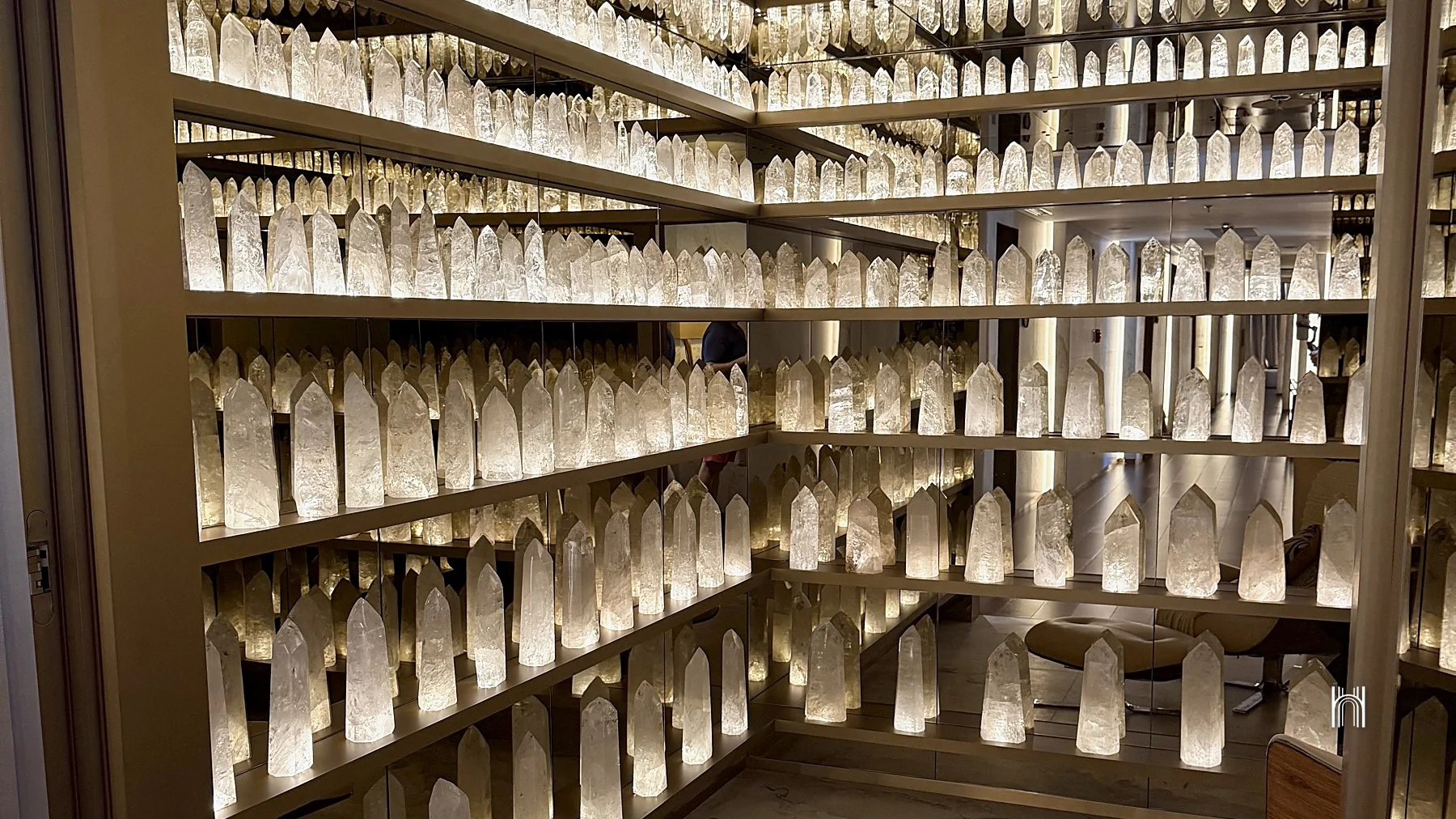
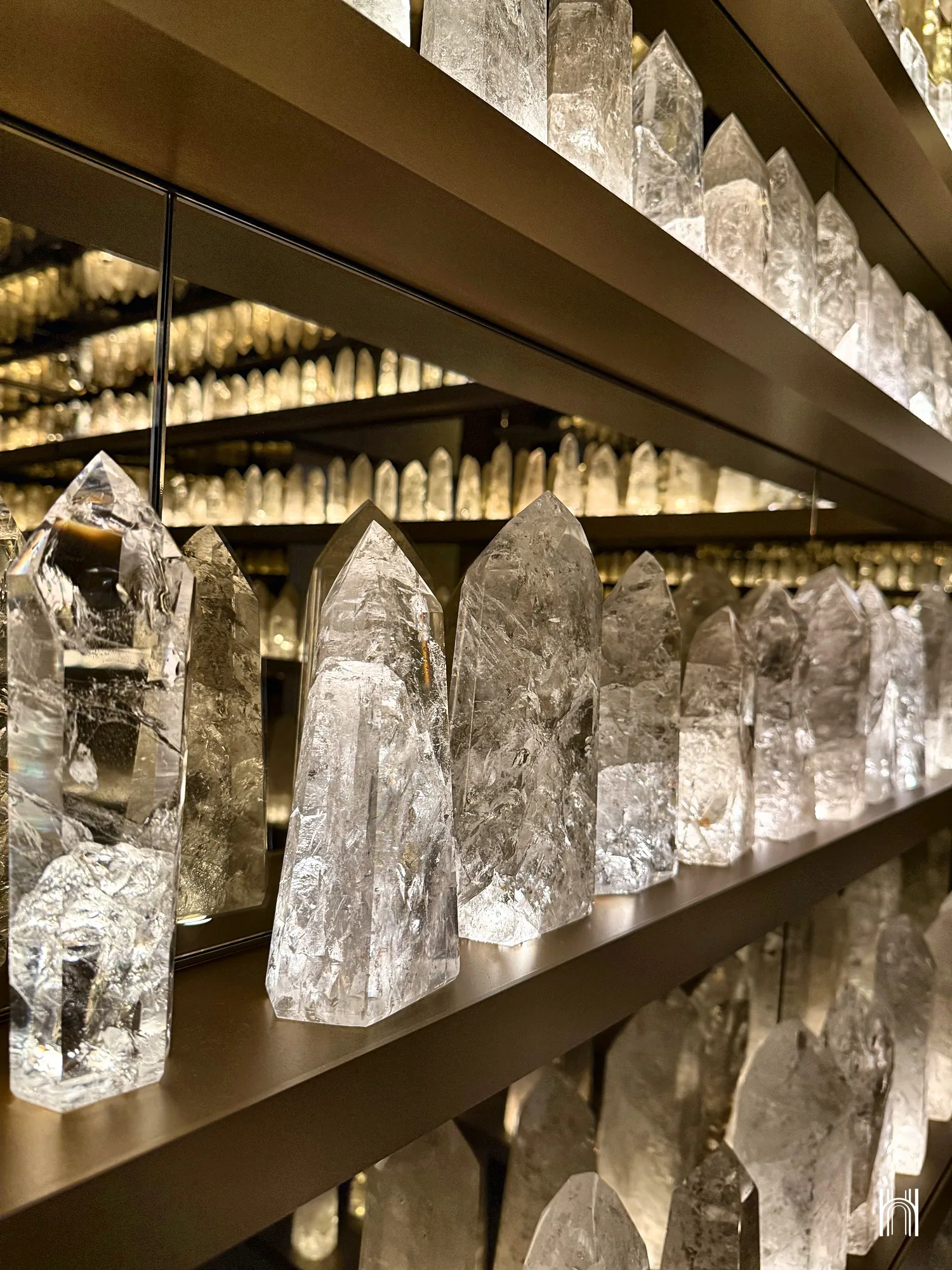
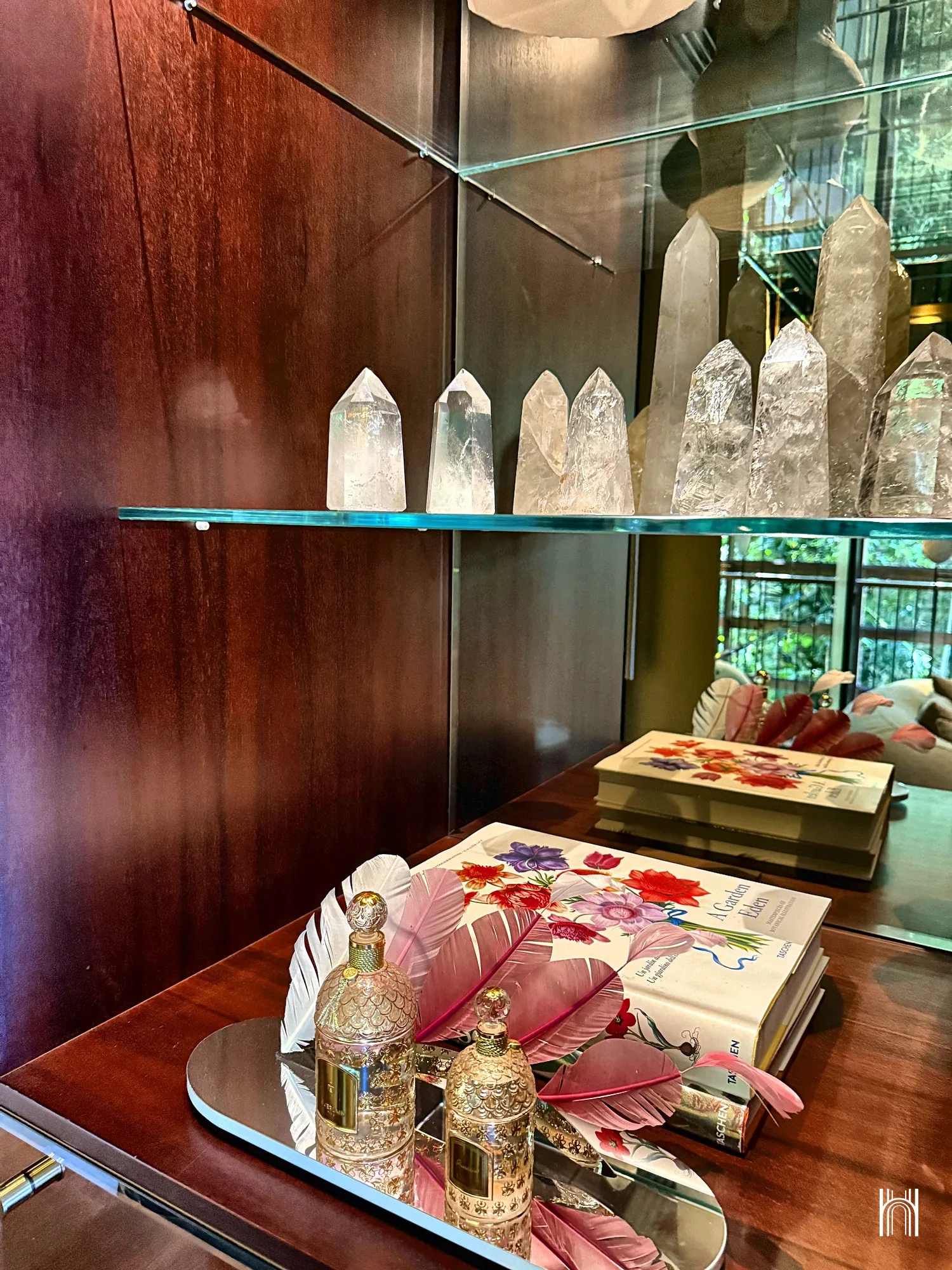
The Crystal Room is a chamber lined with mirrors and rock crystals mined from the Brazilian subsoil, where guided meditations, reiki, and head and foot massages are practised. To my knowledge, nothing comparable exists anywhere else in the world.
Before the treatment, I was invited to sit in a lounge to relax, with a herbal tea. That moment was thoroughly pleasant, and it is not incidental.
I then received a very pleasant traditional massage, in a dedicated massage lounge, with a room beside it to change and get ready.
A guest arrives at the spa still carrying the city on them: the emails, the noise, the rush. Setting them down for a few minutes, a cup in hand, before anything begins, amounts to offering them an airlock. Without it, the first ten minutes of a massage serve only to come back down, and the treatment really begins halfway through. With it, the body is already ready to receive. It is an attention that costs almost nothing and that changes the value of everything that follows. Many establishments have removed it to gain turnover, and they do not measure what they lose.
I then received a foot massage there.
The practitioner showed constant attentiveness. She checked in on how I felt, adjusted the pressure, adapted the depth of the work as the session went on. This continuous calibration is the signature of a true professional. A protocol run identically for every guest is not a treatment, it is a service. The treatment begins the precise moment the practitioner stops applying her sequence to listen to the body in front of her.
How long did I stay in that room? I could not say. An eternity, it was so good. I did not see time pass, and that is not a polite turn of phrase: it is exactly the effect such a room is meant to produce, and that almost none does.
The crystals are everywhere. Top to bottom, on every side, from floor to ceiling. The largest sit low and the smallest sit high. There are hundreds of them in all. The eye never finishes taking them in. Looking at them, sensing their energy, produces an experience so genuinely immersive that you stop watching yourself live it. It is the most beautiful thing I have seen in a hotel spa in a very long time.
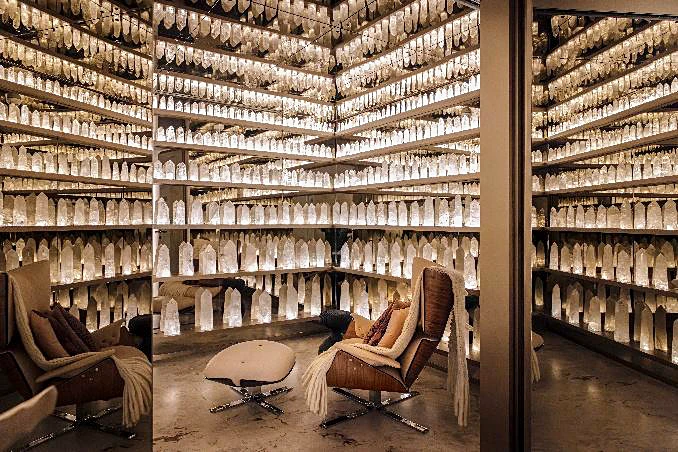
Three decisions make this room unique.
The first: the crystals come from the Brazilian subsoil, not from a decoration catalogue.
Brazil is one of the great mineral countries on the planet. Amethyst, quartz, agate, tourmaline: the country has exported for centuries what the whole world puts on display. It would have been absurd to bring stones from elsewhere, and yet that is what most so-called holistic spas do, buying their decor from a catalogue without ever asking what the ground beneath their own foundations might offer them.
That, very concretely, is what I call the sense of place, the first key to generous hospitality. It is not about hanging a map of the country on a wall, or serving a local cocktail on arrival. It is about building the experience from what the territory already holds, and that no one else holds.
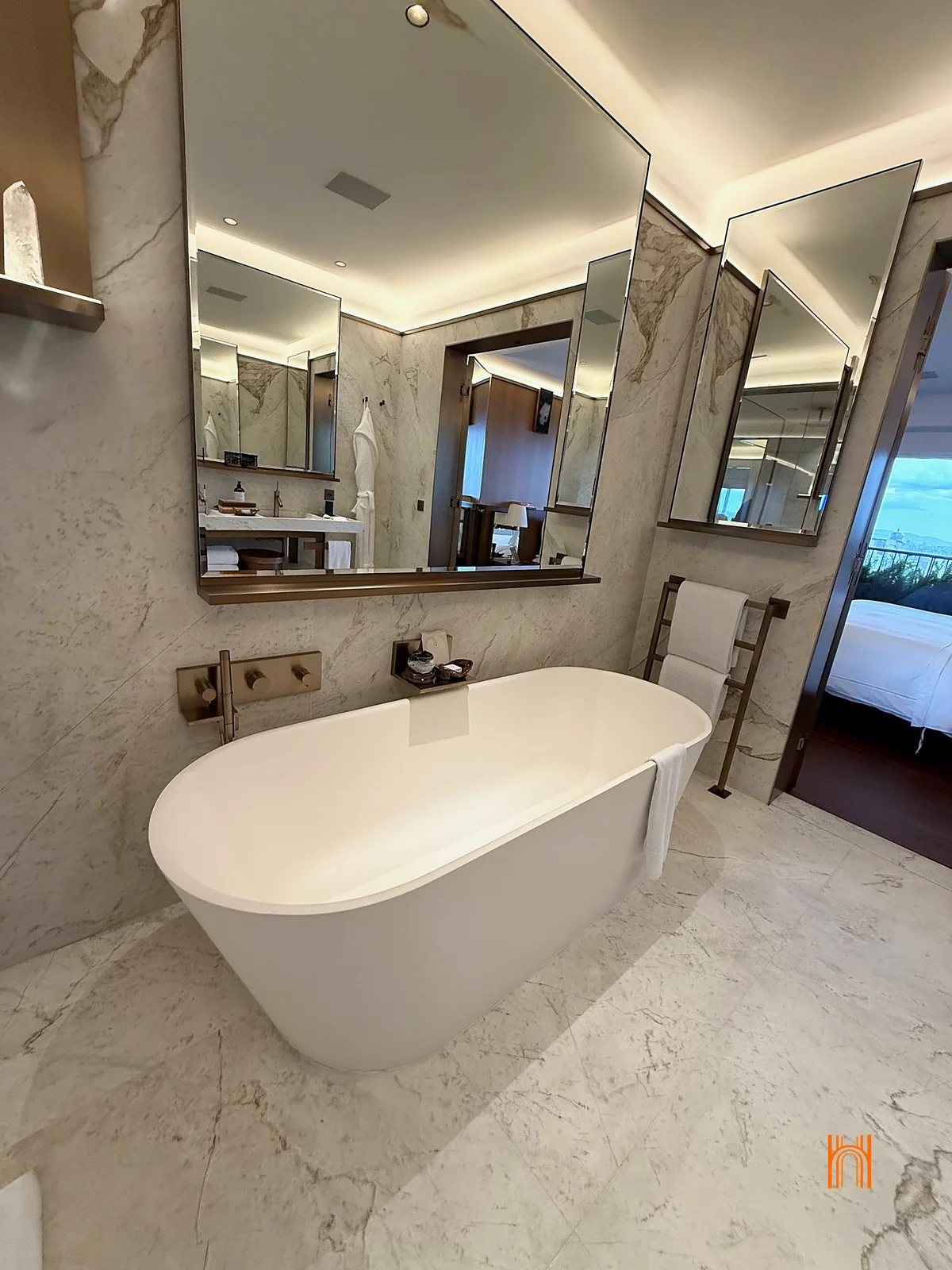
Three examples within this one spa are enough to prove it. The stone comes from the Brazilian subsoil. Fabiano Senk's painting was born of the skin tones of the Brazilian people. The Forest Energy massage draws on the Atlantic Forest growing a hundred metres away, up Jean Nouvel's tower. None of it can be transplanted to Geneva or Dubai, and that is exactly what gives it value.
A guest can find an excellent massage in any major city in the world. This one, they can only live here. That is the entire difference between a service and an experience.
The second: the mirrors, paired with the crystals. They multiply the material and remove every corner. The eye no longer finds a single bare wall to rest on, and something releases before the practitioner's first gesture.
The third, the most important: the work on the feet. Most treatment menus relegate them to a fifteen-minute add-on, even though they absorb the fatigue of a city like São Paulo. Devoting an entire session to them, in a dedicated room, means taking the body from the ground up, where the city has settled. It is a practitioner's choice, not a menu's choice.
A guest may well remain sceptical of the virtues attributed to crystals, and that scepticism is entirely legitimate. But it shifts the question, and I would like to put it back where it belongs.
The question is not whether a stone holds a power. The question is whether the person walking into that room is in a state to receive anything at all.
Because nothing is received without consenting to it. For a place, a treatment, a piece of music or an encounter to produce something, one first has to accept that it might be possible. Someone who walks through the door having already decided that nothing will happen is right in advance: nothing will happen. Not because the place failed, but because they closed themselves off before entering.
We close ourselves off this way constantly, and rarely through reasoning. We close ourselves off through fears that often reach far back, to childhood, to a personal history, to wounds we have stopped looking at. These fears work in silence and decide, in our place, what we allow ourselves to experience.
This is where I find the conviction I share throughout my training sessions, and which sits at the heart of my work: welcoming oneself before being able to welcome others.
The principle applies first to teams. A team member at peace with themselves welcomes with ease, without effort and without a mask. One who judges themselves, fears themselves or protects themselves can only offer politeness, never presence.
But it holds just as true for the guest, and this spa reminded me of it. A traveller who arrives tense, rushed, on guard, will receive little of what is offered to them, whatever the quality of the house. Hospitality is an encounter, and an encounter requires two people who are available.
What Rosewood São Paulo does remarkably is to prepare that availability rather than assume it. The lounge before the treatment, the herbal tea, those few minutes sitting and doing nothing: these are not pleasantries, they are the conditions of access to everything else. The house opens the guest before giving them anything.
This is why the question of the crystals does not interest me. What gives this room its value is not the belief, it is the intention: to offer a place where doing nothing becomes possible, in a city that never allows it, and to bring the guest into the state where they can make use of it.
A guest does not remember a protocol. They remember having been allowed to stop.
Why does a Parisian house put its name to a Brazilian spa?
Because the alliance does not seek to import Paris to São Paulo, but to put a technique in service of a territory.
Guerlain has created fragrances since 1828 and has cultivated an aesthetic expertise since 1939, nourished by traditional massage techniques gathered from around the world. This house could have settled for installing its international menu in Brazil. It did the opposite: three treatments were created exclusively for Rosewood São Paulo, and their names alone say the intention.
Forest Energy is a ninety-minute muscular massage built around the Atlantic Forest, the very one that Jean Nouvel's tower carries a hundred metres above the lobby.
Art of Sculpt works the face and body for two hours, with a sculptor's gestures.
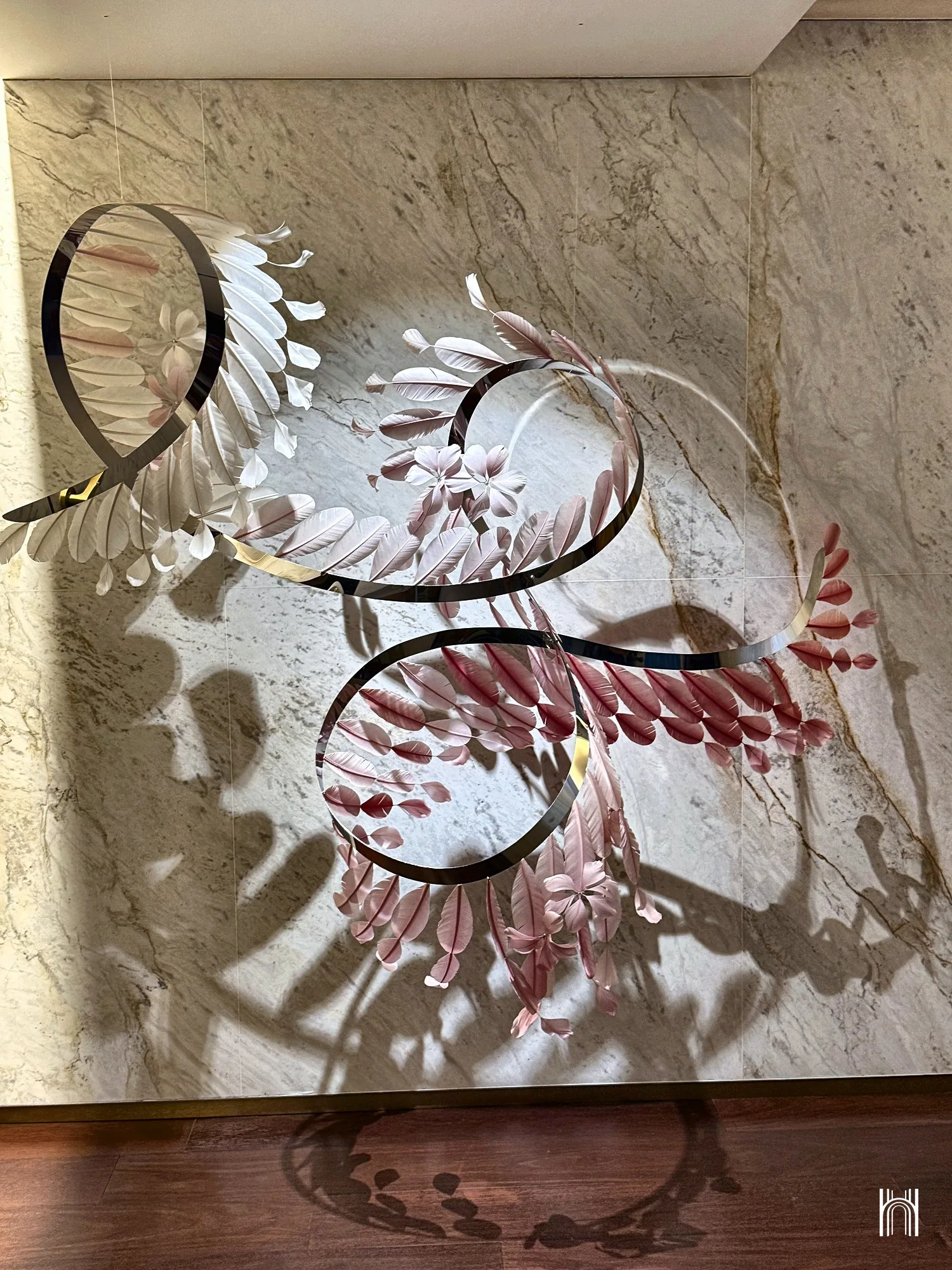
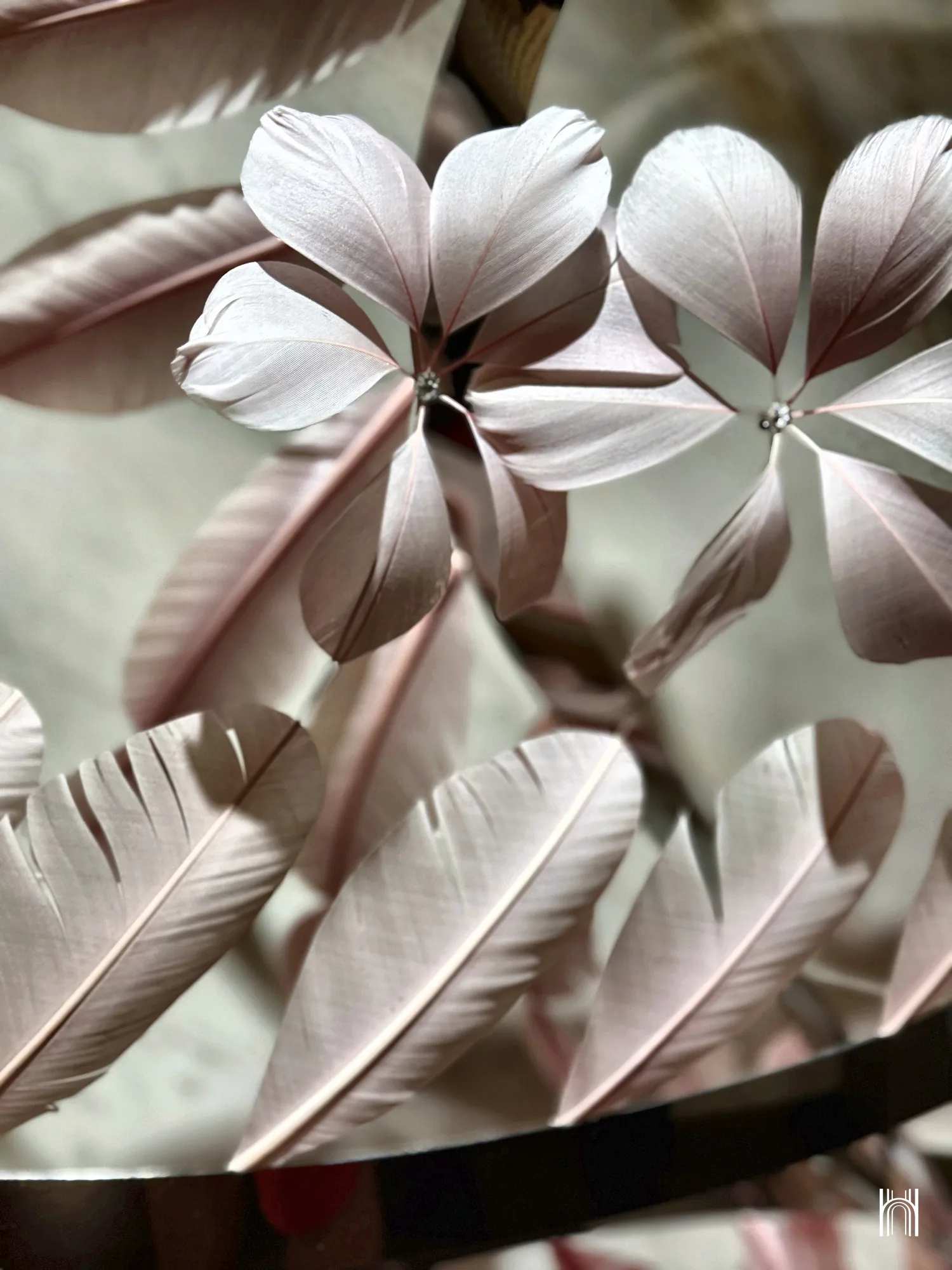
Brazilian Feathers borrows its vocabulary from carnival, with brushes replacing hands for part of the modelling.
None of these three protocols exists anywhere else in the world. A guest who loves the first will not find it again in Vienna or Hong Kong, where Guerlain and Asaya are nonetheless present. Creating a treatment that cannot be duplicated is an economically counter-intuitive choice, and it is exactly what makes a guest want to return.
What I read in this alliance is a deliberate hierarchy: the Brazilian house remains master in its own home, and the French house brings its expertise without imposing its decor. The order of the words matters, in the very name of the place: Asaya Spa by Guerlain. Brazil first, France behind it.
That is what I call the sense of place, the first of the three keys to generous hospitality. A technique, however prestigious, must serve a territory, never overwhelm it. I have visited too many international hotel spas where a guest could have been in Dubai, Shanghai or Geneva without noticing the slightest difference. The protocol was flawless, and the place was absent. Here, the protocol is Parisian and the place is Brazilian, and the two answer each other instead of cancelling each other out.
What a spa reveals about generous hospitality
A spa reveals, better than any other space in a hotel, a house's sincerity toward its guests' wellbeing.
Wellbeing is the third key to generous hospitality, after the sense of place and human connection. It is also the easiest to fake. A beautiful treatment room, a candle and a soothing vocabulary are enough to give the illusion for a few minutes. What cannot be faked is coherence.
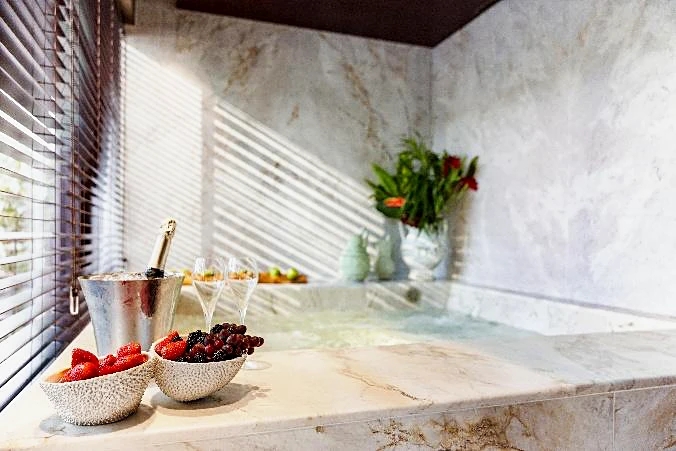
Here, the coherence holds. The whole establishment runs on 100 percent renewable energy, with responsible water and waste management, and a significant share of locally sourced materials. The spa is no exception: its construction, its design and its programming followed the same rules. A house that cares for its guests' bodies without caring for the land around them tells a story no one believes any more. A guest's wellbeing and the wellbeing of the living world are not two separate subjects; they are the same one.
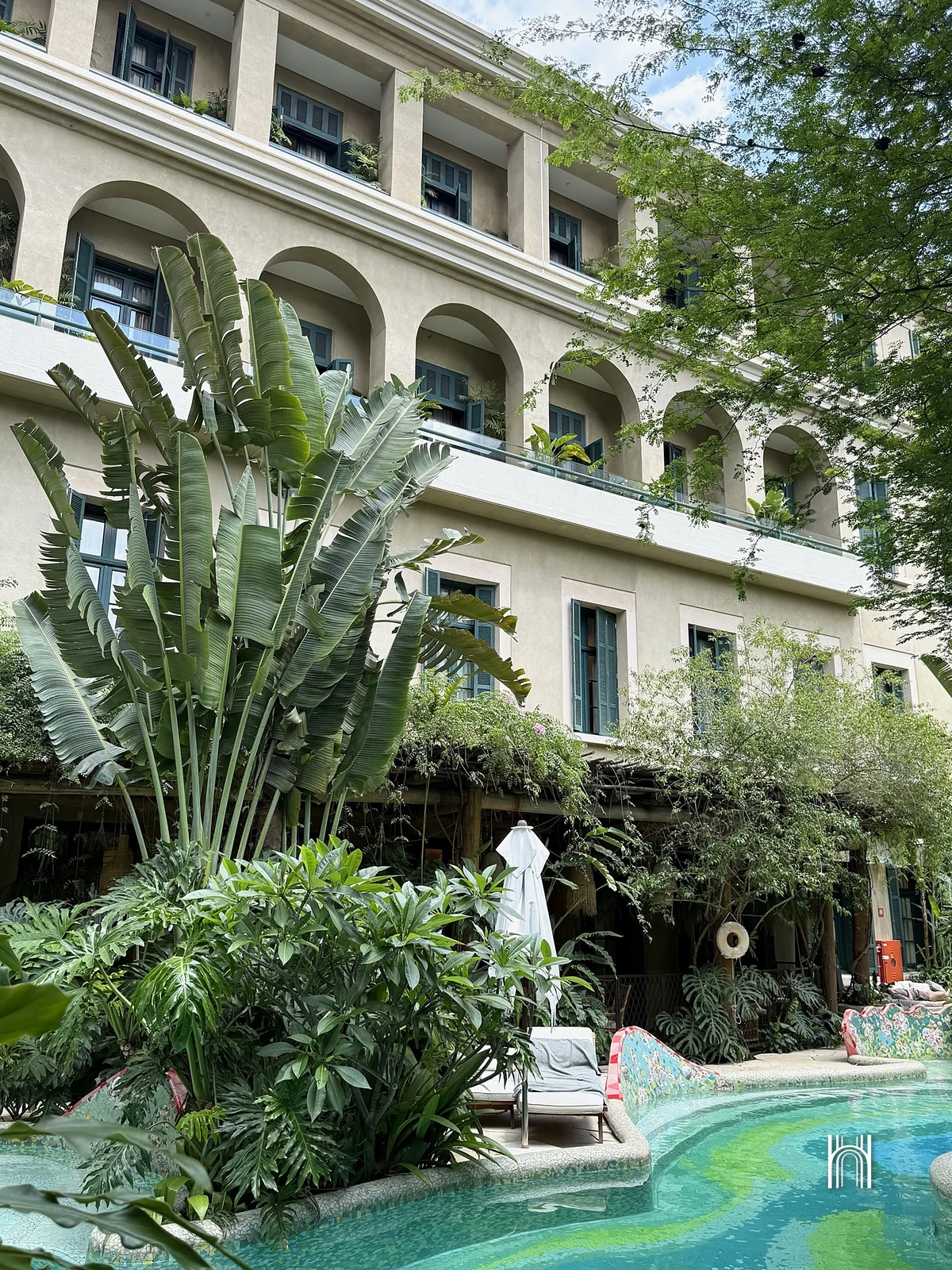
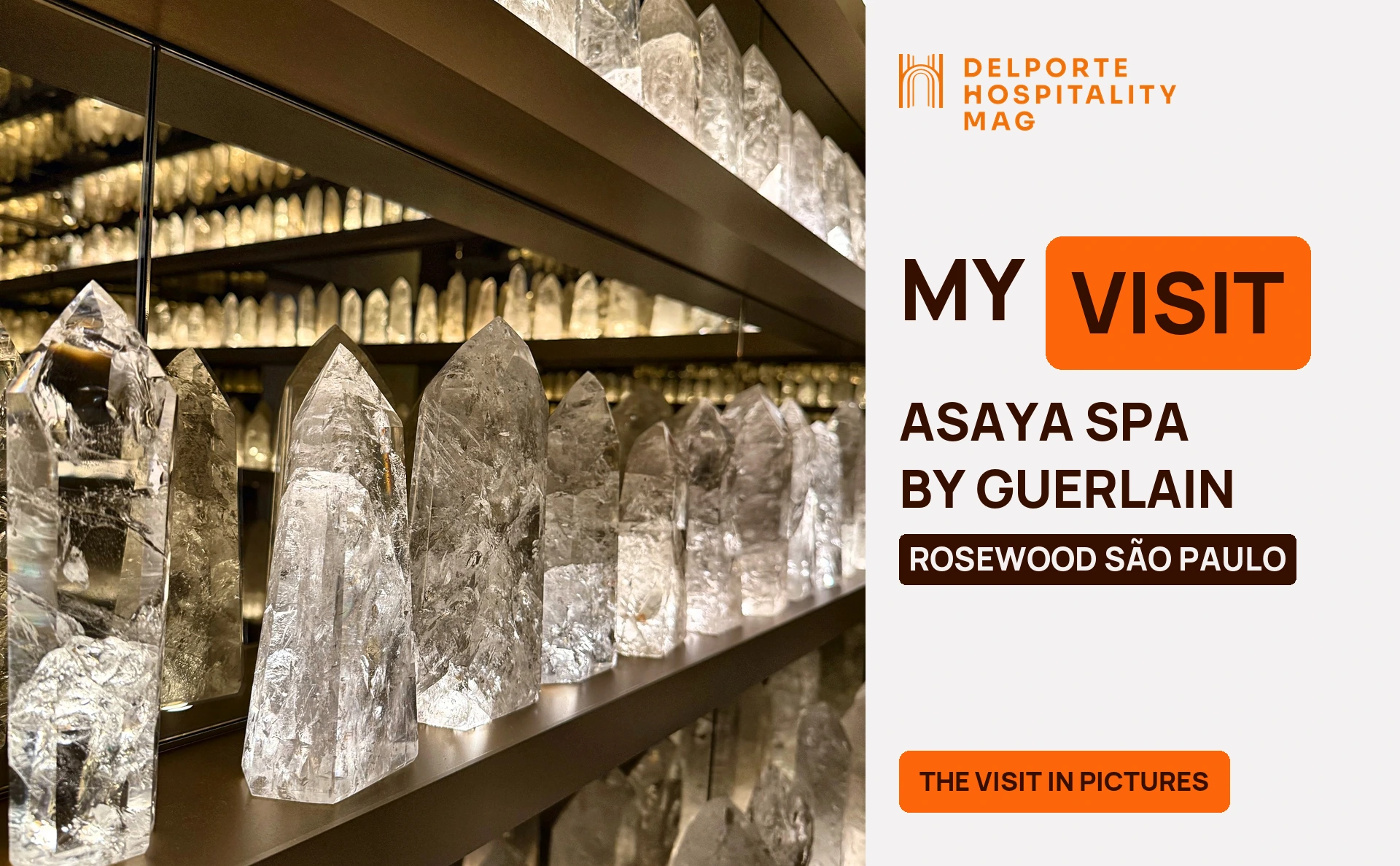
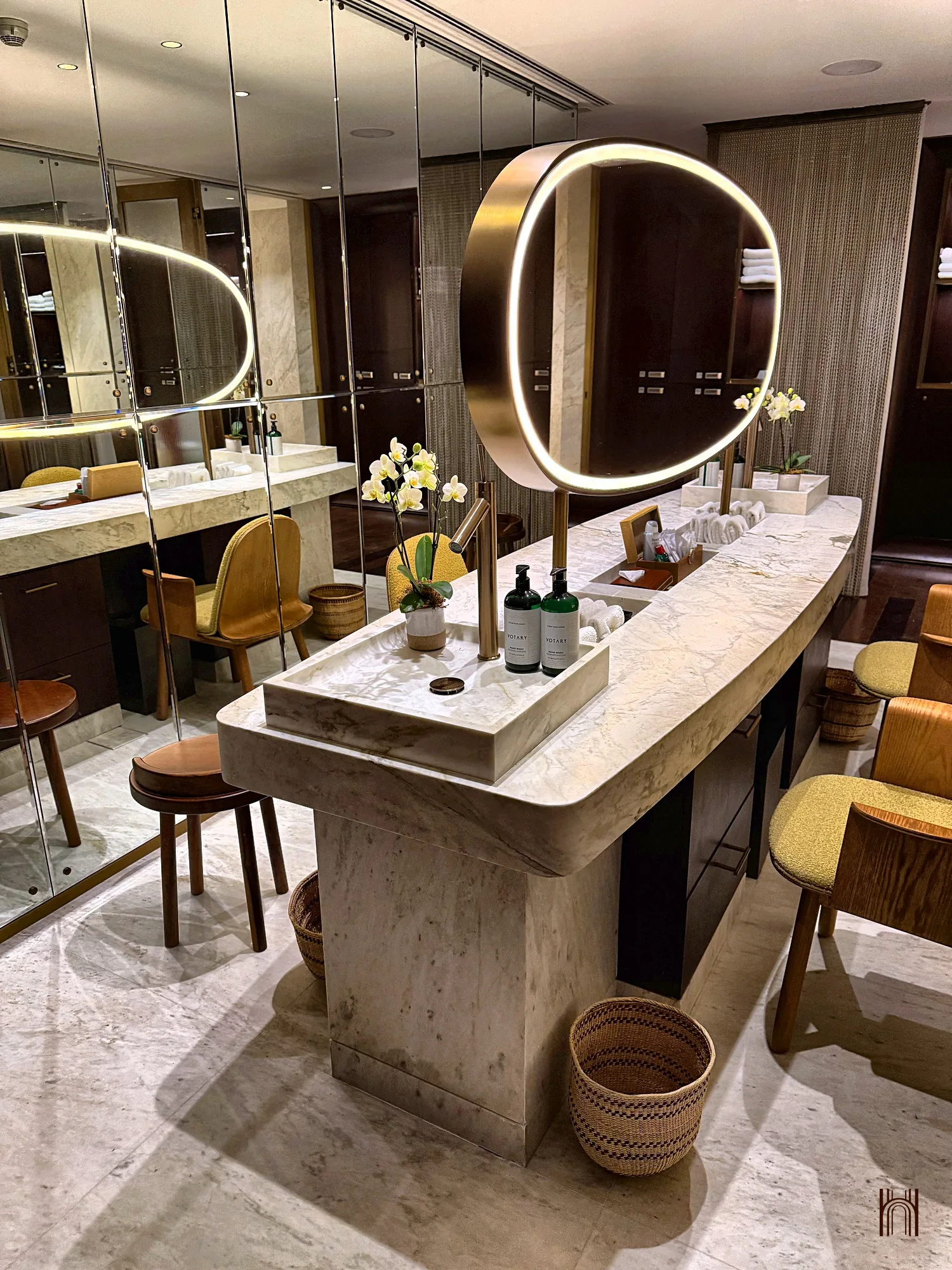
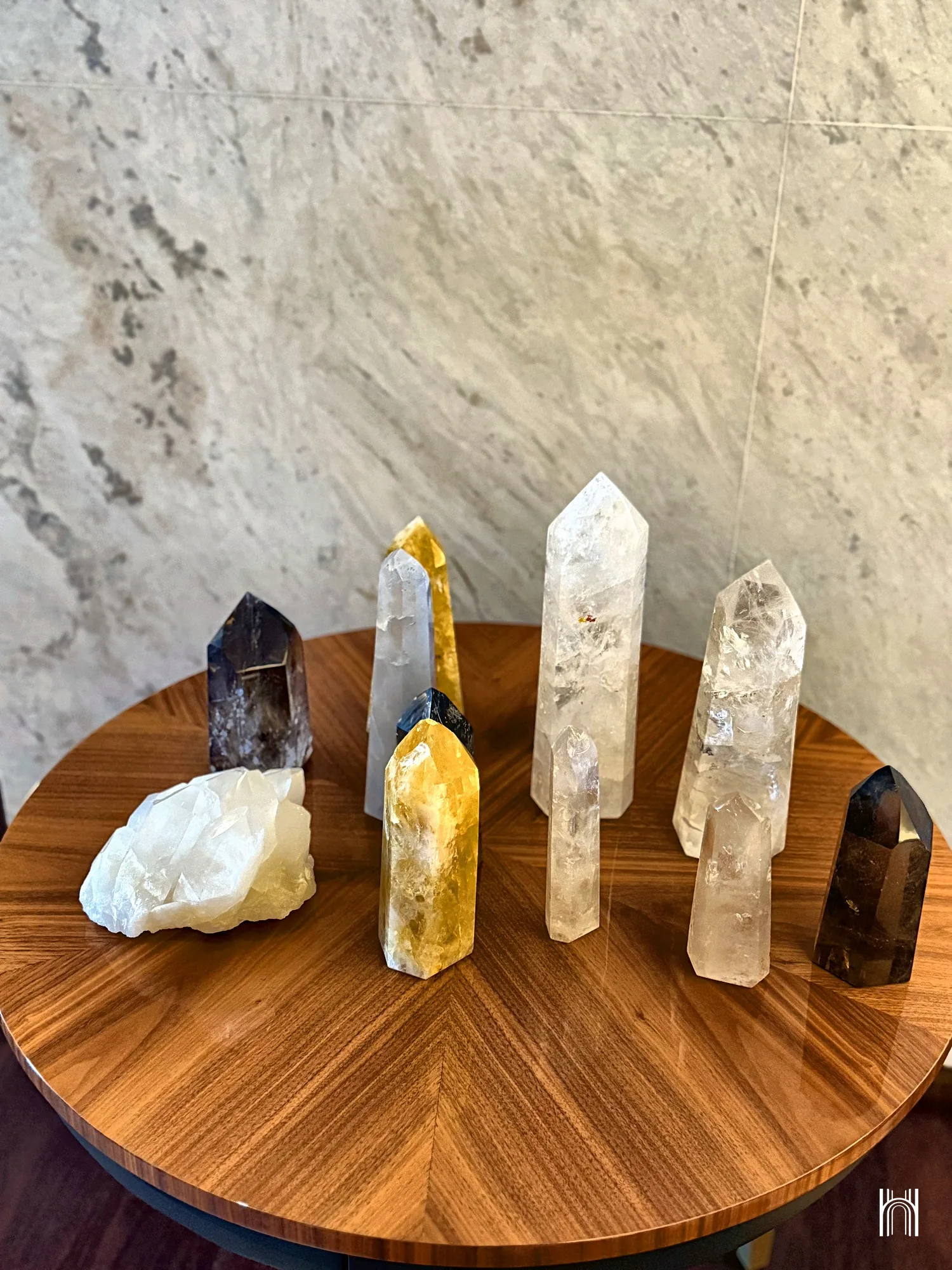
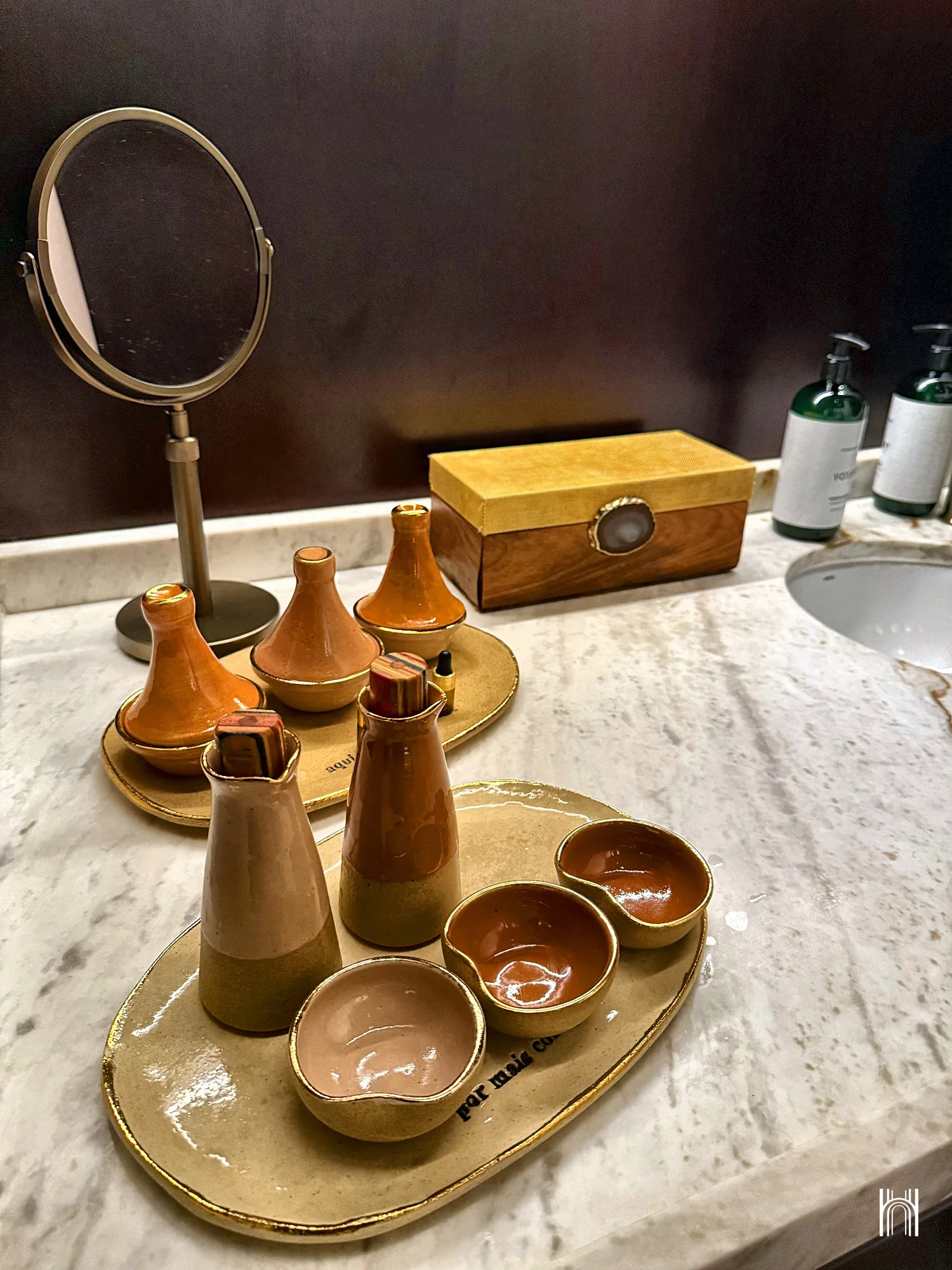
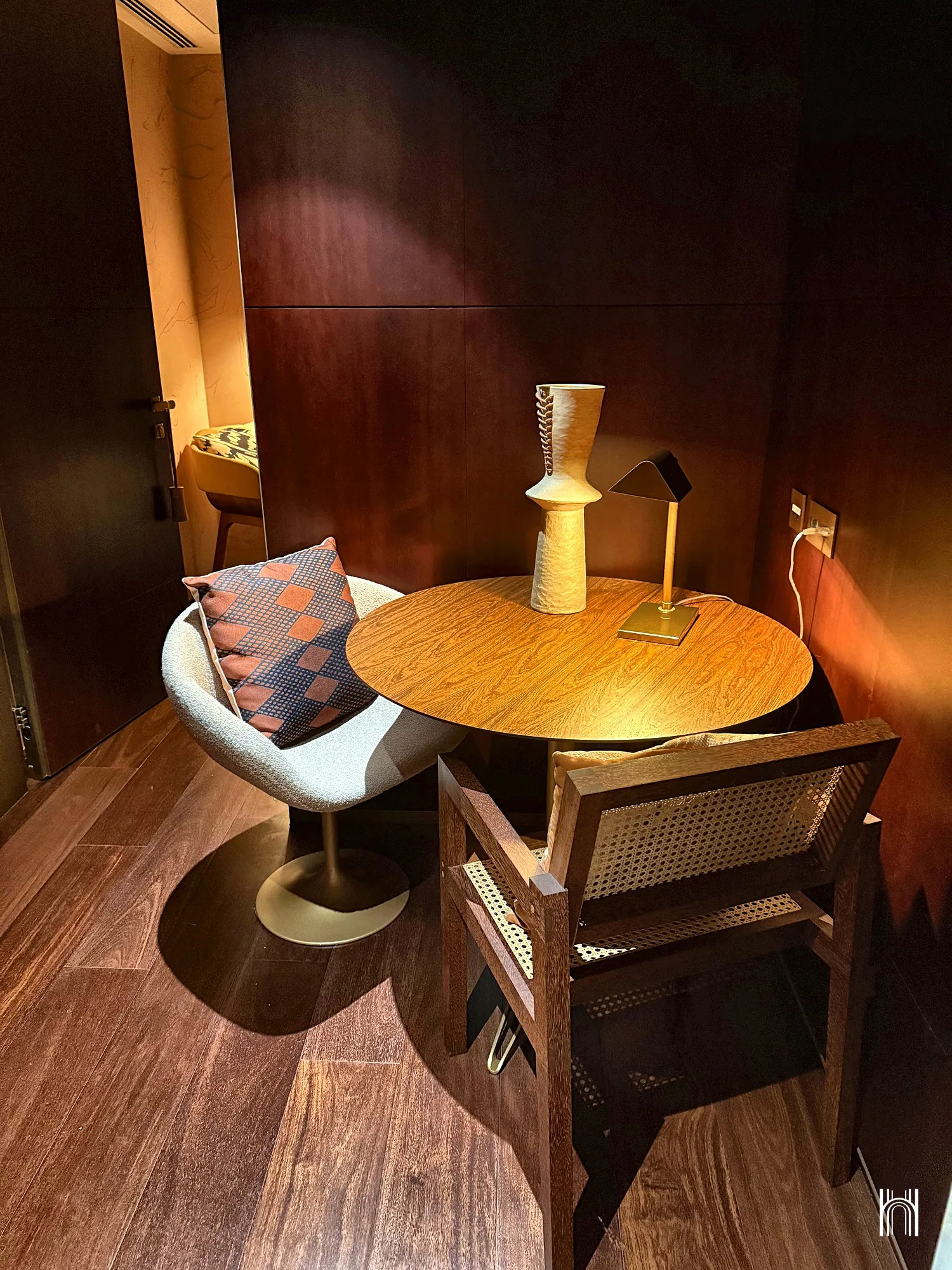
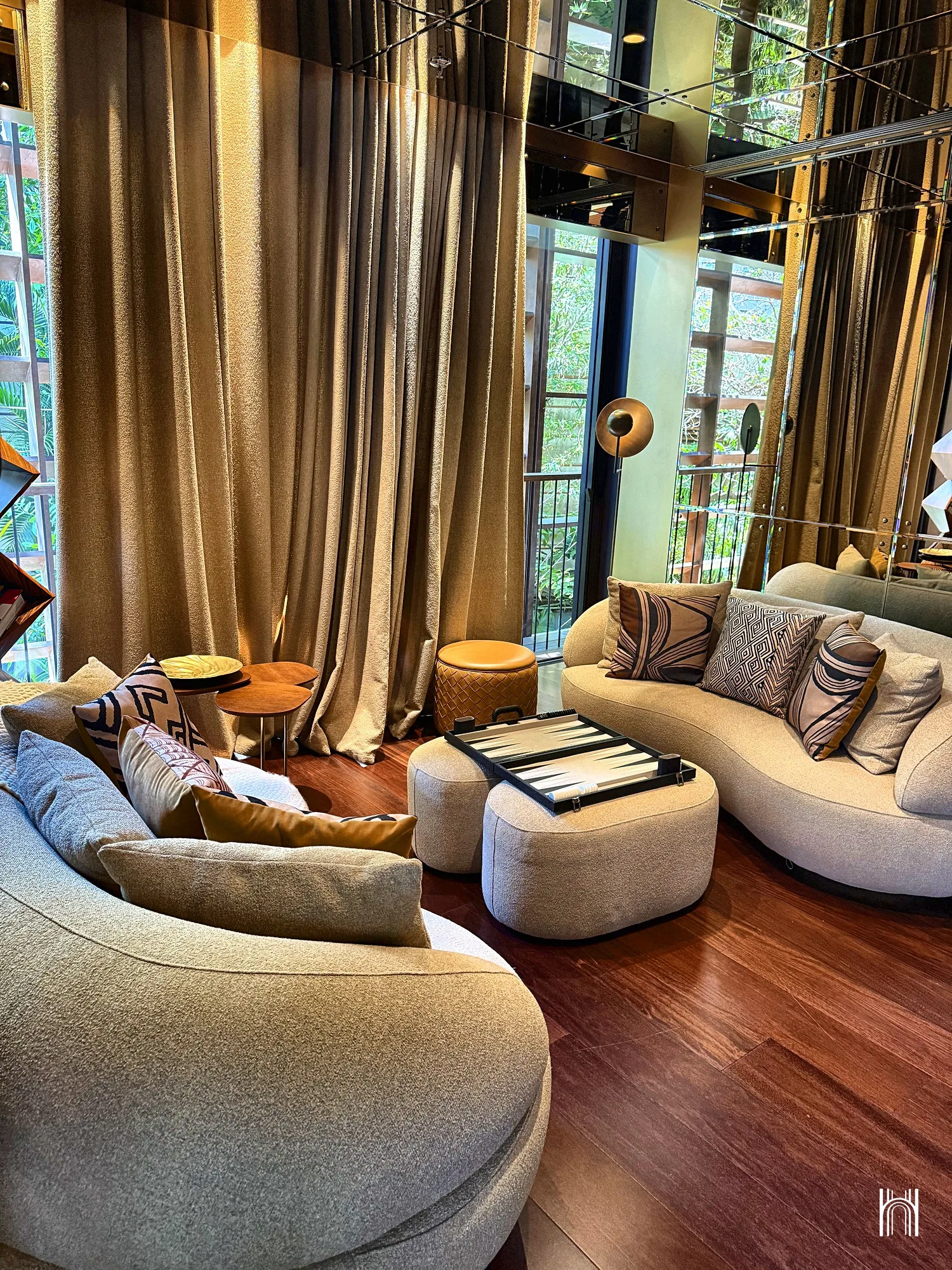
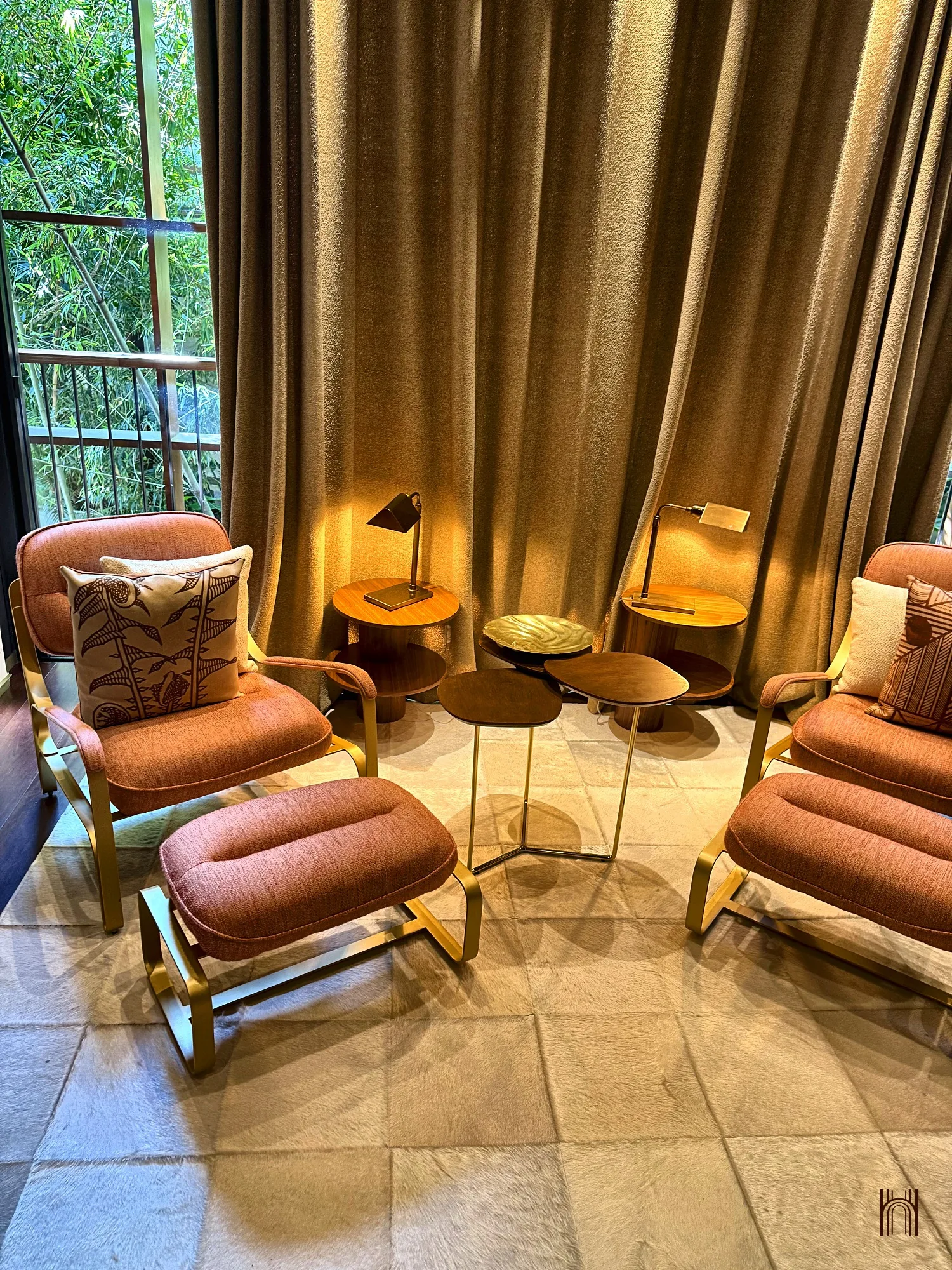
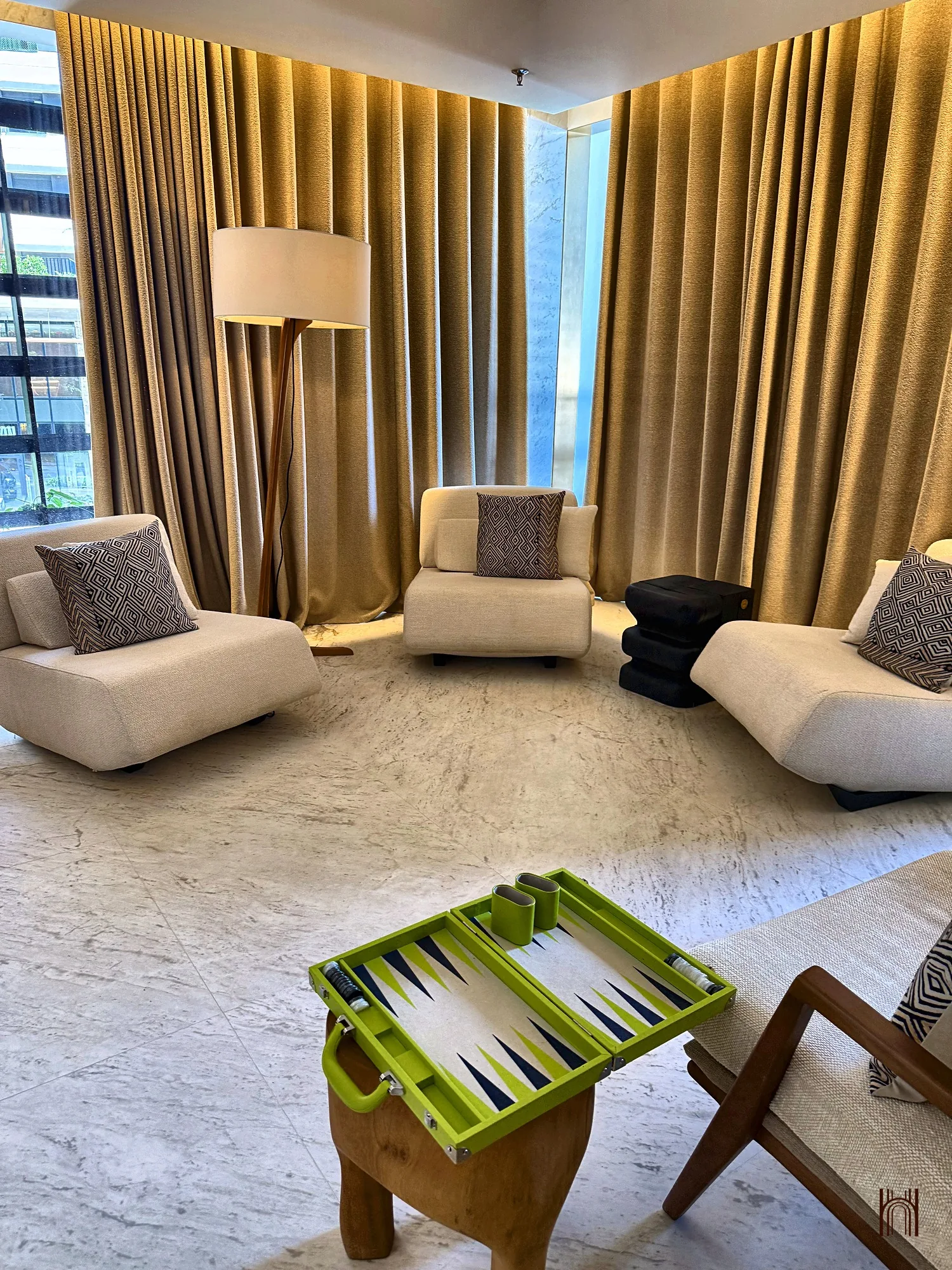
In pictures: the Asaya Spa by Guerlain, details from my visit. Photos: DELPORTE HOSPITALITY.
Would I recommend Rosewood São Paulo?
Yes, without reservation, and I say so knowing the level of demand of those who ask me.
To those travelling on business who arrive in São Paulo wrung out by the flight and the time difference, I recommend the Asaya Spa on the very first day, before the meetings and not after. To those travelling as a couple, I recommend the Crystal Room, an experience to live together rather than to recount. And to those who want to understand Brazil beyond the clichés, I say this spa teaches more about the country than a day of sightseeing would: its stone, its skin tones, its forest, and that very Brazilian way of taking care without ever taking itself too seriously.
What this spa confirmed for me is that a wellness space is not meant to make guests forget the city they are in. It is meant to make it bearable, then desirable. In São Paulo, a vast and exhausting city I deeply love, that distinction changes everything.
It may be the finest definition of a hotel spa: not a parenthesis outside the world, but a place from which the world becomes beautiful again.
Read more
Share this article with a colleague, a client or a partner.
That is often how an idea enters a house, and then its habits.
What you say about it matters more than what I say.
A keynote, a mission, an article in the magazine: if my work has been useful to you, a few lines on Google are worth more than any argument.
Leave a review on Google →