
In hospitality, have we forgotten the essential?
In the world of luxury hospitality, establishments invest millions in architecture, design, dining, spas, rooftops, and immersive experiences. Yet one fundamental element is sometimes underestimated, even though it is a hotel's very first mission: letting the guest sleep well.
This question has become strategic today, in a world marked by stress, hyperconnectivity, frequent travel, and mental fatigue. Today's traveler no longer looks only for beautiful décor or flawless service. They are seeking to recover, to regenerate, to find physical and emotional balance again.
Sleep is thus becoming a genuine lever of guest experience in contemporary hospitality.
A guest may forget certain details of a stay, but will always remember a bad night's sleep. Conversely, a hotel able to offer deep, restorative sleep will leave a lasting emotional imprint on the guest's mind. This is precisely where loyalty is won today in upscale hospitality.
The hotels that succeed tomorrow will likely be those able to understand that contemporary luxury no longer rests solely on aesthetics or ostentation, but on the ability to profoundly improve guest well-being.
Sleep: a new strategic territory for hospitality
For a long time, the hotel room was conceived as a purely functional or decorative space. Today, it is becoming a true space for physiological and mental recovery.
Sleep directly shapes the overall perception of a stay. A tired guest will be more sensitive to noise, stress, the quality of the welcome, or any imperfection in service. Conversely, a well-rested guest will perceive their overall experience far more positively.
The quality of bedding therefore becomes a strategic subject in the hotel guest experience. It is of course important for a hotel to have an excellent location, an elegant lobby, inspiring architecture, or refined dining. However, if the guest sleeps poorly, the overall experience immediately loses its value.
In luxury hospitality, sleep can no longer be considered a mere operational detail. It becomes a central element of hospitality itself.
Many establishments are already beginning to build this reflection into their positioning: sleep-friendly menus, evening rituals, aromatherapy, noise reduction, light control, and technologies dedicated to recovery.
The sleep experience is gradually becoming a new territory for differentiation.
Bedding: a subject far more complex than it appears
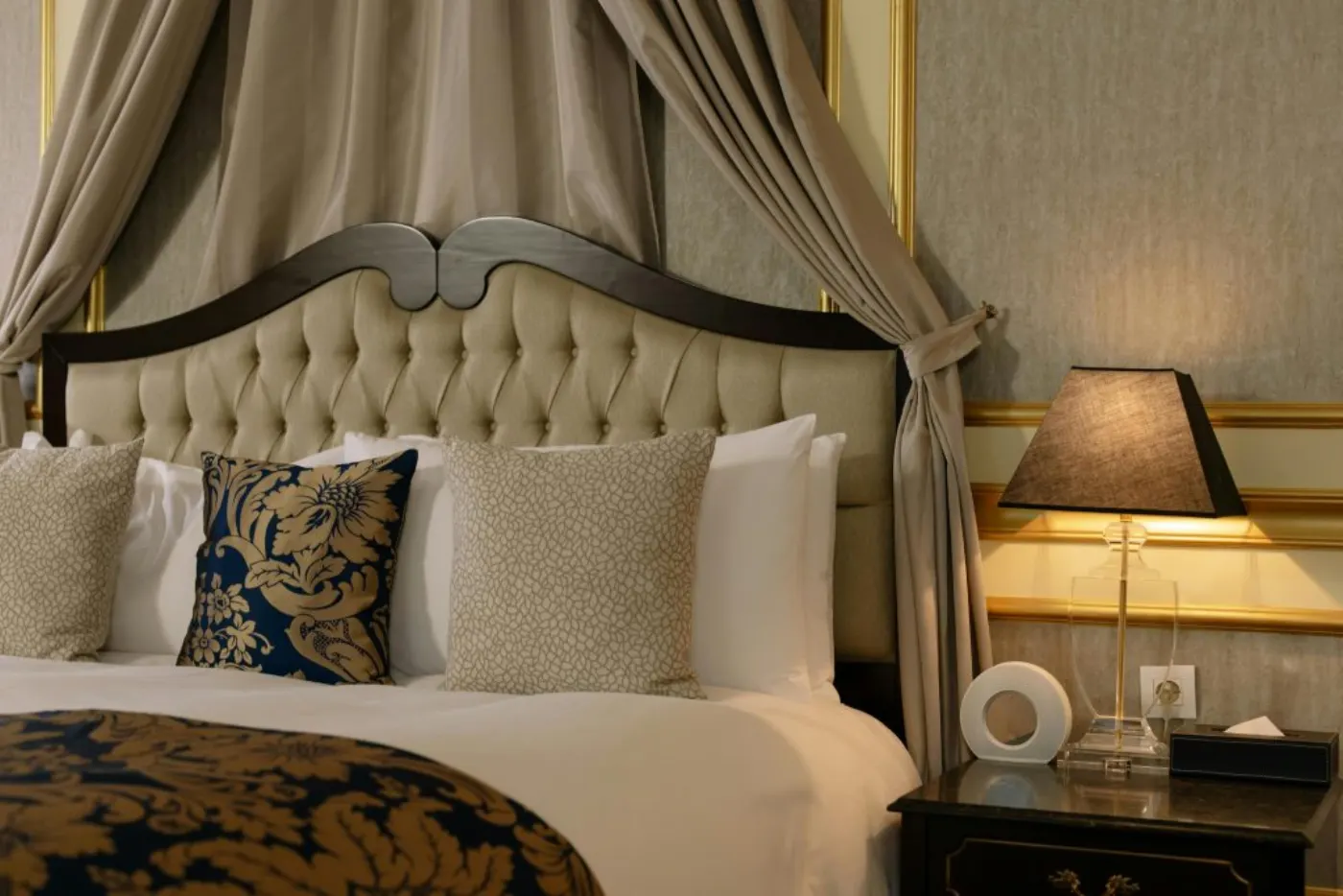
The quality of a bed does not depend on the mattress alone. It is a complex assembly of components and parameters that directly shape guest comfort. A bed is made up of a bed base, a box spring, a mattress, a mattress topper, a duvet, pillows, and bed linen. Each element plays a precise role in the experience the guest feels.
The bed base, often invisible to the guest, remains essential for housekeeping teams. It eases the work of housekeepers and valets, reduces physical strain, and improves working conditions. This dimension matters, because the quality of hospitality also depends on the well-being of employees. A hotel that takes care of its teams generally builds a better quality of service over time.
The choice of materials, the breathability of fabrics, thermal regulation, and the durability of equipment must also be taken into account. Bedding evolves constantly over the years, shaped by several factors: room occupancy frequency, air conditioning, humidity, seasonality, guest profile, and the hotel's destination.
In some establishments, more than 365 different people may sleep in the same bed over the course of a single year. After several years of operation, the impact on comfort and wear becomes considerable. Bedding therefore represents a strategic investment, not a simple equipment expense.
High-end bedding: the evolution of contemporary luxury
In luxury hospitality, high-end bedding is becoming a genuine marker of identity and differentiation. Contemporary luxury is gradually shifting toward greater personalization and real comfort. Guests now expect an experience tailored to their physiological needs and their sleep habits.
Standardization no longer really makes sense. It is particularly worthwhile to offer different types of pillows depending on sleep position: on the back, on the stomach, or on the side. Yet many hotels still present four identical pillows purely for aesthetic reasons.
In reality, some of these pillows are often removed from the bed and set on the floor or on a chair. True luxury no longer lies solely in visual staging. It lies in the relevance of the experience actually lived by the guest.
This shift is forcing hotels to rethink their approach: the choice of natural or synthetic materials, allergy management, thermal comfort, duvet weight, mattress firmness, and the sensory quality of bed linen. Sleep is becoming a subject at the crossroads of well-being, health, technology, and hotel design.
Suppliers and partners: a key role in the guest experience
The choice of bedding or an in-room product can no longer be made on cost or aesthetics alone. Specialized suppliers now play a fundamental role in building the hotel guest experience.
Hotels need partners capable of understanding their positioning, their clientele, their brand identity, their operational constraints, but also their environmental commitments and their ambitions in terms of well-being.
A good supplier no longer simply sells a product. They accompany the establishment in a broader reflection on sleep, comfort, and hospitality. This is especially true in luxury hospitality, where every detail contributes to the emotional perception of the stay. The choice of a mattress, a pillow, an ambient fragrance, or bed linen can profoundly transform the guest's experience.
Establishments are now looking for partners able to bring genuine expertise to the sensory experience and to the overall coherence of the hotel project.
Sleep as a total sensory experience
Sleeping well in a hotel does not depend on mattress quality alone. Sleep is shaped by a multitude of sensory elements: room acoustics, light, temperature, scents, textures, air circulation, and even the emotional feel of the space.
Some hotels are now developing genuine sleep-focused experiences, with dedicated wellness protocols. The hospitality industry is beginning to understand that guests no longer simply want a comfortable room, but an environment capable of fostering physical and mental recovery.
This approach connects deeply with new societal expectations around well-being, preventive health, and slowing down. Sleep is thus becoming one of the new frontiers of wellness hospitality.
Sustainability and bedding renewal: a major challenge
Renewing equipment also represents a significant environmental challenge. When a 100-room hotel renews its bedding, that potentially means 100 mattresses, 100 box springs, 100 mattress toppers, 400 pillows, and 100 duvets.
The issues linked to recycling, giving materials a second life, and environmental impact therefore become considerable. Choosing a supplier must now include a broader reflection on product sustainability, the materials used, repairability, recyclability, and production chains.
Sustainability can no longer be separated from the guest experience. Tomorrow's luxury hospitality will likely have to reconcile excellence in comfort with environmental responsibility.
Tomorrow's hotel will have to relearn how to help guests sleep
In a society marked by constant acceleration, sleep is probably becoming one of the greatest luxuries of our time. Guests are now looking for establishments capable of offering them more than a room: a genuine space for regeneration.
Tomorrow, the best-performing hotels may not be the ones with the largest lobbies or the most spectacular design, but those able to deeply understand the physiological, emotional and sensory needs of their guests.
Contemporary hospitality is no longer just about welcoming a guest. It is about allowing them to leave in better physical and mental shape than when they arrived. And that often starts with an excellent night's sleep.
Delporte Hospitality supports hotels in defining their sleep experience
As part of its hospitality consulting missions, Delporte Hospitality supports hotel establishments in defining their guest experience and selecting the suppliers best suited to their positioning. This notably includes issues related to bedding, high-end bedding, and, more broadly, the sleep experience.
The goal is not simply to select a product, but to build a coherent, sustainable experience aligned with guest expectations. Thanks to a global vision of luxury hospitality, Delporte Hospitality helps hotels identify the best solutions in terms of comfort, sensory experience, and guest well-being, in order to turn sleep into a genuine lever for differentiation and loyalty.
The choice of a mattress, a pillow, or high-end bedding should never be left to chance. Every decision directly shapes the quality of the stay, the guest's emotional perception, and the overall coherence of the hotel experience.
Key takeaways
Sleep is becoming a major strategic issue in the hotel guest experience. A bad night can undermine the entire perception of a stay, while restorative sleep fosters guest loyalty. Bedding is no longer limited to the mattress: every component shapes comfort and the overall sensory experience. Suppliers now play a key role in designing the guest experience, and hotels need to further personalize the sleep experience. New technologies are gradually transforming the world of bedding, while equipment renewal raises significant environmental challenges. In contemporary luxury hospitality, sleeping well is probably becoming one of the most powerful levers of differentiation.
Share this article with a colleague, a client or a partner.
That is often how an idea enters a house, and then its habits.
What you say about it matters more than what I say.
A keynote, a mission, an article in the magazine: if my work has been useful to you, a few lines on Google are worth more than any argument.
Leave a review on Google →