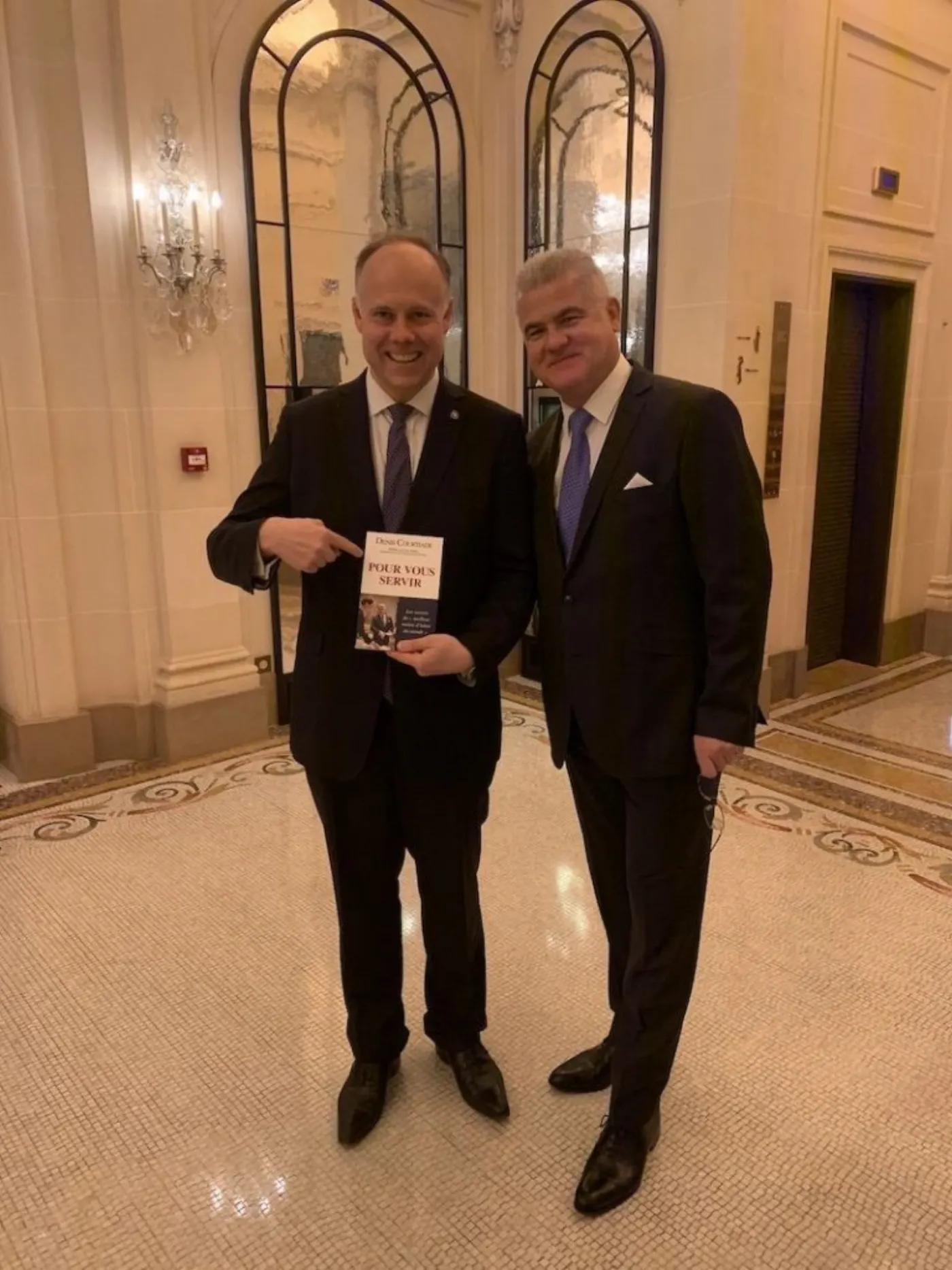
Talking about service professions is one thing. Living them alongside Denis Courtiade is another. This meeting is part of an approach that has guided me for many years: go into the field, observe, listen, understand what makes up the reality of hospitality.
In luxury hospitality, but also in many sectors seeking relational excellence, service professions are often mentioned without being truly understood. They are sometimes reduced to operational functions, when in fact they are a major strategic lever in creating value and experience.
Meeting Denis Courtiade means stepping into a demanding, deeply human vision of service. It also means discovering a career that alone illustrates the transformations of a profession in search of recognition.
Through this series of five articles, I invite you into this world, with a clear ambition: to restore the depth, complexity and nobility of service professions, while opening perspectives for other sectors.
This interview is part of an editorial series built around five fundamental themes of hospitality and service. One strong conviction runs through it: service can no longer be thought of purely as execution, but as a genuine architecture of the guest experience.
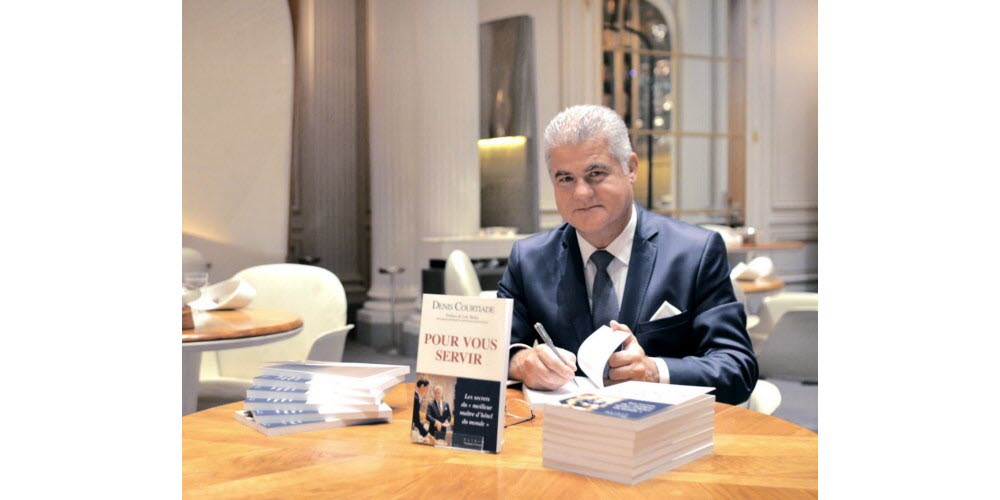
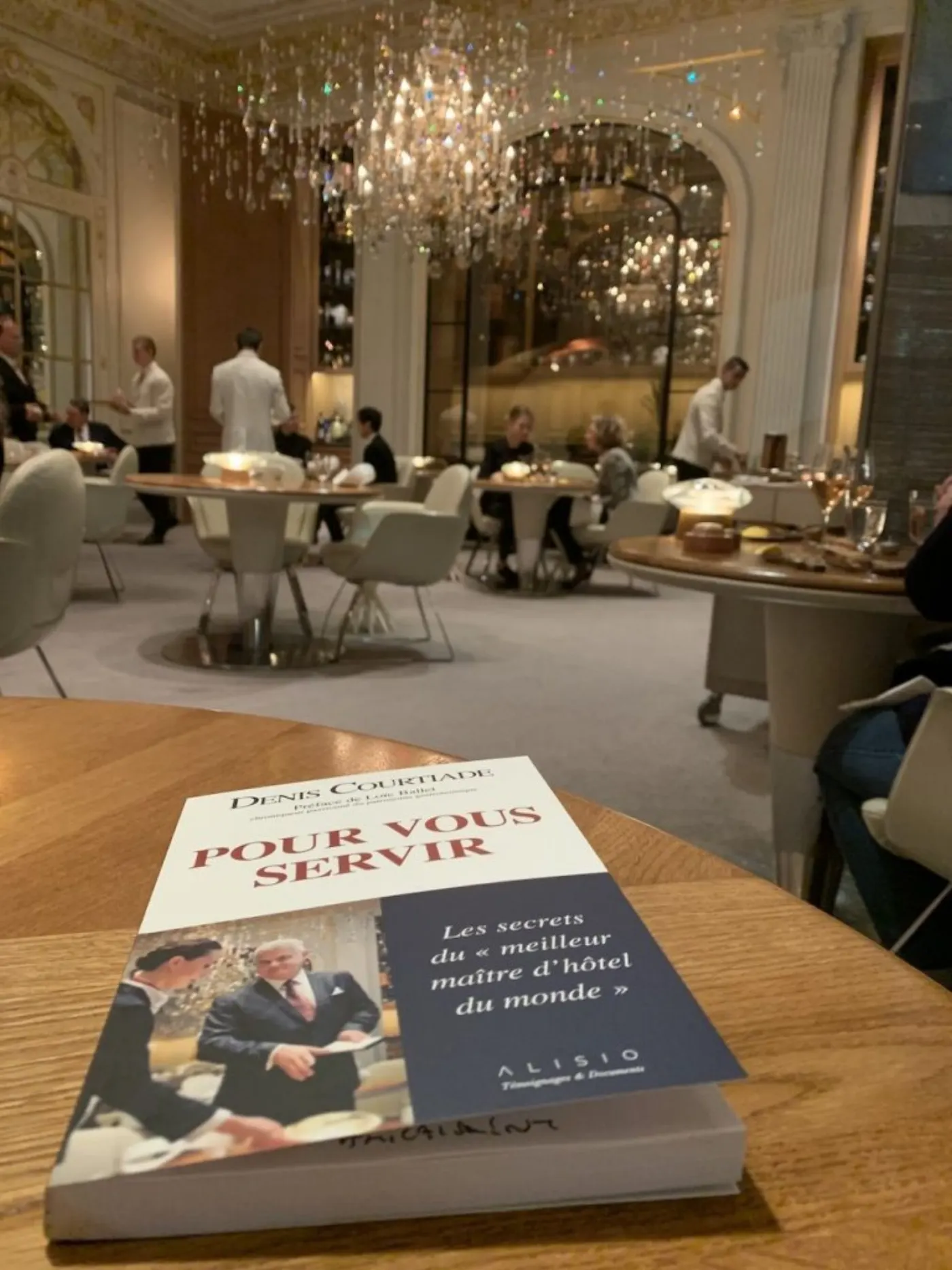
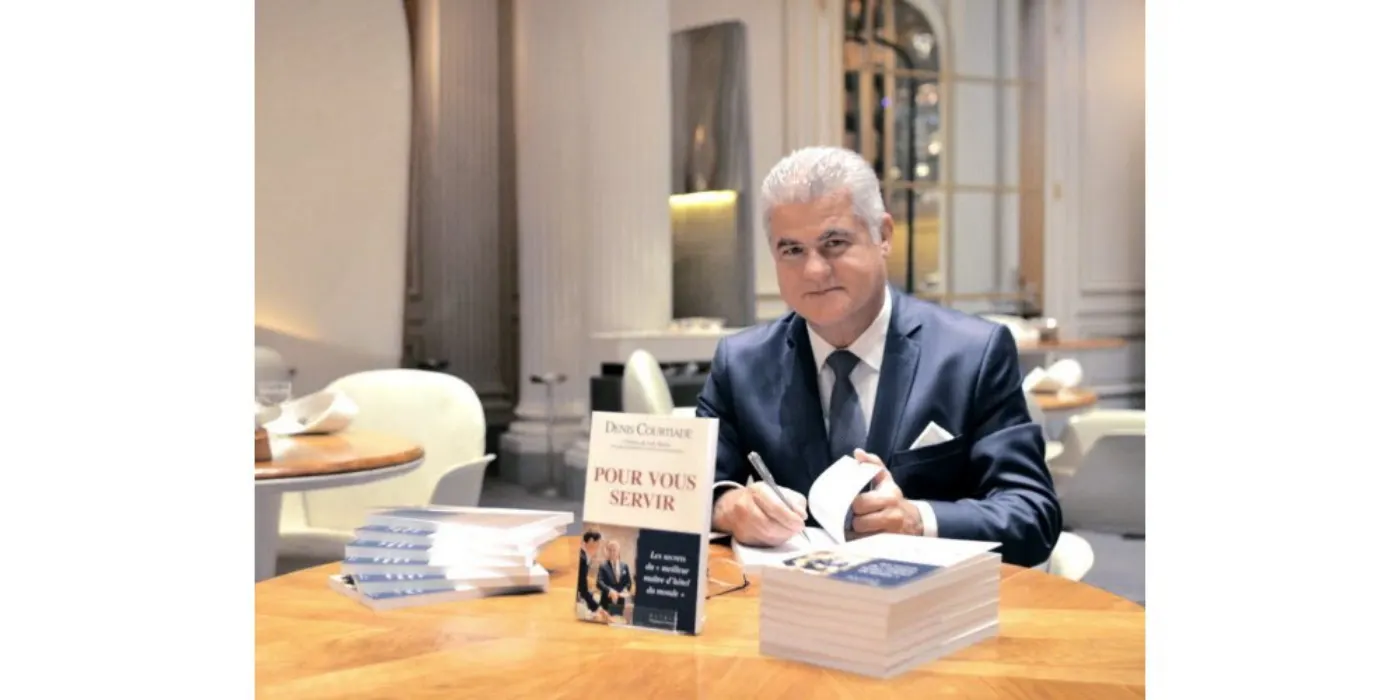
Have you read Denis Courtiade's book, Pour vous servir?
A career built on rigour and transmission
Denis Courtiade's career is emblematic of a generation trained in rigour, discipline and transmission.
In his book Pour vous servir, he looks back with sincerity on his beginnings. He describes an "old-school" training, shaped by learning in the field, in environments where discipline and precision structured everyday life.
His first experiences at the Auberge des Templiers, then his encounter with his mentor Alain Francoz, were decisive steps. They reveal an essential point about service professions: careers are never built alone, they are always the result of formative encounters.
His time in the United Kingdom, then his arrival, at just 25 years old, as second-in-command at Le Louis XV, Alain Ducasse's restaurant in Monaco, marked a turning point. He entered a world where service becomes an art in its own right, on equal footing with the cuisine championed by Alain Ducasse.
Service as the building of identity
What is striking in Denis Courtiade's career is how service gradually becomes an identity. Over the years, it is no longer just about learning gestures or techniques, but about building a posture, a presence, a way of being in the world.
This evolution is fundamental to a contemporary approach to hospitality. In my missions at DELPORTE HOSPITALITY, I regularly see how this shift, from technical gesture to posture, sets successful organizations apart.
Denis Courtiade perfectly illustrates this transformation. Over time, he becomes a guide, a reference, a man of transmission. This recognition is reflected in particular by his title of best maître d'hôtel in the world, an honour he has won twice.
A strong conviction: recognizing your teams
This sentence, simple in appearance, is in fact deeply structuring.
In many properties, recognition remains implicit. It is assumed, but rarely expressed. Yet in service professions, where emotional engagement runs high, recognition becomes an essential lever of performance.
In my work with clients, I see how much this lack of recognition weighs on teams. We find here a fundamental principle of generous hospitality: we can only offer others what we ourselves live.
What is your vision of French hospitality? How do you see this notion evolving?
I believe it is important for us to keep this French art of service alive, even though today it is genuinely hard to define. On one hand, we hold traditions and know-how in hospitality; on the other, France is the most visited, most touristic country in the world. So together, we owe it to ourselves to restore value to our service professions, to make everyone understand the importance of welcoming and serving our travelling guests well. We are all ambassadors of France!
The notions of French hospitality and service are, in a way, a heritage, even though, in my view, there has been a generational break in passing on the profession's values, and the profession has not always known how to question itself. As founding members of the association Ô Service, des talents de demain, we work every day with young learners and teachers in schools, to help as many people as possible realize that practising a service profession is a noble act.
In what way is service truly an art, and not servitude?
Denis Courtiade's answer is unambiguous: it is entirely a matter of awareness and posture. Service becomes an art the moment it is lived as a contribution, not a constraint.
He also raises the idea of a "double personality": when you put on the uniform, you embody a function, a responsibility, a standard.
This idea is particularly interesting in a contemporary reading of service professions. It does not mean a loss of authenticity, but rather an ability to place oneself in service of an experience greater than oneself.
In my missions, I often insist on this point: the guest experience does not rest solely on procedures, but on the ability of teams to step into a role with precision and awareness.
How was the Ô Service association born? What is its role?
The association Ô Service, des talents de demain, was born from a shared observation: the need to unite a profession that is often fragmented. During the Assises des Métiers, led by Régis Marcon, several key figures became aware of the urgency to act collectively.
The ambition is strong: to unite a fragmented profession, and to strengthen the appeal of these professions, the transmission of know-how and the value placed on vocations. This effort reaches far beyond the restaurant industry.
Service as a strategic lever in contemporary hospitality
Beyond the personal account, this interview raises a central question: what place does service hold in organizations today? In a context where guest expectations evolve quickly, service becomes a major differentiating factor. It is no longer just about executing well, but about creating connection and giving meaning to every interaction.
In my work on hotel projects, I often see that service is underestimated in the design phase. The focus goes to architecture, design, product, but rarely to orchestrating the human experience. Yet that is precisely where the difference is made.
From technique to a signature of service
One of the major insights from this meeting with Denis Courtiade lies in understanding the shift from a technical service to a signature of service.
This transformation rests on several elements that redefine the very role of service. The maître d'hôtel then becomes a true conductor. He does not simply supervise, he embodies a vision, structures the experience, and creates connection.
What to remember: restoring meaning to service professions
This meeting with Denis Courtiade goes far beyond a personal account. It highlights a fundamental issue: restoring meaning, value and visibility to service professions. In an economy increasingly focused on experience, these professions hold a central place. Yet they remain, too often, misunderstood or underestimated.
Generous hospitality, as I defend it at DELPORTE HOSPITALITY, rests precisely on this conviction: service is not a secondary role, it is at the heart of the experience. Denis Courtiade's career and vision remind us of this with force.
And in a world in search of meaning, it may well become, once again, one of the most precious professions.
Share this article with a colleague, a client or a partner.
That is often how an idea enters a house, and then its habits.
What you say about it matters more than what I say.
A keynote, a mission, an article in the magazine: if my work has been useful to you, a few lines on Google are worth more than any argument.
Leave a review on Google →