
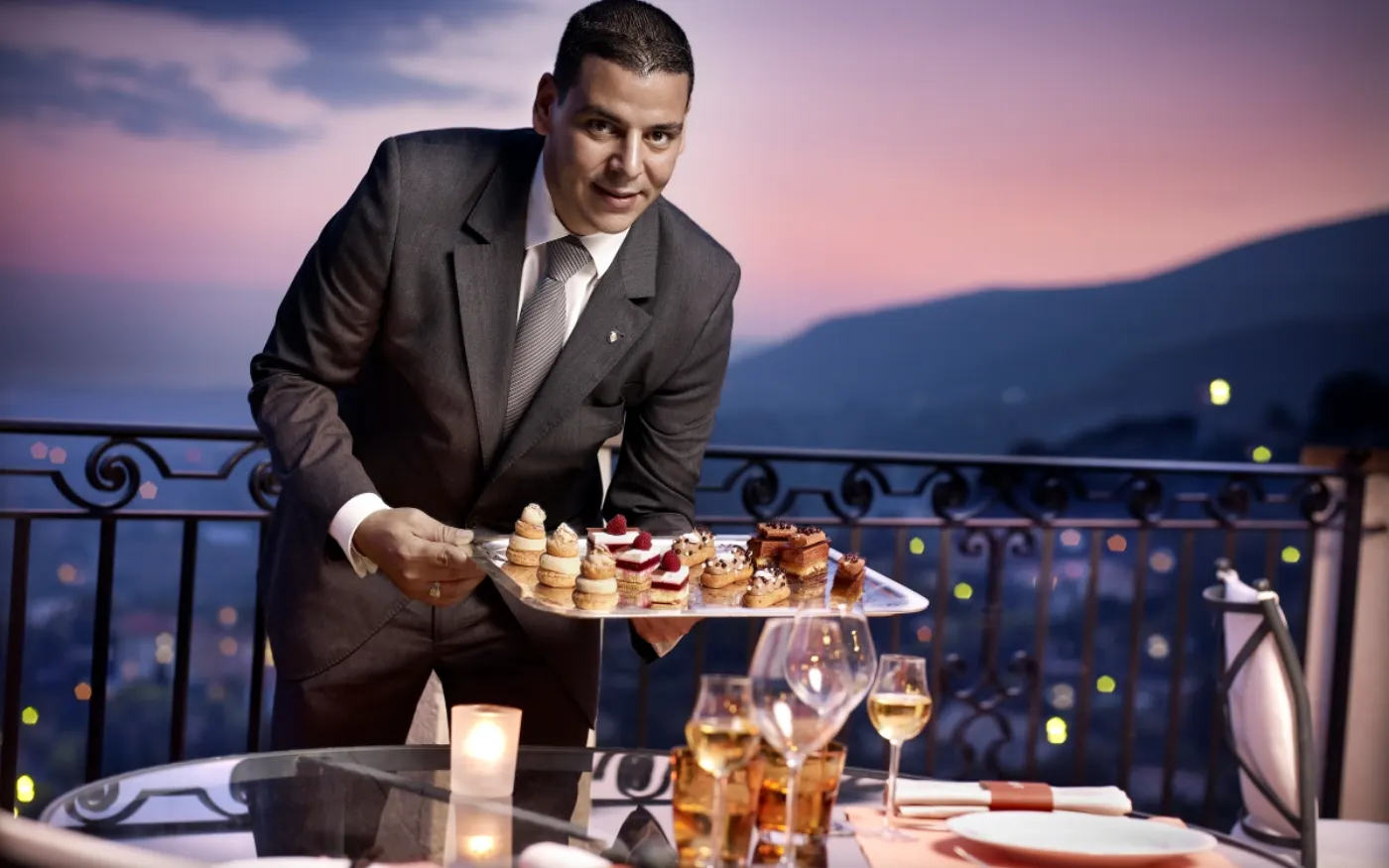
It takes a great many qualities and skills to succeed as a maître d'hôtel, skills that will always serve anyone who one day wishes to change activity or sector. When we sit at a table, we only see the tip of the iceberg behind this profession. Everything then depends on the maître d'hôtel: whether they play their role fully, with passion, or simply “do the job” without any real feeling. Your experience will not be the same either way. On one hand, you will want to return to that restaurant and will not hesitate to recommend it to those around you; on the other, you won't feel like going back, even if the meal itself was excellent. The maître d'hôtel, whose love of the work is sometimes felt almost as a calling, plays a direct role in building guest loyalty.
It has become difficult for the restaurant sector to recruit staff and attract young people. Denis Courtiade created the association Ô Service, des Talents de demain. What a lovely name, and what a fine promise, to support young people in this sector as they build their careers. A good part of the profession is coming together to organize itself and build an action plan to promote the trade. The association highlights examples of successful maîtres d'hôtel. Everyone has their own style, and everyone has their own success. It is a profession in which it is possible to flourish and rise to major responsibilities. It is a genuine engine of social mobility for the most hardworking and the most motivated.

Even the finest palace hotels struggle to recruit staff for their gastronomic restaurants. It is difficult for every type of restaurant. It is hard to promote this profession to young people, and to their parents. This is undoubtedly also a key factor in the journey of a young person thinking about their career. Parents often carry within them career dreams they were unable to fulfil themselves, and so they dream that their children will become what they themselves failed to be. A sad, and avoidable, mistake. Everyone should have the freedom to choose their own career path. It is a complex question for a young person to know what they want to do with their life. For some, it begins at fourteen or sixteen; for others, after twenty. And then there are those who wake up at thirty or forty, realizing their past mistake and wanting to change direction; in the end, they would have done better to follow their original instinct.
The way others view a young person's career plans inevitably shapes their thinking. “My son, you will be a doctor.” “But no, mother, I want to work in the restaurant business and bring pleasure to guests, while fulfilling myself in a role that truly suits me.” “My son failed at school, so he's starting a vocational diploma in catering.” Sometimes even teachers go so far as to tell their students: “If you don't work harder, you'll end up in catering.” Who hasn't heard something like that at least once, from someone around them? These kinds of remarks have done a great deal of harm to the profession. This sense of sadness, of disappointment, has spread over the years. Unconsciously, it does not encourage young people to enter the profession with pride. Ego comes into play too. The real, difficult question to ask is whether I actually want to do this job, setting aside every judgment or biased opinion that might sway that choice. It is a deep feeling that we owe it to ourselves to listen to.
The time has come to leave behind that sense of inferiority, that negative image of the man or woman who serves, the “servant”! A whole new generation is working, with the support of their peers, to restore the shine of this profession and to show the pleasure and passion they feel in this multifaceted trade. More than ever, it matters to help people dream, to lift them out of the everyday, to create smiles made just for them, to share genuine kindness. These are not just words: they are real emotions to convey, emotions that bring guests true wellbeing. When you go to a restaurant, you nourish yourself on two levels: mind and body. It is this combination that creates the experience. The two are inseparable, and equally important.
Share this article with a colleague, a client or a partner.
That is often how an idea enters a house, and then its habits.
What you say about it matters more than what I say.
A keynote, a mission, an article in the magazine: if my work has been useful to you, a few lines on Google are worth more than any argument.
Leave a review on Google →