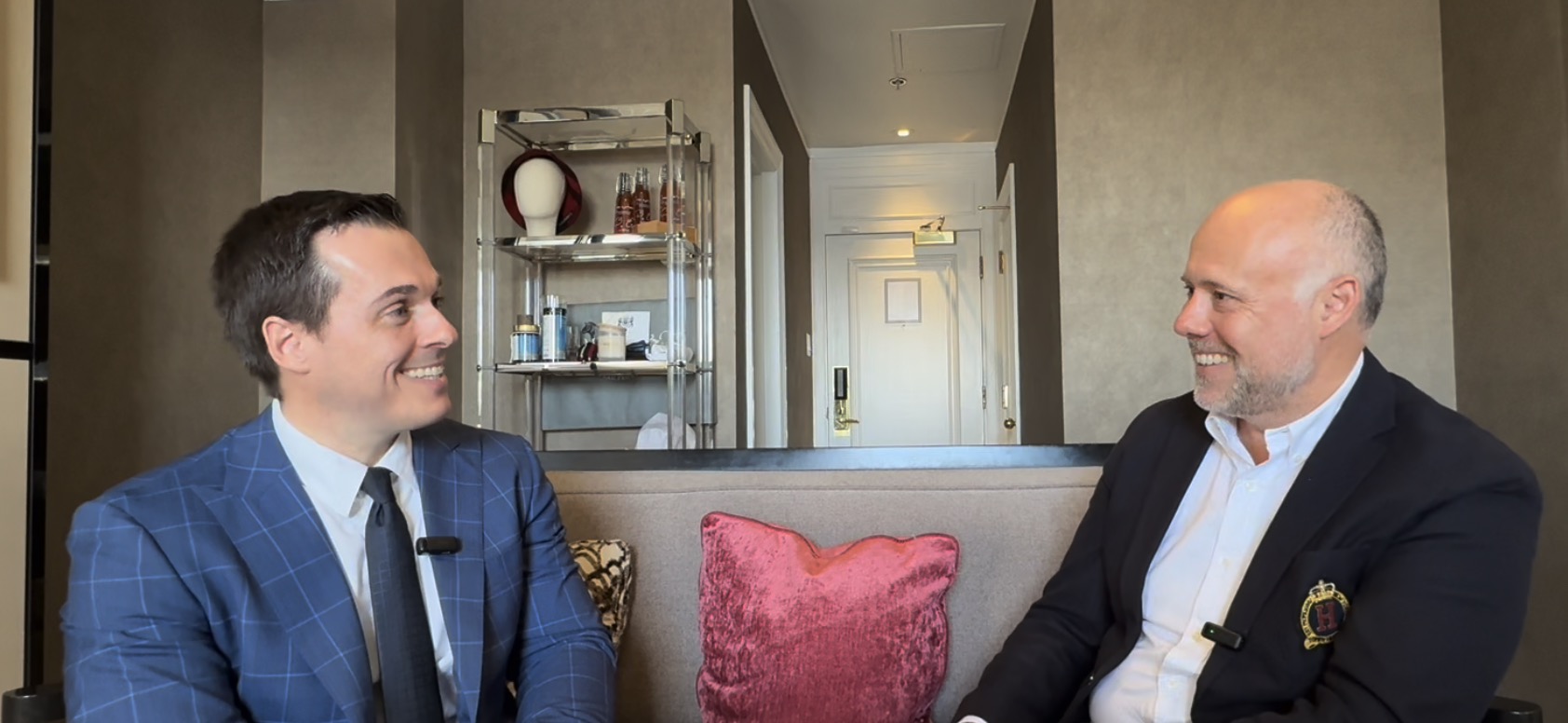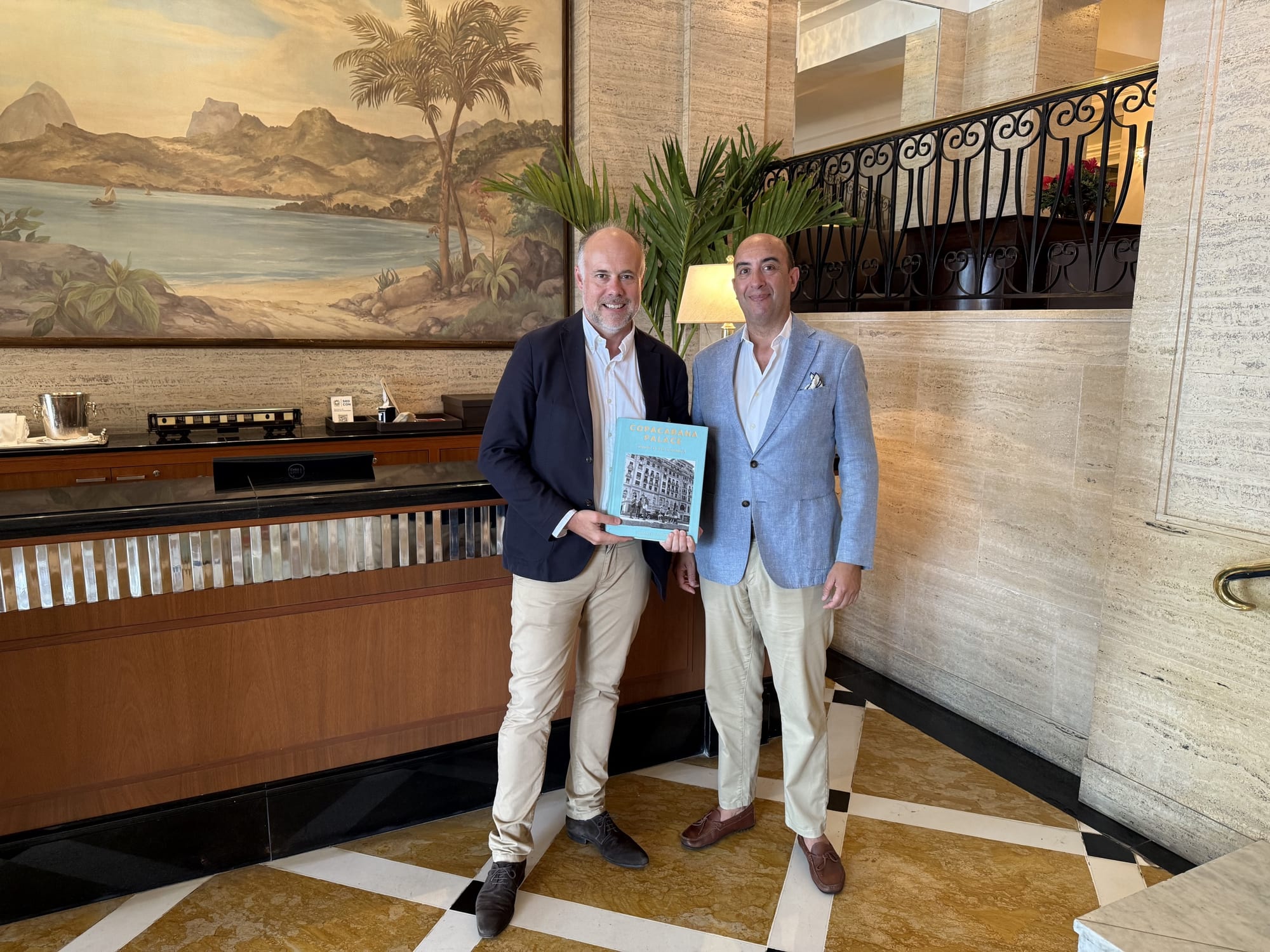
A sleep mask left behind in a Dubai hotel room, a question asked at room service, and two more waiting on a desk the next morning. For the Managing Director of the world's oldest hotel school, that is a truer definition of hospitality than any standards manual. I met him in Milan.
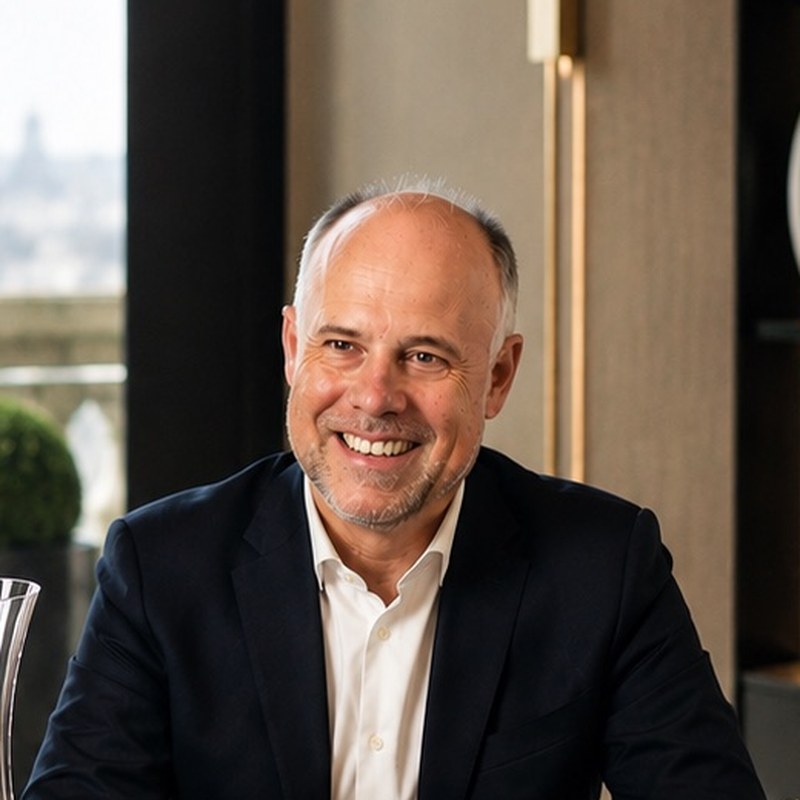
Markus Venzin leads EHL, founded in Lausanne in 1893 and recognized as the world's first hotel management school. More than four thousand students, over one hundred and twenty nationalities, three campuses across Switzerland, Passugg and Singapore. From the Bachelor's to Executive Education, through the Master's and the MBA.
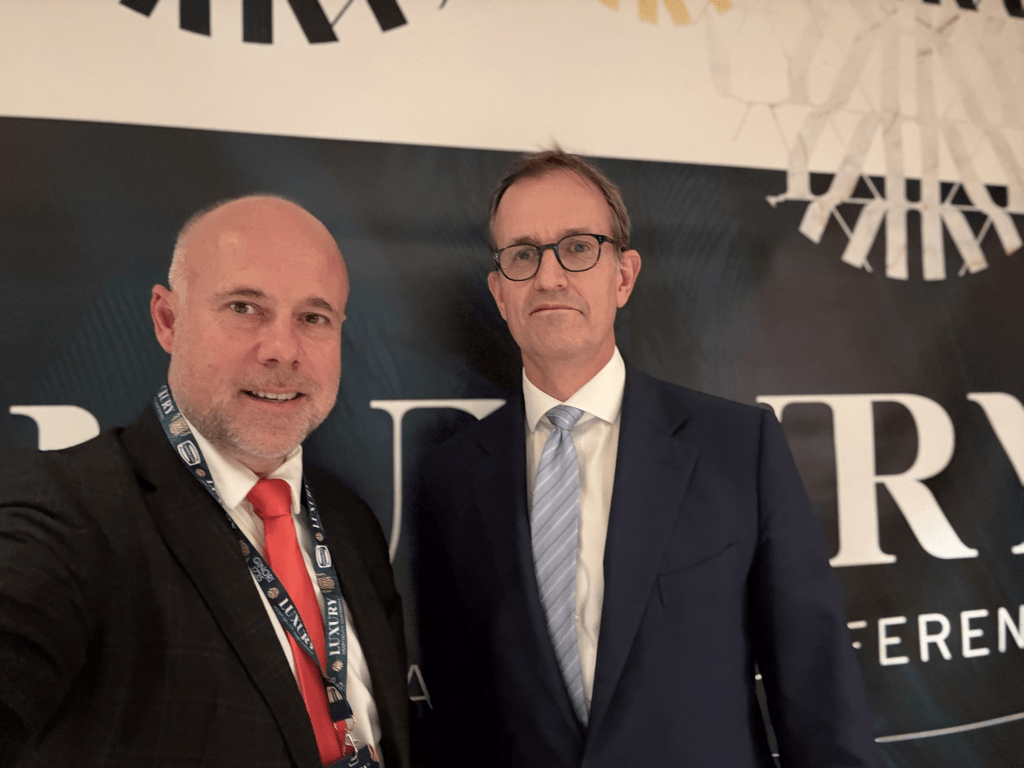
We met at the Luxury Hospitality Conference in Milan, and the conversation took a turn I hadn't expected. It began with a distinction, and that distinction changes a great deal.
What is hospitality?
For Markus Venzin, it differs fundamentally from service, and even from service excellence. Service rests on procedures and standards. Hospitality rests on the relationship and on what the person feels.
His answer came immediately, as if he'd been waiting for the question.
The nuance deserves to be laid out slowly, because our industry has confused the two for a long time. Service is measured: a response time, a compliance rate, a score. It gets checked, audited, benchmarked. Hospitality, by contrast, plays out in the quality of the bond created. A person who feels welcomed feels recognized and considered, something no indicator captures.
A property can therefore post flawless scores and leave its guests completely indifferent. We all know houses like that.
The story of the two sleep masks
Exhausted after a flight from Los Angeles to Dubai, he found a particularly pleasant sleep mask in his room and asked room service where he could buy one. The answer: "I'll check with my manager." The next day, two of them were waiting on his desk.
He tells the scene with precision, and it's worth more than any theory.
The gesture cost almost nothing. No budget was involved, no procedure had anticipated the case, and the guest's question wasn't even a request: it was about where to buy something, not about a service.
Three elements strike me as decisive in this story, and I've kept coming back to them since.
The first is listening. Someone heard something beyond the question that was asked. A guest who asks where to buy an object is really saying that the object touched them.
The second is the organization. "I'll check with my manager" could easily have been where the request died. In this house, the chain worked, which means a team member knew who to pass it to, and a manager had the latitude to decide.
The third is timing. The next morning, not three days later. Attention loses almost all its value once it arrives after the guest has already moved on.

Why do half of all graduates leave the hotel industry?
Because the skills taught have become transferable. About 50% of EHL graduates today work outside hospitality in the strict sense: private banking, luxury goods, high-end retail, consulting.
The figure deserves to be looked at without drama, but without complacency either.
Markus Venzin doesn't present it as an exodus. He presents it as proof. Human relationships, experience design and the quality of interaction have become strategic levers in industries that had never used those words before.
Still, that reading raises a blunt question for our profession. When half the people trained in hospitality choose to work elsewhere, the hotel industry has to ask what it offers in return. If these talents have a choice, and they do, the question is no longer how to train them but why they would stay.
On teaching method, his position is clear. The goal isn't to produce concepts or presentations, but to learn by doing, experimenting and acting concretely. Training instills a discipline, a bearing, a way of presenting oneself and interacting with others. Technical skills evolve, he says in substance; the fundamentals of hospitality endure.
What makes a school last longer than a ranking
The success of its alumni. The alumni association has existed since 1926 and brings together active members in more than one hundred and twenty countries.
Markus Venzin insists on this point with a clarity rarely found in the head of an institution.
A school's reputation, he says, is measured far more by the professional success of its former students than by the effect of its institutional campaigns. Its graduates hold leadership positions in hospitality, luxury, finance, consulting and real estate, and that very spread is the proof.
The network acts as an accelerator: it opens up opportunities, gives access to mentors, and lets practices travel from one country to another. The international rankings, where the school tops the list for hospitality management, mostly reflect recruiters' confidence, whose assessment weighs heavily in the methodology.
On top of that comes the diversity of the student body, close to a hundred nationalities, which produces an adaptability that has become essential far beyond the hotel industry.
His definition of leadership
Build a shared vision with your teams, then let everyone excel. A team member must feel recognized and useful in exactly the same way a guest must feel unique.
He starts by smiling, pointing out that it's a formidable question to ask a professor of strategy.
Then he draws a symmetry that I find accurate and rarely put this way. Just as the guest experience aims to make every guest feel unique, the management relationship must give team members the feeling of being recognized and fully useful.
In other words, the promise made to the guest and the promise made to the team are the same promise. A house that keeps the first while neglecting the second will eventually keep neither, because it's the same people carrying both.
Laurent Delporte's reading keys
Three things stayed with me from that conversation, and I carry them into my own work.
The first is the distinction between service and hospitality, which should sit at the start of every property project. When a management team asks me to improve its service, I now begin by checking what exactly they mean. Almost always, their indicators measure service while their guests are judging hospitality. The gap between the two explains most of the disappointment that satisfaction surveys never pick up.
The second is the sleep mask story, which I use in training sessions. In thirty seconds it proves what no lecture ever quite manages to: a gesture with no economic value can build more loyalty than an expensive service, provided the organization lets that gesture happen. I then ask the teams to tell me the last time they were able to do the same thing. The silence that follows is telling.
The third is the statistic about half the graduates. It forces the hotel industry to see itself in competition, no longer with other hotels, but with private banking and consulting. Those industries recruit our profiles, pay better and offer more predictable hours. Faced with that, invoking a passion for the job is no longer enough. Reasons to stay have to be built, and that is a matter of organization, not of speeches.
These three ideas now run through my training sessions and my talks, in France and abroad.
What to remember
Service rests on procedures and standards. Hospitality rests on the relationship and on what the person feels. A property can succeed at the first and completely miss the second.
A gesture with no economic value, two sleep masks left on a desk, can create more attachment than an expensive service.
That gesture requires three conditions: someone who listens beyond the question that was asked, a decision chain that works, and a short turnaround.
About half of EHL graduates work outside the hotel industry. Hospitality skills have become transferable, and the hotel industry now finds itself competing with private banking and consulting.
An institution's reputation is measured by the success of its alumni more than by its campaigns.
The promise made to the guest and the promise made to the team are the same promise, carried by the same people.
Share this article with a colleague, a client or a partner.
That is often how an idea enters a house, and then its habits.
What you say about it matters more than what I say.
A keynote, a mission, an article in the magazine: if my work has been useful to you, a few lines on Google are worth more than any argument.
Leave a review on Google →