
The French Art of Hosting Faces the New Expectations of International Luxury
In a world where luxury hospitality is undergoing profound transformation, the notion of the art of hosting has never been so strategic. Long associated with traditional codes, it must now adapt to international clients seeking more personal, more immersive and more emotional experiences.
This evolution is particularly visible in Asia and the Middle East, where cultural references intersect and client expectations are evolving rapidly. In this context, the ability to revisit the codes of French luxury while adapting them to local cultures becomes a genuine point of differentiation.
Through the eyes of Isabelle Miaja, this article offers a nuanced reading of these transformations. Between heritage, creativity and adaptation, she develops an approach in which design becomes a tool in service of the client experience, a vision that aligns with the principles of generous hospitality: creating meaning, connection and overall coherence between the place, the teams and the client.
The Art of Hosting According to Isabelle Miaja, Architect and Designer
The French art of living is a trademark recognized the world over. It is a savoir-vivre that crosses every border. Its aura of elegance, refinement of nose and palate, culture and sophistication is a major asset for luxury hospitality.
For each project, we present our know-how, shaped by our French roots and our knowledge of Asia, a lived experience we introduce in small touches that our clients appreciate. We bring them this touch: whether unusual, cheeky or understated, it creates that certain something that produces unique atmospheres, a mood defined by accumulated and reinterpreted experiences. The French art of hosting is a set of rules of savoir-vivre passed down through generations, an appreciation of the 'rules' to follow, of what is 'correct' and what is 'done.' A whole symphony of complicated unspoken understandings, like a dance where every step is executed with care, a labyrinth where every turn is calculated. It is a world in which many lose their way, yet it is fascinating, because every culture has its own art of hosting, its own art of living and its own codes of conduct, which we must learn to recognize and to make appreciated. Today we adapt this art by weaving in local touches for each project; the codes change and renew themselves. It is in these changes that we best express each period of artistic flourishing.
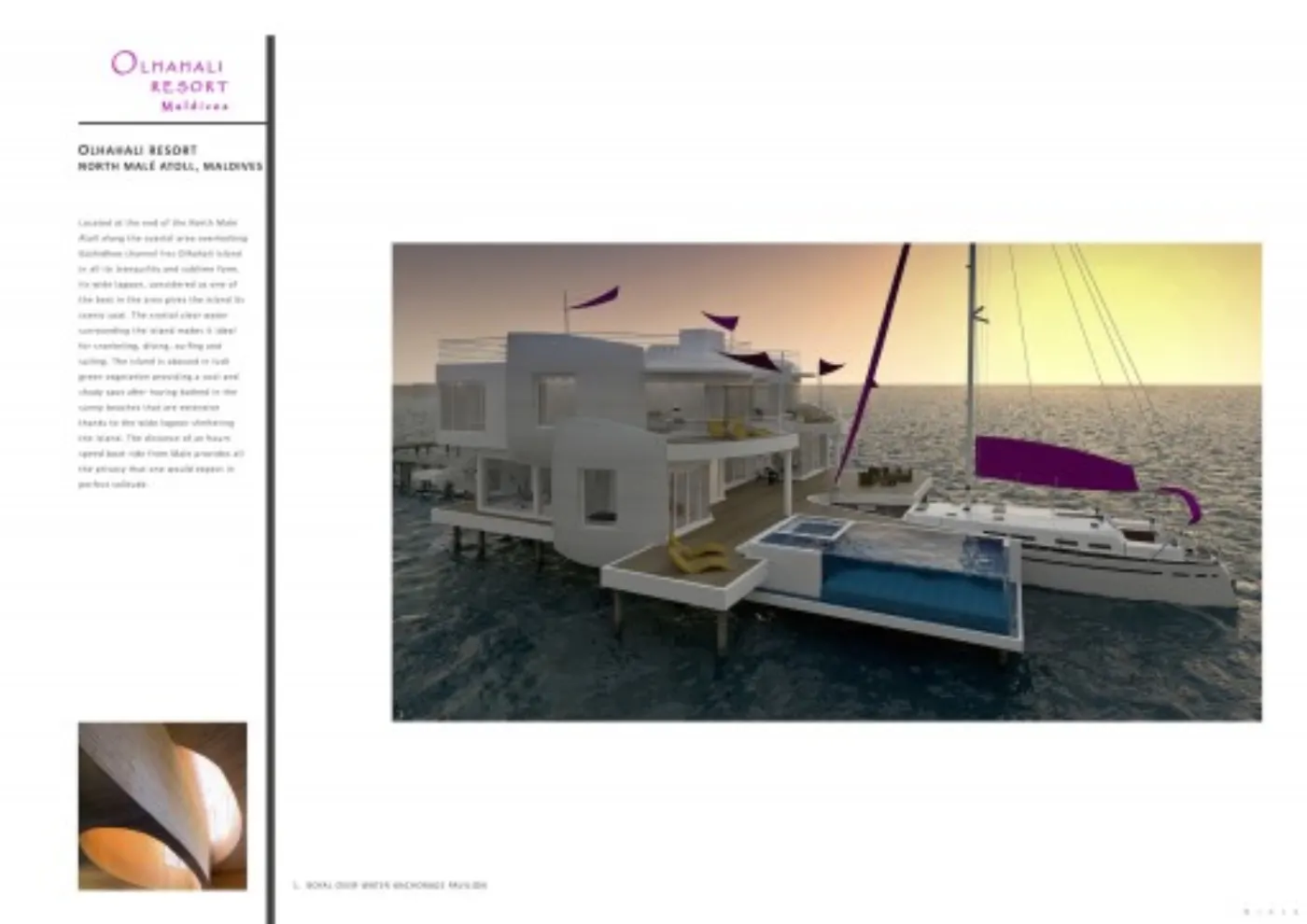
France still holds a large share of the luxury market in clients' minds; it is a calling card that serves me well, because France remains, without question, the country where the traditions of luxury are admired, respected and followed with diligence. Being French is an asset that has served me greatly with my clients in their choice of interior architect. There is enormous trust in the intellectual, artistic and savoir-vivre contribution that France has passed down, and of which I am the ambassador wherever I work.
Are We Searching for New Kinds of Hotel Spaces?
I believe the very notion of a hotel is evolving. It no longer simply designates a place where one comes to sleep. It now corresponds to a space of transition, notably one that accompanies business travel. This evolution is particularly visible in urban hotels, which are experiencing the most significant transformations today, both artistically and functionally.
Conversely, leisure hotels have always managed to preserve a dimension of escape through their surroundings, even if this was not as developed as in the projects we design today. It is clear that hotels have become open living spaces, where the world that is created must seduce, inspire, surprise and, above all, make guests want to return.
Client loyalty has become the primary objective. Every hotel must therefore convey, through its services and its atmosphere, a genuine sense of belonging.
How Do We Reinvent the Codes of Hospitality?
How do we break the codes to rethink a hotel's various spaces? Questioning the established codes of hospitality is an integral part of the role of interior designers, but also of every profession in the sector. We must respond to a clientele that is constantly evolving.
Hotel teams must no longer simply meet client expectations; they must anticipate them across every aspect of the stay. Nothing should be left to chance. From sunrise to sunset, everything is designed to surprise, to inspire dreams, to educate, notably through art and culture, and to bring comfort.
Experiences are multiplying and intensifying. The notion of feeling 'at home' in a hotel no longer matches today's expectations. Our new ambition is to go further: to offer an experience that is 'even better than home.'
This applies to every space: restaurants, bathrooms, meeting rooms. This approach requires a considerable amount of research and inspiration, notably by observing shifts in usage and trends across varied fields such as media, music, technology and audiovisual equipment.
Fashions and trends now strongly influence hospitality. They shape aesthetics as much as usage. Today, we are no longer simply interior designers, but creators of experiences tied to the notion of 'feeling at home, elsewhere.'
Leisure hotels, for their part, must reinforce this emotional dimension by giving shape to dreams of escape and relaxation. The search for nature and authenticity is omnipresent there.
The Rise of 'Haute Couture' Hotels
The convergence between Haute Couture and hospitality reflects the sector's deep transformations. In the past, a hotel was designed to last, with a relatively classic aesthetic. Renovations took place every seven to ten years, or even longer, given the considerable investment they represented.
Today, hospitality adapts to a clientele in constant search of novelty. It becomes more playful, more open, and evolves in a world where the boundaries between disciplines are rapidly blurring.
The pursuit of surprise, innovation and creativity is accelerating. The concept of seasonality is gradually replacing that of permanence, much as we see in fashion or technology. Trends now strongly influence the entire hospitality ecosystem. Trade shows showcase new color and material palettes, while manufacturers develop innovative techniques.
Working with renowned creators, such as Karl Lagerfeld, perfectly illustrates this convergence between fashion and hospitality. It marks the emergence of a genuine 'hotel fashion' and signals a profound transformation in hotel design.
For a designer, this approach is central. It consists of drawing inspiration from both the present and the past to create unique places carrying a strong identity. Art also plays a key role in this process. It becomes a structuring element of the hotel's identity. We no longer simply add decorative works. At Miaja, we created a department dedicated to art, which is involved from the very beginning of each project.
The art budget is now autonomous, and collaborations with artists are an integral part of the design process. Art finds its way into every space of the hotel, and we even work to integrate artworks directly into certain projects.
Collaborating with artists, designers or artisans creates a unique creative richness, one that is often the source of surprising and inspiring results.
Toward a New Definition of Hospitality: Between Identity, Experience and Creation
Through this reflection, one thing becomes clear: luxury hospitality can no longer simply reproduce existing codes. It must constantly reinvent itself to meet client expectations that are ever more complex and ever evolving.
The approach developed by Isabelle Miaja perfectly illustrates this transformation. By integrating art, culture and contemporary trends into her projects, she helps create singular places, capable of leaving a lasting impression and stirring emotion.
This ability to create a coherent and differentiating experience now lies at the heart of hotel performance. It rests on a fine understanding of client expectations, as well as on a mastery of the interplay between design, use and service.
In my view, this evolution fits fully within a logic of generous hospitality. It means conceiving the place as a true ecosystem, where every detail contributes to creating meaning and strengthening the relationship with the client.
More than simply a place to stay, the hotel then becomes a destination in its own right: a space of expression, inspiration and encounter, where the client comes to live a unique experience, one they will above all want to live again.
Share this article with a colleague, a client or a partner.
That is often how an idea enters a house, and then its habits.
What you say about it matters more than what I say.
A keynote, a mission, an article in the magazine: if my work has been useful to you, a few lines on Google are worth more than any argument.
Leave a review on Google →