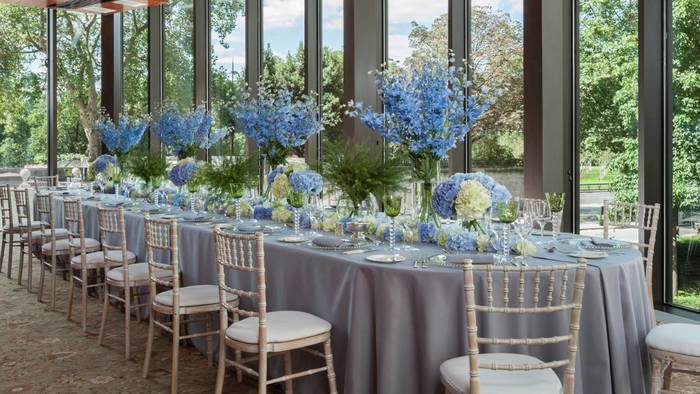
The art of moving people through the art of welcome: the invisible strategy of floral decoration
In hospitality, and more broadly in any place that welcomes the public, emotion cannot be left to chance. It is thought through, built, orchestrated. Every detail contributes to the overall perception of the experience, and certain elements, seemingly secondary, actually play a structuring role.
Floral decoration is one of those elements. Too often reduced to a purely aesthetic dimension, it is in fact a strategic lever of hospitality. It acts at once on the immediate perception of the place, on the sensory dimension of the experience, and on the memory the guest will keep of it.
In my missions at DELPORTE HOSPITALITY, I regularly support hotels and prestigious venues in defining their hospitality strategy. In that context, floral decoration stands out as a central subject: not as a simple decorative choice, but as a tool for aligning the place, the teams and the guest experience.
The question is no longer whether to include flowers, but how to place them within a global, coherent and demanding vision of hospitality.
Floral decoration as an extension of the sense of place
The first step is to move away from a purely decorative approach and into a logic of meaning.
In the most accomplished properties, floral decoration does not simply "dress up" a space. It extends an intention. It is built on a fine reading of the architecture, the interior design and the hotel's positioning.
A historic Parisian palace, a seaside resort or a contemporary boutique hotel cannot approach flowers in the same way. Volumes, light, materials, circulation, and even how spaces are used, should all guide floral choices.
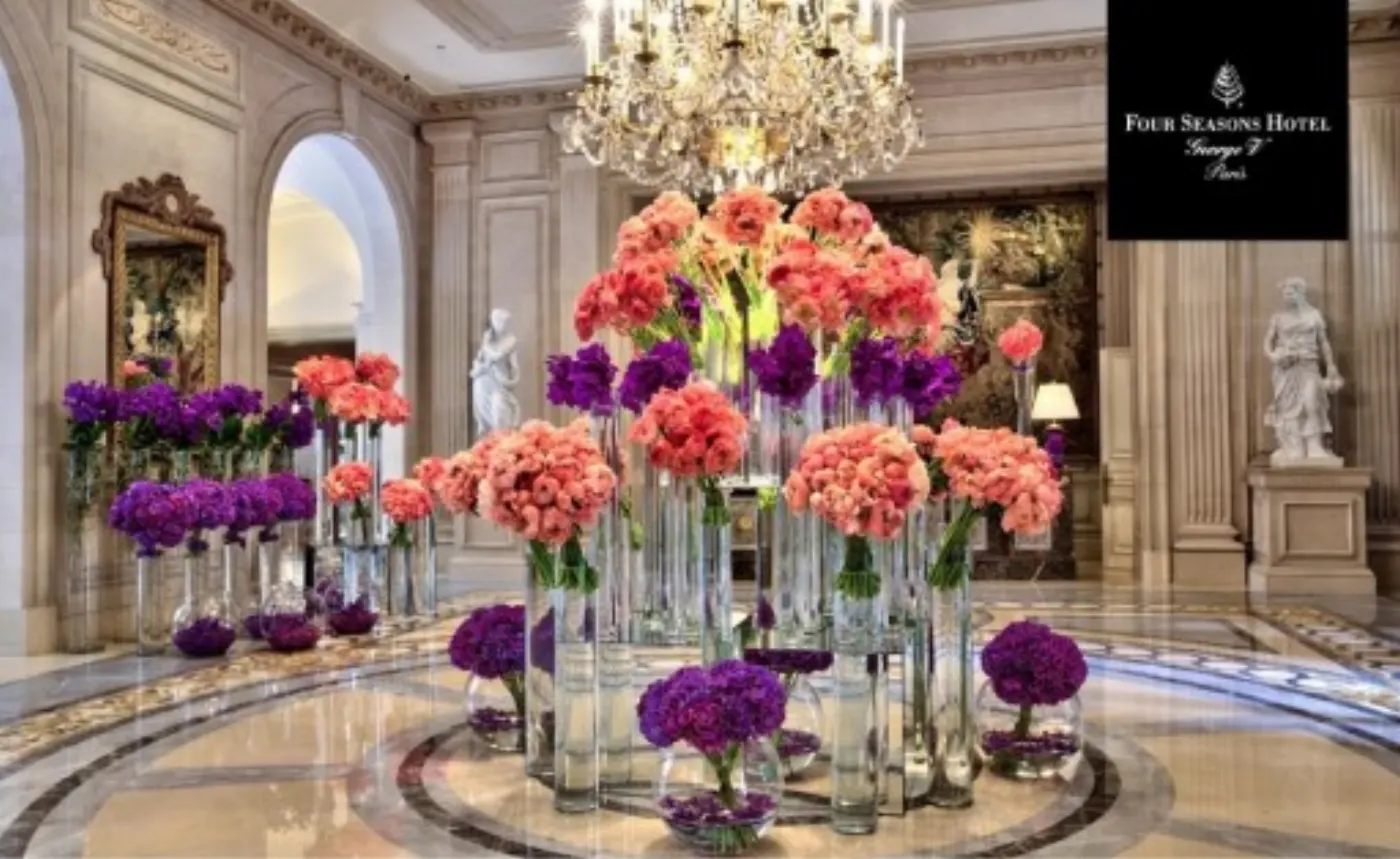
Some houses turn flowers into a genuine signature. They work with floral artists able to design specific, evolving, almost scenographic installations. The lobby then becomes a place of expression, a first encounter with the identity of the location.
From this perspective, floral decoration helps structure the guest journey. It accompanies arrival, highlights key spaces, creates points of attention, and contributes to how the place is read as a whole.
This work requires an in-depth reflection on several dimensions of the place, from architecture to guest profile. Flowers thus become a tool in the service of the sense of place, one of the fundamental pillars of hospitality.
A powerful sensory lever in the service of guest emotion
The strength of floral decoration lies in its ability to activate several dimensions of the experience at once.
The first is visual. Flowers immediately catch the eye, create depth, bring colour and structure volumes. They contribute to the first impression, often decisive in a guest's overall perception.
The second is olfactory. The scent of a flower works in a much deeper way. It can awaken memories, create an immediate sense of wellbeing, or, on the contrary, create discomfort if poorly controlled. This dimension is still too rarely used strategically.
Finally, the emotional dimension is essential. Flowers have this unique ability to touch an intimate memory. They create a link between the place and the guest's personal history. It is precisely this connection that turns a pleasant experience into a lasting memory.
In an approach of generous hospitality, this dimension takes on its full meaning. It is not only about seducing, but about creating an experience that does good, that soothes, that reconnects.
Moreover, in a context where image plays a major role, floral decoration becomes a vector of visibility. The most striking compositions are photographed, shared, spread. They contribute to building the property's image far beyond its walls.
But this visibility cannot be sought for its own sake. It must be the consequence of an authentic and coherent experience.
Choosing a floral designer: a strategic decision
The choice of a floral designer is often underestimated. Yet it is decisive.
In the projects I support at DELPORTE HOSPITALITY, this selection receives particular attention. It is not simply about choosing a supplier able to create beautiful compositions. It is about finding a partner able to understand and interpret a vision.
Several criteria come into play, starting with the choice between an independent florist, a specialized house or an in-house team, which will depend on the property's level of ambition, positioning and resources.
But in every case, the relationship must be built to last. Floral decoration is not a one-off project. It is ongoing work, one that evolves with the place and with its guests.
Operational rigour: a revealer of the culture of hospitality
It is often in execution that the reality of the experience plays out.
Flowers are living elements. They require daily attention. A wilted, poorly maintained or neglected composition becomes immediately visible. It sends a negative signal, far beyond the purely aesthetic dimension.
It calls into question the rigour of the property, its attention to detail and, more deeply, the culture of its teams.
I remember a reception desk where the teams worked all day in front of a half-wilted bouquet. This situation, which one encounters regularly, is revealing. It says less about a floral problem than about a lack of collective vigilance and rigour.
To avoid this, several levers need to be put in place, starting with involving the front-desk teams, housekeepers and, more broadly, the entire staff. Floral decoration should never be seen as an external subject, but as a full component of the experience.
In the best-performing properties, this attention to detail is shared by everyone. It becomes a reflex, a culture.
What to remember
Floral decoration, when approached superficially, remains just one decorative element among others. But when it is integrated into a global hospitality strategy, it becomes a powerful lever of differentiation.
It connects essential dimensions of the experience: sense of place, emotion, memory and perceived quality. It acts both on the present moment and on the memory the guest will keep.
In the projects I support at DELPORTE HOSPITALITY, flowers are never a detail. They are an indicator. They reveal a property's level of ambition, its ability to think through the experience as a whole, and to sustain that ambition over time.
Through this lens, floral decoration goes far beyond its original function. It becomes a language, a strategic tool, and a marker of maturity in the art of welcome.
In a sector where differentiation is increasingly difficult, it is precisely these mastered, considered and embodied details that make the difference.
The George V hotel in Paris
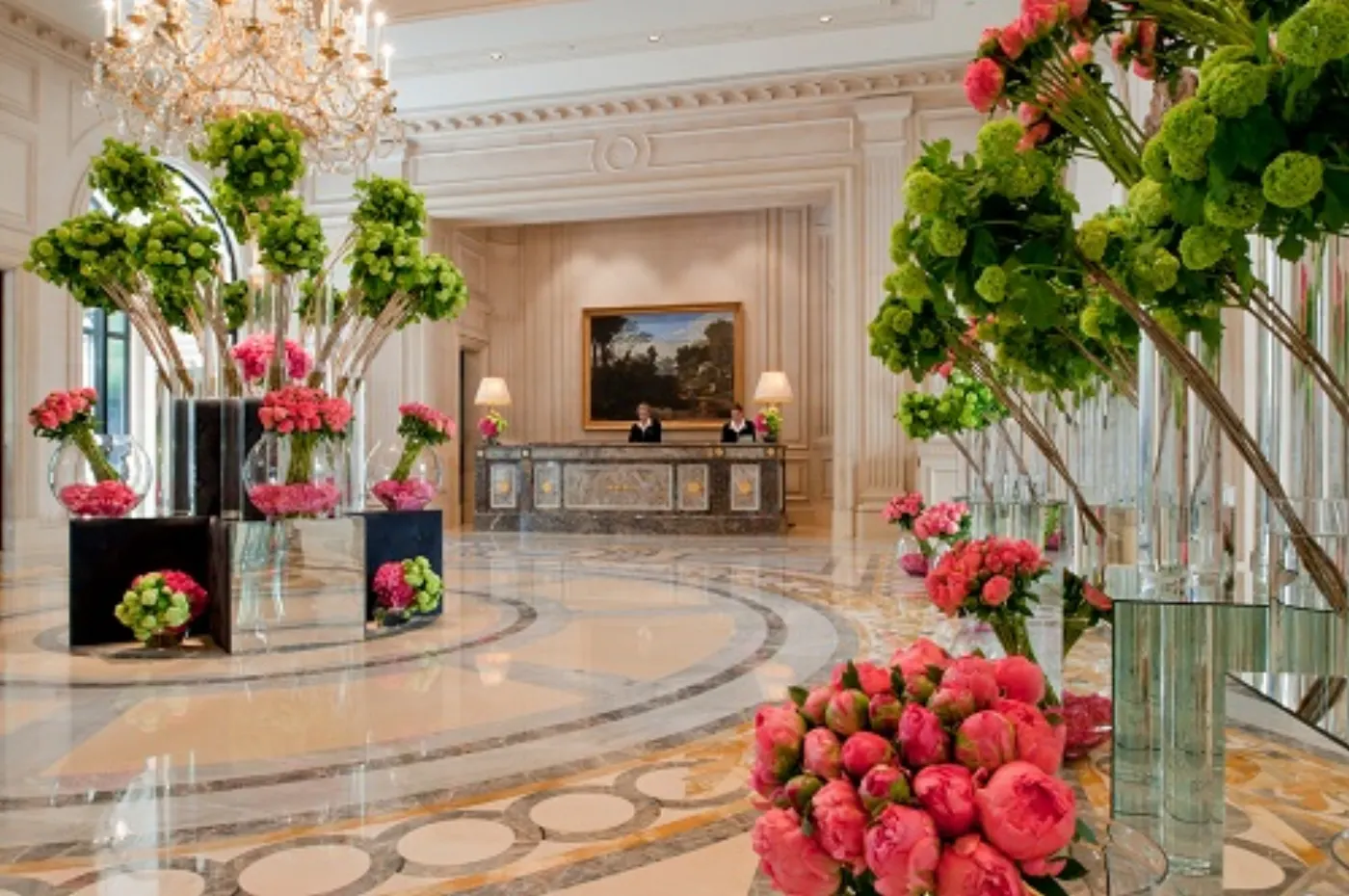
The George V lobby in Paris
Share this article with a colleague, a client or a partner.
That is often how an idea enters a house, and then its habits.
What you say about it matters more than what I say.
A keynote, a mission, an article in the magazine: if my work has been useful to you, a few lines on Google are worth more than any argument.
Leave a review on Google →