
In a city where everything moves fast, where places appear and disappear with the rhythm of trends, certain spaces seem to escape time. Nestled within The Carlyle, A Rosewood Hotel, the Bemelmans Bar belongs to this rare category.
Nothing here seeks to impress at first glance, and yet everything leaves a lasting impression. Behind its walls unfolds a form of hospitality that goes far beyond the consumption of a cocktail or the listening of a jazz piece. This place embodies a deeper, almost silent vision of what it truly means to welcome.
It is precisely this type of experience that has led me, over the years, to articulate what I call generous hospitality. An approach that does not rely on an accumulation of services or apparent sophistication, but on a coherent alignment between the place, the teams, and the impact felt. A form of fulfillment in hospitality when these three dimensions fully align.
Generous hospitality rests on three essential pillars: the sense of place, the quality of human relationships, and the lasting impact on those who walk through the door. The Bemelmans Bar offers a particularly refined illustration of this.
First Pillar: Sense of Place, an Identity That Transcends Time
The Bemelmans Bar cannot be understood without its history. In the 1940s, Ludwig Bemelmans, known for bringing the world of Madeline to life, was invited to contribute to the hotel. In exchange for his murals, he stayed with his family for many months.
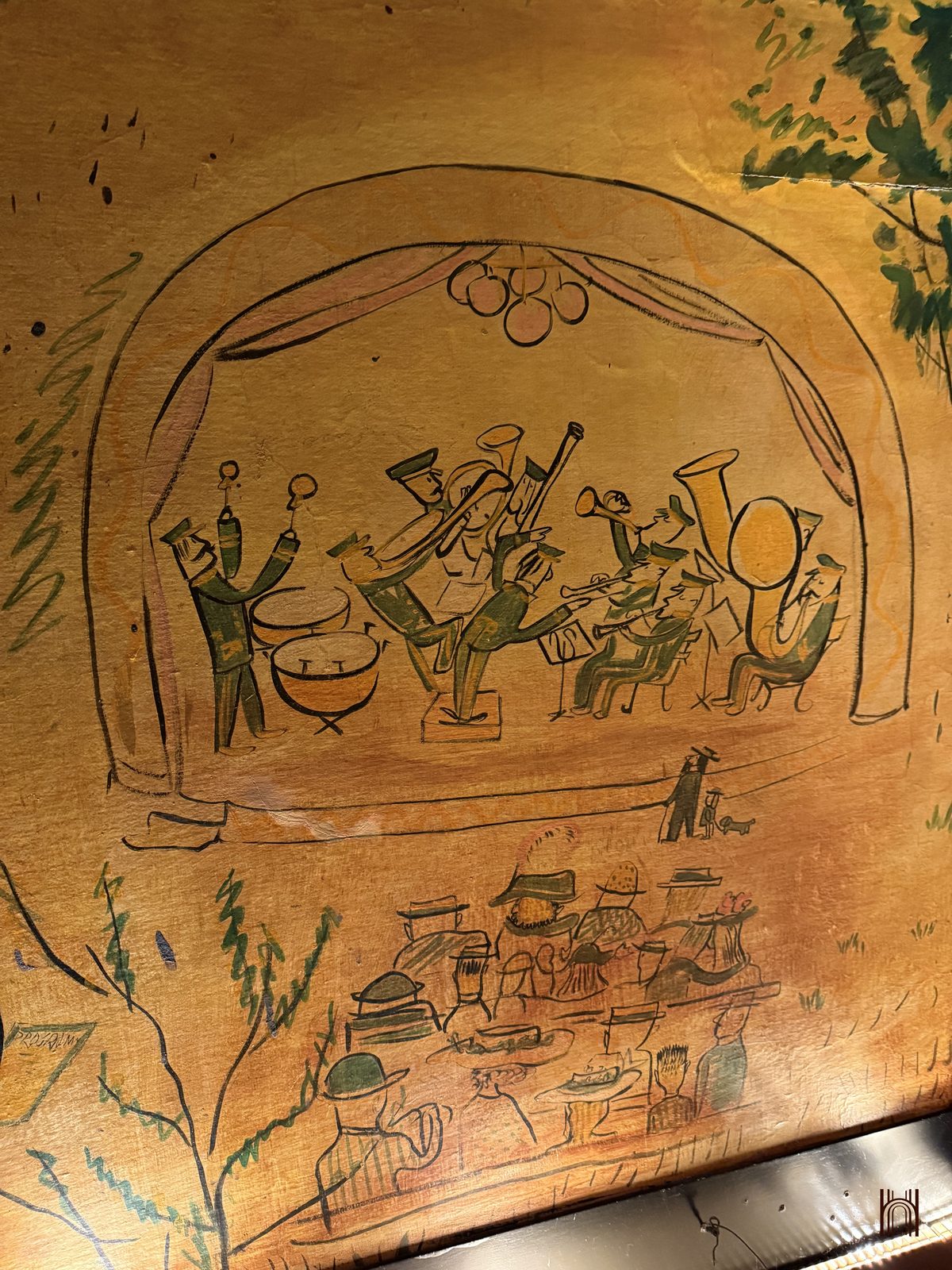
This extended time changed everything. He did not simply decorate a space: he created an atmosphere. On the walls, scenes inspired by Central Park come to life. Animals, characters, landscapes sketched with apparent lightness form a visual narrative that is instantly recognizable.
This artistic signature gives the place rare depth. The bar does not rely on interchangeable aesthetics. It tells a story, and that story becomes the anchor of the experience.
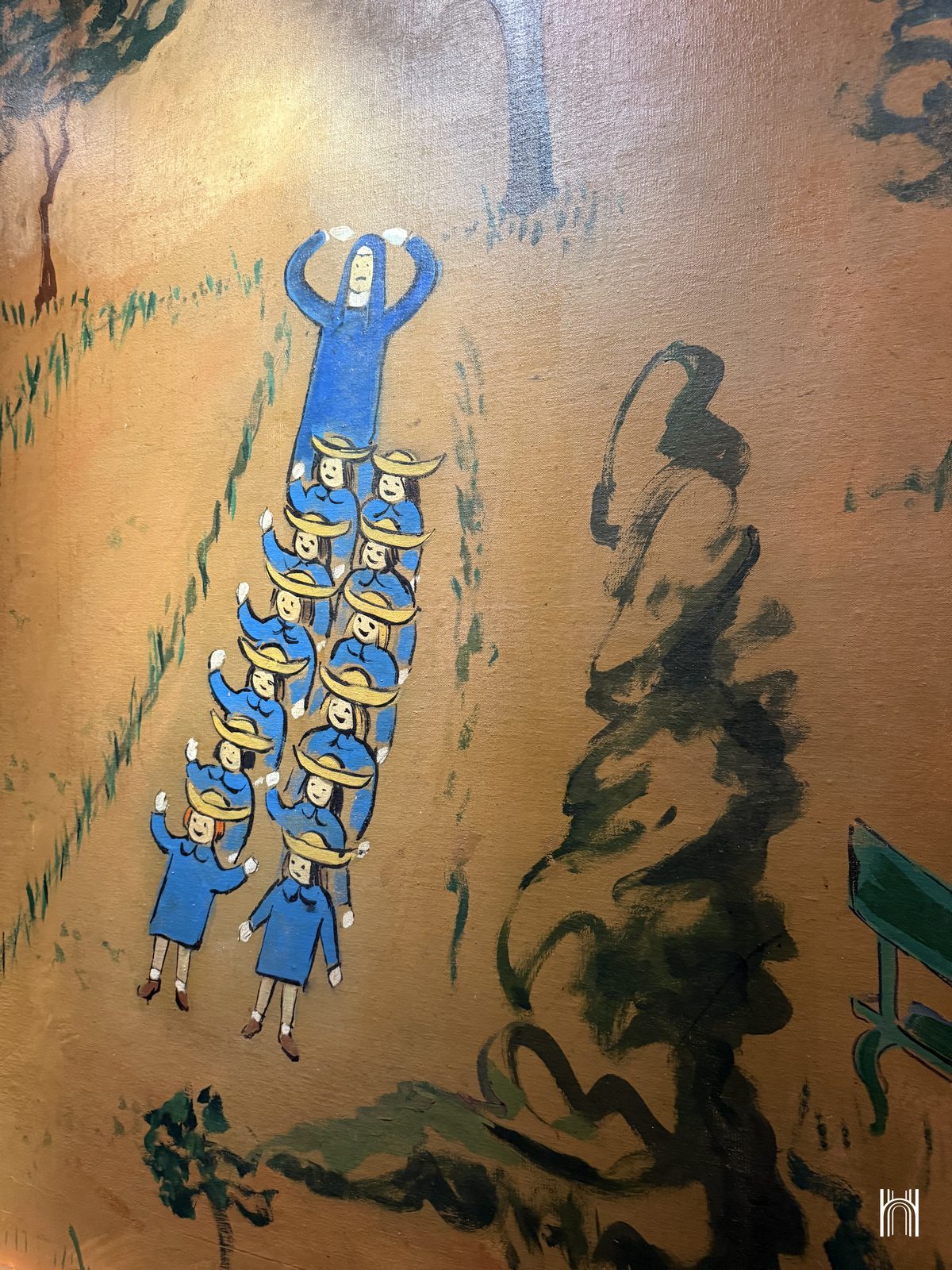
Where many establishments constantly seek reinvention, the Bemelmans Bar chooses the opposite: to preserve, refine, and transmit. The décor has hardly changed. This permanence creates a reassuring stability in a city like New York, where everything is in constant motion.
The space becomes a landmark. Generations follow one another, drawn by this sense of continuity. It is not merely a hotel bar: it is a place where time seems to move at the pace of music and conversation.
Even outside opening hours, the space retains its particular energy. An almost empty room, a musician rehearsing, a few notes echoing in the silence: these moments reveal the depth of the bond between the place and those who bring it to life.
The Bemelmans Bar is not simply frequented. It is inhabited.
Second Pillar: The Teams, Human Connection as Atmosphere
The place provides the framework. The teams bring it to life.
At the Bemelmans Bar, human interaction is neither overly staged nor distant. It exists in a form of precision and balance. The bartenders embody this approach. Their presence feels natural, fluid, almost self-evident.
Each interaction adjusts itself to the individual. Some guests seek conversation; others prefer to observe, to listen, to remain in the background. The ability to perceive this nuance creates a rare quality of connection.
Attention is never imposed. It is offered: available, but never intrusive.
This subtlety transforms the experience. Service is no longer merely operational. It becomes a vector of atmosphere. A glance, the way a glass is placed, a word offered at the right moment all contribute to a climate in which each person can feel at ease.
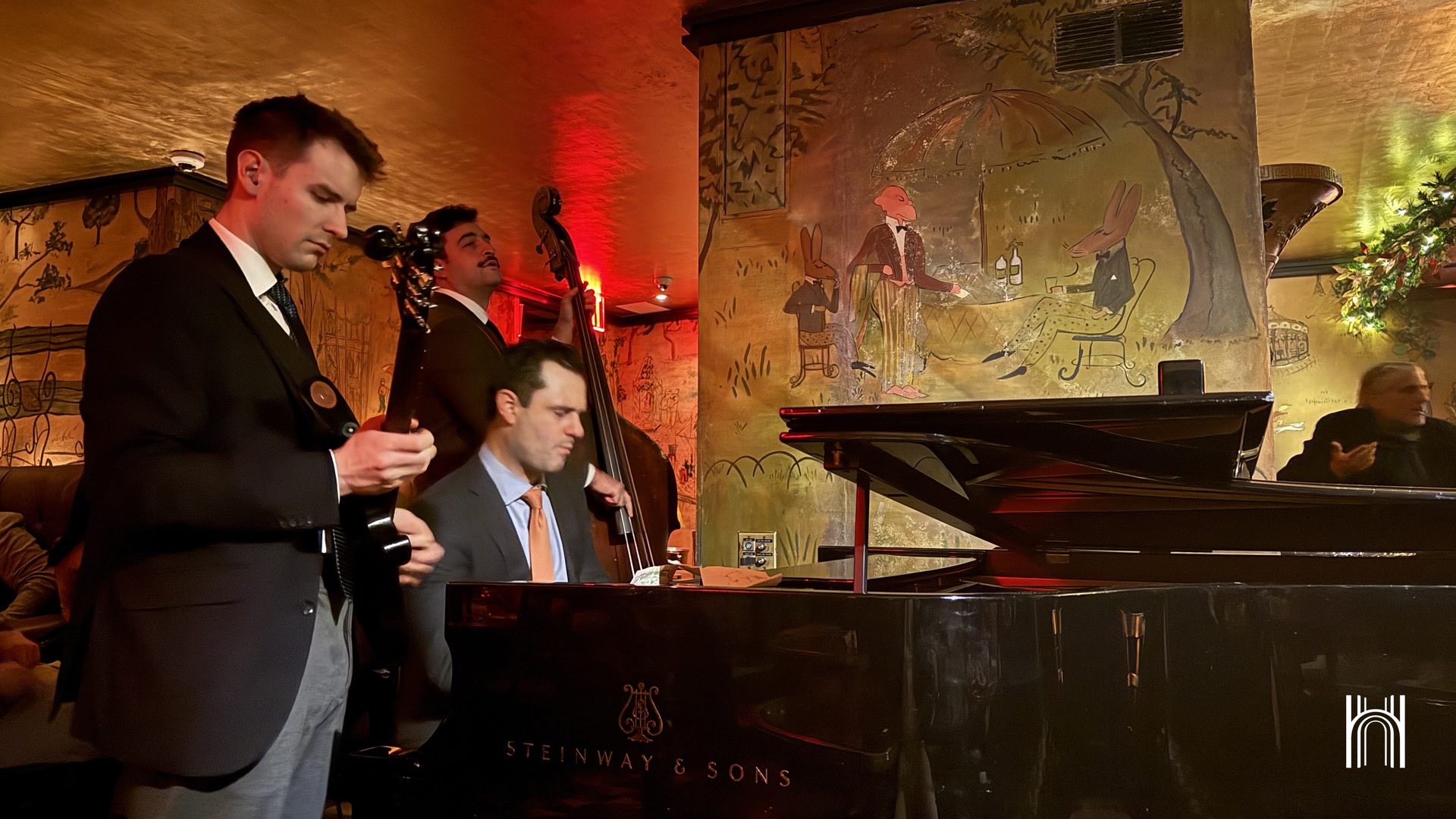
Music reinforces this dynamic. Every evening, the piano becomes the beating heart of the space. Musicians do not simply perform: they inhabit the room. Some develop such a strong attachment that they return to play even outside scheduled hours, simply to reconnect with the atmosphere.
This relationship between teams, artists, and guests creates an invisible continuity. Regulars recognize familiar faces. Teams recognize habits. A collective memory takes shape, without ever being formalized.
The Bemelmans Bar does not function as a place where a service is delivered. It functions as a place where a relationship is built.
Third Pillar: Impact, an Experience That Endures
Generous hospitality is not measured only by what is offered. It is measured by what remains.
The Bemelmans Bar initially attracts visitors through its aesthetics. The murals, widely shared on social media, spark curiosity. They invite discovery. Yet this first impression alone does not explain guest loyalty.
What truly leaves a mark lies in the lived experience.
Guests arrive for a drink and stay for the atmosphere. They settle in, take their time, let themselves be carried by the music. The situations are varied: a moment for two, an evening among friends, a solitary presence at the bar. This diversity creates a particular richness.
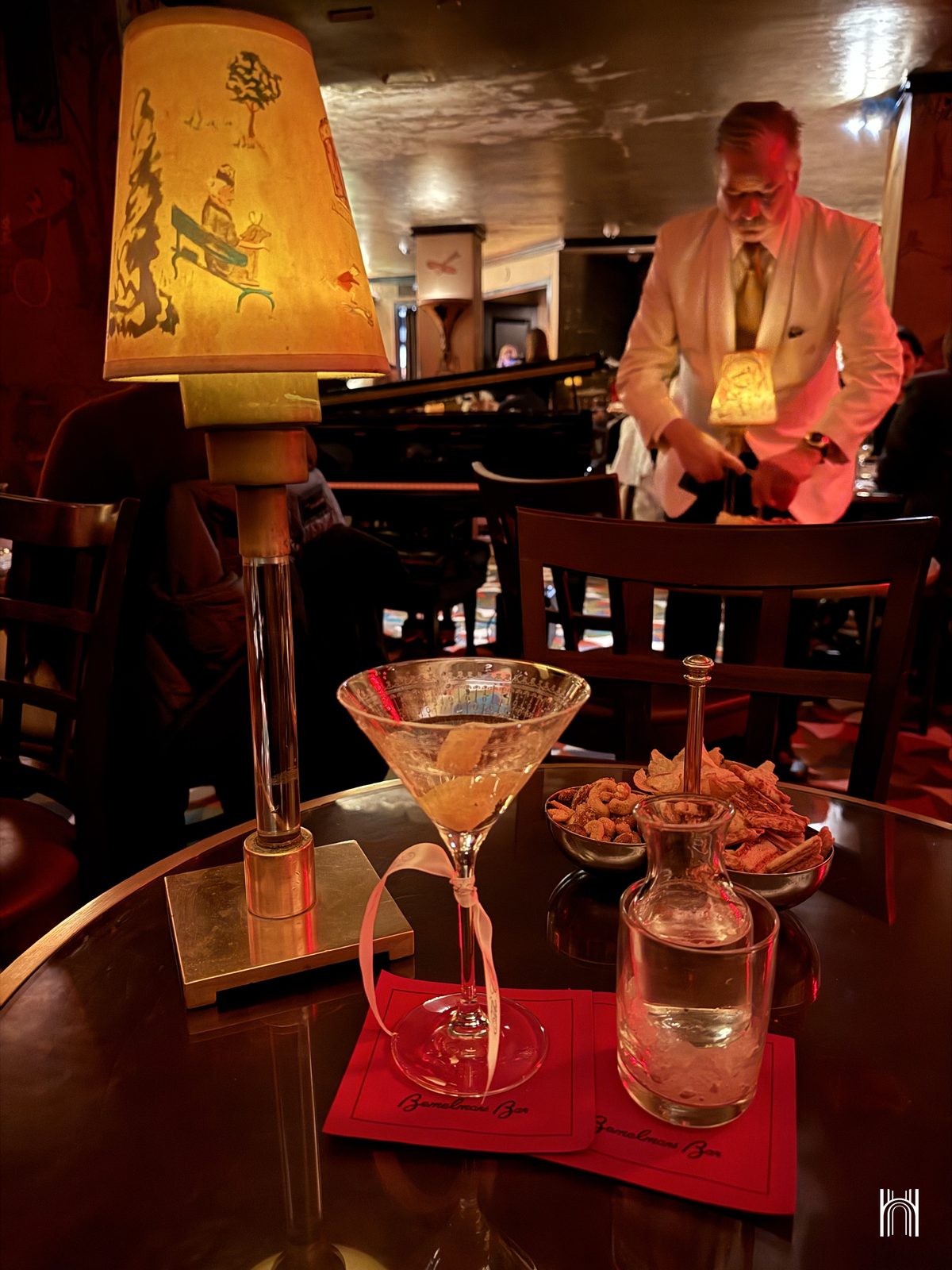

The space encourages unexpected moments. A spontaneous conversation, an exchange with a musician, a sense of calm in the midst of New York’s intensity. Nothing is scripted, and it is precisely this freedom that gives value to the experience.
The decision made after COVID illustrates this ability to amplify impact. By opening from noon to midnight every day of the year, the hotel allowed a new generation to appropriate the space. Social media then extended this momentum, transforming the bar into a destination.
Today, lines and advance reservations reflect undeniable success. But beyond attendance, it is the nature of the experience that stands out.
Guests do not come simply to consume. They come to live a moment. And above all, they leave with something more.
An energy.
A memory.
A quiet sense of having experienced something true.
What Remains: A Complete Expression of Generous Hospitality
The Bemelmans Bar offers a precise illustration of what a place can become when the three pillars of generous hospitality fully align: a meaningful setting, teams capable of creating genuine connection, and an experience that leaves a lasting imprint.
Over time, this framework has emerged as an evident truth. It is not theoretical: it is drawn from repeated observation of places that truly work. Those that resonate. Those that build loyalty. Those that create connection.
The Bemelmans Bar does not seek to demonstrate.
It embodies.
And perhaps that is where its true strength lies: offering, without ever forcing, a form of hospitality in which everyone can find their place and leave, quietly, just a little changed.
Share this article with a colleague, a client or a partner.
That is often how an idea enters a house, and then its habits.
What you say about it matters more than what I say.
A keynote, a mission, an article in the magazine: if my work has been useful to you, a few lines on Google are worth more than any argument.
Leave a review on Google →