
The French art of entertaining is all about sincerity
At a time when customer experience is becoming increasingly standardized on an international scale, theart of French hospitality is making a comeback in the luxury hotel and restaurant sector.
Through an encounter with Pierre Gagnairean emblematic chef on the world gastronomic scene, one conviction becomes clear: a sincere relationship remains the foundation of lasting, differentiating hospitality.
Pierre Gagnaire is one of France’s great chefs. He now runs a dozen restaurants around the world, including Restaurant Pierre Gagnaire on rue Balzac in Paris. I had the opportunity to meet him at the presentation of his partnership with the Barrière Group. He now signs the menu for the Fouquet’s Cannes restaurant, illustrating his desire to transmit a certain French art de vivre.
This exchange revealed a powerful idea: in a world where service standards tend to be standardized, sincerity is becoming a real lever for differentiating the customer experience.
What do you mean by the French art of entertaining?
It’s about sincerity, the sincerity of the relationship we have with our customers.
I travel a lot, and I can’t get used to the idea of meeting someone I’ve never seen before and asking “How are you today? I’m sorry, but we don’t know each other… In fact, it’s a sort of formula that’s constantly repeated in Anglo-Saxon countries. The French art of entertaining does not correspond to this state of mind. We don’t have that “familiar” two-minute relationship with our customers. We need time to adapt.
In a restaurant, even if the relationship is brief, you can’t do it mechanically. Today, we know that we’re living in difficult times, when service professions are much less “popular”. That’s why I try to ensure that the people who are in direct contact with the customer live up to my intentions.
I always tell my teams that we don’t know the customer, but we’re going to make them happy because they’re going to stay with us for 3 hours. They’re the ones who choose to come to our establishment, so we have to give them a lot of pleasure.
Here we are at the bar of the Brasserie du Fouquet’s in Paris. For me, a place like this is a place that characterizes France. We feel very comfortable here. We’re not in an i-tech place, but rather a place with patina. Today, it’s a bit of what I claim, because patina is what gives things their excellence.
This notion of “patina” goes beyond aesthetics: it refers to a memory of place, a capacity to create lasting emotion, far beyond standardized contemporary design.
This approach is directly in line with the foundations of the generous hospitality that DELPORTE HOSPITALITY promotes: a relationship that is not simulated, but built up through accuracy and presence.
Codes and fundamentals
When you open a restaurant abroad, do you bring a French touch to the building? What codes do you use?
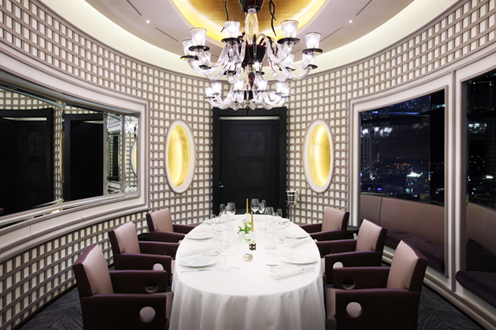
As far as possible, I try to give my point of view in the design of my restaurants. For example, in Seoul, we did a restaurant where I completely controlled the project with Olivier Gagnaire, who designed the decor. And this place is really very, very French, yet very much in line with Asian codes.
Olivier Gagnaire has real French cultural credentials, because he knows the history of the materials that give authenticity to a place. We try to make spaces that are comfortable, elegant, a bit humorous, a bit grumpy, with a cheeky side, a bit like the French really.
What’s your vision of the brasserie you’ll be offering at Groupe Barrière restaurants?
A customer makes the effort to choose us and comes to our place for 3 hours. This is an important moment. A lot can happen over lunch. The meal is an opportunity to spend a good time and exchange ideas with other participants. That’s what we try to do in our restaurants, by offering a cuisine that includes the fundamentals of a brasserie: a blanquette of veal, a good sliced smoked salmon, a fine piece of beef, sole meunière, street corner potatoes, for example.
Things to remember :
In the words of Pierre Gagnairea clear conviction emerges: the French art of entertaining is based neither on fixed standards nor on automatisms, but on a demanding sincerity of relationship.
At a time when the customer experience is becoming increasingly standardized, this approach is a real differentiating factor for hotel and restaurant operators.
It is directly in line with the principles of generous hospitality: to welcome with care, to create a bond and to offer an experience that goes beyond mere service to become a living moment.

Biography of Pierre Gagnaire :
Pierre Gagnaire was born on April 9, 1950 in Apinac, Loire. His father, chef and owner of Le Clos Fleuri restaurant in Saint-Priest-en-Jarez, passed on his passion for the trade to him. After training as a pastry chef, Pierre Gagnaire worked in one of Paul Bocuse’s restaurants and decided to become a chef. Later, he took over his father’s restaurant. After 6 years at the Clos Fleuri, Pierre Gagnaire opened his first restaurant in Saint Etienne at the age of 31. In an avant-garde setting, he’ll be serving the people of Saint-Etienne a cuisine that’s just like the place: creative, aesthetic and sophisticated. The Michelin Guide awarded him the three stars so coveted by the profession.
In 1995, following financial difficulties, Pierre Gagnaire left the Saint-Etienne region to open a restaurant in Paris, where he took over the Hôtel Balzac. It will soon get its 3 stars back.
In the 2000s, a number of brand-name stores sprang up in Tokyo, Dubai, Seoul, Las Vegas, Moscow, Berlin and London.
