
A Closer Look at Generous Hospitality in the Heart of Quebec
Introduction: A Place, A Story, An Atmosphere
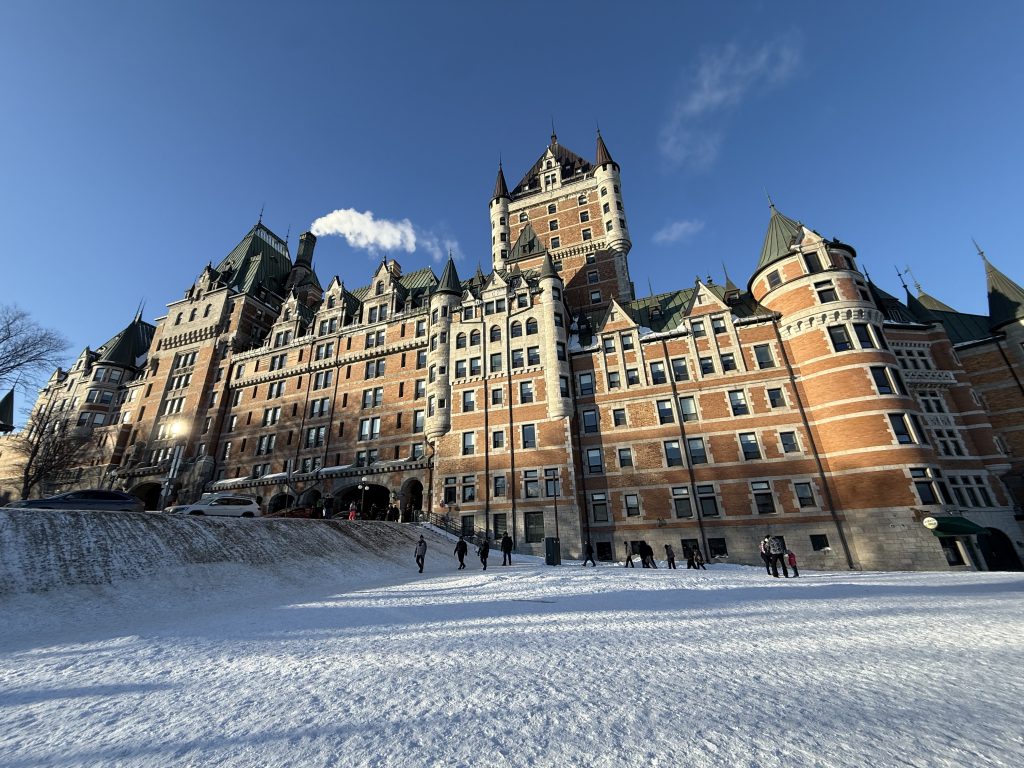
Overlooking the St. Lawrence River for more than 130 years, the Château Frontenac stands out as one of the most recognizable hotels in the world. Opened in 1893, this iconic establishment embodies a certain vision of travel, inherited from the golden age of rail travel in Canada. With more than 600 rooms, its copper roofs, and its strategic location in the heart of Old Quebec, it goes far beyond the role of a hotel to become a cultural and historical landmark.
Its history is closely tied to that of the Canadian Pacific Railway, which designed these “railway castles” to develop tourism across the country. This vision has shaped a unique model: making the journey a destination in itself.
Now part of Fairmont Hotels & Resorts, an international brand operating more than 80 hotels and resorts around the world, the Château Frontenac is part of a collection of properties that embody a luxury rooted in their location, history, and culture. Fairmont does not develop standardized hotels. The brand creates destinations, each with a strong identity, often tied to an exceptional heritage.
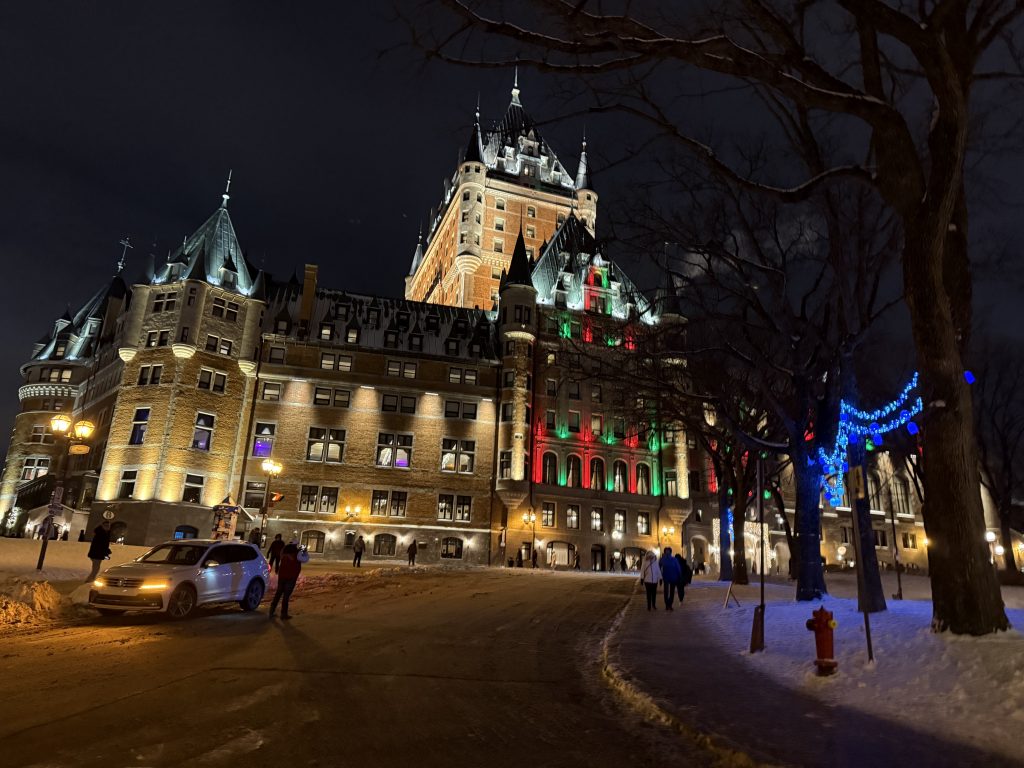
I had the opportunity to stay at this hotel between Christmas and New Year’s Day. This moment profoundly changes one’s perception of the place. Quebec, blanketed in snow, takes on an almost surreal appearance. Inside, the Château takes on a different atmosphere: soft lighting, Christmas decorations, and a special energy unique to this time of transition. It’s no longer just a hotel—it’s a haven, a living theater where international travelers and local regulars come together.
It is within this personal experience that we find the concept of generous hospitality developed by DELPORTE HOSPITALITY, an approach structured around three pillars: sense of place, human connection, and guest well-being. The point is not to describe a place, but to understand what truly makes it unique.
A place that has evolved over time and brings its history to life
You can’t truly get to know the Château Frontenac in just one reading. It can be understood as a succession of eras, transformations, and architectural intentions that, together, form a unique identity. Built beginning in 1893 under the direction of American architect Bruce Price, the original building was designed in a style inspired by French Renaissance castles. This initial design was subsequently expanded through several major renovations in the early 20th century, notably with the addition of the central tower in the 1920s, which shaped the hotel’s current silhouette and reinforced its iconic status in the Quebec City skyline.
This layered structure is immediately apparent in the experience. The place is not homogeneous in the contemporary sense of the word, and that is precisely what makes it so rich. The materials play a key role in this interpretation: solid wood, carved woodwork, stone, and decorative details inspired by European history but reinterpreted in a North American context. Some meeting rooms retain an almost timeless aesthetic, where the spaces, textures, and finishes evoke an era when the hotel was already conceived as a venue for hosting events.
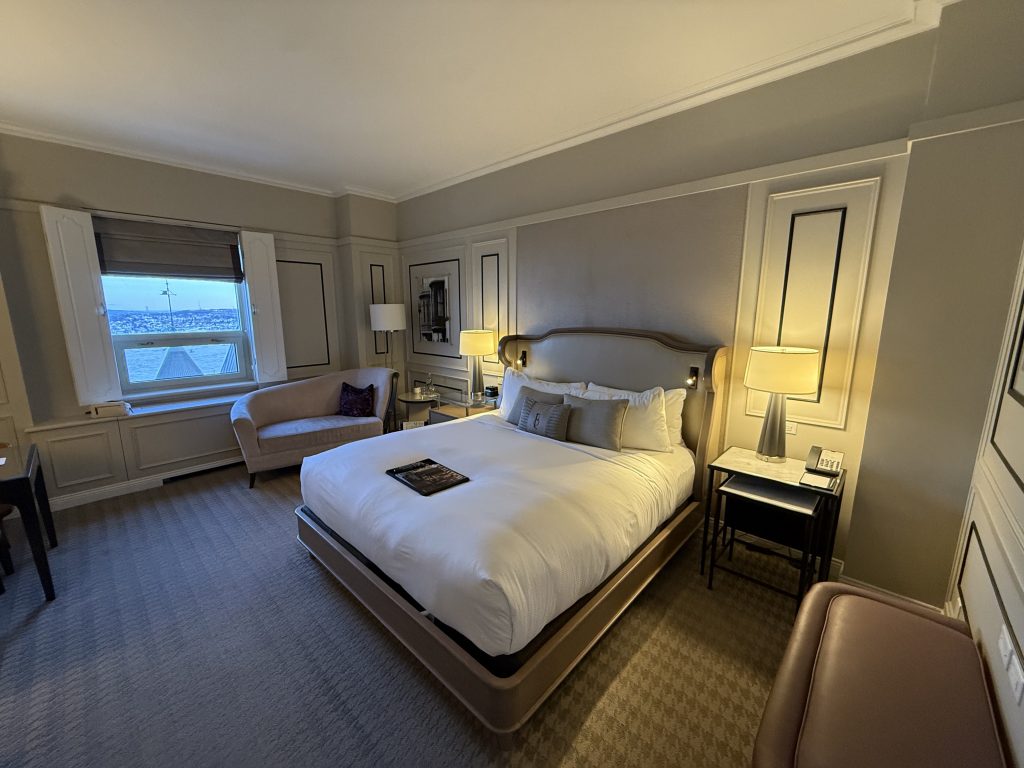
The major renovation, completed in 2014 and led primarily by local teams specializing in heritage restoration, made it possible to modernize the entire complex without erasing its history. More than $75 million has been invested to redesign the guest rooms, public spaces, and technical infrastructure, while preserving the building’s historic character. This approach illustrates a perfectly balanced tension between conservation and adaptation: the place evolves, but never changes to the point of losing its meaning.
One detail in particular stood out to me during this journey through time: a hallway displaying photographs chronicling the major meetings that took place at the Château. International conferences, diplomatic meetings, prominent political figures… walking through this space is like stepping into a living memory. The customer isn’t just looking at images; they are part of a larger context. The hotel thus becomes an active witness to history.
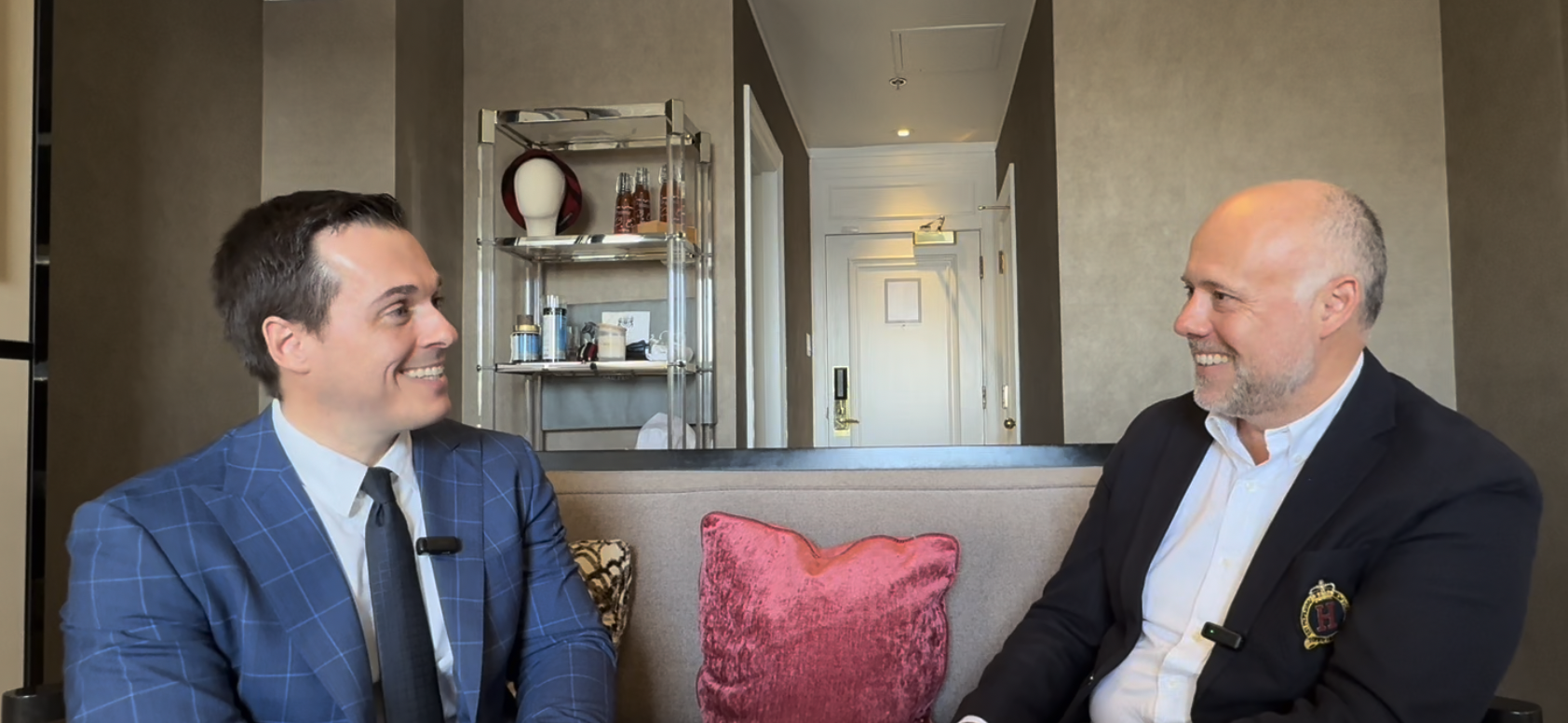
In my conversations with Jean-François Vary, General Manager of the Fairmont Château Frontenac, this aspect is clearly acknowledged: “ A place like the Château Frontenac cannot remain static. It must keep up with the times, but without ever losing what makes it who it is. Every renovation is a responsibility: the responsibility to preserve history while allowing the place to continue to thrive. “
This idea takes on even greater significance when it extends beyond the building. Right at the foot of the Château, one experience rounds out this journey through history: the famous Dufferin Terrace and its “slide,” known as the Dufferin Terrace Toboggan Slide. This toboggan run, which has been in place for over a century, is an integral part of the Quebec landscape. I had the opportunity to try it during my stay.
The sensation is immediate: speed, the cold, and a spectacular view of the river and the castle itself. But beyond the fun of the experience, this moment reveals something deeper. Quebec families come here to go sledding all day long, carrying on an age-old tradition in a setting that has remained virtually unchanged. The hotel, right above, then becomes part of the scenery, almost a silent witness to this local life.
According to Jean-François Vary, “ The appeal of a place like this is that it extends beyond its walls. It is part of an environment, a culture, and everyday life. It is this continuity that creates a powerful customer experience. “
This interaction between the hotel and its surroundings greatly enhances the sense of place. Château Frontenac is not just a building situated in a city. He is a pillar of the community, a point of reference, and an active participant in local life.
It is precisely this ability to create a dialogue between architecture, history, materials, and contemporary uses that transforms this place into an experience.
Teams that embody the venue and bring meaning to the experience
At a hotel with more than 600 rooms, such as the Château Frontenac, the staff plays a central role in shaping guests’ overall experience. What you immediately sense is a special kind of presence. The staff bring the venue to life with naturalness, precision, and dedication. Every interaction reflects a deep understanding of what the Château represents—far beyond a mere workplace.
This presence is reflected in the way we welcome, support, and respond to others. The service is seamless, attentive, and deeply rooted in a culture of attention to detail. It’s not just about fulfilling a request, but about building a relationship and creating continuity in the customer experience. This sense of connection gives the place a lively, almost organic quality.
Team stability plays a key role in this perception. Many employees have been with the company for several years, and in some cases, several decades. This commitment helps build a collective memory, ensure the transmission of expertise, and maintain consistency in the experience offered. It also strengthens the sense of belonging, which is evident in the way each person represents the place.
In my conversations with Jean-François Vary, General Manager of the Fairmont Château Frontenac in Quebec City, this aspect emerges as fundamental:
” Hospitality is based on sincere intent. When teams have a deep understanding of the place where they work, they can create an experience that is meaningful to the customer—an experience that goes beyond mere service to become a relationship. “
This commitment is reflected in the teams’ ability to adapt to each client while maintaining a strong identity. The Château welcomes an international clientele with a wide range of expectations, yet the experience remains consistent. She maintains a warm, attentive Quebec style that has become her trademark.
” The challenge is not to adapt by changing who we are, but to be attentive enough to adjust the way we welcome each customer, while remaining true to our culture. “
This approach requires rigorous internal organization. Information is shared, teams exchange observations, and refine their understanding of expectations. This collective intelligence makes it possible to personalize the experience on a large scale while maintaining consistent quality.
Beyond processes, what really makes the difference is the human element. Employees are committed, engaged, and aligned with the purpose of their mission. They help create an experience that goes beyond simply providing a service.
Jean-François Vary also emphasizes this essential link between teams and the customer experience:
” The care we show our employees is directly reflected in the care we show our customers. When teams operate in an environment that allows them to express themselves and understand their roles, they naturally create memorable moments. “
This consistency is evident at every stage of the stay. It gives guests the feeling of being welcomed into a lived-in space, cared for by people who understand its value and pass it on.
With this in mind, the teams do more than just participate in the experiment. They are the most direct expression of this.
A holistic experience focused on well-being and attention to detail
In Delporte Hospitality’s interpretation of generous hospitality, the third pillar focuses on the tangible benefit the guest derives from their stay. Beyond the place and the relationship, the question becomes simple: in what condition is he leaving? The goal is no longer simply to satisfy or impress, but to create an experience that tangibly improves one’s emotional state. A successful trip is one whose impact lasts long after you’ve left.
At Château Frontenac, this aspect develops gradually, almost imperceptibly. Context plays a decisive role. Spending time between Christmas and New Year’s Day in a snow-covered city changes one’s perception of time and space. The contrast between the cold, bright exterior and the warm, cozy interior creates an immediate sense of refuge. This place slows down the pace, inviting you to settle in, observe, and fully embrace the moment.
This transformation is not based on a single factor, but on a series of consistent details. Spaces, materials, light, and human interactions all contribute to creating an environment in which the client can reconnect with themselves. The Château does not seek to overwork its employees. It creates a sense of availability.
In my conversations with Jean-François Vary, General Manager of the Fairmont Château Frontenac, this idea is clearly expressed: “ The customer experience isn’t measured solely during the stay. It is measured by how the customer feels when they leave. If he leaves feeling at peace, enriched, and with the sense that he has experienced something different, then the experience has meaning. “
This approach is reflected in specific programs, such as the Fairmont Gold program. Located on the upper floors, this space offers a more intimate view of the hotel. The hospitality here is personalized, in a dedicated lounge, with an attentive staff that supports guests throughout their stay. In the morning, breakfast is served in a peaceful setting with a spectacular view. In the afternoon, snacks are served, and at the end of the day, an aperitif rounds out the day.
These moments are not simply an additional service. They give structure to the experience. They create moments of respite and transitions that allow the client to settle in, slow down, and fully enjoy the space. “What matters isn’t the number of services, but the ability to create memorable moments.” It’s moments like these that stick in your memory and make the trip worthwhile. “
This approach is carried throughout the entire hotel. The restaurants invite guests to discover local cuisine prepared with precision; the bars become lively gathering spots; and the common areas offer views that make you want to linger. Everything comes together to create a holistic experience, where every element has its place.
Added to this is a dimension that has become essential to our perception of well-being: environmental coherence. Château Frontenac is committed to a concrete approach to reducing its environmental footprint, incorporating initiatives related to energy, resources, and waste. This attention contributes to a sense of inner peace for the client, who is increasingly sensitive to these issues.
Jean-François Vary emphasizes: “ The customer’s well-being can no longer be separated from the environment in which they find themselves. The experience must be aligned with both what the customer feels and what the place embodies.”
This consistency enhances the impact of the trip. It gives guests the feeling that they have had a well-rounded experience that extends beyond the immediate confines of the hotel.
At Château Frontenac, well-being is more than just a feeling. It brings about a subtle yet real transformation that stays with the client long after they leave.
Things to remember
Château Frontenac embodies a fully realized vision of hospitality, where every aspect of the property contributes to a cohesive and memorable experience.
The sense of place is expressed through iconic architecture, a history deeply rooted in Canada’s development, and a vibrant relationship with Quebec City.
A human connection is built on dedicated teams who truly embody the spirit of the place and foster a sense of connection that is evident at every stage of the stay.
Guest well-being is built through a holistic experience, in which the setting, spaces, services, and commitments of the venue all work together to truly transform the guest’s stay.
Programs such as Fairmont Gold exemplify this ability to curate experiences, offering a more intimate and personalized experience while remaining true to the venue’s identity.
Beyond this overview, the Château Frontenac offers a comprehensive range of services that contribute to its status as an international leader:
- several restaurants (Champlain Restaurant, Place Dufferin) and bars (1608 Wine & Cheese Bar, Bar 1608) serving local and international cuisine
- SPA EXPERIENCE: Le Château Frontenac, a spa and wellness facilities (pool, fitness center, etc.)
- More than 20 meeting and reception rooms
- facilities for events, conferences, and weddings
This trip confirms a key point: some hotels do more than just provide service.
They shape an experience, give structure to a memory, and forge a lasting connection between a place, a culture, and those who discover it.
