
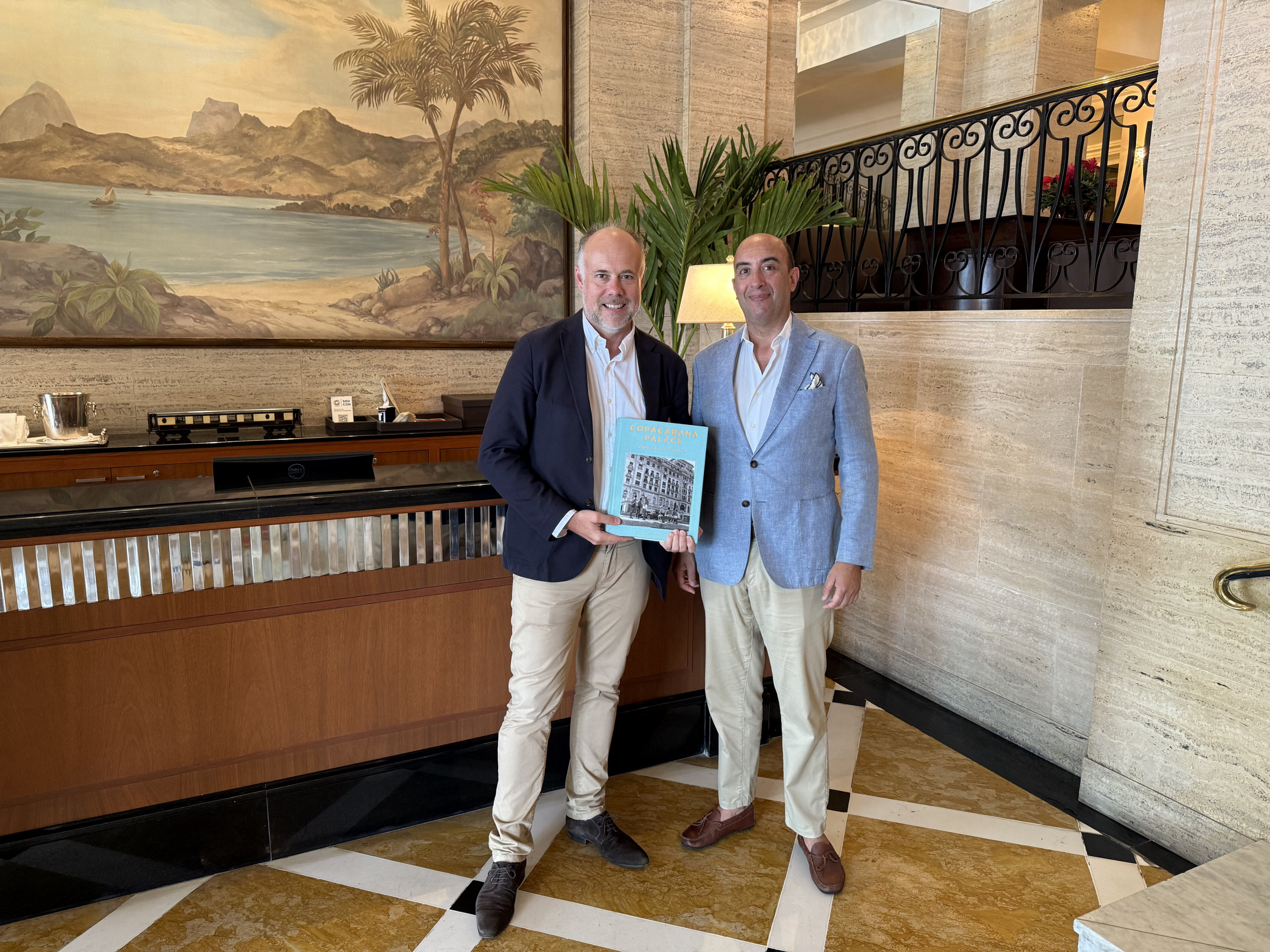
Conversation with Ulisses Marreiros, General Manager of the Copacabana Palace
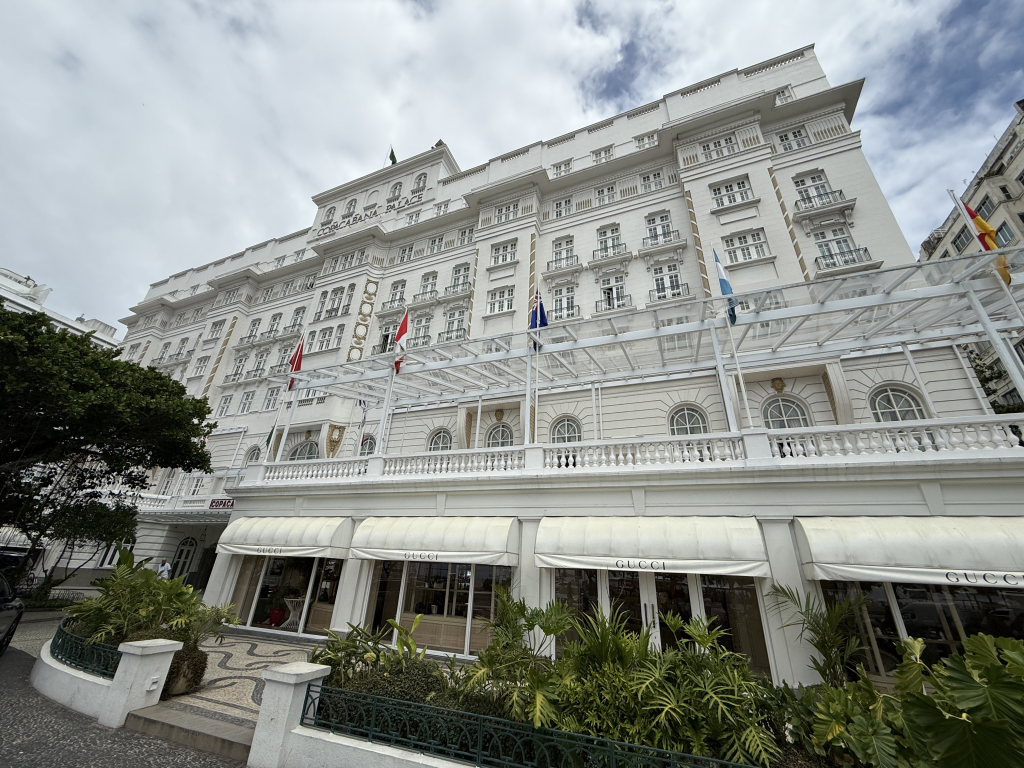
Facing the Atlantic Ocean, on the legendary beach of Copacabana, the Copacabana Palace has embodied the Brazilian art of hospitality for over a century. Inaugurated in 1923 after four years of construction, the hotel was conceived as early as 1919 as a visionary project designed to support the development of Rio de Janeiro and to welcome the world.
Imagined by the French architect Joseph Gire, the building draws inspiration from the grand palaces of the French Riviera while embracing a distinctly tropical interpretation, open to light, the beach, and outdoor living. At a time when Copacabana was not yet a central district, this location reflected a bold ambition: to create a place rooted in its territory, designed to endure across generations.
Today, the hotel features 208 rooms and suites, several iconic restaurants including Cipriani, Mee, and Pérgula, as well as a legendary swimming pool that has become one of the city’s defining symbols. The property belongs to Belmond, a major player in global luxury hospitality and part of LVMH.
It is within this storied yet vividly alive setting that I met Ulisses Marreiros, General Manager of the Copacabana Palace and Managing Director of Belmond Brazil. Our conversation revealed a deeply human vision of hospitality, grounded in celebration, transmission, and connection, far beyond codes and protocols.
What is your vision of the art of hospitality? What does it mean at the Copacabana Palace, and more broadly in Brazil?
For me, hospitality begins with a long-term vision. The Copacabana Palace was never conceived as a hotel for a single moment, but as a place designed to transcend time and welcome successive generations.
From the outset in 1919, the ambition was to create a hotel capable of welcoming the world. A place inspired by the grand hotels of southern France, in Nice, Cannes, and along the Riviera, yet deeply anchored in the Brazilian context. At that time, Copacabana was not a frequented area. Building here was already a gesture of anticipation, openness, and invitation.
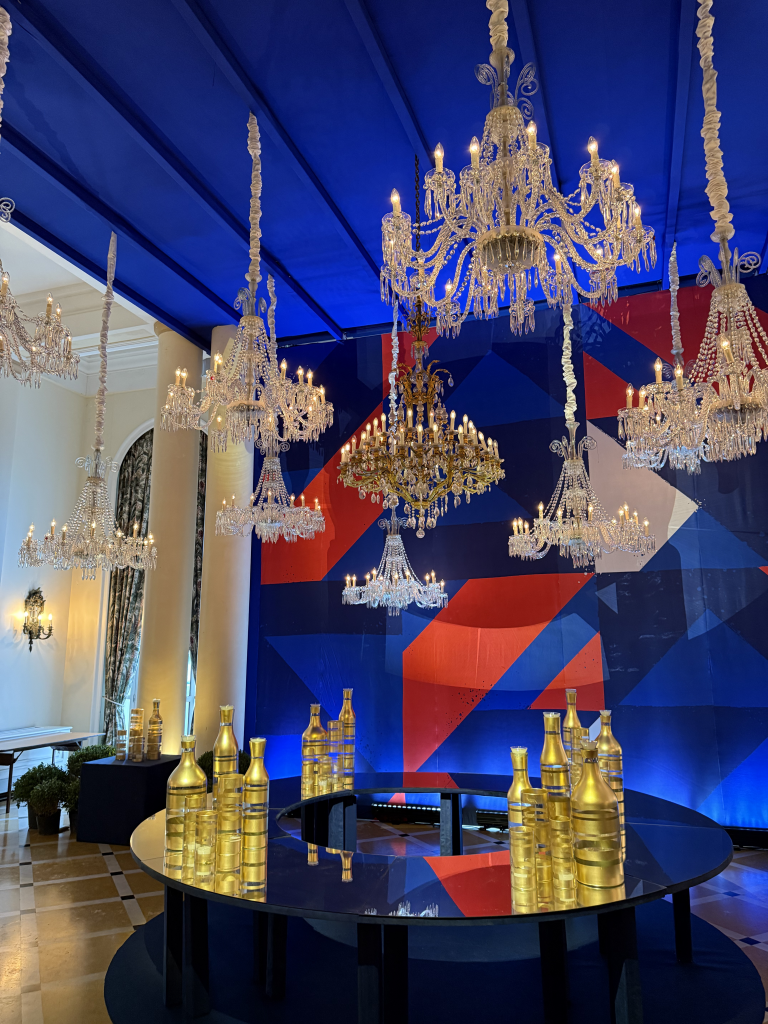
Hospitality also lies in the ability to create a setting that encourages gathering, celebration, and shared moments. Since its opening, the Copacabana Palace has accompanied the great moments of the city and the country. It evolves with Rio, with the beach, and with the Carioca lifestyle, becoming a central stage for major celebrations.
Welcoming here goes beyond receiving guests. It is about welcoming stories, cultures, and emotions. The hotel can host a simple lunch, an intimate celebration, or an event for up to 1,500 guests, always with the same level of care.
Ultimately, hospitality at the Copacabana Palace, and more broadly in Brazil, is about creating connection, celebrating life, and making everyone feel part of something larger.
How did the Copacabana Palace become a historical and cultural institution in Brazil?
It is difficult to summarise the history of this building in just a few minutes. Today, the Copacabana Palace is a heritage landmark, but originally, it represented a true innovation.
In 1919, Brazil’s president, Epitácio Pessoa, envisioned a hotel comparable to Europe’s grand establishments to host dignitaries for the centenary of Brazil’s independence in 1922. The Guinle family took on this ambitious project and selected Copacabana, then a largely undeveloped area.
The hotel finally opened in 1923. Otavio Guinle explained that it was not built for a single event, but for the future. This vision continues to shape the identity of the Copacabana Palace today.
Over the decades, the hotel expanded and transformed. In the late 1930s, the swimming pool was built, becoming one of the largest and most iconic on the beachfront. In 1948, an annex building was added, followed later by the construction of a theatre.
The Copacabana Palace also played a significant role in Brazil’s cultural history. The closure of casinos in 1946 had a profound impact on cultural life, indirectly contributing to the emergence of samba-canção and later Bossa Nova. The hotel remains intimately connected to these cultural evolutions.
What relationship does the Copacabana Palace have with the Carioca lifestyle and culture of celebration?
The Copacabana Palace is deeply intertwined with the Carioca way of life, particularly its relationship with the beach and outdoor living. Originally, Rio’s residents did not frequent the beach as they do today. This relationship evolved significantly in the 1940s and 1950s, when people began to embrace the beach as a central part of daily life.
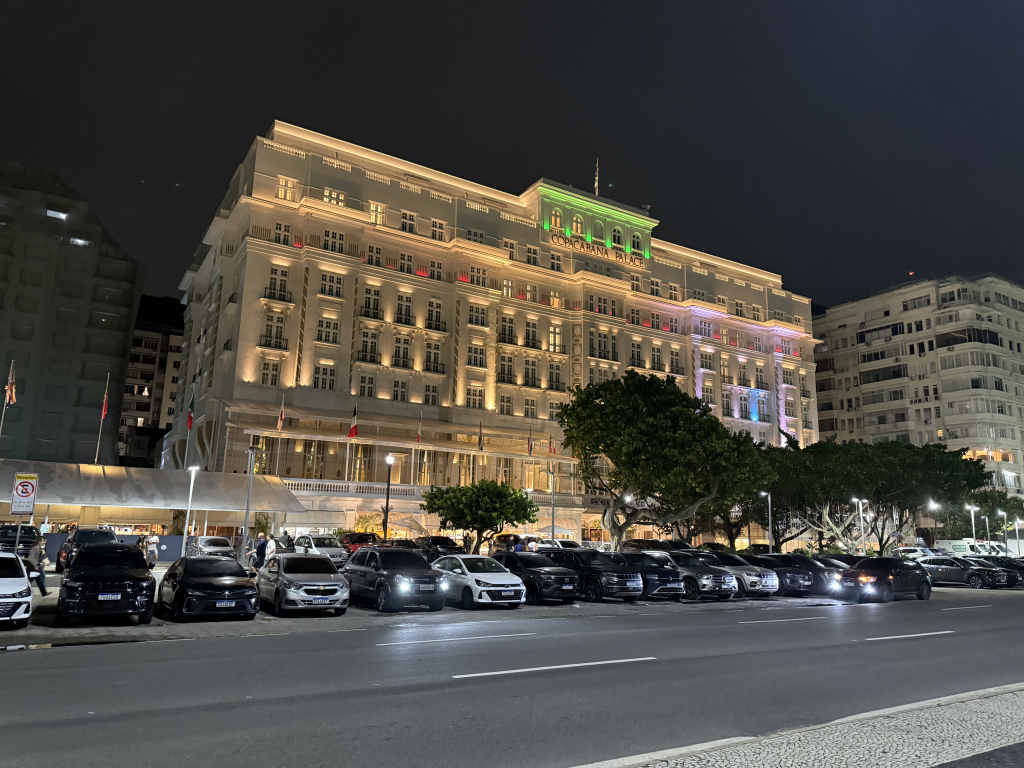
The hotel fully accompanied this transformation and became a focal point for major city celebrations. Each year, New Year’s Eve unfolds directly in front of the hotel, alongside numerous international concerts held throughout the year.
If I had to define the Copacabana Palace in one word, it would be celebration. This celebration can be intimate or grand, ranging from a lunch to events hosting up to 1,500 people.
Even when these events are not organised by the hotel itself, the connection remains strong. On New Year’s Eve, nearly two million people gather in front of the property, requiring close coordination between the city and the hotel.
How is hospitality expressed concretely at the Copacabana Palace, particularly through guest experience and team transmission?
At Belmond, we speak of the “leaf,” which represents the local identity of each property. This approach aims to embed local culture into the guest experience.
At the Copacabana Palace, the welcome begins with a chilled maté, a traditional beach drink in Rio since the 1950s, served with ginger. Teams share the story of this beverage and invite guests to a daily tour of the hotel to explore its heritage.
Hospitality is, above all, human. Technology plays an important role, but primarily to automate certain tasks and free up time for human interaction.
We invest heavily in training, particularly in English language skills, service excellence, emotional intelligence, and leadership. Nearly 600 employees have access to Belmond and LVMH training platforms. Leadership’s role is to transmit this philosophy through presence, example, and daily engagement.
How does the Copacabana Palace integrate sustainability into its relationship with teams, guests, and the environment?
We have implemented a comprehensive sustainability approach, certified by EarthCheck. This approach encompasses people, community, energy, and the environment. All employees receive dedicated training, and these principles are reinforced through daily briefings, concrete actions, and leadership.
Significant progress has already been made. Waste has been reduced by more than 80% through compaction systems, energy consumption has decreased by 20 to 25% thanks to new MEP equipment, and 99% of treated water is reused in the laundry.
We work with local suppliers for fruits, vegetables, bread, and pastries, many of which are produced on-site by our teams. After major events, decorations are repurposed by the Céu da Favela association, and plants are redistributed to employees.
The objective remains clear: reduce, reuse, and recycle, without ever compromising the guest experience, while staying true to the spirit of the Copacabana Palace, a place of heritage, celebration, and transmission.
Laurent Delporte’s Perspective
This conversation with Ulisses Marreiros reinforces a conviction that runs through all my work on hospitality: a great hotel is not defined solely by its history, architecture, or level of service, but by its ability to create lasting connections over time.
What stands out at the Copacabana Palace is its capacity to connect worlds. It connects the people of Rio with international travellers, a place with its territory, and individuals with one another. The hotel does not simply host; it invites guests to understand, to feel, and to discover.
Hospitality here is expressed through gestures that are both simple and precise, through sensory attentions, and above all through the creation of situations that foster encounters. The stay becomes a collective experience, enriched by conversations, shared moments, and human interaction, giving travel a rare depth.
Finally, this experience is a powerful reminder that hospitality finds its true meaning through those who bring it to life every day. The teams embody a sincere joy in welcoming, a natural generosity, and an ability to create immediate and lasting relationships. This spirit reflects both Brazilian culture and the Carioca soul, where human connection precedes protocol.
Having experienced this hotel from within, I left with a deep appreciation for its subtlety and authenticity. In the book project I am developing on legendary and iconic hotels around the world, the Copacabana Palace will naturally hold its place.
What No One Told Me Before Staying at the Copacabana Palace
I had the opportunity to spend several days at the Copacabana Palace in Rio de Janeiro, to settle in, to sleep there, to move through its spaces freely, and to absorb the atmosphere of this historic place. This stay allowed me to experience the hotel beyond its reputation and iconic image.
I took the time to observe, to feel, to speak with the teams, and to discover the habits, attentions, and details that shape the identity of this singular property. The experience left a lasting impression, one I felt compelled to share.
Facing the Atlantic Ocean on the legendary Copacabana beach, the hotel was conceived in 1919 and inaugurated in 1923. Designed by Joseph Gire, it emerged at a time when Copacabana was not yet a central district of Rio. This location already reflected a powerful vision: to create a place capable of attracting the world while standing the test of time.
Today, the property features 208 rooms and suites, several iconic restaurants, a celebrated pool facing the beach, and extensive reception areas. Owned by Belmond, part of LVMH, the hotel embodies a subtle balance between architectural heritage, Carioca lifestyle, and contemporary hospitality.
Through this narrative, I aim to share what I personally appreciated at the Copacabana Palace. These pages recount lived moments, human encounters, sensory experiences, and cultural discoveries that give full meaning to hospitality in this place. More than a stay, it offered a tangible understanding of what a living, inhabited hotel can be, deeply connected to its territory.
What the Copacabana Palace Reveals About Brazilian Hospitality
The Copacabana Palace maintains a unique relationship with the people of Rio. Beyond major celebrations such as New Year’s Eve, the hotel forms part of the city’s collective memory.
Many Cariocas have celebrated important moments of their lives here: graduations, school and university events, family gatherings, business meetings, and significant corporate occasions. The hotel is not only oriented toward international travellers; it is also a place of emotion and memory for those who live in Rio.
This connection creates a genuine attachment between the property and the city, reinforcing its status as both a local icon and an international destination.
Living Within History
Sleeping at the Copacabana Palace means stepping into history. From a room overlooking the Atlantic, it becomes easy to imagine decades of celebrations, concerts, and landmark events that have taken place here.
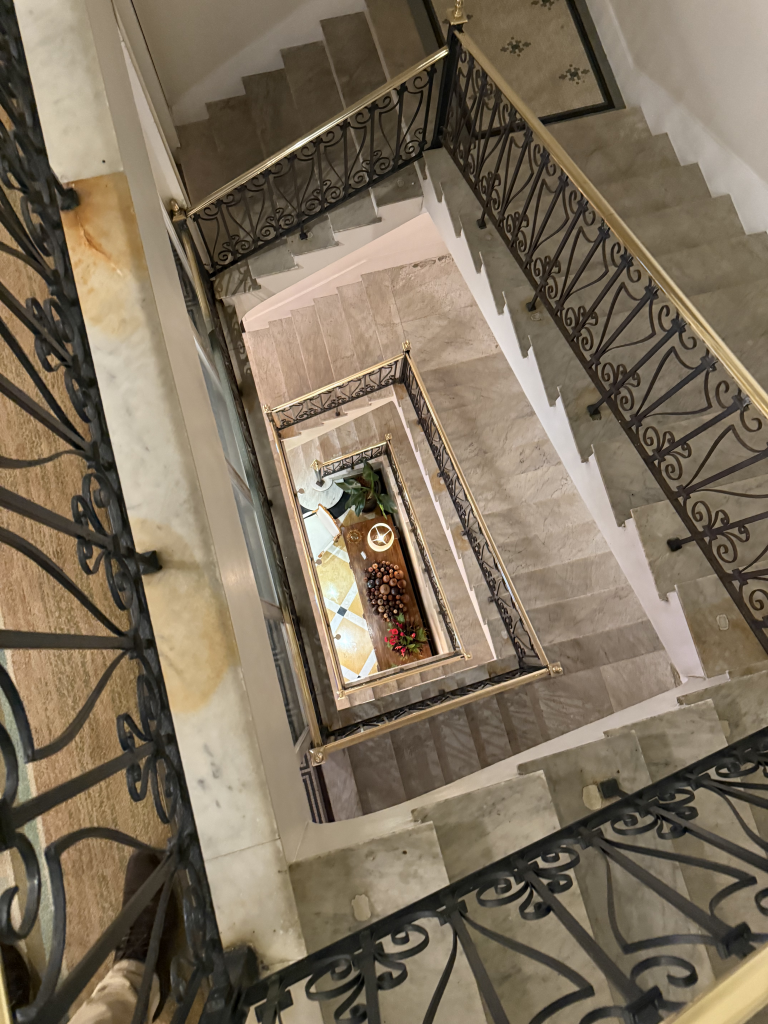
Moving through the hotel, each space tells a story. The volumes, salons, circulation, and openness to the outside reflect another era, another way of receiving, where elegance was expressed through generosity of space and gesture.
The hotel does not attempt to conceal its age. It embraces it fully. One must appreciate this historical dimension, this feeling of inhabiting a place that has witnessed the world and still carries the legacy of past excellence in hospitality.
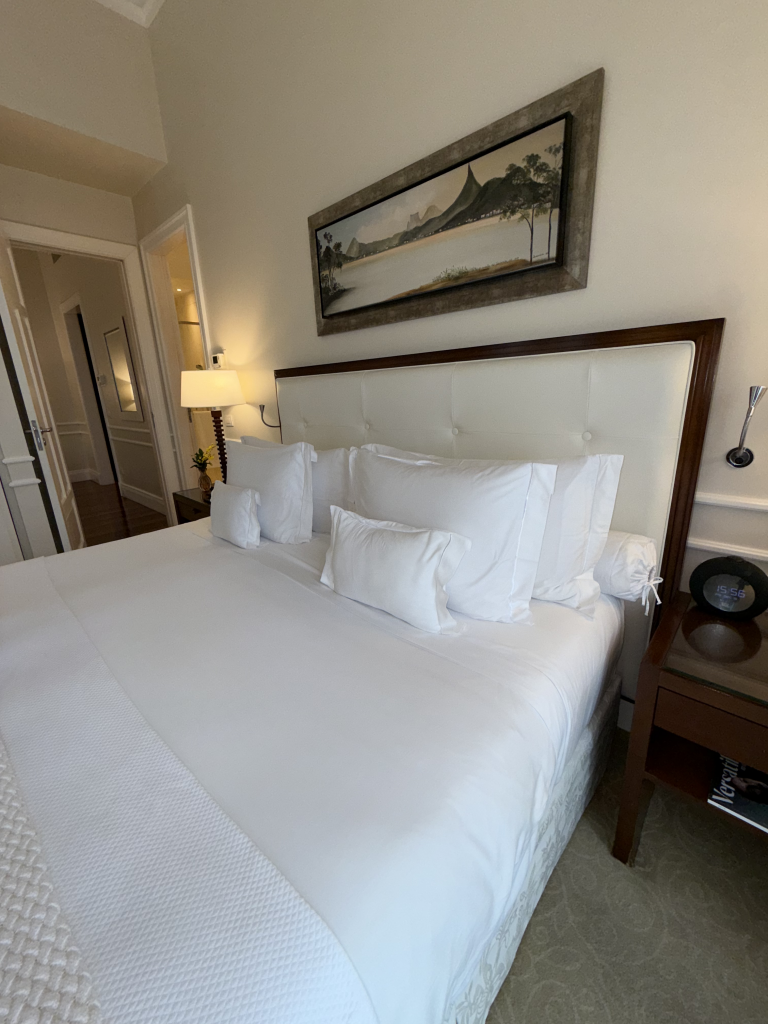
At the same time, the hotel integrates contemporary touches, particularly in its rooms and selected spaces. Comfort, materials, and modern attentions coexist with heritage without diminishing it. This dialogue between past and present defines the singular identity of the Copacabana Palace.
Through the Senses: Discovering Brazil
Hospitality here unfolds as an invitation to experience Brazil through the senses. Upon arrival, a fresh local drink is offered at reception, a delicate first contact with the culture.
The stay becomes a sequence of thoughtful gestures, extending even to departure, when a receptionist offered me a small stone as a keepsake of the Copacabana Palace and Brazil. A simple yet symbolic gesture that prolongs the experience beyond the stay.
The culinary experience plays a central role in this immersion. It was here that I discovered for the first time the fruit of the cashew tree, known as the cashew apple, a juicy and surprising fruit attached to the shell that produces the cashew nut.
Tasting this fruit in its context, accompanied by explanation, creates an immediate connection to Brazilian daily life. What made this moment memorable was the intention behind it. A member of the team took the time to share his culture and guide me toward something unfamiliar. This was, in essence, generous hospitality: a genuine desire to give, to ensure the guest’s enjoyment, and to make it happen.
The dining experience moves seamlessly between contemporary cuisine and Brazilian tradition. Alongside refined, modern dishes, the hotel preserves historic recipes that remain on the menu, telling a story of continuity and respect for roots.
Breakfast, in itself, becomes an experience. All breads and pastries are prepared on-site with evident craftsmanship. The diversity offered allows guests to discover the richness of local gastronomy from the morning: tropical fruits rarely encountered in Europe, traditional cakes, new textures and flavours.
This moment becomes more than a meal. It is a time of discovery, curiosity, and pleasure, where hospitality is expressed through taste, sharing, and attention to detail.
Evening Atmosphere: Rhythm and Elegance
As the day draws to a close, time naturally slows at the Copacabana Palace. After the intensity of the beach, it becomes particularly enjoyable to sit by the pool, drink in hand, as music accompanies the transition into evening.
The Pool Bar – Pérgula, a true institution within the hotel, is one of the most vibrant places to experience this moment. It was here that I took the time to savour a caipirinha, Brazil’s iconic cocktail, simple in appearance yet perfectly balanced.
Music plays a central role in shaping the atmosphere. Live performances regularly accompany the poolside setting, blending bossa nova, soft samba, Latin jazz, and, at times, Caribbean influences. The music supports the ambiance without overwhelming it, creating a natural continuity between day and night.
These moments linger. They reflect a Brazilian way of life where conviviality, rhythm, and the pleasure of being together take centre stage.
When a Hotel Creates Connection
Hospitality is also revealed in the way a hotel encourages guests to step beyond its walls and discover a territory.
During a walk organised by the hotel, a team member accompanied a small group of guests along Copacabana beach to a nearby hill. What began as a simple walk quickly became a shared experience.
The guide explained the history of the area, pointed out details that would have otherwise gone unnoticed, and described the relationship between the city, nature, and the sea. Along the way, we encountered marmosets, small monkeys living close to the beach, adding a surprising and distinctly local dimension.
At the top, the visit of the old fort, with its panoramic view over Copacabana, took on meaning through his storytelling.
The experience was further enriched by tasting freshly pressed sugarcane juice, caldo de cana, prepared on-site. This simple gesture, accompanied by explanation, deepened the sense of immersion.
More importantly, this team member played a key role in creating connections between guests. He encouraged conversations, facilitated exchanges, and created an atmosphere of shared curiosity.
Through this experience, I met other guests with whom conversations developed naturally, leading to connections that continued beyond the stay. This ability to create situations where people meet and connect gives hospitality a deeper dimension. The stay becomes a human experience, shaped by encounters and shared memories.
What I Learned About Hospitality
This attitude reflects, more broadly, the character of Brazilians, and especially that of Cariocas. In Rio, hospitality is expressed with simplicity, warmth, and a joyful lightness. Human connection often precedes protocol.
This spirit permeates the entire Copacabana Palace, giving hospitality a deeply human and memorable dimension.
Staying at the Copacabana Palace is not simply about sleeping in a historic hotel. It is about experiencing embodied and generous hospitality, where history, celebration, and culture meet naturally. A place not merely to pass through, but to feel, to share, and to leave with lasting memories.