
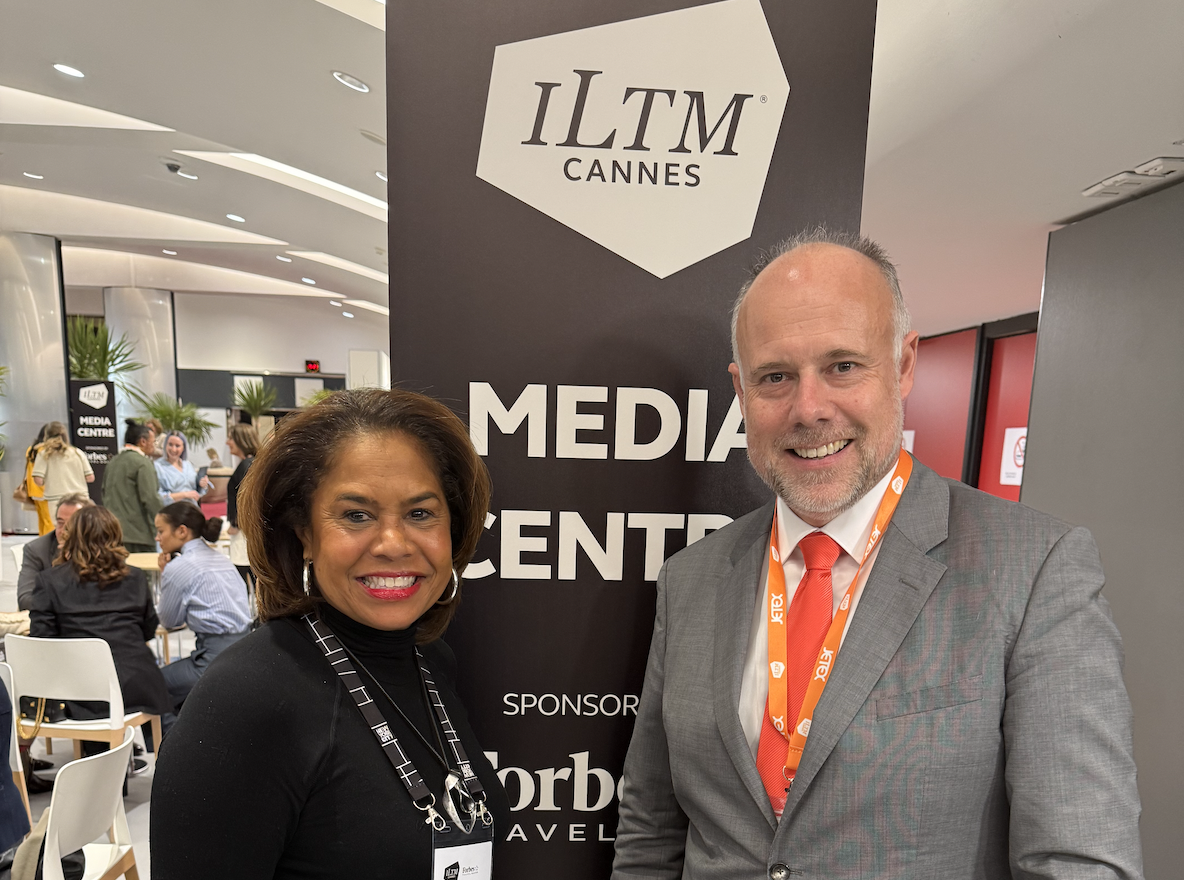
The meeting with Julie Coker took place in Cannes during the International Luxury Travel Market. In this environment dedicated to high end and luxury tourism, where destinations strive to assert their uniqueness, New York naturally stands out as a global benchmark.
Julie Coker serves as President and CEO of NYC Tourism + Conventions, the official organization responsible for promoting the destination internationally. Her role goes far beyond communication. NYC Tourism + Conventions is the official destination marketing organization and the convention and visitors bureau for the five boroughs of New York. Its mission is to invite the world to discover New York, support the tourism economy, assist industry professionals, and promote the city to visitors, businesses, and residents. The organization states a clear ambition: to build sustainable, equitable tourism prosperity that benefits the entire city.
This mission takes on major importance. In 2025, New York welcomed approximately 65 million visitors, generating 84.7 billion dollars in economic impact. The city also offers around 124000 hotel rooms across its five boroughs, with 24 hotel projects under development through 2028.
During this exchange, one conviction immediately emerges: New York is not limited to a high performing tourism offering. The city delivers a form of hospitality at scale, where every component hotels, culture, events, residents, infrastructure contributes to a coherent experience.
Through this interview, three key questions emerge for DH MAG: understanding why New York remains a major luxury destination, analyzing how the city transforms its cultural identity into lived hospitality, and drawing lessons for hotels, brands, cultural venues, and service companies.
This approach directly connects with the concept of generous hospitality, defined as the ability to combine a strong sense of place, genuine human connection, and real attention to the well being of the visitor.
At this scale, New York becomes particularly compelling to analyze not only as a luxury destination, but as a city capable of transforming its energy, diversity, and infrastructure into a welcoming experience.
New York: A Luxury Destination Built on an Ecosystem of Experiences
An exceptional concentration of luxury assets
Julie Coker immediately sets the framework: New York has always been a luxury destination. She is not referring only to hotels, but to a broader ecosystem including hotels, experiences, sports, entertainment, Broadway, restaurants, shopping, and culture. This perspective is essential, as it shows that New York luxury is based on a carefully managed accumulation of rare experiences. She explains that the city offers “an exceptional mix of products” and experiences “that only New York can offer,” sometimes lived as once in a lifetime moments.
The city counts more than 700 hotels, including several dozen positioned in the luxury and ultra luxury segments.
This density does not simply create diversity. It generates extremely strong competition between properties, where each seeks to capture attention, sometimes more through image than through the reality of the experience delivered.
During my recent visit, one observation became clear: a significant number of hotels claim a luxury positioning without fully embodying its fundamentals. This is reflected in complex pricing practices, with attractive entry prices to which numerous additional costs are added once on site. This approach can create a gap between promise and actual experience, weakening the relationship of trust with the guest.
Major international brands are present, including Ritz-Carlton, Four Seasons, Mandarin Oriental, and The Peninsula, alongside iconic independent properties. Julie Coker highlights the Waldorf Astoria New York, closed for eight years for renovation, as a defining address of the moment. She emphasizes the return of historic glamour, attention to detail, modernity of the result, and the hotel’s role within the fabric of New York. For her, the Waldorf goes beyond the status of a hotel it is part of the city’s urban, social, and cultural history.
Luxury is also expressed through retail. Fifth Avenue remains a global corridor of high end retail, with more than 100 flagships, hotels, restaurants, and iconic landmarks, including Saks Fifth Avenue, The Plaza Hotel, Louis Vuitton, Tiffany & Co., Bergdorf Goodman, the Museum of Modern Art, and St. Patrick’s Cathedral. This concentration gives New York unique international visibility: brands establish image destinations as much as retail spaces.
This dynamic goes beyond commerce. It contributes to a staging of luxury at the scale of the city, where each address helps build an overall perception, sometimes more spectacular than deeply experiential.
This is complemented by an exceptional gastronomic scene, with more than 70 Michelin starred restaurants, as well as a unique cultural and artistic offering: Broadway, major museums, galleries, and international events.
Julie Coker summarizes this richness clearly: “New York has always been a luxury destination, thanks to an exceptional mix of experiences, hotels, sports, entertainment, and culture.” This diversity forms the foundation of the destination’s positioning.
It also shows that New York luxury is not limited to a hotel or retail category. It emerges from a density of offerings, venues, and scenes capable of creating a sense of privileged access to the city. This first perspective naturally leads to another dimension: how New York transforms this concentration of assets into lived experiences.
Experiences that go beyond tourism
Julie Coker repeatedly emphasizes a structuring point: New York is not just a collection of places. The city creates experiences that few destinations can match. She refers to “only in New York” moments, unique experiences sometimes lived as once in a lifetime events.
This capability is based on an “exceptional mix” of hotels, culture, sports, entertainment, and experiences, allowing the city to meet very different traveler profiles while maintaining a high level of expectation. This uniqueness lies in its ability to combine events, places, and timing.
From a sports perspective, New York is part of a global calendar. The city hosts major annual events such as the US Open Tennis Championships, which transforms Flushing Meadows into the center of the tennis world. The New York City Marathon crosses the five boroughs and offers a unique reading of the city through effort and urban diversity.
Julie Coker also highlights a major upcoming moment: the FIFA World Cup 2026, with several matches in the New York region and a final scheduled. She notes that more than one million visitors are expected, positioning the city as a global stage capable of hosting events of exceptional scale. This figure changes the understanding of hospitality. It is no longer only about offering experiences, but about ensuring large scale capacity without compromising quality. The city becomes both a global stage and a hospitality system.
Culturally, the city operates continuously as an artistic platform. Broadway is one of its pillars, with programming that attracts international audiences year round. This is complemented by institutions such as the Metropolitan Museum of Artand the Museum of Modern Art, as well as a more diffuse artistic scene visible in galleries in Chelsea, urban performances, and temporary installations.
Julie Coker also underlines the city’s ability to structure key moments throughout the year, including seasonal periods such as “Winter Outings,” offering a different perspective on New York with attractive propositions across hotels, restaurants, and shows.
She also highlights upcoming milestones, notably the 250th anniversary celebrations of the United States, embedding the tourism experience within a broader narrative and reinforcing international attractiveness.
The holiday season is another key moment. She describes a city that becomes particularly attractive at the end of the year, where the experience goes far beyond a simple visit. Decorations, animated storefronts, events, and atmosphere transform New York into an immersive stage.
During my last stay, this dimension was strongly felt. Times Square offered immediate immersion into New York energy. The tree at Rockefeller Center created a shared, almost ritual moment. The animated facades of department stores turned a walk into a visual and emotional experience.
At the same time, Central Park provided essential breathing space. This balance between density and calm fully contributes to the perception of luxury.
This succession of experiences whether event based, cultural, or simply urban creates continuity. Each moment extends the previous one. Each neighborhood offers a different atmosphere. Each visitor can build their own journey.
In this perspective, luxury no longer lies only in access to places or events, but in the ability to experience a seamless continuity where each moment becomes part of a broader narrative.
Hospitality designed and organized at the scale of a city
What progressively emerges from this exchange with Julie Coker is not only the richness of the offer or the diversity of experiences. It is the way this complexity is made readable, accessible, and fluid for the visitor.
Julie Coker recalls that the role of NYC Tourism + Conventions is not only to promote the destination. It is to orchestrate a vision, structure flows, support stakeholders, and make the experience understandable on an international scale. This organization becomes essential in a context where the experience can quickly fragment, especially when commercial promises do not fully match reality. It restores coherence within a highly competitive environment.
Hospitality therefore begins well before arrival. It is built during the inspiration phase, when the traveler discovers the destination, understands its possibilities, and imagines the stay. This preparation plays a decisive role in the quality of the final experience. It is shaped by how the city tells its story.
Julie Coker also emphasizes a key point: the intention to promote all five boroughs. This transforms the way New York is experienced. The journey is no longer limited to Manhattan it expands, diversifies, and deepens. Each borough becomes a different entry point into the city, with its own codes, rhythms, and uses.
This distribution creates a form of fluidity. It avoids excessive concentration and offers a more balanced, nuanced, and authentic experience. Hospitality unfolds across the territory.
The city also relies on infrastructure that directly supports this quality of welcome. Public transportation allows easy movement between neighborhoods. Walking, widely practiced, encourages gradual and intuitive discovery. Julie Coker notes that this is part of the New York experience: an accessible, vibrant, and walkable city.
The organization of the calendar also plays a structuring role. Seasons, events, and cultural highlights create rhythms. Each period offers a different interpretation of the city. This temporality renews interest and gives visitors the feeling of experiencing a specific moment within a broader dynamic.
Julie Coker also highlights the importance of international visitors, particularly from Europe, with France among the key historical markets. She recalls that New York is the primary gateway to the United States, implying a specific responsibility: welcoming visitors from all over the world with diverse expectations, cultures, and habits.
This international dimension directly influences hospitality. It is rooted in a culture of diversity. Julie Coker describes a city where everyone can feel represented, hear their language, and find familiar reference points. She speaks of an inclusive destination, supported by its residents, who actively contribute to the experience by sharing their addresses, habits, and perspectives.
One symbol embodies this idea: the Statue of Liberty. Julie Coker describes it as the first sign of welcome, an invitation addressed to the world. This notion of invitation is essential. It reflects a posture, a way of opening the city before any interaction.
New York hospitality is thus built on a balance between organization and culture. On one side, strong structuring manages flows, coordinates stakeholders, and ensures fluidity. On the other, a culture of welcome rooted in history and diversity gives a human and spontaneous dimension to the experience.
Julie Coker also stresses the importance of preserving this identity over time. She outlines a clear ambition: to remain a competitive global destination while maintaining what defines New York a diverse, open, and welcoming city.
This vision includes attention to sector transformations. Sustainability, mobility, territorial balance, and flow distribution become key issues. Promoting all five boroughs reflects this evolution, enabling a more complete and nuanced experience while supporting balanced development.
All these elements shape a structured approach to hospitality. It is no longer only about welcoming in a place, but about organizing an experience at the scale of a city, integrating economic, cultural, social, and operational dimensions.
This is precisely where generous hospitality finds its full relevance: it requires shared intention, clarity of journey, and constant attention to the quality of the relationship, beyond operational performance alone.
This perspective directly aligns with the principles of generous hospitality:
- Sense of place expressed through a strong and clear identity
- Human connection built through diversity and interaction
- Visitor well being supported by fluidity, clarity, and ease of navigation
However, in practice, this promise remains uneven. While New York excels in attracting, structuring, and offering a diversity of experiences, the quality of relationships, transparency, and consistency of the customer journey vary significantly between establishments and stakeholders. Generous hospitality, in this context, is not a standard but a differentiation.
New York therefore offers a particularly valuable lesson: hospitality becomes a strategic capability, capable of connecting multiple actors and transforming a city into a coherent experience. But it also reminds us that this capability cannot be declared. It must be built and even in such a structured destination it remains a conscious choice embraced by certain actors rather than a uniform reality.
This capability extends far beyond tourism. It concerns hotels, brands, cultural venues, neighborhoods, airports, healthcare institutions, and any organization that welcomes the public. New York demonstrates that hospitality does not rely solely on service quality. It is grounded in shared intention, clarity of journey, human culture, and the ability to make visitors feel that they truly belong.