Every year, the HOTEL&SPA Forum in Paris brings together personalities committed to thinking about well-being, luxury and hospitality. It was in this context that I attended a number of fascinating conferences, some of which have fed deeply into my own analysis of contemporary hospitality.
The topics addressed resonated with the questions I encounter every day in my auditing, strategic consulting and training assignments in the hospitality sector – whether hotel, corporate or institutional.
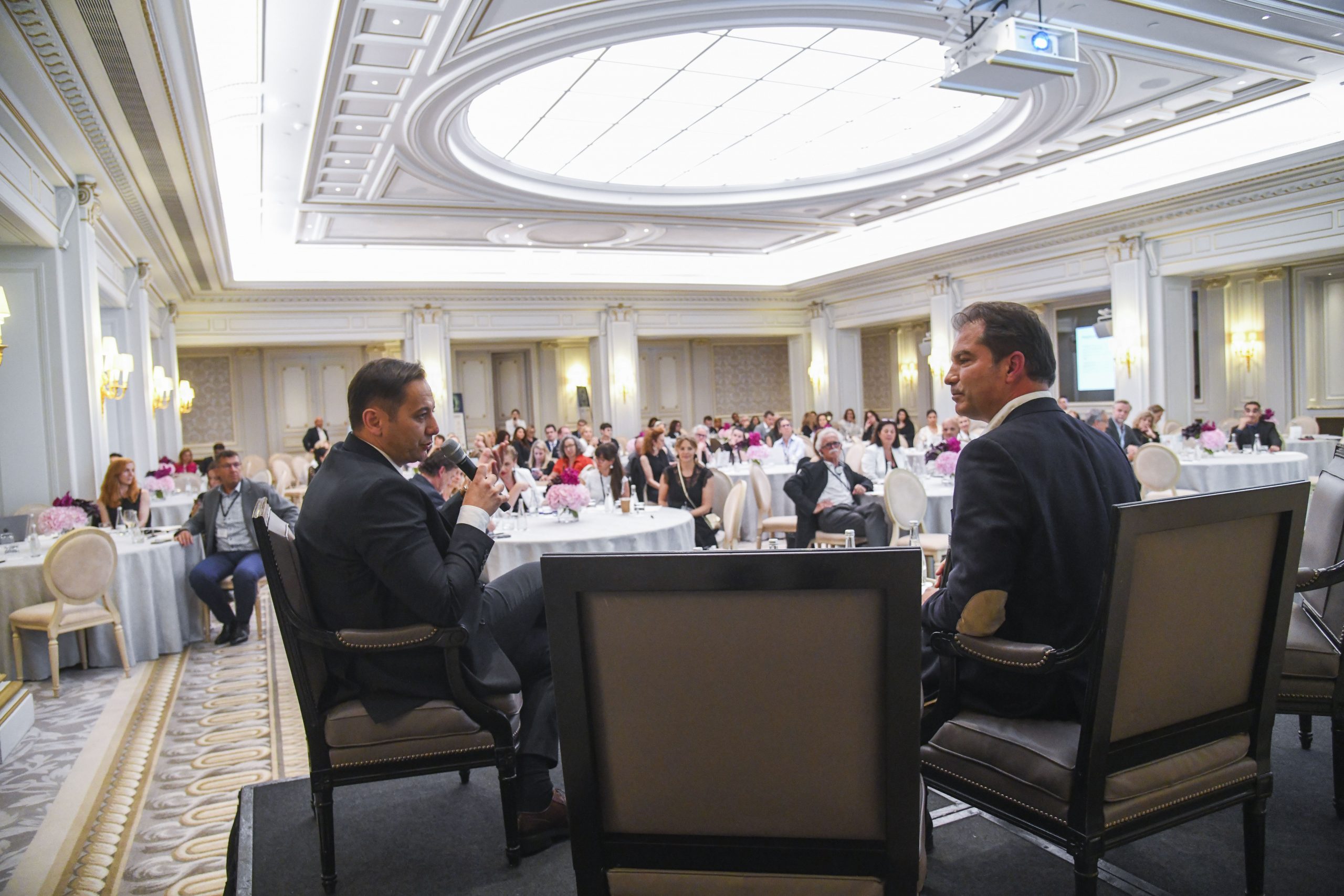
Among these conferences, the one led by Jean-Guy de Gabriac, founder of the World Wellness Weekend and recognized moderator in the sector, and Ozgur Cengiz, Global Director of Wellness Development for Giron Tourism, particularly impressed me. She takes a subtle look at the central role played by people in the world’s most exclusive establishments. I have summarized them in a first article, which I offer here.
In the refined world of ultra-luxurious hospitality, true wealth is measured neither in square meters nor in the number of stars. It is revealed in the quality of human interaction. At a conference on exceptional hospitality, Ozgur Cengiz, Global Director of Wellness Development for the Giron Tourism Group, stated with clarity: “. True luxury is human.”
This statement embodies an often overlooked reality: in the world’s most exclusive hotels, design and technology are no longer enough. The real differentiating factor lies in the way in which our teams embody hospitality on a daily basis.
In these establishments, the myth of the omnipotent general manager is a thing of the past. A network of men and women, united and committed, co-construct the customer experience. The example of Joali in the Maldives speaks for itself. With 55% local staff and employees of 35 nationalities, this resort embodies global hospitality, tailored to ultra-demanding international customers. This human wealth constitutes a veritable intangible capital.
In this context, leadership becomes a central lever. It’s no longer the prestige of a brand that attracts talent, but the reputation of the leader. Ozgur Cengiz emphasizes that candidates are not just looking for a job or a name on their CV, but a human vision, a promise of fulfillment and inspiration. What some call attraction leadership.
Inspiring managers develop a leadership style based on exemplarity, trust and recognition. In concrete terms, this translates into the way in which “host journeys” are conceived – employee journeys that must reflect the same attention to detail as the customer journey. The Joali hotel has made this a strategic priority: quality accommodation, access to sporting and cultural activities, carefully prepared meals, respect for the cultures and rituals of each individual.
Added to this is the logistical and psychological reality of working in an island resort. The pace is fast, expectations are high, and teams live in isolation. Creating a healthy, stimulating living environment is therefore a prerequisite. Without this balance, staff turnover increases, service quality deteriorates, and the customer experience suffers.
Another point raised by Ozgur Cengiz concerns accountability. In his approach, every employee is considered an “owner of the customer experience”. This philosophy changes everything: it encourages us to take the initiative, to anticipate needs, to personalize without being intrusive. A housekeeper isn’t just in charge of laundry, she’s also part of the overall harmony.
This is what enables the Joali Hotel to offer villas at over $50,000 a night, while boasting record customer satisfaction rates. Because behind every smile, every made-to-measure service, there’s a trained, motivated, attentive team. And above all, a leader who embodies this culture.
This model lays the foundations for a new HR culture: less hierarchical, more cross-functional, where the meaning of work and recognition take precedence over mere financial incentives. Tomorrow’s hospitality cannot do without this more human vision, adapted to the aspirations of new generations.
Ozgur Cengiz also spoke of the importance of feedback: a tool for progress, not punishment. The Joali Hotel has set up regular feedback systems, enabling teams to express themselves, make suggestions and innovate. This climate of trust fosters lasting commitment.
This type of governance is echoed in the vision of Delporte Hospitality: generous hospitality, which begins internally, by welcoming others in their uniqueness. The customer experience is merely the mirror image of the employee experience. To aim for excellence, you need to align the two dimensions. Training, coaching and inspiring teams then becomes a strategic act, not just an operational one.
Hospitality is an art of care. Attention to the customer, of course, but also to every daily gesture, every detail. This finesse can only be acquired through a demanding, benevolent and consistent managerial culture. The role of the manager is no longer to control everything, but to create an environment conducive to autonomy, quality and pride in the work accomplished.
This modern concept of hospitality reflects a deep-seated conviction: luxury is not achieved by multiplying services, but by giving them meaning. And this sense is conveyed by the men and women in the field, every day. Authenticity, human warmth, the right gesture: these are the true raw materials of ultra-luxury hospitality.
In conclusion, ultra-luxury hospitality is reinventing itself around an obvious fact: luxury always begins behind the scenes. Behind every exceptional moment lies a close-knit team, guided by a human, visionary and consistent leader. A lesson for all those who still think luxury is all about appearance.